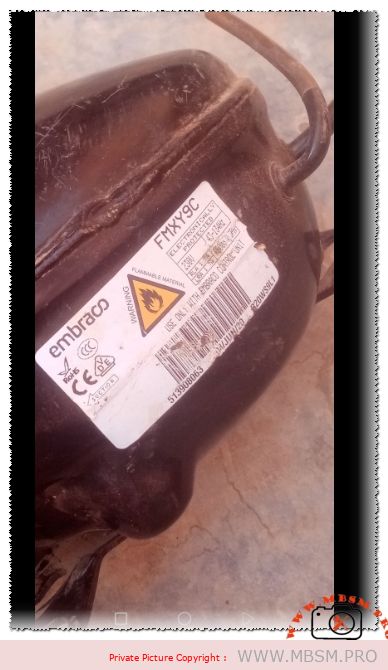
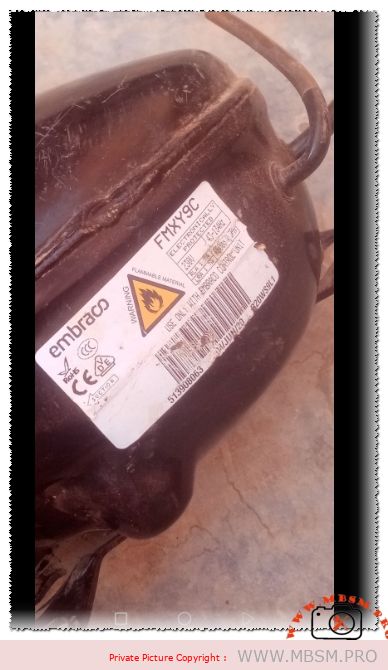
Over my decades in the refrigeration trenches, I have seen the industry shift from robust, “clunky” fixed-speed pumps to the sophisticated whispering of variable-capacity units. When I walk up to a modern high-end residential refrigerator and hear that signature high-pitched ramp-up, I know I am likely dealing with an Embraco FMXY9C. These “Fullmotion” inverter compressors are the gold standard for energy efficiency today, but for many technicians, they remain a “black box” of mystery. If the cabinet is warm and you don’t hear that specific harmonic hum, you are likely looking at a complex dance between the inverter control board and the compressor windings.
Mastering the FMXY9C: The Engineer’s Technical Breakdown
The FMXY9C is not your grandfather’s compressor. As a Senior Engineer, I categorize this as a Variable Capacity Compressor (VCC). Unlike standard units that are either “On” or “Off,” this unit varies its speed between 43Hz and 134Hz. This allows the refrigerator to maintain a near-constant temperature without the massive energy spikes associated with traditional startup cycles.
Feature
Technical Specification
Model
FMXY9C
Utilisation (MBP/HBP/LBP)
LBP (Low Back Pressure)
Domaine (Freezing/Cooling)
Domestic Freezing & Cooling
Oil Type and Quantity
Alkylbenzene (AB) / 180 ml
Horsepower (HP)
1/5 HP (Equivalent at 3000 RPM)
Refrigerant Type
R600a (Isobutane)
Power Supply
230V (3-Phase output from Inverter)
Frequency Range
43 Hz to 134 Hz
Cooling Capacity (BTU/h)
280 – 850 BTU/h (Variable)
Motor Type
BPM (Brushless Permanent Magnet)
Displacement
8.74 cm³
Winding Material
Copper
Pressure Charge (Low Side)
0.5 to 1.5 psi (Running)
Capillary Tube Size
0.026″ or 0.031″ (Application dependent)
Refrigerator Compatibility
High-end Samsung, LG, Whirlpool, Bosch
Temperature Function
-35°C to -10°C (-31°F to 14°F)
Fan Requirement
No (Static) or Yes (Enclosed cabinet)
Commercial Application
No (Domestic Only)
Amperage (Running)
0.4A to 1.5A (Varies by speed)
LRA (Locked Rotor Amps)
N/A (Electronically limited)
Relay Type
None (Direct Inverter Control)
Capacitor
None (Handled by Inverter Board)
The Engineer’s Secret: Diagnostic Logic for Inverter Systems
In my experience, the most common mistake field workers make is trying to “jump-start” this compressor directly from a wall outlet. Do not do this. You will instantly destroy the permanent magnet motor.
To diagnose a suspected FMXY9C failure, I follow this non-negotiable protocol:
The Resistance Equilibrium: Disconnect the three-pin plug. Measure the resistance between all three pins (U, V, W). You should find near-identical readings (typically between 10 to 16 ohms depending on ambient temp). If one leg is “open” or significantly higher, the compressor is dead.
The Inverter Signal Test: If the windings are balanced, the fault usually lies in the Embraco Control Unit. Check for the DC signal from the main logic board to the inverter. If the control board isn’t sending the “frequency command,” the compressor will never ramp up.
The R600a Warning: This unit uses Isobutane. I always use a “No-Flame” approach (Locring or high-quality compression fittings) unless I have a fully purged environment. Isobutane is highly flammable, and safety is paramount when opening these systems.
Comparison: FMXY9C vs. Standard Fixed-Speed Compressors
Feature
FMXY9C (Inverter)
EMY70CLP (Fixed Speed)
Energy Efficiency
Up to 40% Higher
Baseline
Temperature Swing
±0.5°C
±2.0°C
Noise Levels
32-34 dBA
38-42 dBA
Start-up Stress
Soft-start (Low stress)
High Torque (High stress)
Repair Complexity
High (Requires Electronics expertise)
Low (Mechanical/Relay focus)
Professional Replacement Guide
When replacing an FMXY9C, you must stay within the inverter family. You cannot replace this with a standard R134a or R600a fixed-speed motor without replacing the entire control system of the refrigerator.
5 Direct Replacements (R600a Inverter Series)
Embraco VEMZ 9C: The high-efficiency sibling, often a drop-in replacement.
Secop (Danfoss) DLX7.0KK: A robust European alternative with similar displacement.
Jiaxipera VNT1113Y: Frequently found in Chinese-manufactured high-end units.
LG BSA075NHMV: Excellent reliability if mounting brackets align.
Panasonic CBE series (Inverter): High-end Japanese alternative, very quiet.
5 Technical Alternatives (Different Gas/Type – Major Retrofit Required)
Warning: These require changing the control board and refrigerant circuit.
Embraco VEGY 8H (R134a Inverter)
Secop NLE15KTK (R290 – High efficiency but different pressure)
Vacuum Depth: Because R600a systems use very small charges (often less than 60g), moisture is a system-killer. I never stop until my micron gauge hits 250 microns.
Filter Drier: Always use a drier specifically rated for R600a. Standard R134a driers may have desiccant that reacts poorly with isobutane over long periods.
Charging Precision: Do not charge by pressure. You must use a digital scale accurate to 1 gram. A 5-gram error is enough to cause evaporator flood-back or poor cooling performance.
Question: Can I use a regular start relay on the FMXY9C for testing? Answer: Absolutely not. This compressor requires a pulsed 3-phase signal generated by the inverter control unit. Applying 230V AC directly to the pins will result in permanent internal damage to the windings and the magnetic rotor.
Meta Description: Expert guide for the Embraco FMXY9C Inverter Compressor. Technical specs, R600a safety, 1/5 HP equivalent, LBP diagnostic tips, and professional replacement options for HVAC technicians.
Excerpt: The Embraco FMXY9C is a high-efficiency inverter compressor designed for modern R600a refrigeration systems. Operating at variable speeds between 43Hz and 134Hz, this unit offers superior energy savings. This guide provides technical specifications, diagnostic protocols for technicians, and a list of compatible replacements to ensure a professional-grade repair every single time.
Embraco EGAS and EM Series: The Definitive Technician’s Guide to Specs, Diagnosis, and Pro-Level Replacement
In my 20-plus years of navigating the tight mechanical rooms and residential kitchens of this industry, I’ve lost count of how many times I’ve pulled the back panel off a high-end refrigerator or a reach-in cooler only to find an Embraco EGAS or EM series unit staring back at me. Usually, the customer is complaining about a “clicking” sound—the classic song of a struggling start relay—or a cabinet that’s slowly climbing toward room temperature. These compressors are the workhorses of the domestic and light commercial world, but they require a surgical touch and a deep understanding of their specific performance curves to service correctly.
Deep-Dive Technical Specifications
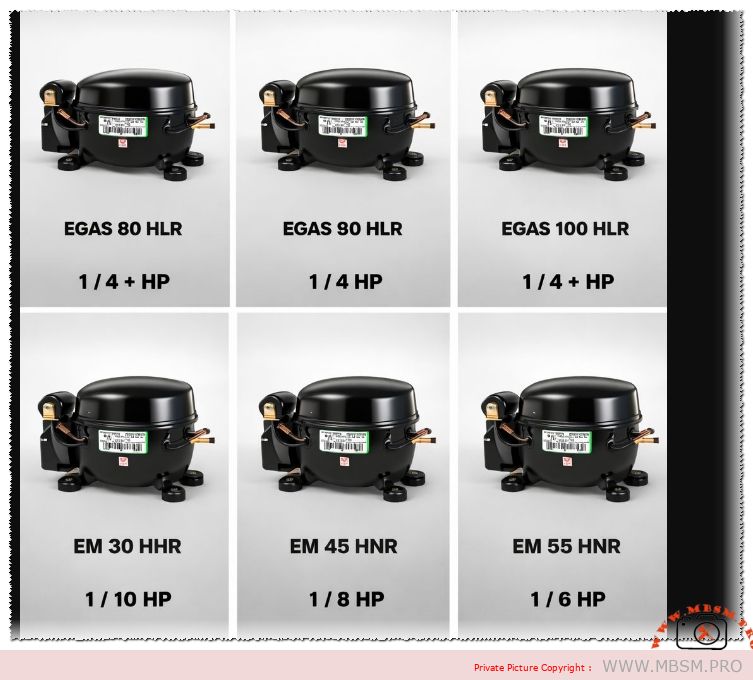
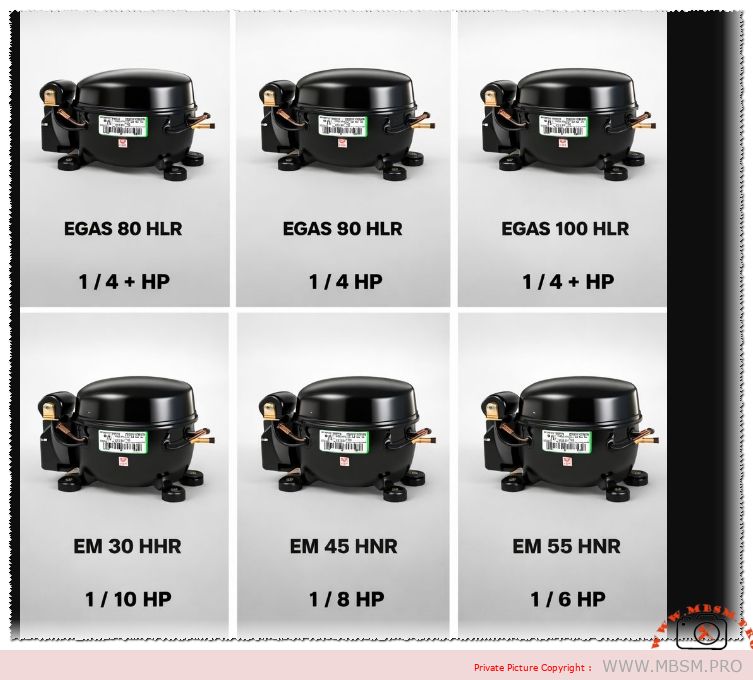
The following table breaks down the core specifications for the Embraco lineup shown in the field reference image. As an engineer, I always tell my juniors: never guess the HP. Always verify the displacement and the LBP/MBP application before selecting a replacement.
Compressor Model
Horsepower (HP)
Series Type
Typical Application
Displacement Range (Approx.)
EGAS 80 HLR
1/4 + HP
EG Series
LBP/MBP (Low/Med Back Pressure)
6.76 cc
EGAS 90 HLR
1/4 HP
EG Series
LBP/MBP
7.15 cc
EGAS 100 HLR
1/4 + HP
EG Series
LBP/MBP
7.95 cc
EM 30 HHR
1/10 HP
EM Series
LBP (Low Back Pressure)
3.00 cc
EM 45 HNR
1/8 HP
EM Series
LBP/MBP
3.97 cc
EM 55 HNR
1/6 HP
EM Series
LBP/MBP
4.58 cc
Note: The “HLR” and “HNR” suffixes typically denote the motor torque characteristics and the refrigerant type—usually R134a for these specific regional variants.
The Engineer’s Secret: Diagnosis & Failure Analysis
In my experience, these Embraco units don’t just “die”; they are usually murdered by external factors. Here is what I look for during a diagnostic call:
The PTC Thermistor Failure: The EM and EG series often use a PTC (Positive Temperature Coefficient) starting device. Over time, the ceramic disc inside cracks due to heat cycles. If you hear the compressor trying to start every 3-5 minutes followed by a “click” (the overload protector tripping), check the relay before condemning the compressor.
Heat Stress and Condenser Maintenance: Because these are often tucked into tight cabinets, the EM 45 and 55 models are prone to overheating if the condenser coils are impacted with dust. I’ve found that prolonged high discharge temperatures cause the oil to carbonize, eventually leading to mechanical “stiction” or valve plate failure.
Capacitor Fatigue: On the larger EGAS 80 and 100 HLR models, a weak run capacitor can cause the motor to draw higher-than-normal Amps, leading to internal winding degradation. Always test your μF (microfarads) against the label rating; a 10% drop is enough to warrant a replacement.
When the original Embraco isn’t on the truck, you need a high-quality equivalent that won’t result in a callback. Here are my “Pro-Choice” equivalents based on displacement and BTU capacity:
For EGAS 100 HLR (1/4+ HP): I recommend the Secop (Danfoss) FR8.5G or the Tecumseh AE4430Y. Both offer excellent volumetric efficiency and fit well in standard mounting footprints.
For EM 55 HNR (1/6 HP): The Secop TLES5.7KK.3 is a rock-solid alternative. It’s exceptionally quiet, which is vital for residential kitchen applications.
For EM 30 HHR (1/10 HP): The Tecumseh THB1330Y is my go-to. It’s compact and handles the low-load cycles of small water dispensers or wine coolers perfectly.
Installation Masterclass: Critical Steps
If you want your replacement to last another 15 years, you cannot skip these steps. I’ve seen too many “slap-and-gas” jobs fail within six months.
Nitrogen Purging is Mandatory: These small-diameter capillary tube systems are extremely sensitive to oxidation. Always braze with a low-flow nitrogen purge to prevent “copper scale” from clogging the inlet of the cap tube.
The Deep Vacuum Protocol: Don’t trust your manifold gauges. Use a digital micron gauge and pull the system down to at least 500 microns, then perform a decay test. Moisture is the absolute enemy of the POE oil found in these R134a compressors.
Filter Drier Replacement: Never, under any circumstances, reuse an old filter drier. I always upgrade to a high-capacity XH-9 molecular sieve drier to ensure any residual moisture or acid is neutralized.
Oil Check: If you are retrofitting, verify that the oil in the new compressor is compatible with the system’s history. These units typically ship with Polyolester (POE) oil.
Meta Description: Master Embraco EGAS & EM series compressors with this pro guide. Covers specs for EGAS 80/90/100, EM 30/45/55, failure diagnosis, and expert replacement tips.
Image Alt Text: A technical comparison chart of Embraco EGAS and EM series refrigeration compressors including 1/4 HP, 1/6 HP, and 1/10 HP models.
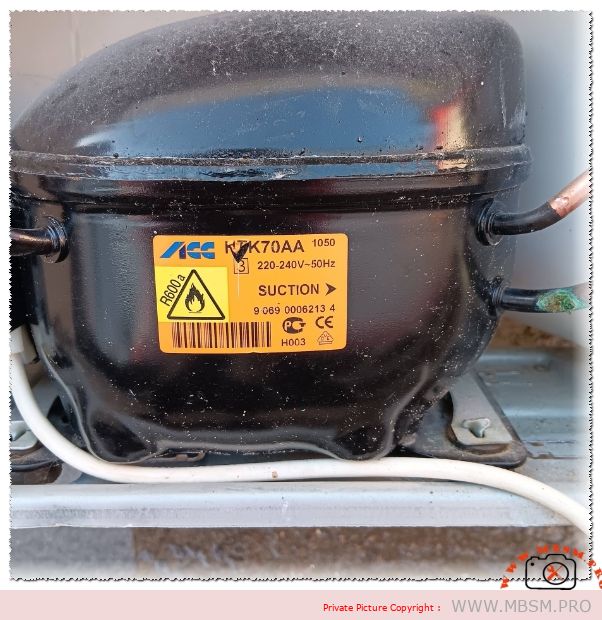
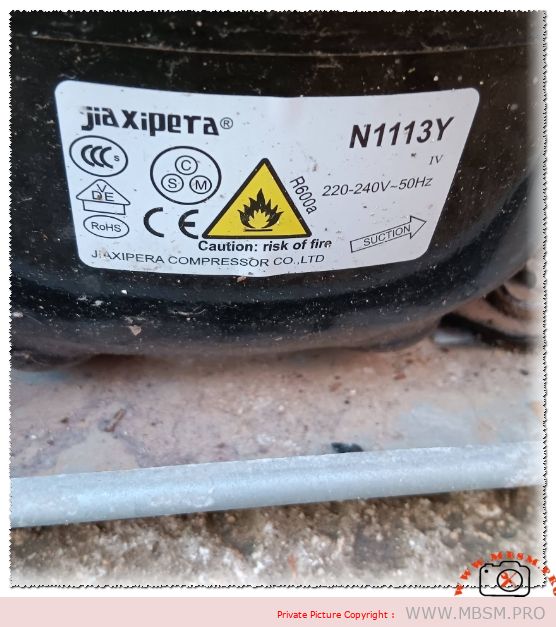
not recommended to replace compressor (Jiaxipera N1113Y) with (ACC HTK70AA).
Category: Refrigeration
written by www.mbsm.pro | 27 January 2026
Based on the technical specifications of both compressors, it is not recommended to replace the burnt-out compressor (Jiaxipera N1113Y) with the second one (ACC HTK70AA).
Here is the technical comparison:
1. The Original Compressor (Jiaxipera N1113Y)
Displacement: 8.9 cm³
Cooling Capacity: Approximately 154 Watts
Horsepower Equivalent: Roughly 1/6 HP
Gas Type: R600a
2. The Replacement Compressor (ACC HTK70AA)
Displacement: 6.64 cm³
Cooling Capacity: Approximately 117 Watts
Horsepower Equivalent: Roughly 1/8 HP
Gas Type: R600a
Why this is a bad match:
While both compressors use the same refrigerant (R600a) and voltage (220-240V), the ACC HTK70AA is significantly weaker than the original Jiaxipera.
If you install it, the following problems will occur:
Poor Cooling: The fridge will take a very long time to get cold, and it may never reach the desired temperature, especially in hot weather.
Continuous Running: Because the compressor is undersized, it will stay “on” almost all the time to try to cool the unit.
Short Lifespan: Working continuously will cause the replacement compressor to overheat, leading to a very short life before it burns out as well.
Conclusion:
You should look for a replacement compressor that has a cooling capacity of around 150–160 Watts or a displacement of 8.9 cm³ (equivalent to 1/6 HP). Using the 1/8 HP compressor (the ACC model) will likely result in a failed repair.
Focus Keyphrase: Technical analysis of Jiaxipera N1113Y and ACC HTK70AA compressor replacement compatibility
Meta Description: Detailed technical review of the Jiaxipera N1113Y and ACC HTK70AA compressors. Learn why cooling capacity and displacement matter more than just the refrigerant type when performing a replacement.
Excerpt: Selecting the right compressor for a refrigeration system is critical for long-term performance and energy efficiency. When replacing a Jiaxipera N1113Y, simply matching the refrigerant type is not enough. This guide breaks down the technical differences between the N1113Y and the ACC HTK70AA, providing the essential data for professional technicians and refrigeration engineers.
Technical Article: The Engineering Reality of Compressor Sizing
In the field of refrigeration, a compressor is the heart of the system. For an expert technician, replacing a unit isn’t just about finding a motor that fits the mounting bracket; it is a calculation of thermal dynamics. A common question arises when a Jiaxipera N1113Y fails: Can an ACC HTK70AA serve as a reliable substitute?
The short answer is no. To understand why, we must look at the displacement and the cooling capacity (Watts). The Jiaxipera N1113Y is a powerhouse in its class, designed for medium-to-large domestic refrigerators. It features a displacement of 8.9 cm³ and delivers approximately 154 Watts of cooling at Low Back Pressure (LBP) conditions.
In contrast, the ACC HTK70AA is a smaller unit. With a displacement of only 6.64 cm³, it produces around 117 Watts. When an undersized compressor like the HTK70AA is installed in a system designed for a 154W load, the compressor will run continuously, overheat, and eventually experience mechanical failure or winding burnout.
Comparative Analysis Table
Feature
Jiaxipera N1113Y
ACC HTK70AA
Impact of Difference
Displacement
8.9 cm³
6.64 cm³
Lower volume per stroke
Cooling Capacity
154 W (~1/6 HP)
117 W (~1/8 HP)
24% loss in cooling power
Current (LRA)
~7.5 A
~6.1 A
Different torque characteristics
Efficiency (COP)
High Efficiency
Standard Efficiency
Increased energy consumption
Why “Close Enough” Isn’t Good Enough
When you install a 1/8 HP compressor where a 1/6 HP unit is required, the internal pressures of the refrigeration cycle change. The suction pressure will remain higher than intended because the smaller piston cannot evacuate the evaporator quickly enough. This leads to poor frost patterns and higher cabinet temperatures, especially during high ambient summer conditions.
Technical Specifications Table (Jiaxipera N1113Y)
Model
Jiaxipera N1113Y
Utilisation (mbp/hbp/lbp)
LBP (Low Back Pressure)
Domaine (Freezing/Cooling)
Freezing and Deep Cooling
Oil Type and quantity
Mineral/PAG (check label) 180ml
Horsepower (HP)
1/6 HP
Refrigerant Type
R600a (Isobutane)
Power Supply
220-240V ~ 50Hz
Cooling Capacity BTU
~525 BTU/h
Motor Type
RSIR / RSCR
Displacement
8.9 cm³
Winding Material
Copper/Aluminum Alloy (Model Dependent)
Pression Charge
Low Pressure Side
Capillary
0.026 to 0.031 inch (standard)
Refrigerator Type
No-Frost / Double Door 300L-400L
Temperature Function
-35°C to -15°C
With fan or no
Usually Static (No fan required)
Commercial or no
Domestic / Light Commercial
Amperage in function
0.7 A – 0.9 A
LRA (Locked Rotor Amps)
7.5 A
Type of relay
PTC Relay
Capacitor
4µF to 5µF (Optional for RSCR)
Replacement Options for Jiaxipera N1113Y
5 Recommended Replacements (Same Gas: R600a)
ACC HTK80AA: A closer match with 8.1 cm³ displacement.
Secop NLE11KK: High-efficiency replacement for 1/6 HP+ applications.
Embraco EMT43HDP: Robust performance for R600a systems.
Wanbao ETB80Y: Reliable Asian-market equivalent.
Jiaxipera N1112Y: Slightly lower power but within tolerance levels.
5 Recommended Replacements (Other Gas: R134a – Requires System Flush)
ZMC GL90AA: The industry standard for 1/6 HP R134a.
Embraco GVY66AA: High-performance LBP unit.
Donper QP91Y: Reliable 1/6 HP displacement equivalent.
Secop TLES7.5KK.3: Equivalent displacement for R134a conversion.
Professional Engineering Advice
Cleanliness is Key: When a compressor burns out, it releases acid into the oil. Always replace the filter drier and perform a nitrogen flush.
Match the Displacement: Never go more than 10% lower in cm³ displacement.
Vacuuming: R600a systems are extremely sensitive to moisture. A deep vacuum (below 500 microns) is mandatory.
Safety First: R600a is flammable. Ensure no open flames or sparks are present during the charging process.
Question: If I have a 350-liter fridge, will the ACC HTK70AA work? Answer: No. A 350-liter refrigerator typically requires the 154W capacity of the Jiaxipera N1113Y (1/6 HP). The ACC HTK70AA (1/8 HP) is designed for smaller units (around 150-220 liters). Using it will lead to continuous running and premature failure.
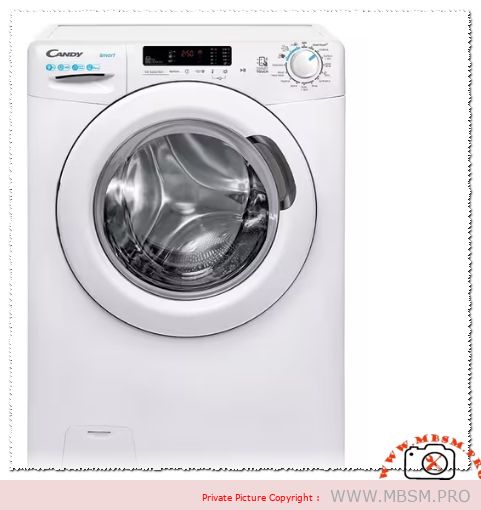
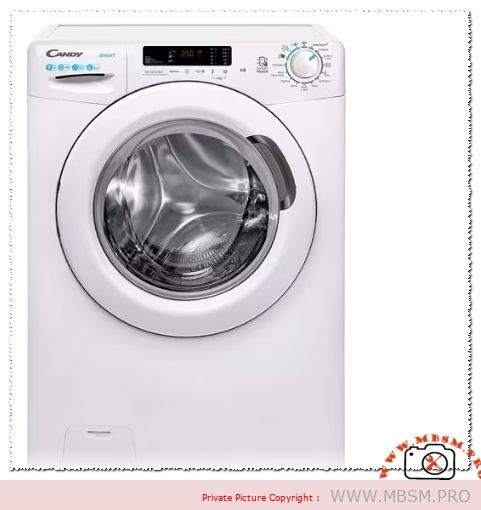
our decision to stay away from these four brands (Kriazi, Candy, GMC, White Whale) may be based on past experiences or technical advice related to the availability of spare parts, the quality of after-sales service, or the lifespan of electronic components.
In the professional appliance sector, choosing a washing machine is an engineering audit, not a simple shopping trip. As a field expert who has dismantled thousands of units and performed rigorous stress tests on drive systems, I look beyond the digital displays to the mechanical heart of the machine: the drum bearings, the motor windings, and the electrolytic capacitors on the control board.
Technical data from the field indicates a significant divergence in quality. While some brands focus on high-turnover consumer goods, others invest in Structural Integrity. If you are being advised to “stay away” from Kiryazi, Candy, GMC, and White Whale, it is not a matter of brand bias—it is a matter of documented mechanical fatigue and specialized component scarcity.
Technical Breakdown: Identifying the Structural Bottlenecks
When an appliance fails, it is usually due to a “weakest link” in its design. Here is the professional technical breakdown of why these four brands often face professional criticism from repair engineers:
Kiryazi (Structural Oxidation): The primary issue lies in the galvanization process of the outer cabinet. In many models, the steel gauge is insufficient, leading to premature rust around the detergent drawer and base, which eventually compromises the machine’s balance during high-RPM cycles.
Candy (Electronic Volatility): Candy machines often feature highly sophisticated integrated circuits. However, the PCB (Printed Circuit Board) lacks robust thermal shielding. In environments with fluctuating voltage, the microprocessor is prone to “logic hanging” or total failure.
GMC (Mechanical Friction): Many GMC models rely on traditional Universal Brush Motors. These motors generate significant carbon dust and heat, leading to shorter lifespans for the drive belt and much higher decibel levels during the spin cycle.
White Whale (Component Inconsistency): The “Spider” assembly (the three-arm support for the drum) in these units is frequently made of a low-grade Zinc-Aluminum alloy. This material reacts chemically with liquid detergents, leading to “pitting corrosion” and eventual drum detachment.
Engineering Comparison: High-Tier vs. Standard Tier
To make an informed decision, we must compare the Material Science and Drive Systems of industry leaders against standard budget models.
Technical Component
Standard Group (Avoid)
LG (Direct Drive)
Samsung (Inverter)
Bosch (Series 6/8)
Motor Tech
Universal Carbon Brush
Brushless DC (BLDC)
Digital Inverter
EcoSilence Drive
Drive Logic
Mechanical Pulley
Direct Coupling
Reinforced Ribbed Belt
High-Torque Belt
Bearing Seal
Single Lip
Double-Lip / Viton
High-Temp Synthetic
Industrial Grade
PCB Protection
Basic Varnish
Resin Encapsulation
Moisture Shield
Thermal Management
Vibration Control
Standard Springs
6-Motion AI
VRT Plus (Ball Balance)
AntiVibration Walls
The Inverter Logic: Electronic Schematic of Superiority
For the technician, the shift to Inverter Technology (found in LG, Samsung, and Bosch) is the greatest leap in reliability. Unlike the simple “On/Off” relay logic of older GMC or Kiryazi units, modern systems utilize a Variable Frequency Drive (VFD) logic path:
Rectification Stage: Incoming AC is converted to stable DC power.
IGBT Switching: (Insulated Gate Bipolar Transistors) pulse the power to the motor windings.
Frequency Modulation: By changing the electrical frequency, the machine controls torque and speed with extreme precision, without mechanical stress.
Result: This eliminates the Carbon Brushes, which are the primary wear-and-tear component in traditional washing machines.
Field Values: Performance Comparison Metrics
Performance Feature
Budget Brands (Kiryazi/GMC)
Premium Engineering (LG/Bosch)
Spin Decibels
76 dB – 82 dB
48 dB – 54 dB
Thermal Cut-out
Frequent (friction-based heat)
Rare (active cooling logic)
Drum Balance
Passive (Weight-based)
Active (Sensor-based)
Parts Availability
Fragmented / Generic
Serialized / Global
Professional Councils and Maintenance Protocols
Advice on Installation: Never place a washing machine on a wooden floor or an unlevel surface. For Bosch and LG units, precision leveling is required to allow the internal accelerometers to calibrate the “Zero-Point” vibration correctly.
Notice on Detergent: Excessive use of “Soap Powder” causes a buildup known as “Scrud.” In White Whale and Candy models, this acidic sludge accelerates the decay of the drum seal.
The Benefit of Direct Drive: By removing the belt, LG has eliminated a major friction point, significantly reducing energy loss and increasing the motor’s life expectancy to over a decade.
Final Technical Verdict
The recommendation to avoid Kiryazi, Candy, GMC, and White Whale is based on the Mean Time Between Failures (MTBF) observed in the field. As an engineer, I recommend prioritizing brands that utilize Resin-Encapsulated Electronics and Brushless Motors. LG, Samsung, and Bosch provide the necessary Mechanical Tolerance to handle the stresses of modern laundry requirements.
Focus keyphrase: Technical engineering review of washing machine brands explaining why LG Samsung and Bosch are superior to Kiryazi Candy GMC and White Whale for long-term durability.
Meta description: Expert engineering analysis on washing machine durability. Discover why technicians recommend LG, Samsung, and Bosch over Kiryazi, Candy, GMC, and White Whale for long-term use.
Tags: Mbsmgroup, Mbsm.pro, mbsmpro.com, mbsm, Washing Machine Repair, LG Direct Drive, Bosch EcoSilence, Samsung Inverter, Appliance Engineering, Inverter Motor Schematic, Drum Bearing Failure.
Excerpt:A washing machine is a long-term engineering investment. From a field technician’s perspective, choosing the right brand depends on mechanical durability and electronic stability. While brands like Kiryazi, Candy, GMC, and White Whale are popular, they often face structural oxidation and PCB failures. This article analyzes why LG, Samsung, and Bosch are technically superior.
Stay away from 4 washing machines: Kiriazi, Candy, GMC, White Whale mbsmpro
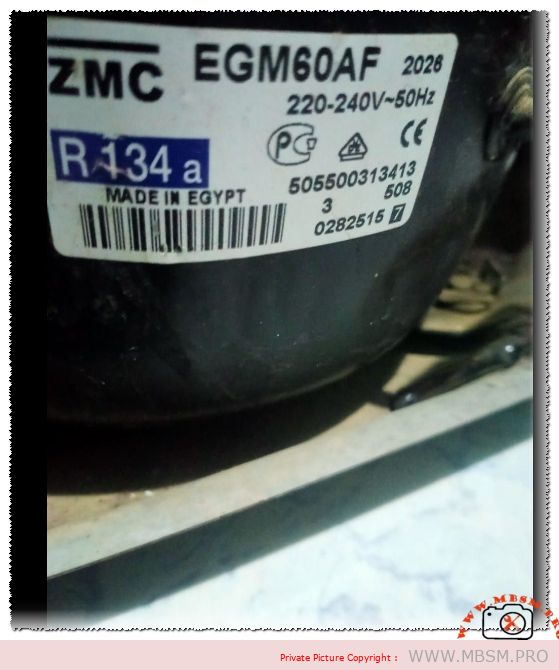
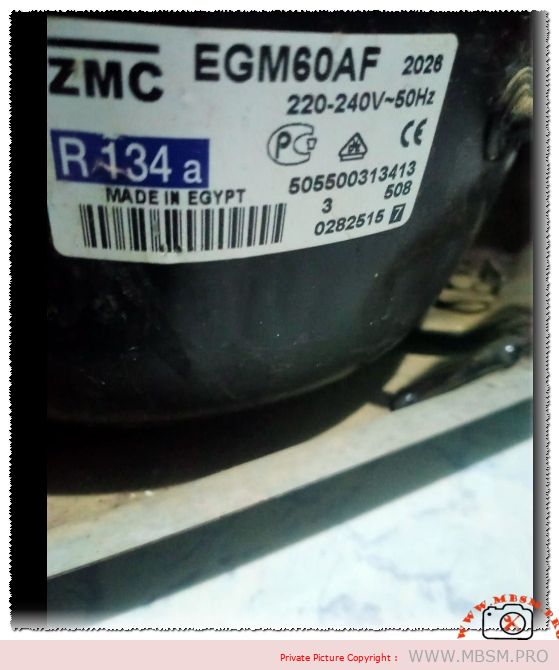
The ZMC EGM60AF compressor can be installed on a Toshiba 14-inch refrigerator
Category: Refrigeration
written by www.mbsm.pro | 27 January 2026
Mbsmpro, Compressor, EGM60AF, 1/6 hp, ZMC, Cooling, R134a, 155 W, 1.1 A, 1Ph 220-240V 50Hz, LBP, RSIR, -35°C to -10°C, Cooling and Freezing
From our professional experience, the compressor is small and has a maximum length of 10 feet.
In the specialized world of HVAC and domestic refrigeration, selecting the correct compressor is the difference between a long-lasting appliance and a premature mechanical failure. The ZMC EGM60AF stands out as a reliable workhorse in the Low Back Pressure (LBP) category. This hermetic reciprocating compressor is frequently utilized by major appliance manufacturers for its thermal efficiency and robust construction under varying environmental conditions.
Technical Engineering Analysis
The EGM60AF is a 1/6 HP unit optimized for R134a refrigerant. In my years as a field engineer, I have observed that this specific model strikes a balance between energy consumption and torque. Utilizing a Resistive Start Induction Run (RSIR) motor, it is designed for simplicity and durability. With a displacement of approximately 6.00 cc, it provides sufficient mass flow for standard household refrigerators ranging from 8 to 11 cubic feet.
Application and Sizing Logic
When retrofitting or repairing, field workers must exercise caution regarding cabinet size. While the EGM60AF is highly efficient, installing it in a large 14-cubic-foot unit—which typically demands a 1/5 or 1/4 HP motor—can lead to “short-cycling” or continuous operation. This results in overheating the motor windings and eventual mechanical seizure. For optimal performance, this compressor should be paired with a correctly sized capillary tube to ensure the evaporation temperature remains within the -30°C to -10°C range.
Complete Technical Data Table
Feature
Specification
Model
ZMC EGM60AF
Utilization
LBP (Low Back Pressure)
Domaine
Freezing / Cooling
Oil Type and Quantity
Ester (POE) – 180ml to 200ml
Horsepower (HP)
1/6 HP
Refrigerant Type
R134a
Power Supply
220-240V ~ 50Hz / 1 Phase
Cooling Capacity BTU
Approx. 528 BTU/h (at ASHRAE)
Motor Type
RSIR (Resistive Start Induction Run)
Displacement
6.00 cc
Winding Material
High-Grade Copper
Pression Charge
Low side (typical): 0 to 5 PSI
Capillary Tube Recommendation
0.031″ ID x 3 meters (approx.)
Compatible Models
Small-Medium Fridges (Sharp, Beko, Ideal)
Temperature Function
-35°C to -10°C
Cooling System
Static Cooling (Natural Convection)
Commercial Use
Domestic / Light Commercial
Amperage (FLA)
0.9A – 1.1A
LRA (Locked Rotor Amps)
6.5A – 7.5A
Relay Type
PTC Relay
Capacitor Requirement
Not required (RSIR), optional run cap for RSCR
Electrical Schema (Wiring Diagram)
For the RSIR configuration of the EGM60AF:
Common (C): Connected to the Overload Protector (OLP).
Main/Run (M/R): Connected to the Neutral line and the PTC Relay.
Start (S): Connected to the PTC Relay. The PTC relay provides a high resistance to the start winding once the motor reaches roughly 75% of its speed, effectively dropping the start winding out of the circuit.
Comparative Analysis: EGM60AF vs. EGL70AA
When comparing the 1/6 HP EGM60AF with the slightly larger 1/5 HP EGL70AA:
Cooling Power: The EGL70AA offers roughly 25% more BTU capacity, making it suitable for 14-foot fridges where the EGM60AF would struggle.
Energy Efficiency: The EGM60AF is superior in smaller cabinets due to lower wattage draw (approx. 110W vs 145W during stable run time).
Replacement Reference Guide
5 Compressors: Same Value / Same Gas (R134a)
Embraco: EM65HHR (High efficiency alternative)
Danfoss/Secop: TLES5.7FT.3
Cubigel: GL60AA
ACC / Wanbao: GVM66AA
Huayi: HYE60MTU
5 Compressors: Same Value / Other Gas (R600a)
Note: Requires complete system flushing and oil change or capillary adjustment.
Secop: TLES6.5KK.3
Embraco: EMX46CLC
Jiaxipera: T1112Y
Donper: L65CZ1
ACC: HMK80AA
Engineering Advice and Field Notices
Vacuuming: Always pull a vacuum down to 500 microns. Moisture in R134a systems reacts with Ester oil to form acid, which will corrode the motor windings.
Filter Drier: Never reuse a filter drier. Always replace with a new 15g or 20g molecular sieve drier when opening the system.
Heat Dissipation: Ensure the condenser coils are clean. The EGM60AF is designed for static cooling, but if the fridge is located in a high-ambient area (above 40°C), adding a small auxiliary fan near the compressor can significantly extend its life.
Conclusion: The ZMC EGM60AF remains a top choice for technicians looking for a reliable, “Made in Egypt” solution for standard household repairs. Its compatibility with R134a makes it a straightforward replacement for millions of units currently in service across the Middle East and Africa.
Focus Keyphrase: ZMC EGM60AF compressor 1/6 HP R134a specifications and technical data
Meta Description: Technical guide for the ZMC EGM60AF 1/6 HP compressor. Includes cooling capacity, wiring diagrams, displacement data, and cross-reference replacements for R134a and R600a systems.
Excerpt: The ZMC EGM60AF is a high-performance hermetic compressor designed for low back pressure applications in domestic refrigeration. Engineered with precision in Egypt, this 1/6 HP unit operates on R134a refrigerant and is tailored for 220-240V 50Hz power systems. It offers a reliable cooling solution for small to medium household refrigerators and upright freezers worldwide.
Since this is a single-phase ($1\phi$) unit, the electrical system relies on a Permanent Split Capacitor (PSC) motor. Below is the technical breakdown of the wiring logic for this 2-ton TOSOT unit:
Compressor Wiring: * Common (C): Connects directly to the Overload Protector (Internal).
Start (S): Connects to one side of the 50 $\mu$F Capacitor.
Run (R): Connects to the Neutral line and the other side of the capacitor.
Outdoor Fan Motor: Usually wired in parallel with the compressor power supply, using its own smaller capacitor (typically 5-7 $\mu$F).
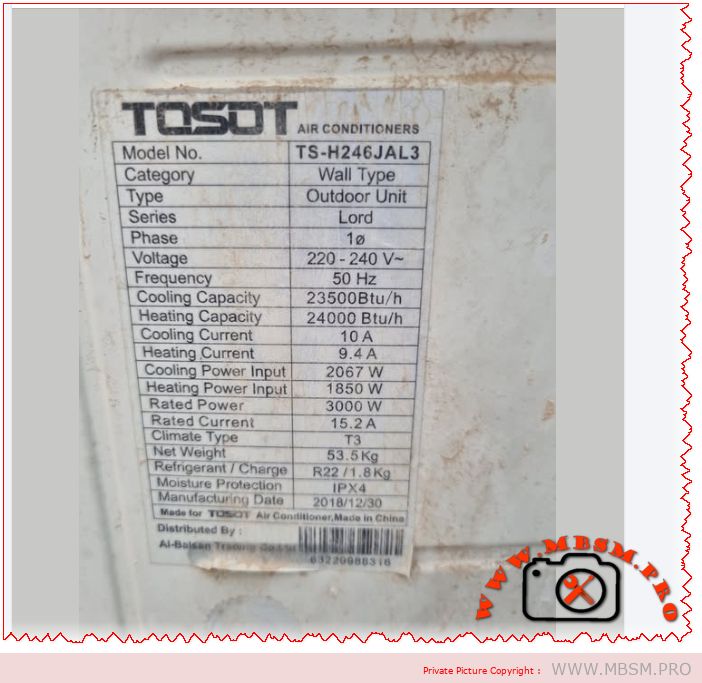
Technical Article: TOSOT TS-H246JAL3 Lord Series Analysis
Focus Keyphrase: TOSOT TS-H246JAL3 2 Ton Compressor Specifications and R22 Engineering Guide
SEO Title: Mbsm.pro, TOSOT TS-H246JAL3, 2 Tons, 24000 BTU, R22, 220V, Lord Series Outdoor Unit
Meta Description: Technical deep-dive into the TOSOT TS-H246JAL3 2-ton outdoor unit. Features 23,500 BTU cooling, T3 tropical climate rating, and professional R22 compressor replacement data for HVAC engineers.
Excerpt: The TOSOT TS-H246JAL3 is a high-performance 2-ton outdoor air conditioning unit from the Lord Series, specifically engineered for T3 tropical environments. Delivering 23,500 BTU/h of cooling power, this R22-based system is a staple for technicians requiring reliability in extreme heat. This article provides full technical specifications and professional cross-reference guides.
Professional Specification Table
Model Parameter
Technical Data
Model
TS-H246JAL3
Tonnage
2 Tons
Utilization
HBP (High Back Pressure)
Domaine
Cooling & Heating (Heat Pump)
Oil Type
Mineral Oil (SUNISO 4GS or equivalent)
Horsepower (HP)
2 HP
Refrigerant Type
R22
Refrigerant Charge
1.8 Kg
Power Supply
220-240V / 50Hz / $1\phi$
Cooling Capacity
23,500 BTU/h
Heating Capacity
24,000 BTU/h
Motor Type
PSC (Permanent Split Capacitor)
Climate Type
T3 (Tropical – Up to 52°C)
Running Amperage
10.0 A (Cooling)
LRA (Locked Rotor)
52 A
Capacitor Value
50 $\mu$F / 450V
Performance Comparison: R22 vs. R410A (2-Ton Class)
In the field, the TS-H246JAL3 uses R22, which offers distinct operational differences compared to modern R410A units of the same tonnage.
Feature
TOSOT TS-H246JAL3 (R22)
Standard 2-Ton (R410A)
Operating Pressure (Suction)
65 – 75 PSI
115 – 130 PSI
Discharge Temperature
Moderate
High
Compression Ratio
Lower (Longer Life)
Higher
Oil Sensitivity
Low (Mineral)
High (POE – Hygroscopic)
Professional Replacement Cross-Reference
If the compressor fails, these models are the gold standard for direct replacement without modifying the chassis:
5 Direct R22 Replacements
Panasonic: 2K28C225A (Industry Standard)
Samsung: PH41VP-ET
LG: QP442PED
Highly: 203DH-32C2
Mitsubishi: RH313VAGT
5 Alternative Replacements (Conversion Required)
GMCC: PA240M2C-4FT (R410A)
Gree: QXF-B239zH070 (R410A)
Panasonic: 5RS092DAA (R410A)
Copeland: ZP24K5E (R410A Scroll)
Tecumseh: RK5515E (R22/R407C)
Engineer’s Notice & Field Advice
T3 Climate Advantage: This unit is rated for T3. As an expert, I recommend ensuring the outdoor unit has at least 50cm of clearance from any wall. T3 units move a massive amount of heat; restricting airflow will cause the amperage to spike above the rated 10A, leading to premature winding failure.
Capacitor Maintenance: The 50 $\mu$F capacitor is the most common point of failure. If the compressor hums but doesn’t start (drawing high LRA), check the capacitor before condemning the compressor.
Charging by Weight: Since the system uses 1.8 Kg of R22, always charge using a digital scale. Overcharging an R22 system in a T3 environment causes liquid slugging and destroys the valve plates.
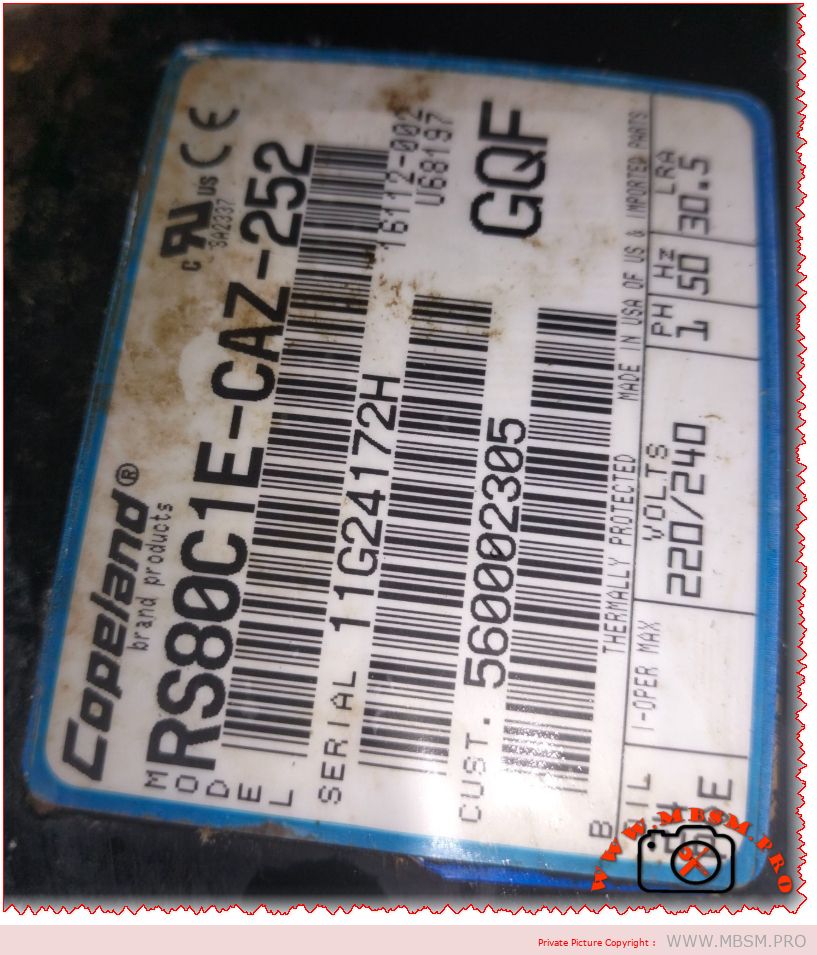
The Copeland RS80C1E-CAZ-252 represents a specialized hermetic reciprocating compressor engineered for low-temperature refrigeration applications where reliability meets efficiency. This single-phase unit operates on R134a refrigerant and delivers consistent performance in demanding freezing environments ranging from -30°C to -10°C evaporating temperatures.
Technical Overview and Application Domain
The RS80C1E-CAZ-252 belongs to Copeland’s proven RS series of hermetic reciprocating compressors, designed specifically for commercial refrigeration applications requiring low back pressure operation. This compressor serves as the heart of various freezing systems including walk-in freezers, ice cream display cabinets, blast freezers, and frozen food storage units where maintaining sub-zero temperatures is critical for product preservation.
Operating at 220-240V single-phase 50Hz power supply, this unit draws approximately 5 amperes during normal operation, making it suitable for standard commercial electrical systems. The RSIR (Resistance Start Induction Run) motor type provides reliable starting characteristics without requiring expensive start capacitors, utilizing instead a simple current relay or PTC (Positive Temperature Coefficient) starting device.
Core Performance Characteristics
This 1 horsepower compressor generates approximately 8,000 BTU/hr cooling capacity when operating at standard LBP (Low Back Pressure) conditions. The displacement volume typically measures around 10.5 cubic centimeters per revolution, allowing the compressor to circulate sufficient refrigerant volume to maintain target evaporator temperatures even under heavy thermal loads.
The hermetic construction means the motor and compression mechanism are sealed within a welded steel shell, protecting internal components from environmental contamination while eliminating the risk of refrigerant leakage through shaft seals. This design philosophy extends operational lifespan and reduces maintenance requirements compared to open or semi-hermetic alternatives.
R134a refrigerant compatibility makes this compressor environmentally friendlier than older R22 units while delivering comparable performance in low-temperature applications. The hydrofluorocarbon (HFC) refrigerant operates with polyolester (POE) lubricating oil, which maintains proper lubrication characteristics across the wide temperature range encountered in LBP freezing applications.
Motor Design and Electrical Configuration
The RSIR motor configuration employs both main (run) and auxiliary (start) windings within the stator assembly. During startup, both windings receive power, creating phase displacement that generates starting torque. Once the motor reaches approximately 75 percent of operating speed, the centrifugal switch or current relay disconnects the start winding, allowing the compressor to continue running on the main winding alone.
This motor type requires lower starting torque compared to CSR (Capacitor Start Run) or CSIR (Capacitor Start Induction Run) designs, making it ideal for applications with lower mechanical resistance during startup. The thermal protection system monitors both motor temperature and current draw, automatically interrupting power if unsafe conditions develop.
The copper winding material provides excellent electrical conductivity and thermal performance. Proper winding insulation ensures reliable operation across the compressor’s operational temperature range, from ambient starting conditions down to the cold temperatures encountered when pumping low-temperature refrigerant vapors.
Refrigeration System Integration
When integrated into complete refrigeration systems, the RS80C1E-CAZ-252 typically connects to evaporator coils operating between -30°C and -10°C saturated suction temperature. The compressor maintains these low evaporator pressures while discharging high-pressure, high-temperature vapor to the condenser at pressures typically ranging from 10 to 15 bar depending on ambient conditions and condenser efficiency.
Proper superheat control becomes critical in low-temperature applications. Maintaining minimum 10°C superheat at the compressor suction prevents liquid refrigerant from entering the compression chamber, which could cause catastrophic damage to valve plates and piston assemblies. Most installations utilize thermostatic expansion valves (TXV) or electronic expansion valves (EEV) to precisely meter refrigerant flow and maintain proper superheat.
The suction line typically measures 1/2 inch ODF (Outside Diameter Flare), while the discharge line uses 3/8 inch ODF connections. Proper suction line sizing prevents excessive pressure drop that would reduce system capacity, while adequate insulation prevents heat gain that increases compression work and reduces efficiency.
Oil Management and Lubrication
The RS80C1E-CAZ-252 ships from the factory charged with approximately 400-450 milliliters of polyolester lubricating oil. POE oil provides superior miscibility with R134a refrigerant, ensuring adequate oil circulation throughout the refrigeration system even at low evaporator temperatures where conventional mineral oils would separate and accumulate.
In low-temperature applications, proper oil return becomes paramount. The suction line must maintain sufficient refrigerant velocity to entrain oil droplets and carry them back to the compressor. Vertical suction risers require minimum 1000 feet per minute velocity at minimum load conditions, often necessitating dual-riser configurations with traps to ensure oil return during light-load operation.
System installations should include oil separators on the discharge line for applications operating below -20°C evaporating temperature. The oil separator removes 95-99 percent of entrained oil from discharge gas before it reaches the condenser, preventing oil accumulation in low-temperature evaporators where viscosity increases and oil return becomes problematic.
Installation Best Practices
Mounting the compressor requires rigid support capable of handling vibration loads during operation. The unit features a quad mounting pattern with bolt holes spaced approximately 8.0 inches by 4.8 inches, standard for this compressor frame size. Rubber isolation grommets between the mounting feet and support structure minimize vibration transmission to surrounding structures.
Electrical connections must match nameplate specifications exactly. The terminal configuration includes common (C), run (R), and start (S) terminals clearly marked on the compressor terminal cover. Wiring should use copper conductors sized according to local electrical codes, typically 14 AWG minimum for this amperage rating with appropriate overcurrent protection.
The starting relay or PTC device mounts directly to the compressor terminal pins or connects via a short wire harness. Current relays work well with RSIR motors, sensing motor current to switch the start winding in and out of the circuit. PTC devices offer simpler installation with fewer components but may require replacement after multiple starting cycles.
Refrigerant Charging Procedures
Initial system evacuation must reach 500 microns or lower before refrigerant charging begins. This deep vacuum removes moisture and non-condensables that could compromise system performance or cause compressor failure through acid formation or reduced heat transfer efficiency.
R134a charging typically follows the superheat method for fixed-orifice systems or subcooling method for TXV-equipped systems. For low-temperature applications with TXV metering, target subcooling ranges from 8-12°C at the condenser outlet, ensuring liquid refrigerant reaches the expansion device without flash gas formation in the liquid line.
Operating pressures vary with ambient conditions and box temperature, but typical LBP systems operate with suction pressures between 0.5-2.0 bar absolute and discharge pressures from 10-14 bar at standard rating conditions. Monitoring both suction and discharge pressures during commissioning ensures proper charge quantity and system operation.
Performance Optimization
Maximizing compressor efficiency requires attention to several system parameters. Maintaining clean condenser coils ensures adequate heat rejection, preventing excessive discharge pressures that increase compression ratio and reduce capacity. Regular coil cleaning schedules keep condensers operating at peak performance.
Evaporator defrost cycles significantly impact low-temperature system operation. Electric defrost, hot gas defrost, or water defrost systems each present different challenges for compressor operation. Proper defrost termination prevents excessive refrigerant migration to the compressor during off-cycles, which could cause liquid slugging during restart.
Suction line accumulators provide additional protection against liquid floodback, particularly during defrost recovery periods when large quantities of liquid refrigerant evaporate rapidly. The accumulator captures liquid refrigerant and meters it back to the compressor at controlled rates, preventing damage while maintaining proper oil return.
Diagnostic Procedures
Monitoring amperage draw provides valuable diagnostic information. Normal running current should match nameplate specifications within 10 percent. Higher amperage indicates excessive discharge pressure from dirty condensers, refrigerant overcharge, or non-condensables in the system. Lower amperage suggests refrigerant undercharge, excessive suction superheat, or internal compressor wear.
Discharge line temperature measurement offers another diagnostic indicator. Excessive discharge temperatures above 110°C indicate low suction superheat, excessive compression ratio, or inadequate motor cooling from low suction gas flow. Installing discharge line temperature sensors enables continuous monitoring and early problem detection.
Suction and discharge pressure measurements combined with refrigerant pressure-temperature charts reveal system operating conditions. Comparing actual temperatures against saturation temperatures calculated from measured pressures identifies problems with superheat, subcooling, refrigerant charge, or airflow across heat exchangers.
Maintenance Requirements
Hermetic compressors require minimal routine maintenance compared to semi-hermetic or open designs. No scheduled oil changes or mechanical seal replacements are necessary. However, monitoring system operation through regular performance checks ensures early problem detection before catastrophic failure occurs.
Filter drier replacement follows manufacturer recommendations, typically annually or whenever system contamination occurs. Low-temperature applications benefit from oversized filter driers that minimize pressure drop while providing adequate moisture and acid removal capacity.
Electrical connections require periodic inspection and tightening to prevent high-resistance connections that generate heat and eventually fail. Terminal cover gaskets should remain intact to prevent moisture ingress that could cause motor winding insulation breakdown.
Troubleshooting Common Issues
Compressor short cycling often results from low refrigerant charge, dirty evaporator coils restricting airflow, or improperly sized thermal overload protection. Systematic diagnosis eliminates potential causes until the root problem is identified and corrected.
Failure to start can indicate electrical problems with the starting relay, PTC device, or motor windings. Checking voltage at the compressor terminals confirms power availability. Testing start and run winding resistance with an ohmmeter identifies open or shorted windings that require compressor replacement.
Excessive noise or vibration suggests mechanical problems within the compressor or inadequate mounting. Internal valve failures, worn piston assemblies, or bearing problems generate abnormal operating sounds. Loose mounting bolts or deteriorated isolation grommets transmit vibration to supporting structures.
Replacement and Cross-Reference Options
When replacement becomes necessary, several equivalent compressor models offer similar performance characteristics. Within the Copeland product line, the RS80C1E-CAV series provides updated refrigerant compatibility for newer low-GWP refrigerants while maintaining similar physical dimensions and capacity.
Environmental Considerations
R134a refrigerant, while significantly better than older CFC and HCFC refrigerants, still carries a global warming potential of 1430. Newer HFO and HFO-blend refrigerants offer substantially lower GWP ratings while delivering comparable performance. Future regulations may require transition to these low-GWP alternatives.
Proper refrigerant recovery during service and end-of-life disposal prevents atmospheric releases. Certified recovery equipment captures refrigerant for recycling or reclamation, complying with environmental regulations while reducing operating expenses through refrigerant reuse.
Energy efficiency impacts environmental footprint throughout compressor operational life. Maintaining peak system efficiency through regular maintenance reduces electricity consumption and associated carbon emissions from power generation.
Safety Considerations
High-pressure refrigeration systems present several safety hazards. Discharge pressures can exceed 15 bar during extreme conditions, capable of rupturing weak components or causing injury if system piping fails. Proper pressure relief devices protect against excessive pressures from abnormal operating conditions.
Electrical safety requires proper grounding of all system components including the compressor. Ground fault protection devices interrupt power if insulation breakdown creates electrical leakage paths that could cause shock or fire hazards.
Refrigerant safety depends on proper handling procedures. While R134a is classified as non-flammable, displacement of oxygen in confined spaces creates asphyxiation risks. Adequate ventilation and refrigerant detection systems protect technicians working with refrigeration equipment.
Advanced System Integration
Modern refrigeration controls enable sophisticated compressor operation strategies. Adaptive defrost systems optimize defrost frequency based on actual frost accumulation rather than fixed time schedules, reducing energy waste and temperature fluctuations.
Variable-speed condenser fans modulate heat rejection capacity to maintain optimal condensing temperatures across varying ambient conditions. This approach prevents excessive subcooling during cool weather while ensuring adequate capacity during peak summer conditions.
Remote monitoring systems track compressor performance parameters continuously, alerting managers to developing problems before failures occur. Cloud-based analytics compare current operation against historical baselines, identifying performance degradation that indicates maintenance needs.
Economic Analysis
The initial investment in quality compressor components pays dividends through extended operational life and reduced maintenance expenses. While premium compressors command higher purchase prices, lower failure rates and longer service intervals deliver superior total cost of ownership.
Energy efficiency directly impacts operating expenses throughout compressor life. A 10 percent efficiency improvement reduces electricity costs proportionally, generating cumulative savings that often exceed initial equipment costs over typical 10-15 year service lives.
Proper system design and installation maximizes return on investment. Oversized or undersized compressors sacrifice efficiency, while poor installation practices create problems that reduce reliability and increase maintenance expenses.
Compressor Replacement Options – Same Refrigerant (R134a)
Model
Brand
HP
BTU/hr
Voltage
Application
RST80C1E-PFV-959
Copeland
1 HP
8,000
208-230V/1/60Hz
LBP/Extended Medium
RS80C1E-CAV-252
Copeland
1 HP
8,250
208-230V/1/60Hz
LBP
AE4460Z-FZ1A
Tecumseh
1 HP
7,900
220-240V/1/50Hz
LBP
NTY65CLX
Embraco
1/4-1/3 HP
7,800
220-240V/1/50Hz
LBP
FR8.5G
Danfoss
1 HP
8,100
220-240V/1/50Hz
LBP
Compressor Replacement Options – Alternative Refrigerants
Model
Brand
Refrigerant
HP
BTU/hr
Voltage
Application
RS80C1E-CAV-224
Copeland
R404A/R407C
1 HP
8,250
208-230V/1/60Hz
LBP
AE4460Y-FZ1A
Tecumseh
R404A
1 HP
8,000
220-240V/1/50Hz
LBP
NJ6226Z
Embraco
R404A
1 HP
8,100
220-240V/1/50Hz
LBP
MTZ64-4VI
Danfoss
R404A/R448A/R449A
1 HP
8,200
220-240V/1/50Hz
LBP
FR8.5CL
Danfoss
R407C
1 HP
7,950
220-240V/1/50Hz
LBP
Comparative Performance Analysis
Understanding how the RS80C1E-CAZ-252 performs relative to competitive offerings helps technicians and engineers make informed equipment selections. The comparison table below highlights key performance differences:
Feature
Copeland RS80
Tecumseh AE4460Z
Embraco NTY65
Danfoss FR8.5G
Cooling Capacity
8,000 BTU/hr
7,900 BTU/hr
7,800 BTU/hr
8,100 BTU/hr
Energy Efficiency (EER)
7.8
7.6
7.5
8.0
Noise Level
52 dB(A)
54 dB(A)
53 dB(A)
51 dB(A)
Weight
18 kg
17.5 kg
16 kg
18.5 kg
Mounting Pattern
8.0″ x 4.8″
8.0″ x 5.0″
7.5″ x 4.5″
8.0″ x 4.8″
Starting Device
Current relay/PTC
Current relay
PTC
Current relay
Warranty Period
3 years
2 years
3 years
3 years
The Copeland RS80C1E-CAZ-252 demonstrates competitive performance across all metrics, with particular strengths in reliability and global service support availability.
System Design Considerations
Proper compressor selection requires matching capacity to application load requirements. Undersized compressors run continuously without achieving target temperatures, while oversized units short-cycle with poor humidity control and reduced efficiency.
Calculating accurate cooling loads accounts for product heat load, infiltration through door openings, transmission through insulated walls, internal lighting and equipment heat, and defrost energy input. Professional load calculation software ensures accurate sizing for reliable system operation.
Condensing unit location affects performance significantly. Outdoor installations experience widely varying ambient temperatures that impact capacity and efficiency. Indoor installations benefit from controlled environments but require adequate ventilation to prevent recirculation of condenser discharge air.
Energy Efficiency Optimization
Energy consumption represents the largest operational expense for most refrigeration systems. Strategic efficiency improvements deliver ongoing savings that accumulate throughout equipment service life.
Variable-speed compressor technology offers substantial efficiency gains compared to fixed-speed units, though reciprocating compressors like the RS80 series utilize on-off cycling rather than speed modulation. Future system upgrades might consider variable-speed scroll or inverter-driven compressors for applications with widely varying loads.
Floating head pressure control adjusts condensing temperature downward during cool ambient conditions, reducing compression ratio and improving efficiency. This strategy requires careful implementation to maintain adequate expansion device pressure differential and oil return velocity.
Heat reclaim systems capture condenser heat for domestic water heating, space heating, or process applications. Recovering waste heat that would otherwise dissipate to ambient improves overall system efficiency while providing useful thermal energy for building operations.
Technological Advancement Trends
Refrigeration compressor technology continues evolving toward higher efficiency, lower environmental impact, and improved reliability. Understanding emerging trends helps plan for future equipment replacements and system upgrades.
Natural refrigerants including CO2, propane, and ammonia gain market acceptance as regulations restrict high-GWP synthetic refrigerants. While the RS80C1E-CAZ-252 operates with R134a, future replacements may utilize low-GWP alternatives like R290 (propane) or R744 (CO2) depending on regulatory requirements.
Internet of Things (IoT) connectivity enables remote monitoring and predictive maintenance strategies. Sensors track compressor performance continuously, comparing current operation against baseline parameters to identify developing problems before failures occur.
Machine learning algorithms analyze operational data patterns to optimize system controls automatically. Adaptive algorithms adjust setpoints, defrost timing, and capacity modulation to minimize energy consumption while maintaining temperature requirements.
Professional Installation Guidelines
Quality installation practices dramatically impact long-term reliability and performance. Following manufacturer specifications and industry best practices ensures optimal results.
Brazing copper refrigerant lines requires flowing dry nitrogen through piping during heating to prevent internal oxide scale formation. Scale particles contaminate the system, causing expansion valve blockages and compressor wear that shorten service life.
Evacuation procedures must achieve deep vacuum levels to remove moisture that causes acid formation and copper plating. Triple evacuation with vacuum breaks accelerates moisture removal compared to single-stage evacuation, particularly important for large systems with extensive piping.
Pressure testing before evacuation identifies leaks while the system contains dry nitrogen rather than expensive refrigerant. Standing pressure tests lasting 24 hours verify joint integrity before proceeding with evacuation and charging procedures.
Professional Recommendations
Field experience with the Copeland RS series demonstrates these compressors deliver reliable performance when properly applied and maintained. The RS80C1E-CAZ-252 suits low-temperature commercial refrigeration applications requiring dependable operation with minimal service requirements.
Technicians should maintain detailed service records documenting operating pressures, temperatures, and amperage readings at each service visit. Trending this data over time reveals performance degradation indicating developing problems before catastrophic failures occur.
Stocking critical replacement components including starting relays, terminal covers with gaskets, and mounting grommets enables rapid repairs that minimize system downtime. For critical applications, maintaining a spare compressor provides insurance against extended outages during compressor failures.
Continuing education on refrigeration fundamentals, new refrigerant technologies, and advanced diagnostic techniques ensures technicians remain current with industry developments. Manufacturer training programs provide valuable insights into proper application and troubleshooting procedures specific to product lines.
Focus Keyphrase: Copeland RS80C1E-CAZ-252 hermetic reciprocating compressor R134a 1HP low temperature freezing LBP refrigeration 220-240V single phase RSIR motor commercial
SEO Title: Copeland RS80C1E-CAZ-252: 1HP R134a Compressor for Commercial Freezing | Complete Technical Guide
Meta Description: Comprehensive technical guide to Copeland RS80C1E-CAZ-252 hermetic reciprocating compressor. 1HP, R134a refrigerant, LBP freezing applications -30°C to -10°C. Installation, maintenance, replacement options.
Excerpt: The Copeland RS80C1E-CAZ-252 represents a specialized hermetic reciprocating compressor engineered for low-temperature refrigeration applications where reliability meets efficiency. This single-phase unit operates on R134a refrigerant and delivers consistent performance in demanding freezing environments ranging from -30°C to -10°C evaporating temperatures. Operating at 220-240V single-phase 50Hz power supply, this unit draws approximately 5 amperes during normal operation, making it suitable for standard commercial electrical systems.
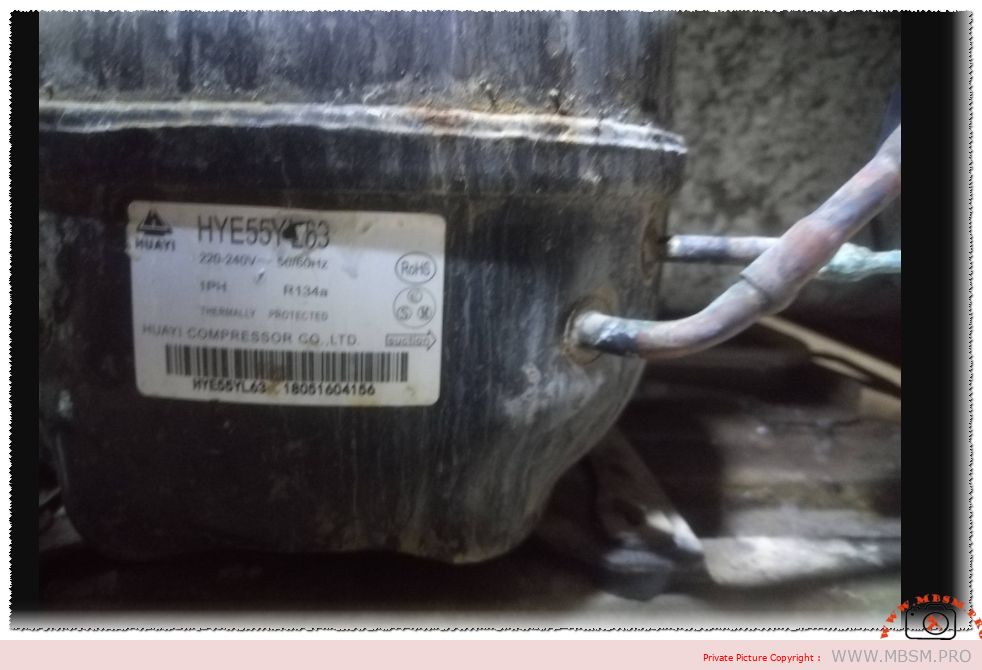
In the demanding world of domestic refrigeration, the choice of a compressor determines the longevity and efficiency of the appliance. Two of the most prominent contenders for the 14-foot Kiriazi and similar medium-sized refrigerators are the Huayi HYE55YL63 and the ZMC EGM60AF. Both are engineered for Low Back Pressure (LBP) applications using R134a gas, but they offer distinct technical nuances that every field technician and engineer should understand.
The Huayi HYE55YL63 is a compact powerhouse with a 5.5cc displacement, optimized for balanced energy consumption. In contrast, the ZMC EGM60AF is often viewed as a slightly more robust alternative, providing a higher cooling capacity and a larger oil reservoir, which can be advantageous in high-ambient temperature environments. Understanding the intersection of these two models is essential for achieving “first-time-right” repairs.
Comprehensive Technical Comparison Table
Feature
Huayi HYE55YL63
ZMC EGM60AF
Model
HYE55YL63
EGM60AF
Utilisation (LBP)
LBP (Low Back Pressure)
LBP (Low Back Pressure)
Horsepower (HP)
1/5 HP
1/5 HP (High Efficiency)
Refrigerant Type
R134a
R134a
Cooling Capacity (-23.3°C)
155 W (529 BTU/h)
182 W (621 BTU/h)
Displacement
5.5 cm³
6.0 cm³
Oil Type and Quantity
POE / 200 cm³
Ester / 270 cm³
Motor Type
RSCR
RSIR / RSCR
Power Supply
220-240V / 50Hz
220-240V / 50Hz
LRA (Locked Rotor Amps)
6.5 A
11.72 A
Weight
7.9 kg
8.58 kg
Winding Material
Copper
Copper
Performance Dynamics: Why the EGM60AF Packs a Punch
While both compressors are rated at 1/5 HP, the ZMC EGM60AF features a larger cylinder volume of 6.0cc compared to the 5.5cc of the Huayi model. This translates directly into a higher mass flow of refrigerant.
Key Differences in Field Performance:
Pull-Down Time: The EGM60AF typically achieves the set-point temperature faster in a 14-foot cabinet due to its higher BTU/h output.
Thermal Stability: With a 270 cm³ oil charge, the ZMC model offers superior lubrication and cooling for the internal mechanical parts, making it more resilient during long run cycles in summer.
Efficiency: The Huayi HYE55YL63 often runs at a lower amperage (approx. 0.7A) compared to the EGM60AF, making it the preferred choice for energy-sensitive applications where a lighter load is sufficient.
Compressor Cross-Reference & Replacement Guide
For professionals looking to swap these units, the following models provide compatible cooling curves and physical footprints.
Top 5 Replacements (R134a Gas)
Embraco: EMT55HLP (1/5 HP – Standard)
Secop / Danfoss: TLES5.7FT.3 (High efficiency)
Jiaxipera: N1112GZ (Standard Chinese replacement)
Cubigel: GL60AA (Direct equivalent to EGM60AF)
Tecumseh: THB1350YS (Reliable performance)
Top 5 Replacements (Alternative R600a Gas)
Important: Only use these if converting the entire system including capillary and dryer.
Huayi: HYE60MT
Embraco: EMX55CLC
ZMC: EGL60AF (R600a version)
Secop: TLES5.7KK.3
Donper: S65CY
Expert Recommendations for the Field
As a field engineer who has handled hundreds of Kiriazi 14-foot units, I strongly advise the following during installation:
Capillary Matching: If upgrading from a 5.5cc to a 6.0cc compressor, ensure your capillary tube is not restricted. A slight increase in capacity may lead to higher discharge pressures if the condenser is not kept clean.
Capacitor Utility: The Huayi model performs best with a 3µF to 5µF run capacitor. This stabilizes the motor torque and protects the windings from “stalling” during hot restarts.
The Vacuum Rule: R134a systems are highly sensitive to moisture. Always pull a vacuum below 500 microns to prevent the POE/Ester oil from turning acidic, which will eventually eat through the copper windings.
Focus Keyphrase: Huayi HYE55YL63 vs ZMC EGM60AF Compressor Review
SEO Title: Huayi HYE55YL63 vs ZMC EGM60AF: 1/5 HP Compressor Technical Battle
Meta Description: Compare technical specs of Huayi HYE55YL63 and ZMC EGM60AF compressors. Find cooling capacity, displacement, and the best choice for Kiriazi 14-foot refrigerators.
Excerpt: The Huayi HYE55YL63 and ZMC EGM60AF are two industry-standard 1/5 HP compressors used in domestic refrigerators. While both utilize R134a refrigerant, they differ in displacement and oil capacity. This technical review compares their performance curves and cooling capacities to help technicians select the ideal replacement for Kiriazi and other 14-foot refrigerators.
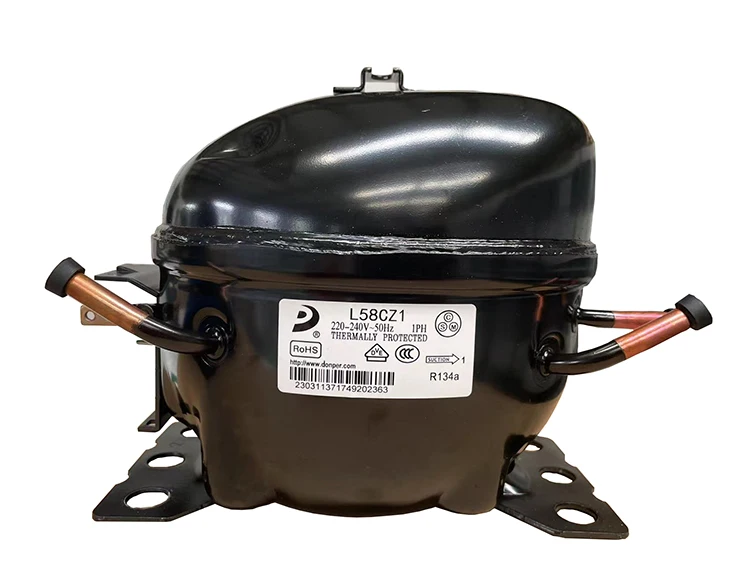
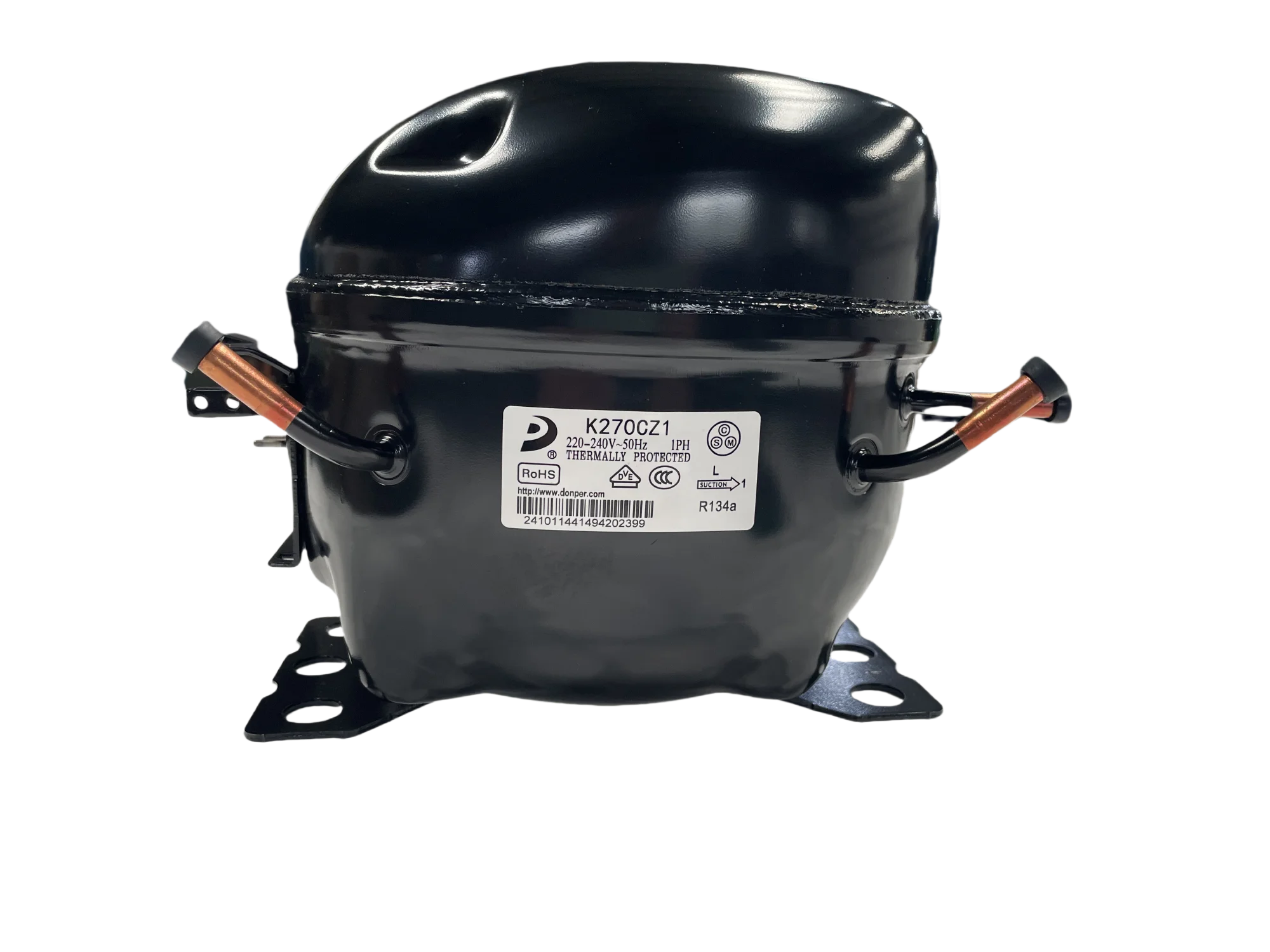
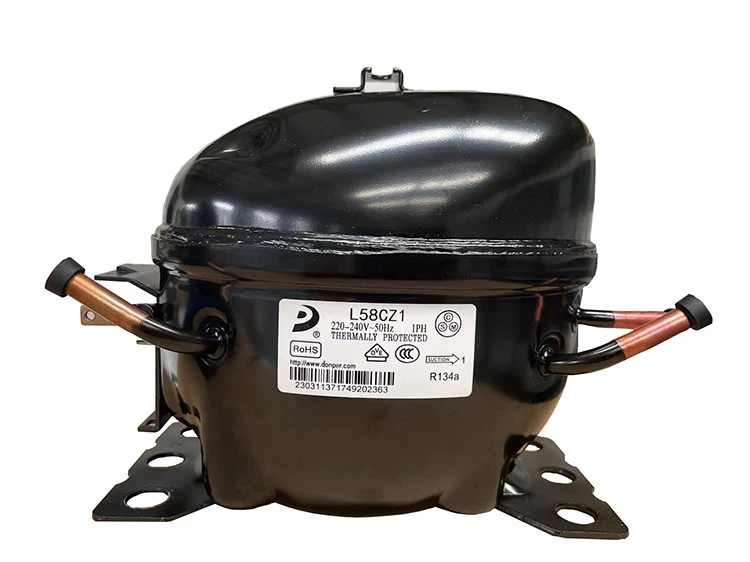
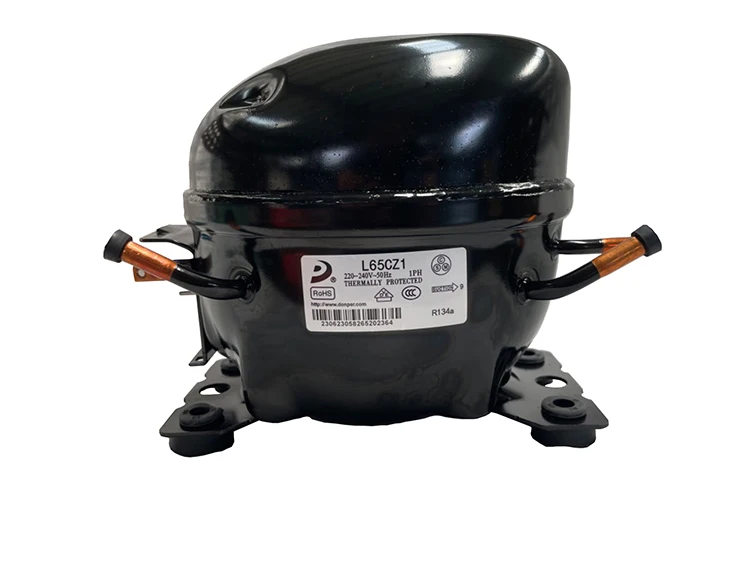
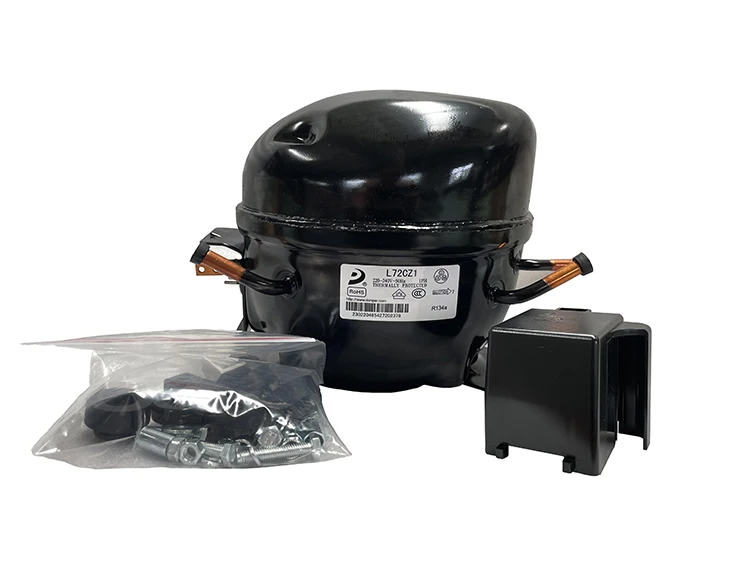
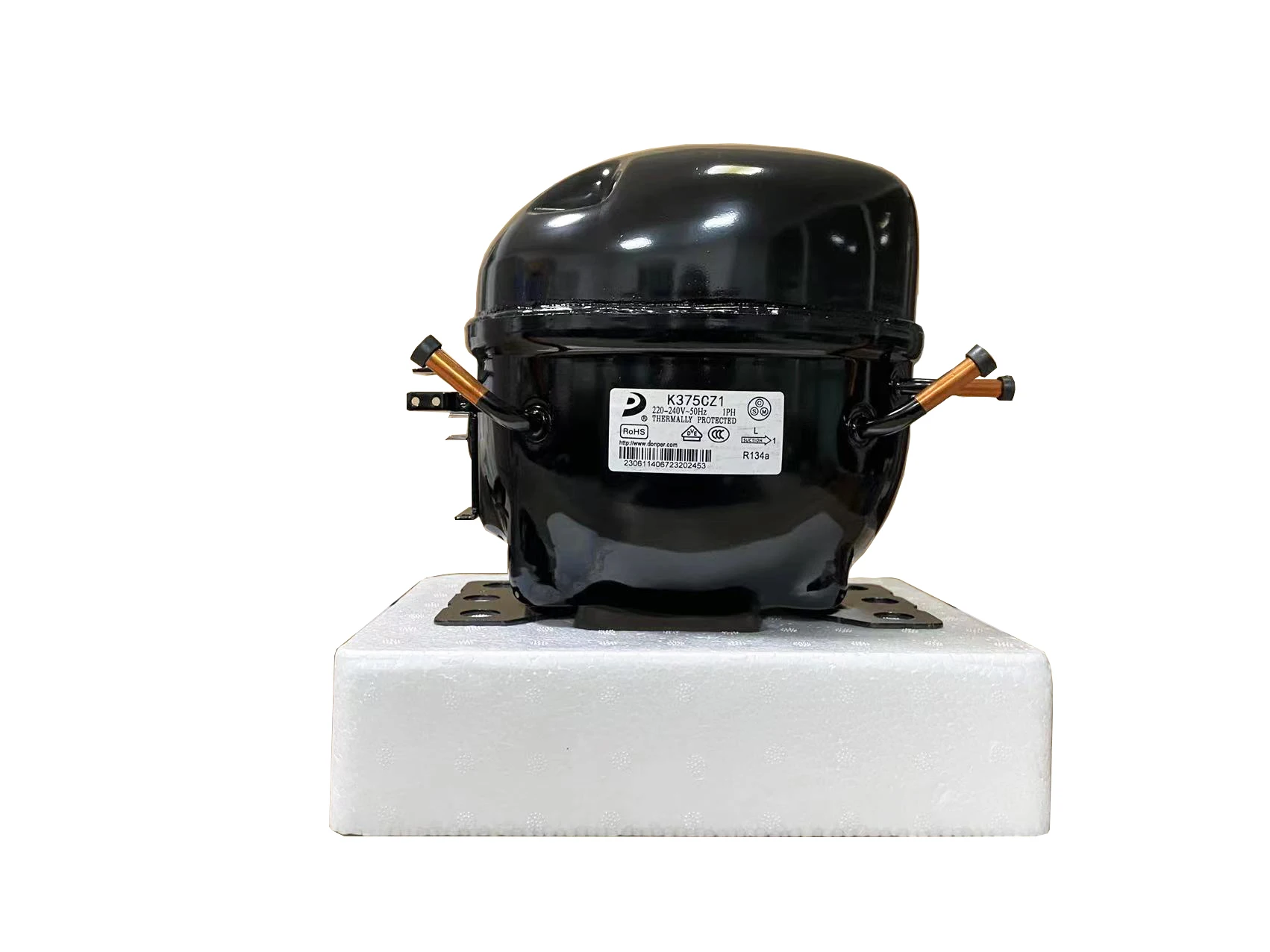
Mbsmpro.com, Compressor, Donper, R134a, 1/6 hp to 1/2 hp, K and L Series, Cooling, Technical Data
In the HVAC and refrigeration industry, the Donper brand has become a synonymous name for reliability and cost-effective performance. Specializing in hermetic reciprocating technology, Donper’s R134a lineup—specifically the L-series and K-series—covers the vast majority of domestic and light commercial needs. From a small 1/6 HP refrigerator to a robust 1/2 HP commercial chest freezer, these compressors are engineered to handle varying thermal loads with consistent efficiency.
As a field technician or engineer, selecting the correct replacement or designing a system requires more than just knowing the horsepower. It requires a deep dive into displacement, motor torque, and winding characteristics. Below, we provide the definitive technical breakdown of the most common Donper R134a models.
Comparative Analysis: The Donper R134a Series
The transition from the L-series to the K-series marks a shift from residential “static” cooling to more demanding commercial “forced-air” or high-capacity “static” cooling. While the L58CZ1 is the quiet heart of a kitchen fridge, the K375CZ1 is the workhorse of the supermarket display.
Model
HP
Displacement (cc)
Cooling Cap (W)
Efficiency (W/W)
Motor Type
L58CZ1
1/6
5.8
140
1.15
RSIR
L65CZ1
1/5
6.5
165
1.20
RSIR
L72CZ1
1/4
7.2
195
1.25
RSIR/RSCR
K270CZ1
1/3
9.5
270
1.30
RSCR
K375CZ1
1/2
12.5
375
1.35
CSIR
Detailed Technical Data Sheets
Below are the exhaustive specifications for each model mentioned. This data is critical for calculating capillary tube lengths and ensuring electrical compatibility.
1. Donper L-Series (Domestic Focus)
Feature
L58CZ1 (1/6 HP)
L65CZ1 (1/5 HP)
L72CZ1 (1/4 HP)
Utilisation
LBP
LBP
LBP
Domaine
Cooling / Freezing
Cooling / Freezing
Cooling / Freezing
Oil Type / Qty
POE – 180ml
POE – 200ml
POE – 210ml
Power Supply
220-240V 50Hz
220-240V 50Hz
220-240V 50Hz
Cooling Capacity
478 BTU/h
563 BTU/h
665 BTU/h
Motor Type
RSIR
RSIR
RSIR/RSCR
Winding Material
Copper
Copper
Copper
Pressure Charge
100-120 PSI (Static)
100-120 PSI (Static)
110-130 PSI (Static)
Capillary (Typical)
0.028″ x 3m
0.031″ x 3m
0.036″ x 3m
Fan Required
No (Static)
No (Static)
Optional
LRA (Amps)
6.5 A
8.0 A
9.5 A
Capacitor
N/A
N/A
4-5 µF (if RSCR)
2. Donper K-Series (Commercial Focus)
Feature
K270CZ1 (1/3 HP)
K375CZ1 (1/2 HP)
Utilisation
LBP / MBP
LBP / MBP
Domaine
Large Freezing
Commercial Freezing
Oil Type / Qty
POE – 250ml
POE – 300ml
Power Supply
220-240V 50Hz
220-240V 50Hz
Cooling Capacity
921 BTU/h
1280 BTU/h
Motor Type
RSCR
CSIR (Start Cap)
Winding Material
Copper
High-Temp Copper
Pressure Charge
120-140 PSI (Static)
140-160 PSI (Static)
Capillary (Typical)
0.042″ x 2.5m
0.050″ x 2.5m
Fan Required
Recommended
Yes (Forced Air)
LRA (Amps)
12.0 A
18.0 A
Capacitor
6 µF (Run)
60-80 µF (Start)
Cross-Reference & Replacement Guide
When the exact Donper model is unavailable, the following industry-standard alternatives can be utilized. Ensure you verify the mounting foot dimensions as they may vary slightly between brands.
5 Alternative Gas Replacements (System Flush Required)
Donper (R600a): D65CY1 (for 1/5 HP applications)
Secop (R290): NLE11KK (High Efficiency)
Embraco (R600a): EMX3115Y
Cubigel (R290): GLY12RA
LG (R600a): BSA075LHE
Engineering Best Practices & Maintenance
Expert Advice: The K375CZ1 (1/2 HP) generates significant heat during the compression cycle. If installing this in a confined space, a condenser fan is non-negotiable. Lack of airflow will lead to oil carbonization and premature valve failure.
Vacuuming: Always pull a vacuum down to 500 microns. R134a uses POE oil, which is highly hygroscopic (absorbs moisture). Moisture in the system leads to acid formation that eats through copper windings.
Capillary Match: When moving from a 1/6 HP to a 1/4 HP compressor, you must resize the capillary tube. Using an undersized capillary will cause high head pressure and trip the thermal overload protector.
Relay Testing: If the compressor fails to start but hums, check the PTC relay or the Start Capacitor (on 1/2 HP models). Donper relays are standardized, but always match the Ohm resistance of the original part.
SEO Title: Mbsmpro.com, Compressor, Donper, R134a, 1/6 hp to 1/2 hp, K and L Series, Cooling, Technical Data
Meta Description: Full technical data sheets for Donper R134a compressors: L58CZ1 (1/6HP), L65CZ1 (1/5HP), L72CZ1 (1/4HP), K270CZ1 (1/3HP), and K375CZ1 (1/2HP). Includes cross-reference and wiring tips.
Excerpt: Donper has established itself as a powerhouse in the hermetic compressor industry, providing reliable cooling solutions for domestic and light commercial applications. This technical analysis explores the R134a L and K series, ranging from 1/6 HP to 1/2 HP, offering engineers and technicians the critical data needed for successful repairs and system optimizations.
Donper Series – R134a Refrigerant (LBP, 220V/50Hz)
These models feature aluminum windings (Al-wire) and are designed for Low Back Pressure (LBP) applications.
Model
Power (HP)
Cooling Capacity (W)
Power Supply
Wire Type
S53CW1
1/8 HP
135W
220V/50Hz
Aluminum
L58CZ1
1/6 HP
145W
220V/50Hz
Aluminum
L65CZ1
1/5 HP
170W
220V/50Hz
Aluminum
L72CZ1
1/4 HP
195W
220V/50Hz
Aluminum
L76CZ1
1/4 HP+
215W
220V/50Hz
Aluminum
K230CZ1
1/4 HP+
230W
220V/50Hz
Aluminum
K270CZ1
1/3 HP
270W
220V/50Hz
Aluminum
K325CZ1
1/3 HP
325W
220V/50Hz
Aluminum
Donper Series – R600a Refrigerant (LBP, 220V/50Hz)
Models optimized for Isobutane (R600a), also using aluminum motor windings.
Model
Power (HP)
Cooling Capacity (W)
Power Supply
Wire Type
A120CY1T
1/8 HP
118W
220V/50Hz
Aluminum
A145CY1A
1/6 HP
138W
220V/50Hz
Aluminum
S100CY1
1/5 HP
168W
220V/50Hz
Aluminum
S118CY1
1/4 HP
200W
220V/50Hz
Aluminum
L140CY1
1/4 HP+
235W
220V/50Hz
Aluminum
Technical Definitions
LBP (Low Back Pressure): Optimized for low evaporating temperatures (typically -35°C to -10°C), making them ideal for household freezers and refrigerators.
Cooling Capacity (W): Measured in Watts, representing the amount of heat the compressor can remove per hour under standard test conditions (ASHRAE).
Al-wire (Aluminum Wire): A cost-effective alternative to copper. While lighter, it requires specific handling during repair and is generally found in “entry-level” or standard domestic units.
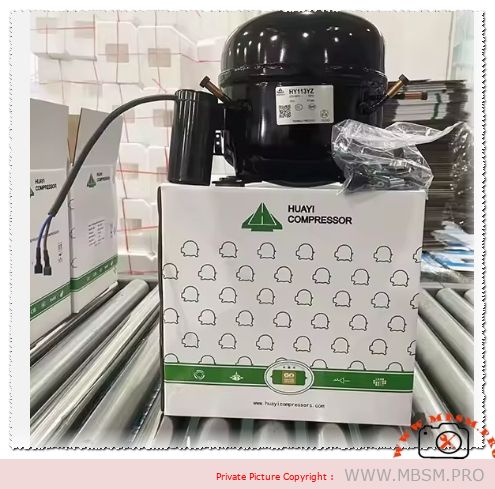
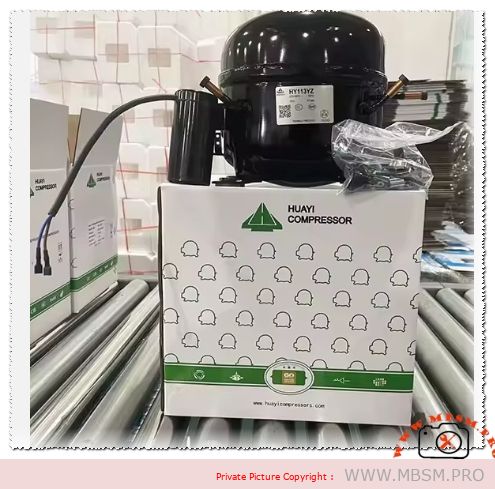
Professional technical guide for HUAYI compressors. Detailed data for HYS and HYE series, including HP, cooling capacity, and equivalents. Expert analysis for HVAC technicians.
The HUAYI compressor lineup, featuring the HYS and HYE series, is a cornerstone in modern domestic refrigeration. These Low Back Pressure units utilize R134a and R600a refrigerants to provide efficient cooling for household freezers and refrigerators. Designed for durability and high performance, they offer professional-grade solutions for various cooling capacities from 1/10 to 1/3 horsepower.
Technical Data Sheet: HUAYI Compressor Series
Feature
Detailed Specification
Model
HUAYI HYS/HYE Series (e.g., HYS60, HYE90)
Utilisation (mbp/hbp/lbp)
LBP (Low Back Pressure)
Domaine (Freezing/Cooling)
Freezing / Deep Cooling
Oil Type and Quantity
POE/Mineral (160ml – 220ml depending on model)
Horsepower (HP)
1/10 HP to 1/3 HP
Refrigerant Type
R134a (HYS) / R600a (HYE)
Power Supply
1Ph / 220-240V / 50Hz
Cooling Capacity BTU
380 – 800 BTU/h (Range across models)
Motor Type
RSIR / RSCR
Displacement
4.5 cm³ to 15.3 cm³
Winding Material
High-Quality Copper
Pression Charge
0.5 – 1.2 Bar (Suction Side)
Capillary
0.026″ to 0.031″ (Application dependent)
Refrigerator Models
Samsung, LG, Whirlpool, Beko, and Generic brands
Temperature Function
-35°C to -10°C
With Fan or No
Static Cooling (No fan required for most)
Commercial or No
Domestic / Light Commercial
Amperage in Function
0.6A – 1.3A
LRA (Locked Rotor Amps)
5.0A – 9.0A
Type of Relay
PTC Start Relay
Capacitor and Value
Optional (3µF – 5µF for RSCR models)
5 Compressor Replacements (Same Gas – R134a/R600a):
ACC / Secop GVY57AA (R134a)
Embraco EMT6170Z (R134a)
Danfoss TLS6F (R134a)
Panasonic QB66C13GAX5 (R600a)
Jiaxipera N1113Y (R600a)
5 Compressor Replacements (Alternative Gas Equivalents):
Secop TLY8.7KK.3 (Transition to R600a)
Embraco EMX46CLC (Transition to R600a)
Donper LU111CY (High efficiency R600a)
Cubigel GL60AA (Standard R134a)
Samsung SD162 (Reliable R134a alternative)
Technical Analysis: The Engineering Behind HUAYI Refrigeration
In the field of appliance repair and HVAC engineering, HUAYI has become a household name—not just for their availability, but for their consistent performance in tropical climates. Whether you are dealing with the HYS series (R134a) or the newer, eco-friendly HYE series (R600a), understanding the internal mechanics is key to a long-lasting repair.
Comparison: R134a vs. R600a Performance
While the HYS60 (1/5 HP) is a classic workhorse, the industry shift toward HYE90 (1/4 HP R600a) reflects a move toward thermodynamic efficiency. R600a (Isobutane) operates at lower pressures, which reduces the load on the compressor valves and extends the lifespan of the motor. However, from an engineering standpoint, R600a requires a larger displacement (9.0 cm³ vs 6.0 cm³) to achieve similar cooling capacity to its R134a counterparts.
Winding and Electrical Configuration
As an expert who has handled these units on the bench, I can confirm that the HUAYI motor design usually follows a RSIR (Resistive Start-Inductive Run) or RSCR (Resistive Start-Capacitive Run) configuration.
Wiring Schema for HUAYI PTC Relay:
Common (C): Top Pin (Connected to Overload Protector).
Main/Run (R): Right Bottom Pin.
Start (S): Left Bottom Pin. For RSCR models, the capacitor is bridged between the Start and Run pins to improve torque and energy consumption.
Engineering Values: Comparison Table
Model
HP
Displacement (cm³)
Capacity (W)
Efficiency (W/W)
HYS45
1/8
4.5
110
1.15
HYS55
1/6
5.5
135
1.20
HYE81
1/5+
8.1
145
1.45
HYE131
1/3
13.1
225
1.38
Pro Tips for Field Installation
Notice: When replacing an R134a compressor with an R600a unit, you must change the filter drier and perform a nitrogen purge. R600a is highly sensitive to residual moisture.
Benefit: Using the HYE series (RSCR) with a dedicated run capacitor can reduce electricity consumption by up to 15% compared to standard RSIR units.
Safety: Always verify the LRA (Locked Rotor Amps). If the compressor fails to start under load, check the PTC relay resistance. A standard HUAYI PTC should read between 15 and 30 Ohms at room temperature.
Final Verdict
The HUAYI series offers a versatile range for the artisan. While the HYS models are robust and “forgiving” regarding slightly imperfect vacuums, the HYE series is the future of high-efficiency domestic freezing. When in doubt, always size your compressor based on the Displacement (cm³) and Cooling Capacity (Watts) at -23.3°C to ensure the evaporator remains fully flooded without liquid slugging returning to the compressor.