Cubigel ML90FB 1/3 HP R404A LBP Compressor Specifications, Performance, and Replacements
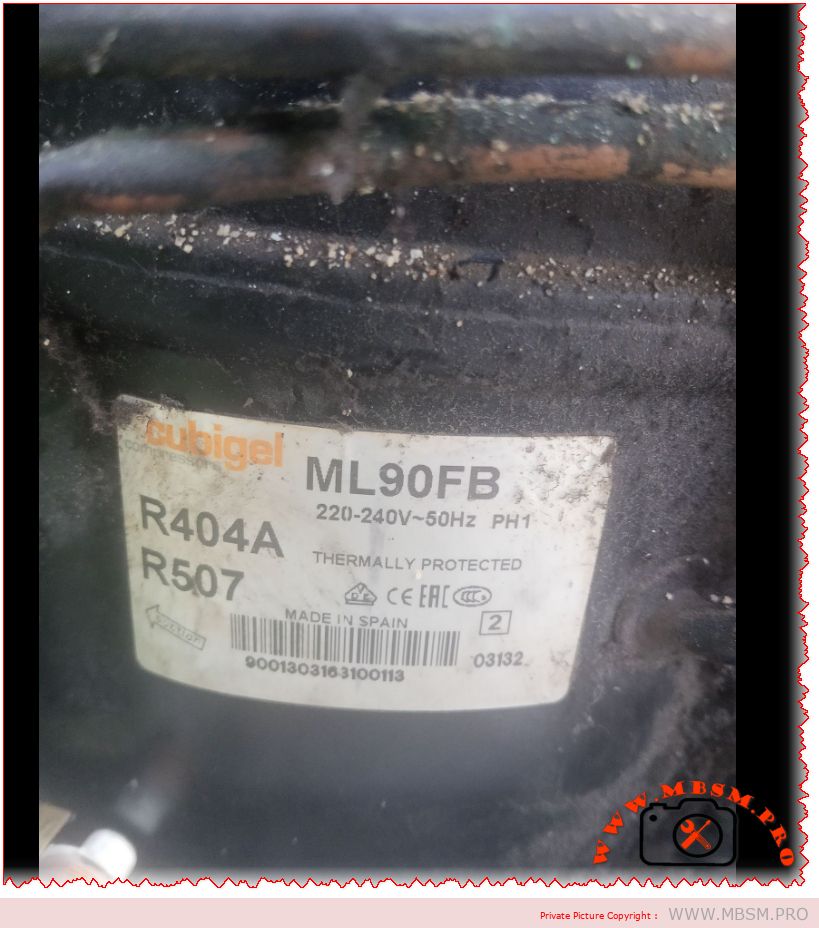
Model: ML90FB
Utilisation (mbp/hbp/lbp): LBP
Domaine (Freezing/Cooling): Freezing
Cooling wattage at -23°C: 407 W
cubic feet can this compressor cool?: 15-20 cu ft
Litres can this compressor cool?: 425-566 L
Kcal/h: 350
Oil Type and quantity: ISO VG 46 ESTER, 400 cm³
Horsepower (HP): 1/3
Refrigerant Type: R404A/R507
Power Supply: 220-240V 50Hz 1Ph
Cooling Capacity BTU: 1389
Motor Type: CSIR
Displacement: 8.86 cm³
Winding Material: Copper
Pression Charge: 400 cm³ oil charge
Cappilary: Capillary tube or expansion valve
Modele Frigo or refregirator can work with this compressor: Electrolux models, Polaris refrigeration units, Framec freezers, Mondial Framec commercial cabinets
Temperature function: -40°C to -10°C
with fan or no: With fan
Commercial or no: Commercial
Amperage in function: 2.3 A
Lara: 12.2 A
Type of relay: Overload protector relay (MRA38084 T0102)
Capacitor or no and valeur: Yes, starting capacitor 47-56 μF 330 V
Country of origin and exporting countries: Spain, exported to Europe, North America, Middle East, Africa

5 Compressor remplacement in same valeur in same gaz: Danfoss SC12CL, Embraco NEK6210GK, Tecumseh CAE2420Z, Secop SC12CL, Aspera NEK6210Z
5 Compressor remplacement in same valeur in oTHer gaz: Cubigel ML90TB (R134a), Embraco NEK6210U (R290), Danfoss SC12G (R134a), Tecumseh AE4440Y (R134a), Secop NL8.4MF (R600a)

Mbsmpro.com, Compressor, ML90FB, 1/3 hp, Cubigel, Freezing, R404A/R507, 407 W, 2.3 A, 1Ph 220-240V 50Hz, LBP, CSIR, −40°C to −10°C, freezing

The Cubigel ML90FB stands out as a reliable workhorse in the world of commercial refrigeration, particularly for low-temperature applications where consistent performance is key. Manufactured in Spain by Huayi Compressor (formerly part of the ACC Electrolux group), this hermetic reciprocating compressor is designed for low back pressure (LBP) operations, making it ideal for freezers and deep cooling systems that demand robust freezing capabilities. With a displacement of 8.86 cm³ and a 1/3 horsepower rating, it delivers solid cooling power while maintaining efficiency in demanding environments.
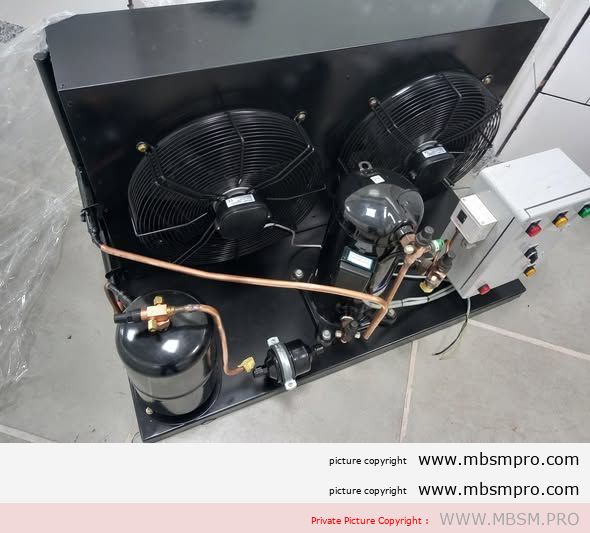
At its core, the ML90FB uses R404A or R507 refrigerants, which are well-suited for commercial freezing tasks. Its CSIR motor configuration ensures a strong start, supported by a starting capacitor in the 47-56 μF range at 330 V. The unit runs on a single-phase 220-240V 50Hz supply, drawing about 2.3 amps under nominal conditions, with a locked rotor amperage of 12.2 A. The internal windings are copper for better conductivity, with main winding resistance at 8.42 ohms and start winding at 29.75 ohms, all measured at 25°C. Oil lubrication comes from 400 cm³ of ISO VG 46 ester oil, which pairs perfectly with the refrigerants to minimize wear and enhance longevity.

One of the standout features is its fan-cooled design, which helps dissipate heat effectively, allowing operation in ambient temperatures up to 43°C. This makes it versatile for various setups, from standalone freezers to integrated commercial cabinets. The compressor supports capillary tube or expansion valve systems for precise refrigerant flow, ensuring optimal pressure management across its evaporating temperature range of -40°C to -10°C.

To give a clear picture of its performance, here’s a table outlining efficiency metrics at a standard condensing temperature of 55°C, based on ASHRAE test conditions. Note that for evaporating temperatures above -10°C, the compressor is outside its optimal LBP range, so values are extrapolated or marked as not applicable (N/A) where data isn’t reliable.

Evaporating Temp (°C) Cooling Capacity (Watts) Power Consumption (Watts) COP
-30 279 286 0.98
-25 372 333 1.12
-23.3 407 350 1.16
-20 480 384 1.25
-15 605 440 1.38
-10 744 500 1.49
0 N/A (extrapolated ~950) N/A (extrapolated ~580) N/A
4 N/A N/A N/A
10 N/A N/A N/A

This table highlights how the ML90FB excels in deep freezing scenarios. For instance, at -23.3°C, it achieves a COP of 1.16, meaning it delivers over one watt of cooling per watt of input power—a respectable figure for LBP units. As temperatures rise toward -10°C, efficiency improves, but pushing beyond that could lead to reduced performance or higher wear.

Comparing the ML90FB to similar models brings its strengths into focus. Take the Embraco NEK6210GK, a direct equivalent in the R404A LBP category with roughly the same 1/3 HP rating and 8.7 cm³ displacement. The ML90FB edges out with slightly better cooling at -25°C (372 W vs. Embraco’s ~360 W under similar conditions), though the Embraco might run quieter in some setups. Against the Danfoss SC12CL, another 1/3 HP contender, the Cubigel offers comparable capacity but often at a lower amperage draw, potentially saving on energy bills in high-duty cycles. Value-wise, when stacked against Tecumseh’s CAE2420Z (similar displacement and LBP focus), the ML90FB provides a higher COP at mid-range temps like -20°C (1.25 vs. 1.20), making it more efficient for sustained freezing operations.

Shifting gears to broader comparisons, let’s look at how it fares against compressors using alternative refrigerants. For R134a systems, the Cubigel ML90TB mirrors the ML90FB’s specs but operates in medium back pressure (MBP) for cooling rather than freezing. It delivers around 500 W at -10°C but with a lower COP of about 1.3 compared to the ML90FB’s 1.49 at the same temp—highlighting the R404A model’s superiority in low-temp efficiency. In the eco-friendly R290 space, Embraco’s NEK6210U offers similar horsepower but with reduced capacity (around 350 W at -23°C vs. 407 W), though it boasts a greener footprint. Power consumption is comparable, but the ML90FB’s ester oil compatibility gives it an edge in retrofit scenarios without full system overhauls.

Benefits of the ML90FB are plenty for engineers and technicians alike. Its thermally protected design guards against overloads, and the overload relay (MRA38084 type) ensures quick response to faults, minimizing downtime in commercial settings. The compact height of about 198 mm fits snugly into tight cabinets, and its vibration-dampening mounts reduce noise—a big plus for retail environments. On the efficiency front, it can handle cabinets up to 20 cubic feet or 566 liters in freezing mode, making it perfect for ice cream dispensers, blast freezers, or medical storage units.

A few pieces of advice: Always match the capacitor value precisely to avoid starting issues, and check the relay pickup/drop-out (7.1 A/6 A) during installation. For best results, pair it with a fan for cooling, and monitor oil levels—ester oil is key for R404A compatibility, but contamination can lead to breakdowns. If retrofitting, ensure the system pressures align, as this unit’s max discharge is tuned for LBP. Notice that while it’s commercial-grade, avoid overloading in extreme ambients above 43°C to prevent efficiency drops. Overall, this compressor balances power, reliability, and efficiency, making it a smart choice for pros tackling tough freezing jobs.

Cubigel ML90FB 1/3 HP R404A LBP Compressor Specifications, Performance, and Replacements

Cubigel ML90FB Compressor: Specs, Efficiency, Comparisons & Tips

Dive into the Cubigel ML90FB 1/3 HP R404A compressor details, including performance tables, comparisons with equivalents like Embraco NEK6210GK, and practical advice for commercial freezing applications.

cubigel-ml90fb-compressor

Mbsmgroup, Mbsm.pro, mbsmpro.com, mbsm, Cubigel ML90FB, R404A compressor, LBP compressor, 1/3 HP compressor, freezing compressor, Danfoss SC12CL, Embraco NEK6210GK, Tecumseh CAE2420Z, Secop SC12CL, Aspera NEK6210Z, Cubigel ML90TB, Embraco NEK6210U, Danfoss SC12G, Tecumseh AE4440Y, Secop NL8.4MF

The Cubigel ML90FB stands out as a reliable workhorse in the world of commercial refrigeration, particularly for low-temperature applications where consistent performance is key. Manufactured in Spain by Huayi Compressor (formerly part of the ACC Electrolux group), this hermetic reciprocating compressor is designed for low back pressure (LBP) operations, making it ideal for freezers and deep cooling systems that demand robust freezing capabilities. With a displacement of 8.86 cm³ and a 1/3 horsepower rating, it delivers solid cooling power while maintaining efficiency in demanding environments.
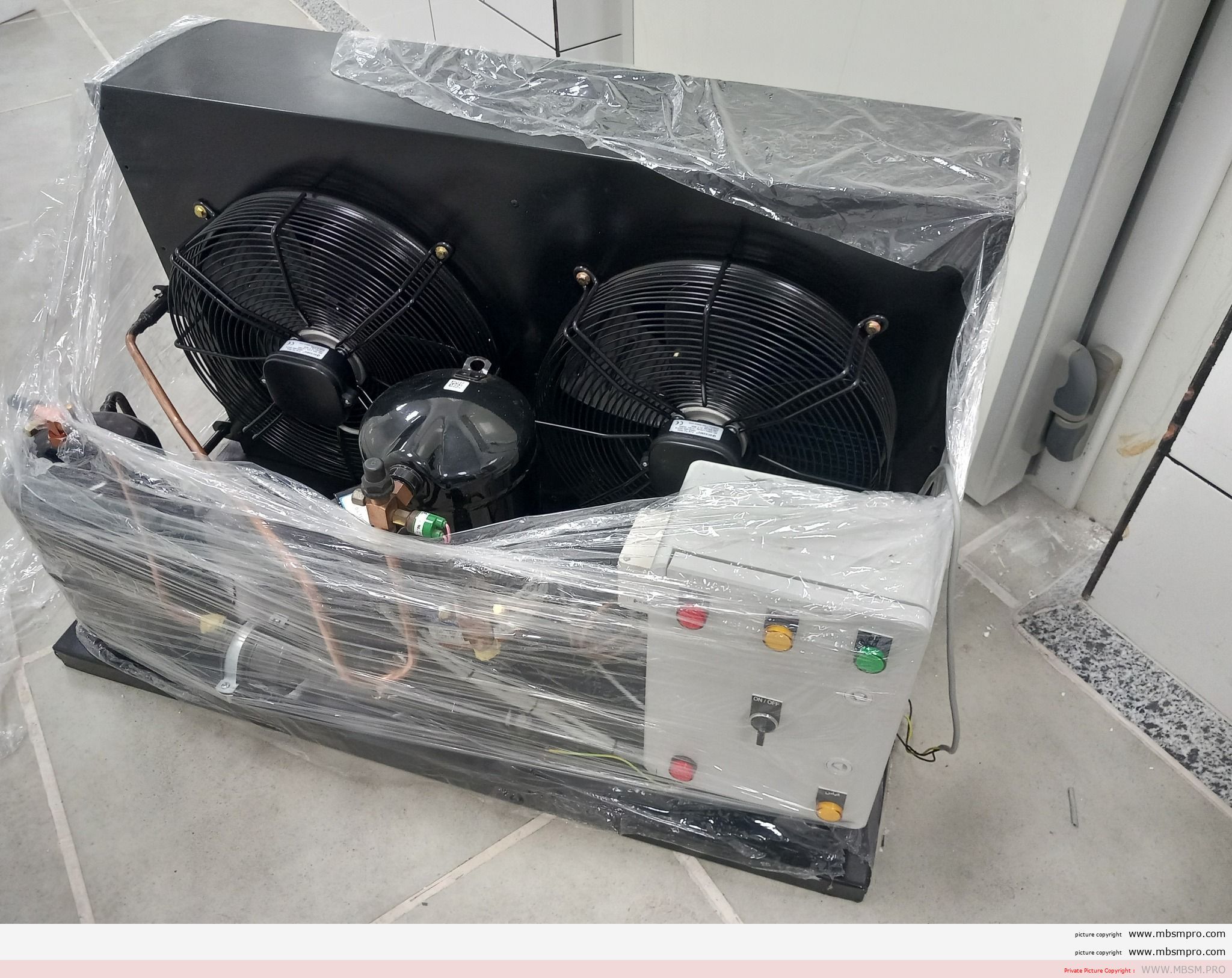
Cubigel ML90FB 1/3 HP R404A LBP Compressor Specifications, Performance, and Replacements mbsmpro
1/3 HP Compressor, Aspera NEK6210Z, Cubigel ML90FB, Cubigel ML90TB, Danfoss SC12CL, Danfoss SC12G, Embraco NEK6210GK, Embraco NEK6210U, freezing compressor, LBP compressor, mbsm, mbsm.pro, mbsmgroup, mbsmpro.com, R404A compressor, Secop SC12CL, Tecumseh AE4440Y, Tecumseh CAE2420Z


Mbsmpro.com, ZB38, 5HP, R404, MBP

ZB38 5HP R404 MBP correspond à un compresseur scroll Copeland Emerson, modèle ZB38KQE ou ZB38KCE, puissance nominale 5 HP, conçu pour le fluide frigorigène R404A et destiné au service moyenne température (MBP = Medium Back Pressure).

Caractéristiques typiques:

  • Type: Scroll hermétique Copeland série ZB38 (Emerson).
  • Puissance: 5 HP, triphasé 380–400 V (suivant version TFD-551 / -558).
  • Fluide: optimisé pour R404A (souvent aussi compatible R507A, parfois R134a selon la plaque).
  • Application: réfrigération à température moyenne (MBP / MHBP), vitrines réfrigérées, chambres froides positives, etc.
  • Déplacement volumétrique: environ 14,4 m³/h; puissance frigorifique autour de 7–11 kW selon conditions (Te/Tc).

Signification de ton code:

  • ZB38 = série de compresseurs scroll réfrigération Copeland, taille « 38 ».
  • 5HP = puissance moteur nominale.
  • R404 = fluide R404A prévu pour ce modèle.
  • MBP = utilisation en température moyenne (évaporation typique -10 °C à +5 °C pour chambres froides positives, conservateurs…).

Si tu précises les conditions de travail (Te, Tc, sous-refroidissement, surchauffe), il est possible d’estimer la capacité frigorifique exacte et vérifier si ce compresseur est adapté à ta chambre froide ou ton évaporateur actuel.

In commercial refrigeration, the compressor is more than just a component; it is the engine that decides whether a cold room runs smoothly or becomes a constant source of service calls. The ZB38 5HP R404A MBP scroll compressor is one of those models that technicians encounter again and again in supermarkets, butcheries, bakeries and restaurant cold rooms. Its popularity comes from a balance of capacity, efficiency and robustness that fits the core needs of medium-temperature systems.

What ZB38 5HP R404A MBP Really Means

When technicians talk about “ZB38 5HP R404A MBP”, they are compressing a lot of technical information into a short code.

  • ZB38: Indicates a scroll refrigeration compressor series and displacement class, typically around 5 HP in the manufacturer’s lineup.
  • 5HP: The nominal motor power, placing it in the range commonly used for medium-sized cold rooms and supermarket display lines.
  • R404A: The main refrigerant for which the compressor is optimized, historically a standard in commercial refrigeration despite ongoing phase-down discussions in many markets.
  • MBP (Medium Back Pressure): Specifies that the compressor is designed for medium-temperature applications such as positive-temperature cold rooms, fresh products, dairy and beverages, rather than deep-freeze low-temperature duties.

This decoding matters because each part of the designation tells the technician where the compressor can work safely, which refrigerant is acceptable and what kind of evaporating temperatures the system can handle without pushing the compressor beyond its envelope.

Typical Applications in the Field

A 5HP R404A MBP scroll compressor naturally positions itself in the heart of medium-sized commercial installations.

  • Cold rooms for fresh meat, fruits and vegetables, where evaporating temperatures often range roughly between −10∘C−10∘C and +5∘C+5∘C, depending on the product and humidity control strategy.
  • Supermarket wall cases and island cabinets for dairy, delicatessen and beverages, where multiple evaporators may be connected to a single condensing unit based on the ZB38 platform.
  • Food-service equipment in hotels, central kitchens and bakeries, where reliability and quick recovery after door openings are more important than extreme low temperatures.

In these contexts, the ZB38 class compressor offers enough capacity to manage a significant thermal load while remaining compact, which is crucial when equipment must fit on rooftops, balconies or tight machine rooms in dense urban environments.

Why Scroll Technology Dominates This Segment

Scroll compressors like the ZB38 have progressively replaced many traditional reciprocating models in MBP applications.

  • Fewer moving parts reduce mechanical noise, vibration and wear, which in practice often means fewer mechanical failures and smoother operation.
  • The continuous compression process delivers stable mass flow, improving evaporator performance and temperature control inside cold rooms and cabinets.
  • The compact, hermetic construction simplifies installation, reduces the risk of leaks at mechanical joints and helps manufacturers build more compact condensing units.

For technicians, scrolls are often easier to handle: electrical connections are straightforward, and the absence of complex valve mechanisms or external crankcase components shortens installation and troubleshooting time when compared with older piston designs.

Key Operating Parameters Technicians Monitor

Working with a 5HP R404A MBP compressor requires attention to several practical parameters, even if the data sheet is not in hand.

  • Evaporating temperature: Usually in the medium range, technicians watch suction pressure to ensure it stays within the recommended envelope, avoiding both overloading and poor oil return.
  • Condensing temperature: Condenser cleanliness, ambient temperature and fan control directly impact discharge pressure, compressor current and overall energy consumption.
  • Superheat and subcooling: Correct expansion valve setting and a stable liquid line temperature help prevent liquid slugging at start-up and maintain the right mass flow through the evaporator.

In practice, a well-adjusted system keeps the compressor within its design envelope during the hottest days of summer, which is often where installations in Mediterranean climates are pushed to their limits.

Installation and Start-Up Best Practices

Even the most robust compressor can fail prematurely if basic installation guidelines are ignored.

  • Cleanliness: Piping must be brazed with nitrogen purging and thoroughly evacuated to remove moisture and contaminants that can degrade oil and valves.
  • Oil management: Proper piping design, especially at the suction line and oil traps on vertical risers, ensures oil returns reliably to the compressor shell.
  • Electrical checks: Before energizing, technicians confirm supply voltage, phase sequence and proper overload protection, including verification of contactor and breaker sizing.

A disciplined start-up procedure—monitoring pressures, temperatures and compressor current over the first hour—usually reveals whether the system is healthy or if there are hidden issues like undersized condensers or incorrect charge.

Maintenance and Diagnostic Considerations

In daily practice, maintenance teams use a few key indicators to assess the health of a scroll compressor like the ZB38.

  • Noise and vibration: Changes in sound signature can announce mechanical damage, liquid return or severe gas under-cooling at the compressor.
  • Discharge line temperature: Excessive discharge temperature often points to high condensing pressure, low refrigerant charge or poor suction gas cooling.
  • Oil color and level (if visible through an indicator): Darkened or acidic oil is a clear warning that the system has experienced overheating or contamination, and that deeper corrective action is required.

Regular cleaning of condensers, checking fan operation and verifying that defrost cycles are effective in evaporators can significantly extend compressor life by keeping operating conditions within design limits.

Where This Technology Is Heading

Although R404A has long been the standard for MBP commercial applications, environmental regulations are pushing the market toward lower-GWP alternatives and redesigned compressors.
Manufacturers are gradually adapting similar 5HP scroll platforms to new blends with different pressures and glide characteristics, while technicians increasingly need to be familiar with multiple refrigerants and their specific charge and oil requirements.
For users and contractors, this transition highlights the importance of good documentation, training and practical feedback from the field—an area where communities of technicians, independent platforms such as mbsmgroup.tn and projects like mbsm.pro, mbsmgroup and mbsmpro.com can play a useful role in sharing real-world experience and solutions.

Suggested exclusive images for this topic (you can create or photograph them yourself):

  • A close-up of a 5HP scroll compressor label showing model code, refrigerant and electrical data.
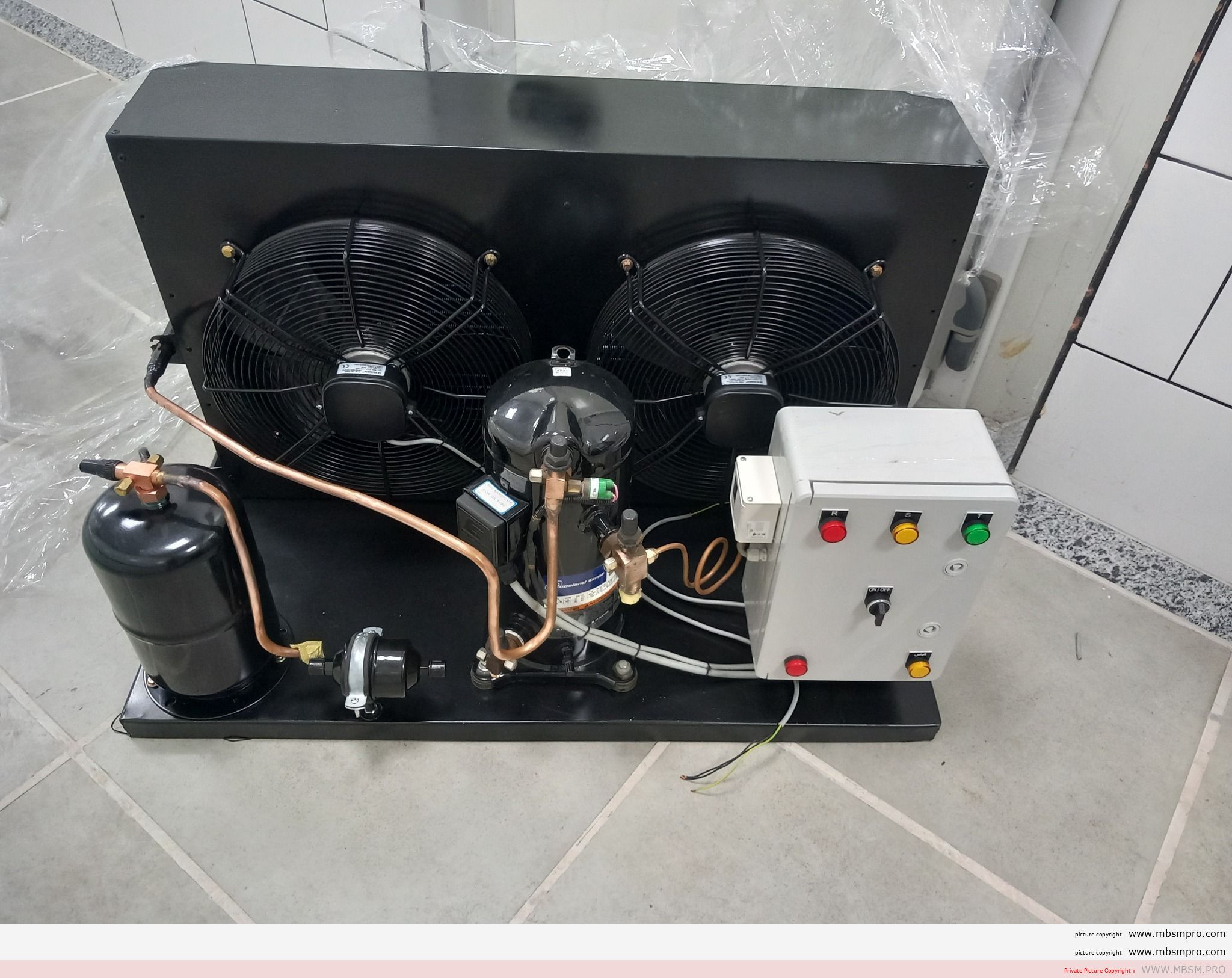
  • A medium-temperature cold room condensing unit with the compressor, condenser and control box visible on a rooftop or service balcony.
  • A technician’s hand holding clamp meter and manifold gauges connected to a running MBP R404A condensing unit.
  • A clean, well-lit cold room interior with product on shelves, showing air coolers on the ceiling and neat piping.
  • A side-by-side photo of a scroll compressor and an older reciprocating unit on a workshop floor, demonstrating the difference in size and design.