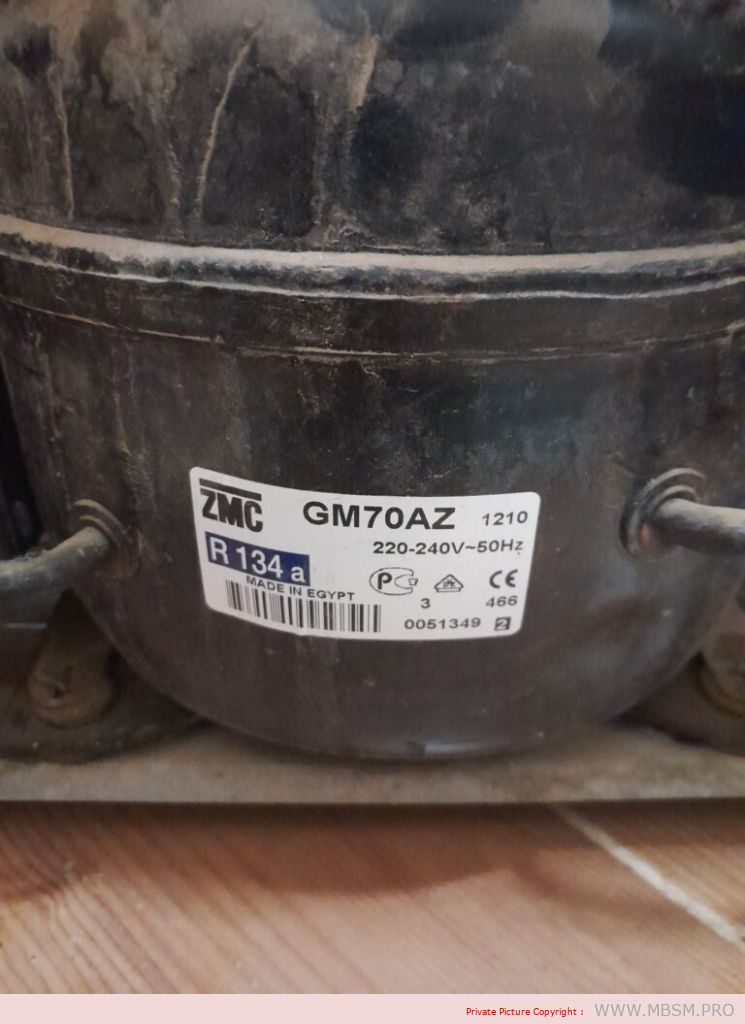
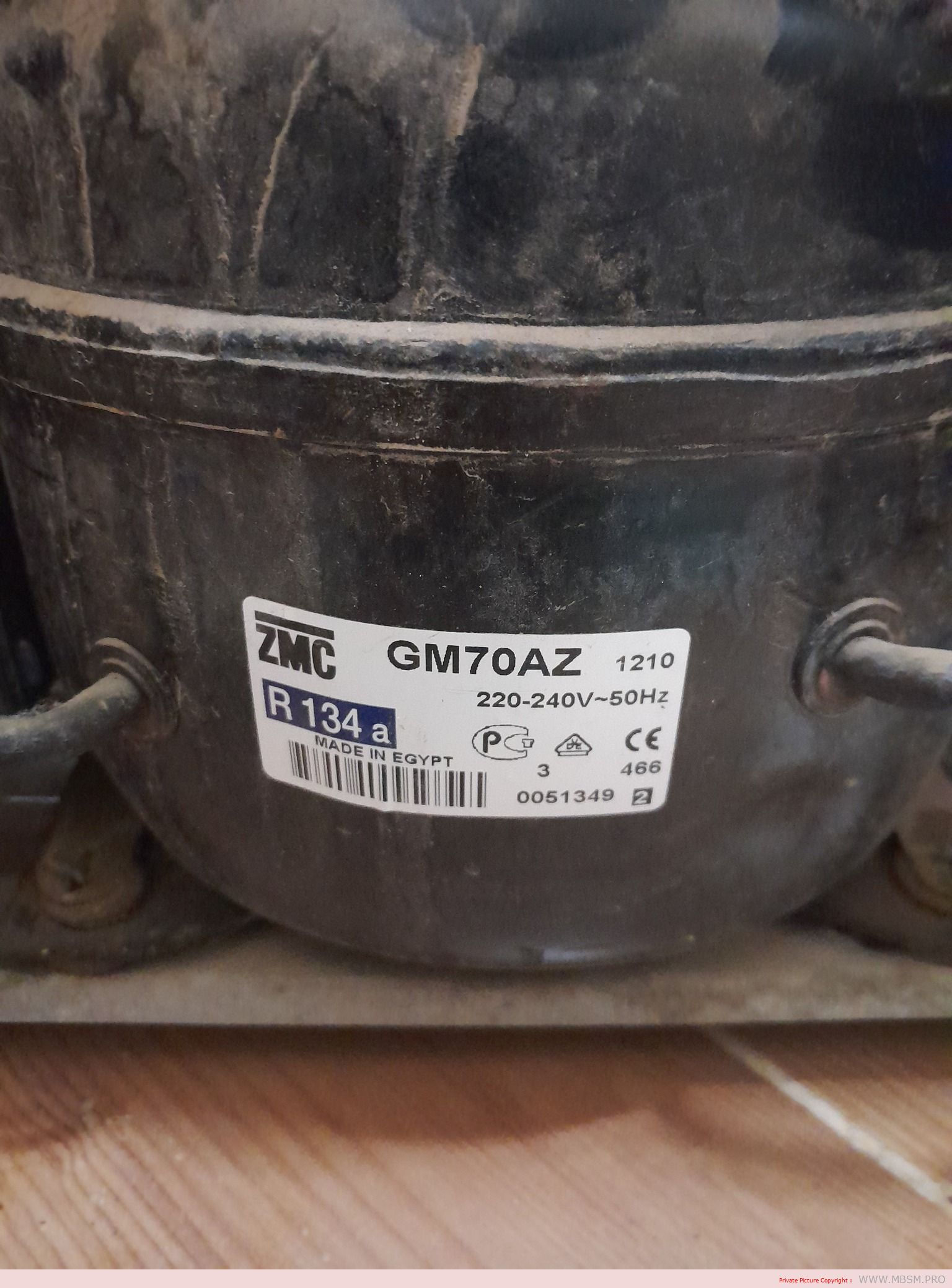
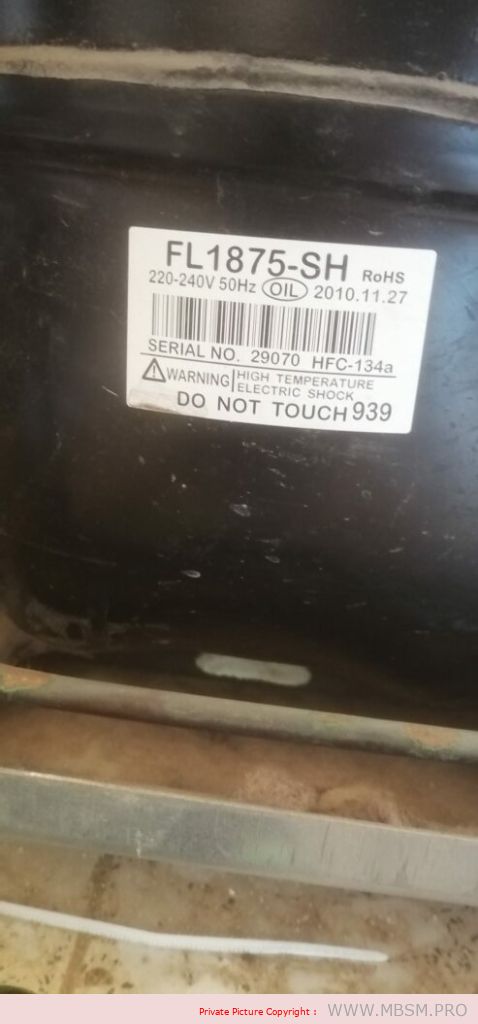
Le compresseur hermétique ZMC GM70AZ, visible sur l’étiquette de la photo, est un modèle fonctionnant au réfrigérant R134a, conçu pour les applications à basse pression d’aspiration dans le froid ménager. Fabriqué en Égypte par Misr Compressor Manufacturing Co. (ZMC), il cible les réfrigérateurs et congélateurs domestiques alimentés en 220–240 V, 50 Hz, très répandus en Afrique du Nord et au Moyen‑Orient.
Caractéristiques techniques essentielles
Le GM70AZ appartient à la famille de compresseurs LBP (Low Back Pressure), avec une plage d’évaporation typique d’environ −30 °C à −10 °C adaptée au froid négatif. Il fonctionne au réfrigérant R134a, avec un refroidissement du moteur par convection statique et une alimentation monophasée 220–240 V, 50 Hz comme indiqué sur l’étiquette.
Ce compresseur offre une puissance de l’ordre de 1/5 HP, ce qui le positionne pour des réfrigérateurs et congélateurs ménagers de petite à moyenne capacité. Il est fourni avec des connexions brasées pour aspiration, refoulement et process, ce qui facilite son intégration dans les circuits frigorifiques standards des fabricants et des ateliers de maintenance.
Les compresseurs GM70AZ et EGM70AZ s’inscrivent dans la stratégie industrielle de ZMC visant à fournir des compresseurs hermétiques compétitifs pour les fabricants de réfrigérateurs et les marchés de rechange. Grâce à leur compatibilité avec le R134a, ils restent courants dans les appareils existants, même si le secteur s’oriente progressivement vers des réfrigérants à plus faible GWP comme le R600a.
Pour les techniciens frigoristes, l’identification correcte du modèle et du gaz, comme on le voit clairement sur l’étiquette GM70AZ, est essentielle pour respecter les conditions de fonctionnement (tension, plage d’évaporation, type de détente capillaire) et garantir longévité et efficacité énergétique. Ce type de compresseur est largement utilisé dans les ateliers de service en Tunisie, en Égypte et dans la région MENA, où les pièces ZMC sont facilement disponibles.
High‑Efficiency AFT Refrigerator Compressors for Modern Cooling Needs
Introduction
Compact hermetic compressors remain the hidden workhorses of domestic and light‑commercial refrigeration, and the new AFT range shown here illustrates how far this technology has evolved in terms of efficiency, reliability and refrigerant flexibility. Designed for 220–240 V, 50/60 Hz operation, these units target fridge, freezer and beverage cooler manufacturers seeking cost‑effective performance in small capacities.
Product overview
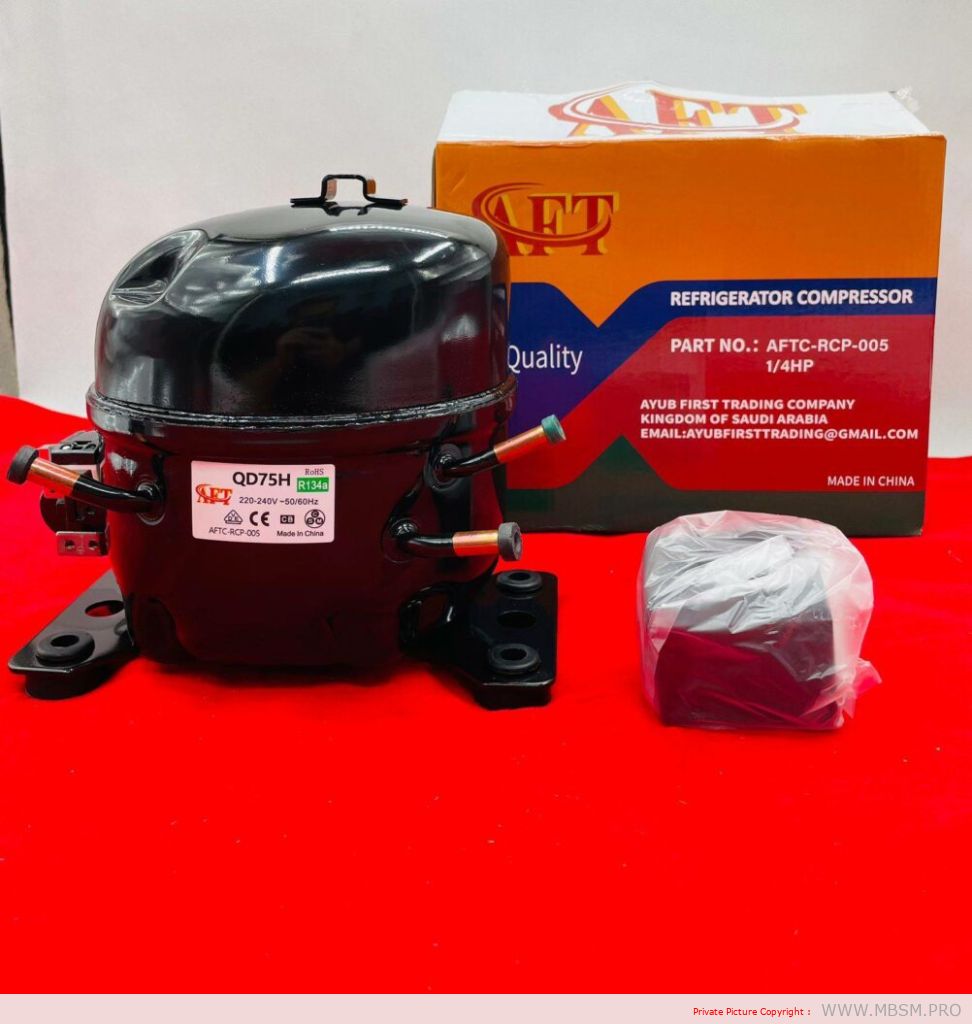
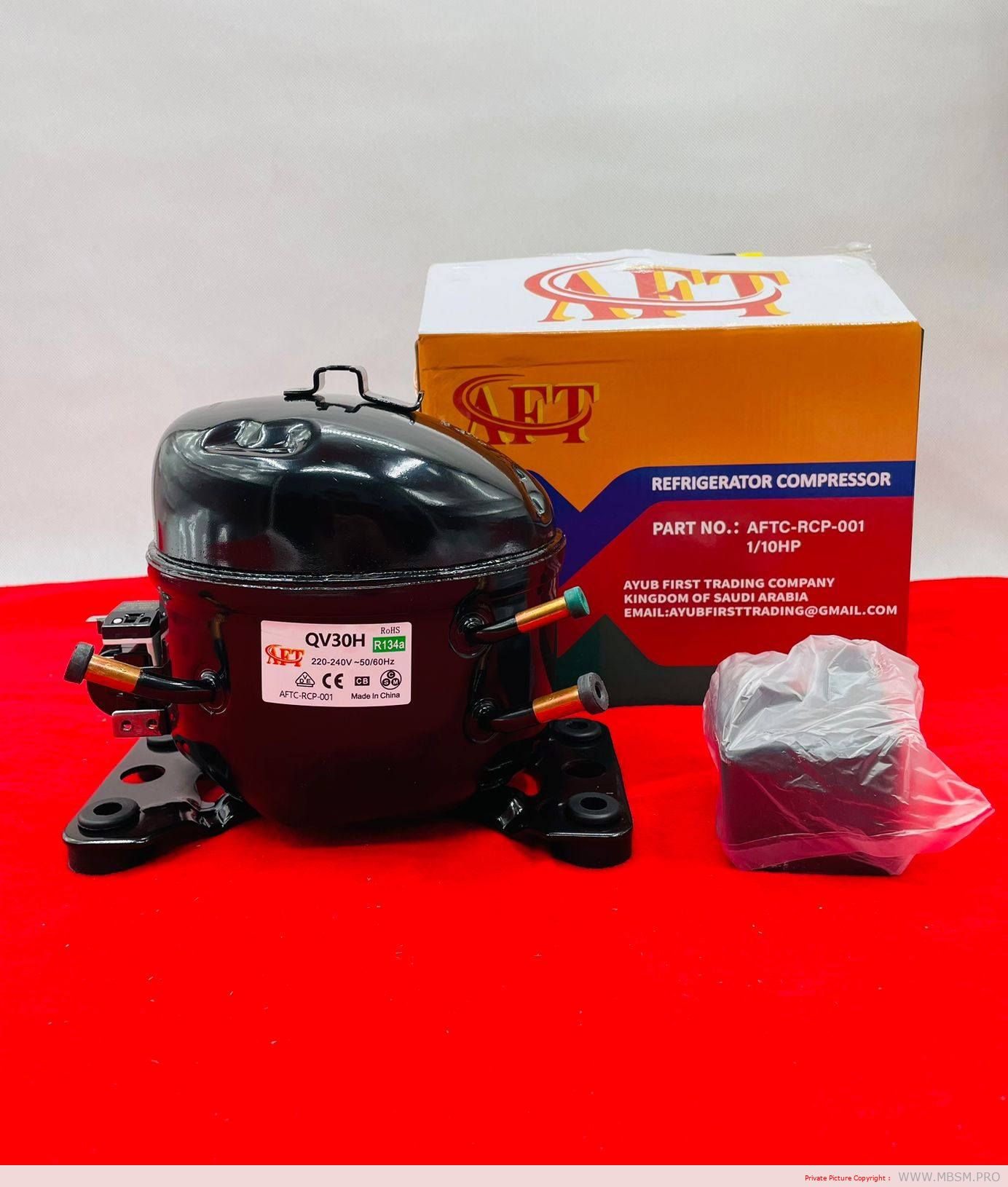
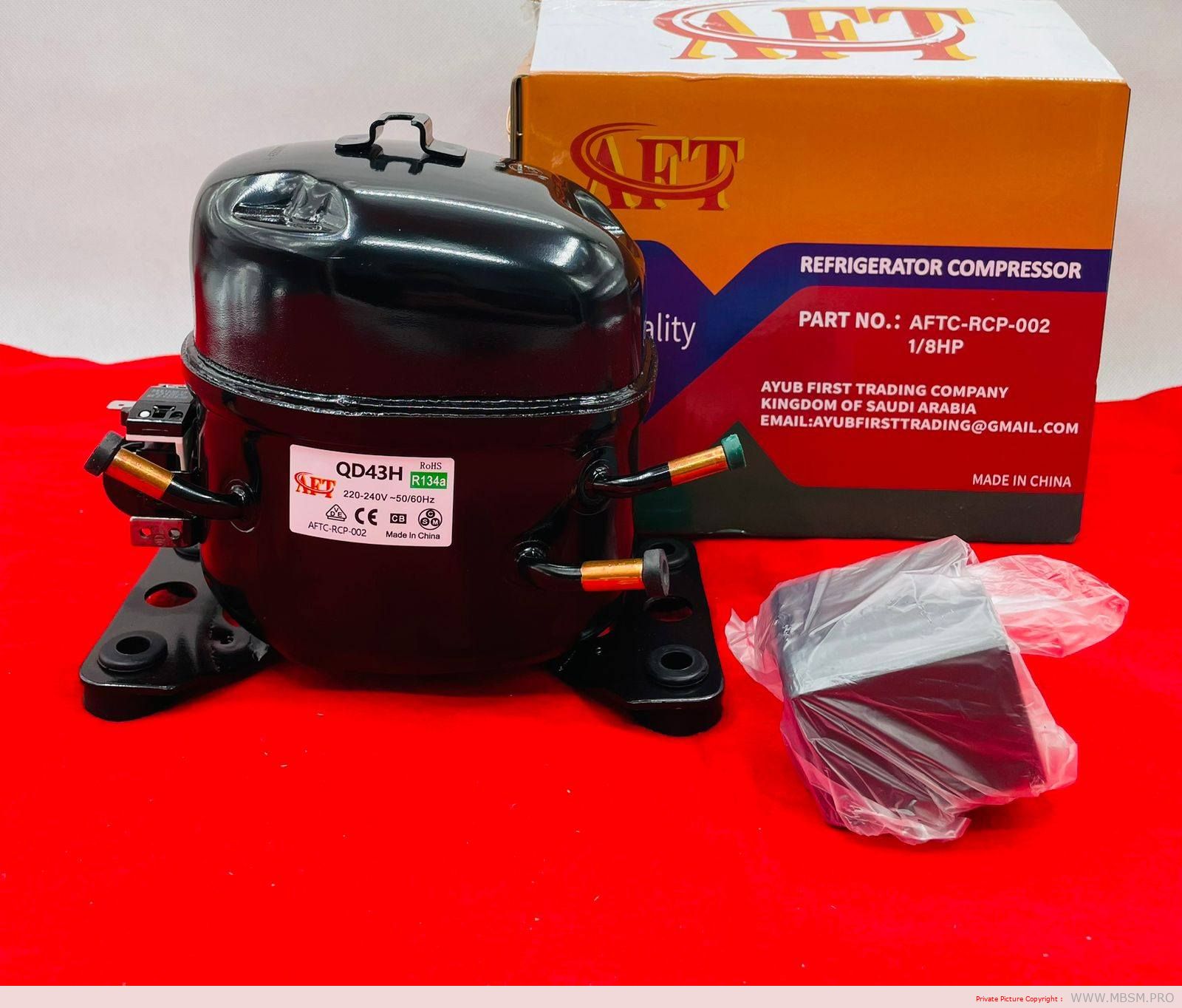
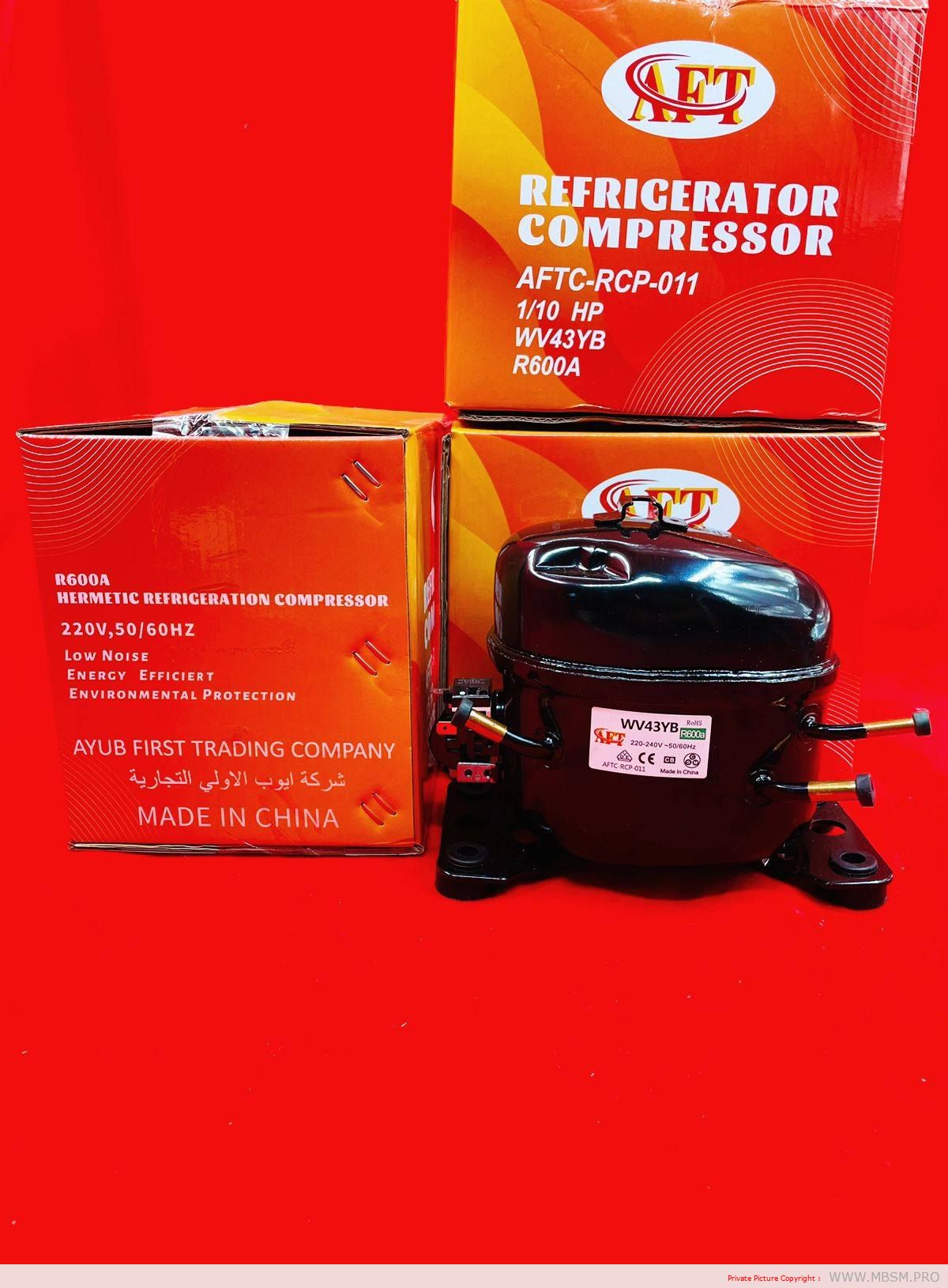
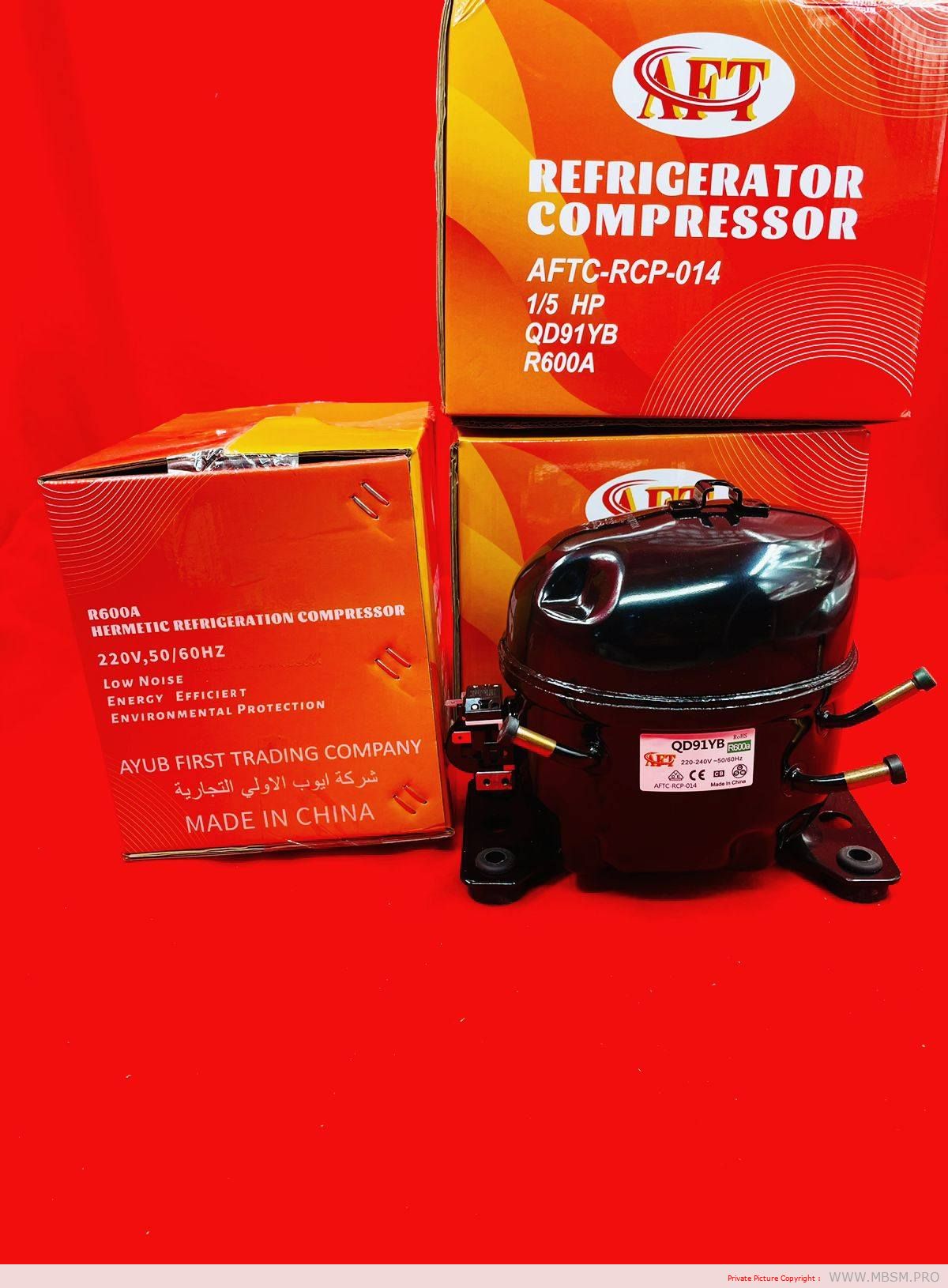
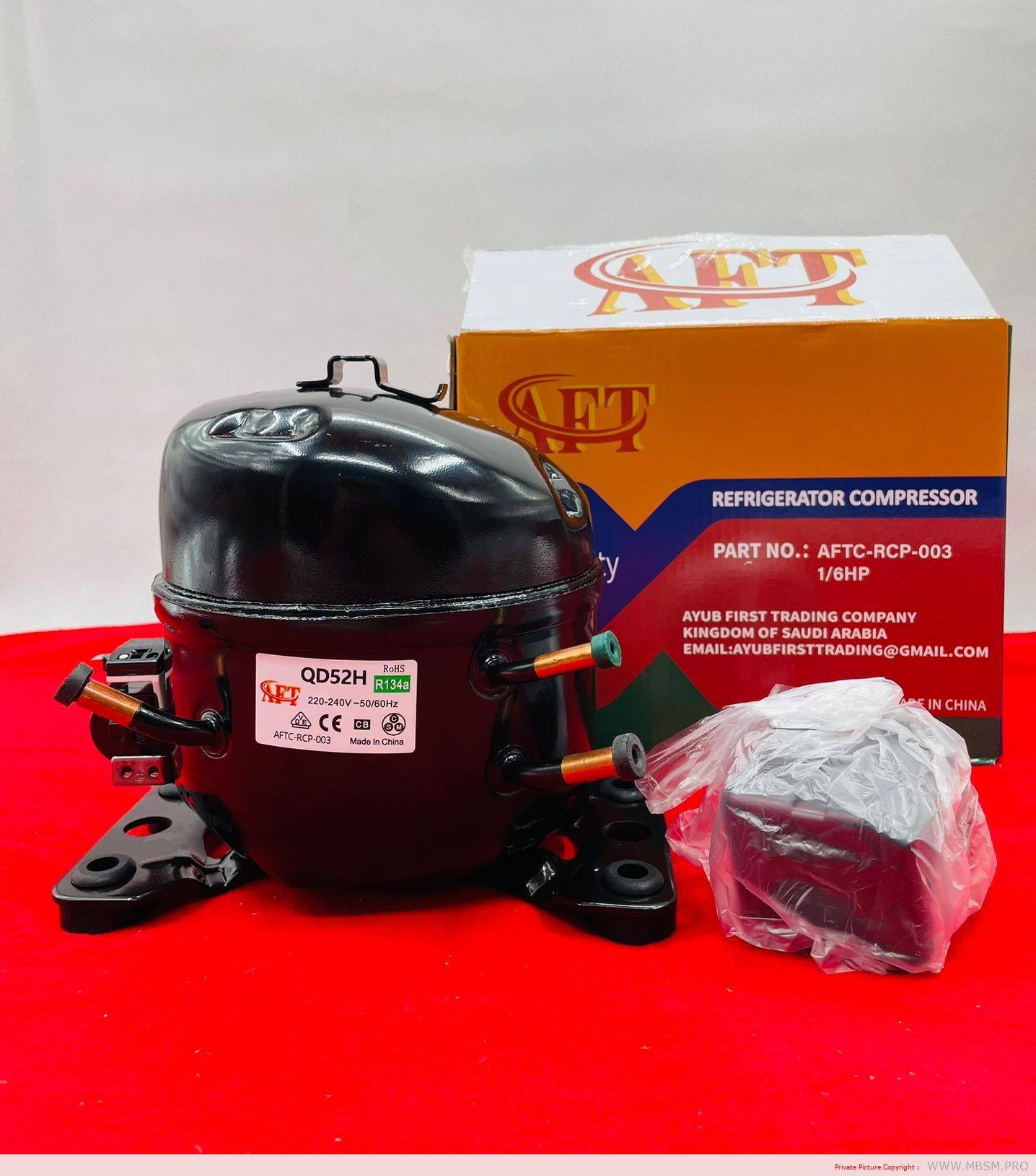
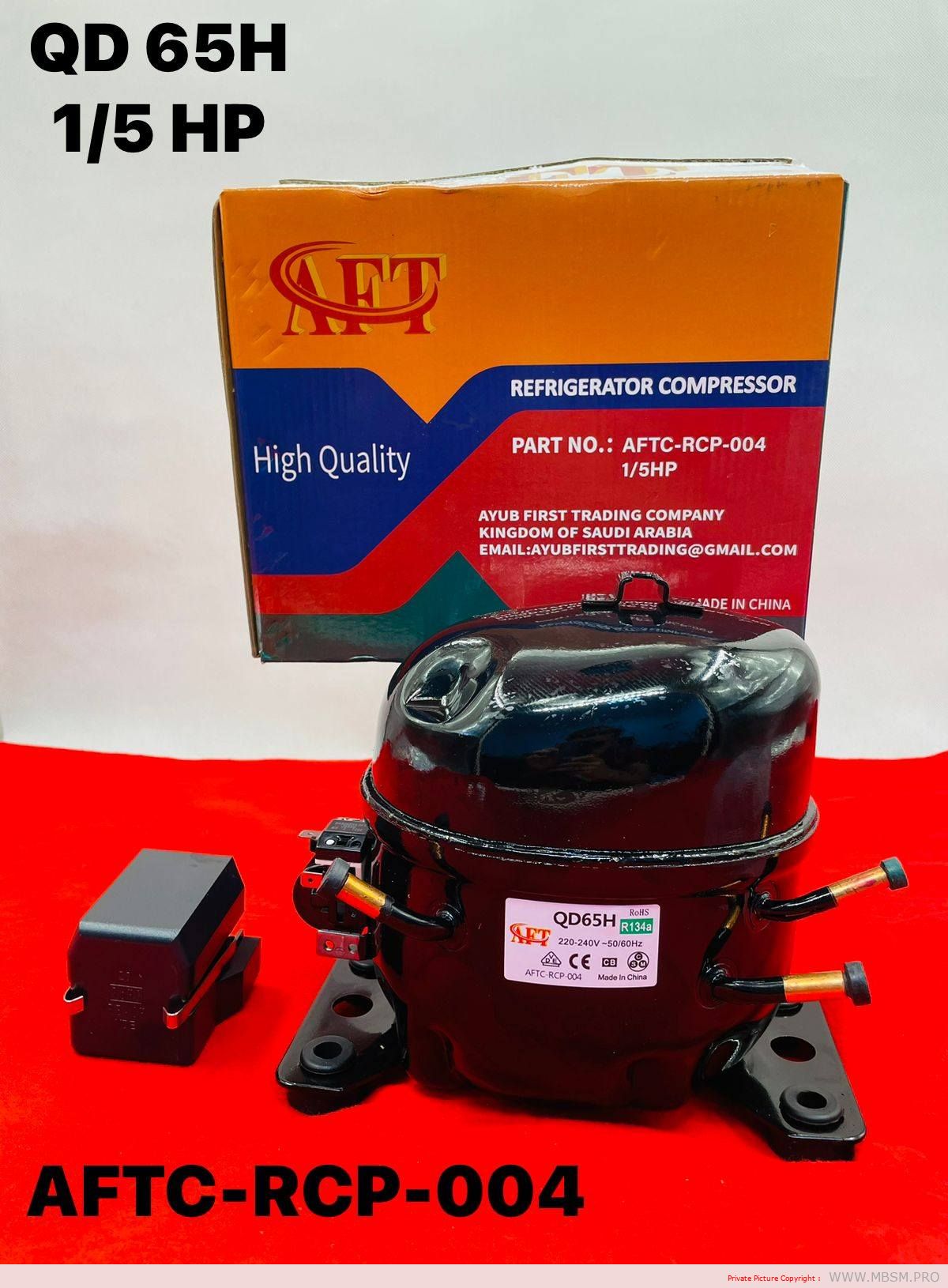
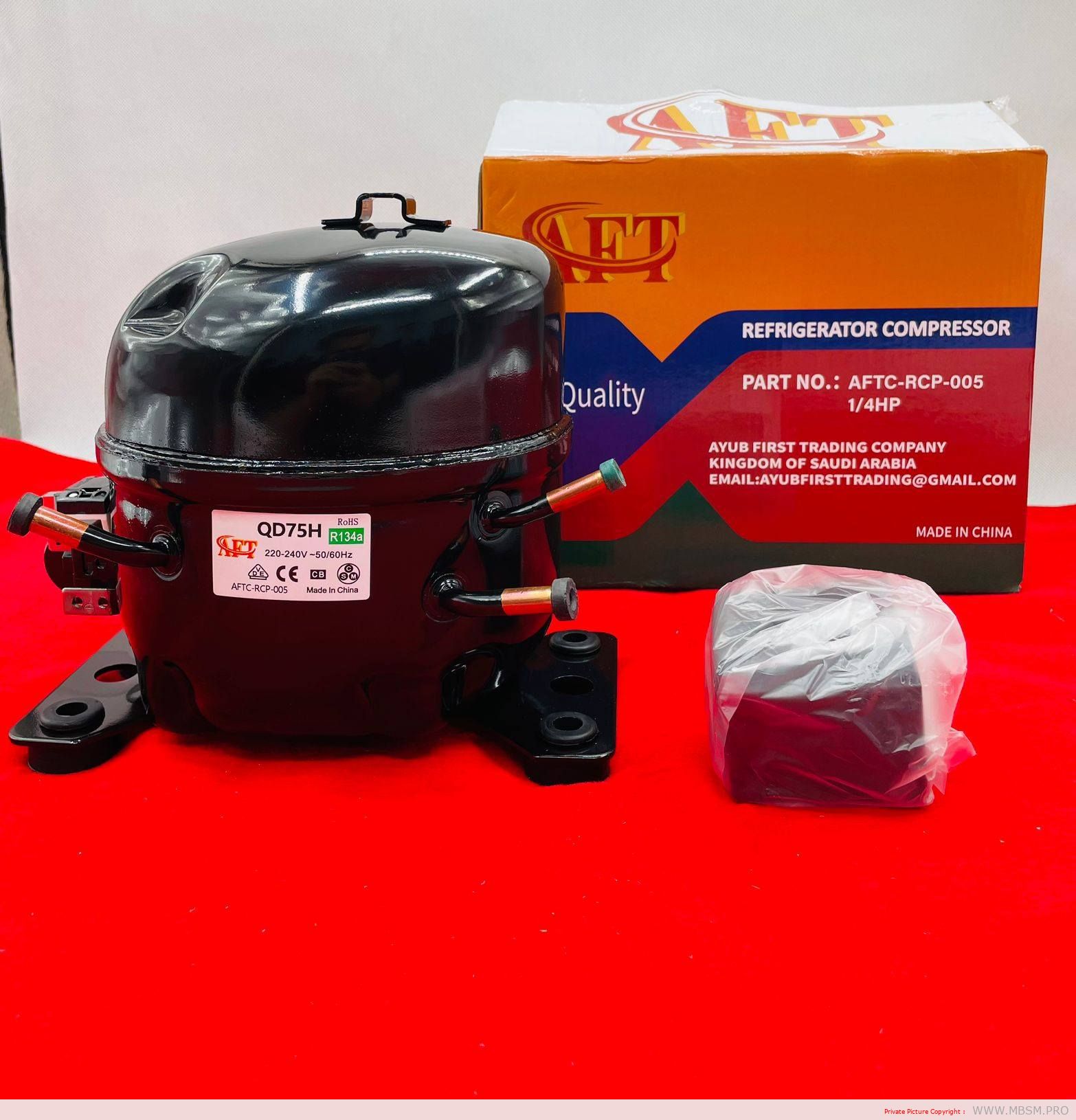
The images present several AFT hermetic refrigerator compressors, including R134a models QD43H, QV30H, QD52H, QD65H and QD75H, alongside R600a models WV43YB and QD91YB, each supplied with starting components and packed in branded cartons for retail or OEM use. The power range spans from approximately 1/10 HP up to 1/4–1/5 HP, matching the typical requirements of single‑door refrigerators, small freezers and display cases in homes, shops and horeca applications.
Technical characteristics
All units are hermetically sealed, reducing leakage risk and simplifying installation while improving noise control thanks to the steel shell and vibration‑damped mounting feet. Nameplate markings highlight CE conformity and compatibility with either R134a or R600a refrigerants, allowing system designers to align with current environmental regulations and low‑GWP requirements.
Main models and specifications
Model
Refrigerant
Nominal power (HP)
Typical application scope
Supply
Notes
QV30H
R134a
1/10 HP
Small single‑door fridge, beverage cooler
220–240 V, 50/60 Hz
Compact footprint suitable for tight cabinets
WV43YB
R600a
1/10 HP
Energy‑efficient domestic fridge with isobutane charge
220–240 V, 50/60 Hz
Emphasis on low noise and environmental protection on carton
High‑efficiency freezers or display cabinets using R600a
220–240 V, 50/60 Hz
Carton stresses low noise and energy efficiency
Market positioning and uses
Branding on the cartons identifies AFT as targeting refrigerator manufacturers, service centres and spare‑parts retailers that require a broad selection of capacities in consistent packaging for easy stocking. The combination of R134a and R600a models allows technicians to replace ageing compressors in legacy appliances or design new equipment that meets current efficiency and environmental expectations without changing voltage or frequency.
Summary of the topic
This AFT compressor range offers compact hermetic units from 1/10 to around 1/4–1/5 horsepower, engineered for 220–240 V, 50/60 Hz refrigerators and freezers in domestic and light‑commercial settings. With options for both R134a and environmentally friendlier R600a, the series gives appliance manufacturers and service professionals a flexible, low‑noise, energy‑conscious solution for modern cooling systems.
Model list with basic type
QD43H – hermetic refrigerator compressor, typically R134a, 220–240 V, used in small fridges and freezers.
QV30H – hermetic refrigerator compressor, R134a, about 1/10 HP for mini refrigerators and coolers.
QD52H – R134a hermetic compressor around 1/6 HP, LBP, 428 W at MBP conditions in mbsm.pro data.
QD65H – R134a hermetic compressor around 1/5 HP, LBP, 467 W at MBP conditions in mbsm.pro data.
QD75H – R134a hermetic compressor usually marketed as 1/5 HP for commercial or domestic refrigeration.
WV43YB – universal R600a hermetic compressor around 1/10 HP for domestic refrigerators and coolers.
QD91YB – R600a hermetic compressor about 1/5 HP for higher‑capacity fridges and freezers.
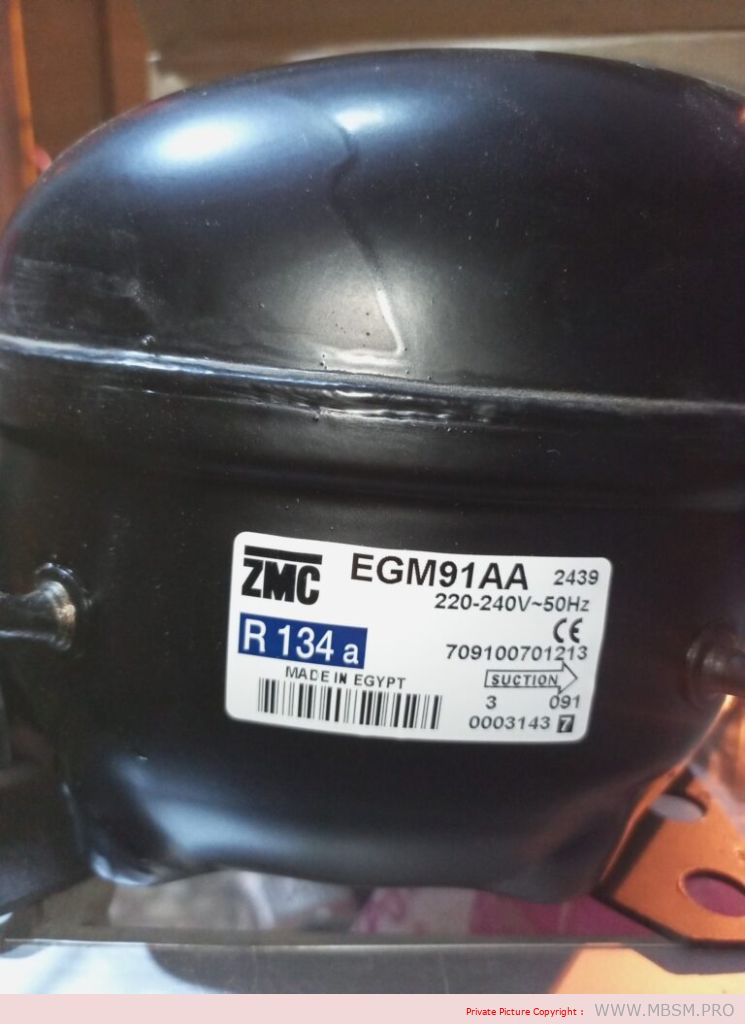
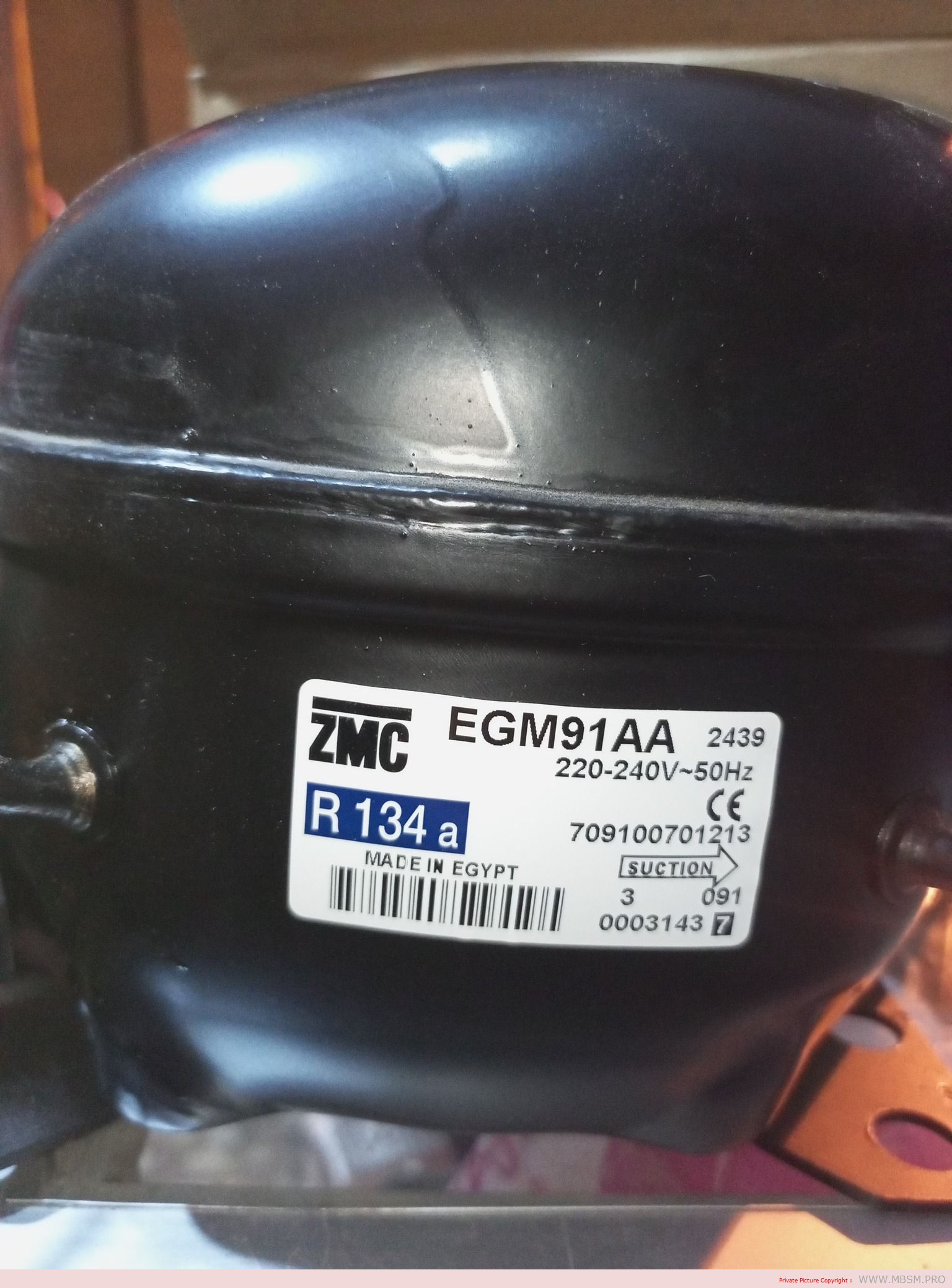
The EGM91AA is a hermetic reciprocating compressor manufactured by ZMC, designed primarily for use with R134a refrigerant. It operates on a voltage range of 220-240V at 50Hz and is typically used for low back pressure (LBP) refrigeration applications like household refrigerators and freezers.
Main Specifications
Refrigerant: R134a
Application: LBP (Low Back Pressure)
Power: 1/4 HP
Voltage/Frequency: 220-240V, 50Hz
Motor Type: RSIR/CSIR
Starting Device: PTC QP2-15Ω
Oil Charge: 180 cm³ esters (POE)
CE certified
Technical Details
Evaporating Temperature Range: -30°C to -10°C (suitable for refrigeration, not deep freeze)
Maximum Motor Temperature: 130°C
Locked Rotor Current: 6.78 A
Voltage Working Range: 187-264V
Compressor Cooling: Static
Expansion device: Capillary tube
Typical Uses
Household refrigerators
Small commercial refrigerators
Appliances using R134a needing 1/4 HP compressor power
This model is manufactured in Egypt and is widely compatible with fridges operating in regions where 220-240V, 50Hz power is standard
For the EGM91AA (LBP, R134a), the answer leans more to freezing / low‑temperature cooling, but it is used for both refrigerators and freezers depending on the system design.
What LBP means
LBP = Low Back Pressure, which corresponds to low evaporating temperatures, typically about −30 °C to −10 °C.
Such compressors are commonly used in freezers, deep freezers, and low‑temperature refrigerator compartments.
So for EGM91AA
Its data sheet lists application = LBP with evaporating range −30 °C to −10 °C, exactly the range used for freezer or low‑temperature refrigerator circuits.
Practically: if you charge and size the capillary for −25/−30 °C, it works as freezing; if you design around −12/−10 °C, it becomes strong cooling / chiller level.
The EGM91AA compressor from ZMC stands out as one of the most notable solutions in the domestic and light commercial refrigeration sector thanks to its use of R134a refrigerant and its high efficiency under varying climatic conditions. It delivers optimal cooling performance for refrigerators operating on 220–240 V, 50 Hz power, making it a practical choice for both local and international markets. Its advanced technical features translate into quick response, reduced energy consumption, and excellent compatibility with household systems, providing reliable performance backed by solid regional manufacturing.
Journalistic introduction
In the fast‑moving world of refrigeration technology, real innovation often hides in the small components that only technicians and specialists tend to notice. At the core of every modern refrigerator, a compressor sets the rhythm for the entire system’s life span and efficiency, and the EGM91AA model is a clear illustration of this principle. A compact steel shell, carefully engineered handling of R134a refrigerant, and optimized power consumption come together to keep food safe and temperatures stable even when ambient heat pushes equipment to its limits.
This compressor is more than a metal capsule in a sealed circuit; it is a technical product with a manufacturing story that starts in Egypt and extends across regional markets serving home refrigeration. Designed for 220–240 V, 50 Hz grids and carrying CE conformity, it offers installers and repair professionals a unit that combines robustness, availability of spare parts, and predictable behavior in low back‑pressure applications. As local industries expand their capabilities, models like the EGM91AA show how regional manufacturing can compete in quality while remaining accessible to small workshops and major appliance brands alike.
Technical specifications table for EGM91AA
Feature
Value
Type
Household refrigeration compressor (LBP)
Manufacturer
ZMC Egypt
Rated voltage
220–240 V, 50 Hz
Refrigerant
R134a
Nominal power
1/4 HP (approx.)
Motor type
RSIR / CSIR
Oil charge
About 180 cm³ POE ester oil
Evaporating range
From −30 °C to −10 °C
Operating voltage band
187–264 V
Certification
CE
Country of origin
Egypt
Mbsmpro.com, ZB38, 5HP, R404, MBP
Category: Refrigeration
written by www.mbsm.pro | 12 December 2025
ZB38 5HP R404 MBP correspond à un compresseur scroll Copeland Emerson, modèle ZB38KQE ou ZB38KCE, puissance nominale 5 HP, conçu pour le fluide frigorigène R404A et destiné au service moyenne température (MBP = Medium Back Pressure).
Caractéristiques typiques:
Type: Scroll hermétique Copeland série ZB38 (Emerson).
Puissance: 5 HP, triphasé 380–400 V (suivant version TFD-551 / -558).
Fluide: optimisé pour R404A (souvent aussi compatible R507A, parfois R134a selon la plaque).
Déplacement volumétrique: environ 14,4 m³/h; puissance frigorifique autour de 7–11 kW selon conditions (Te/Tc).
Signification de ton code:
ZB38 = série de compresseurs scroll réfrigération Copeland, taille « 38 ».
5HP = puissance moteur nominale.
R404 = fluide R404A prévu pour ce modèle.
MBP = utilisation en température moyenne (évaporation typique -10 °C à +5 °C pour chambres froides positives, conservateurs…).
Si tu précises les conditions de travail (Te, Tc, sous-refroidissement, surchauffe), il est possible d’estimer la capacité frigorifique exacte et vérifier si ce compresseur est adapté à ta chambre froide ou ton évaporateur actuel.
In commercial refrigeration, the compressor is more than just a component; it is the engine that decides whether a cold room runs smoothly or becomes a constant source of service calls. The ZB38 5HP R404A MBP scroll compressor is one of those models that technicians encounter again and again in supermarkets, butcheries, bakeries and restaurant cold rooms. Its popularity comes from a balance of capacity, efficiency and robustness that fits the core needs of medium-temperature systems.
What ZB38 5HP R404A MBP Really Means
When technicians talk about “ZB38 5HP R404A MBP”, they are compressing a lot of technical information into a short code.
ZB38: Indicates a scroll refrigeration compressor series and displacement class, typically around 5 HP in the manufacturer’s lineup.
5HP: The nominal motor power, placing it in the range commonly used for medium-sized cold rooms and supermarket display lines.
R404A: The main refrigerant for which the compressor is optimized, historically a standard in commercial refrigeration despite ongoing phase-down discussions in many markets.
MBP (Medium Back Pressure): Specifies that the compressor is designed for medium-temperature applications such as positive-temperature cold rooms, fresh products, dairy and beverages, rather than deep-freeze low-temperature duties.
This decoding matters because each part of the designation tells the technician where the compressor can work safely, which refrigerant is acceptable and what kind of evaporating temperatures the system can handle without pushing the compressor beyond its envelope.
Typical Applications in the Field
A 5HP R404A MBP scroll compressor naturally positions itself in the heart of medium-sized commercial installations.
Cold rooms for fresh meat, fruits and vegetables, where evaporating temperatures often range roughly between −10∘C−10∘C and +5∘C+5∘C, depending on the product and humidity control strategy.
Supermarket wall cases and island cabinets for dairy, delicatessen and beverages, where multiple evaporators may be connected to a single condensing unit based on the ZB38 platform.
Food-service equipment in hotels, central kitchens and bakeries, where reliability and quick recovery after door openings are more important than extreme low temperatures.
In these contexts, the ZB38 class compressor offers enough capacity to manage a significant thermal load while remaining compact, which is crucial when equipment must fit on rooftops, balconies or tight machine rooms in dense urban environments.
Why Scroll Technology Dominates This Segment
Scroll compressors like the ZB38 have progressively replaced many traditional reciprocating models in MBP applications.
Fewer moving parts reduce mechanical noise, vibration and wear, which in practice often means fewer mechanical failures and smoother operation.
The continuous compression process delivers stable mass flow, improving evaporator performance and temperature control inside cold rooms and cabinets.
The compact, hermetic construction simplifies installation, reduces the risk of leaks at mechanical joints and helps manufacturers build more compact condensing units.
For technicians, scrolls are often easier to handle: electrical connections are straightforward, and the absence of complex valve mechanisms or external crankcase components shortens installation and troubleshooting time when compared with older piston designs.
Key Operating Parameters Technicians Monitor
Working with a 5HP R404A MBP compressor requires attention to several practical parameters, even if the data sheet is not in hand.
Evaporating temperature: Usually in the medium range, technicians watch suction pressure to ensure it stays within the recommended envelope, avoiding both overloading and poor oil return.
Condensing temperature: Condenser cleanliness, ambient temperature and fan control directly impact discharge pressure, compressor current and overall energy consumption.
Superheat and subcooling: Correct expansion valve setting and a stable liquid line temperature help prevent liquid slugging at start-up and maintain the right mass flow through the evaporator.
In practice, a well-adjusted system keeps the compressor within its design envelope during the hottest days of summer, which is often where installations in Mediterranean climates are pushed to their limits.
Installation and Start-Up Best Practices
Even the most robust compressor can fail prematurely if basic installation guidelines are ignored.
Cleanliness: Piping must be brazed with nitrogen purging and thoroughly evacuated to remove moisture and contaminants that can degrade oil and valves.
Oil management: Proper piping design, especially at the suction line and oil traps on vertical risers, ensures oil returns reliably to the compressor shell.
Electrical checks: Before energizing, technicians confirm supply voltage, phase sequence and proper overload protection, including verification of contactor and breaker sizing.
A disciplined start-up procedure—monitoring pressures, temperatures and compressor current over the first hour—usually reveals whether the system is healthy or if there are hidden issues like undersized condensers or incorrect charge.
Maintenance and Diagnostic Considerations
In daily practice, maintenance teams use a few key indicators to assess the health of a scroll compressor like the ZB38.
Noise and vibration: Changes in sound signature can announce mechanical damage, liquid return or severe gas under-cooling at the compressor.
Discharge line temperature: Excessive discharge temperature often points to high condensing pressure, low refrigerant charge or poor suction gas cooling.
Oil color and level (if visible through an indicator): Darkened or acidic oil is a clear warning that the system has experienced overheating or contamination, and that deeper corrective action is required.
Regular cleaning of condensers, checking fan operation and verifying that defrost cycles are effective in evaporators can significantly extend compressor life by keeping operating conditions within design limits.
Where This Technology Is Heading
Although R404A has long been the standard for MBP commercial applications, environmental regulations are pushing the market toward lower-GWP alternatives and redesigned compressors. Manufacturers are gradually adapting similar 5HP scroll platforms to new blends with different pressures and glide characteristics, while technicians increasingly need to be familiar with multiple refrigerants and their specific charge and oil requirements. For users and contractors, this transition highlights the importance of good documentation, training and practical feedback from the field—an area where communities of technicians, independent platforms such as mbsmgroup.tn and projects like mbsm.pro, mbsmgroup and mbsmpro.com can play a useful role in sharing real-world experience and solutions.
Suggested exclusive images for this topic (you can create or photograph them yourself):
A close-up of a 5HP scroll compressor label showing model code, refrigerant and electrical data.
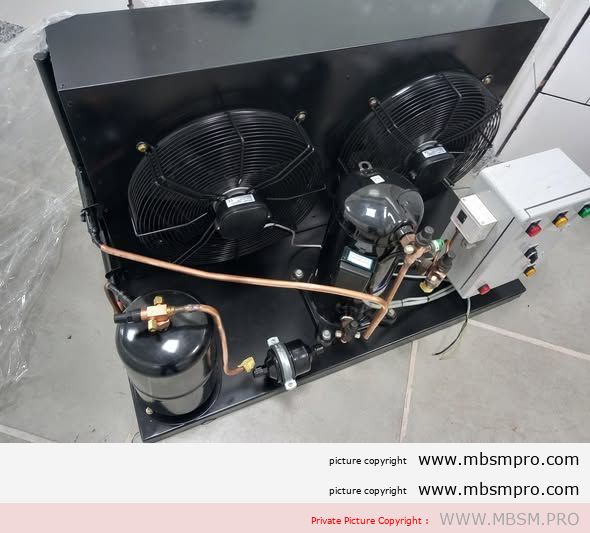
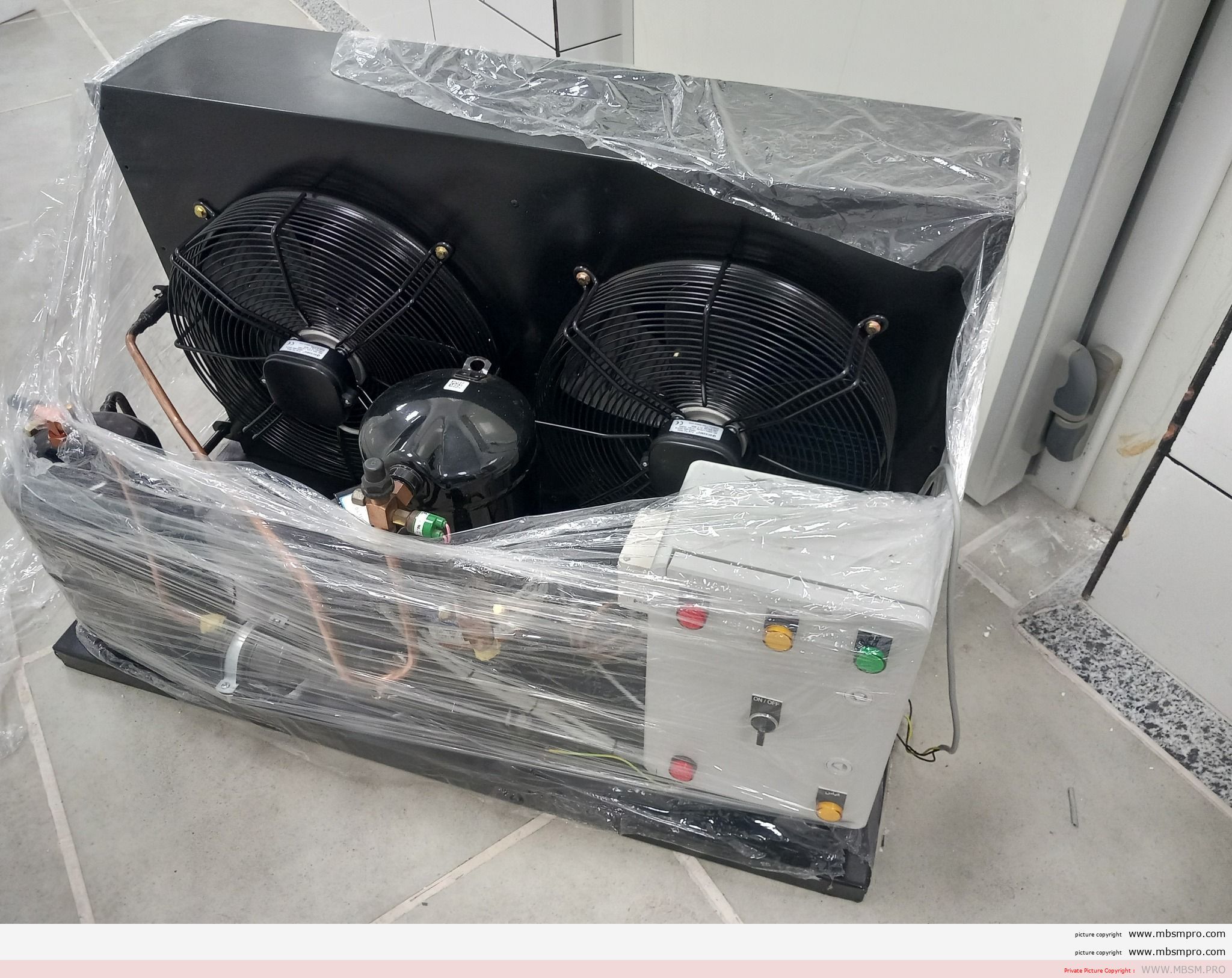
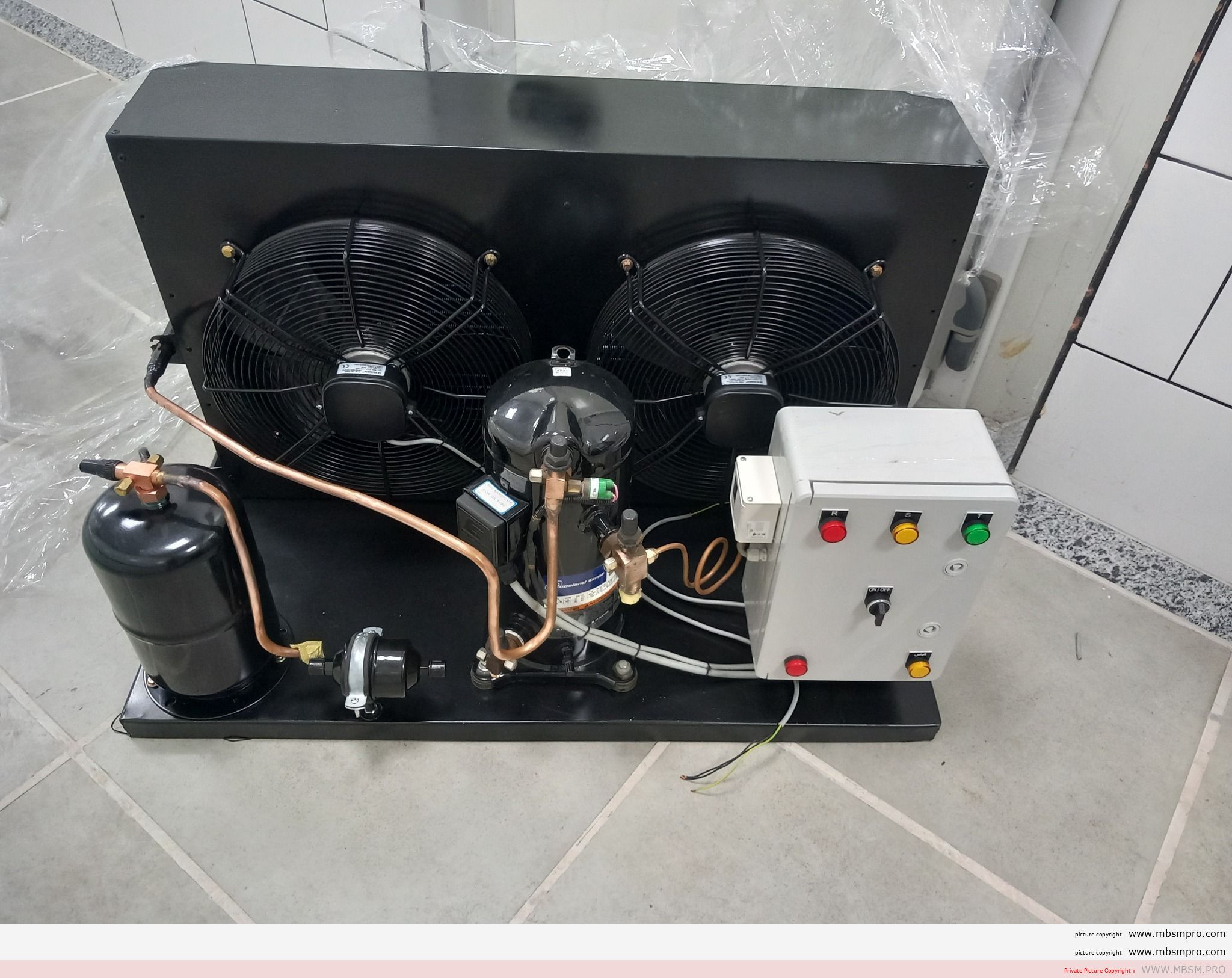
A medium-temperature cold room condensing unit with the compressor, condenser and control box visible on a rooftop or service balcony.
A technician’s hand holding clamp meter and manifold gauges connected to a running MBP R404A condensing unit.
A clean, well-lit cold room interior with product on shelves, showing air coolers on the ceiling and neat piping.
A side-by-side photo of a scroll compressor and an older reciprocating unit on a workshop floor, demonstrating the difference in size and design.
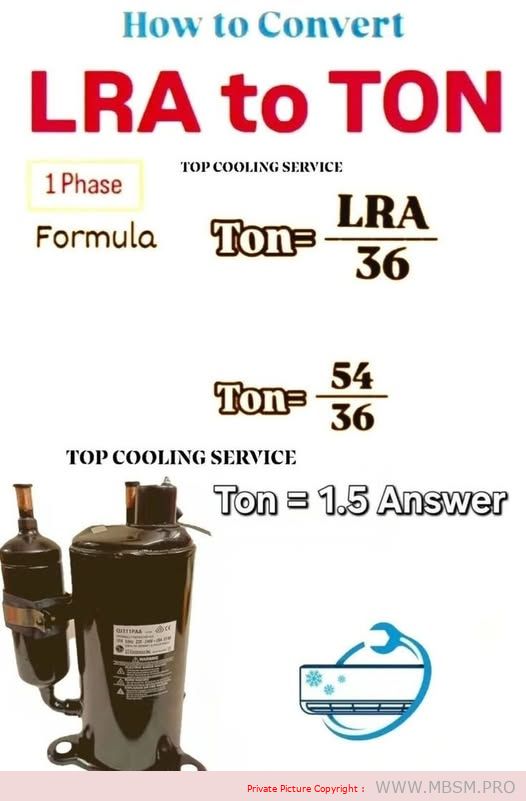
Determining the cooling capacity of air conditioning and refrigeration compressors is fundamental for professionals in the HVAC industry. One of the key electrical values specified on compressor labels is the LRA (Locked Rotor Amps), which represents the maximum current drawn at motor start. Transforming this into tons of cooling provides a rapid and reliable way to size, diagnose, and upgrade systems.
What is LRA and Why Convert it to Tons?
Locked Rotor Amps (LRA): The peak current when a compressor starts. It is vital for sizing electrical protection and understanding performance.
Cooling Ton: Standard unit for cooling capability (1 ton = 12,000 BTU/hr).
The Simple Conversion Formula
For single-phase compressors, the modern, professional formula is:
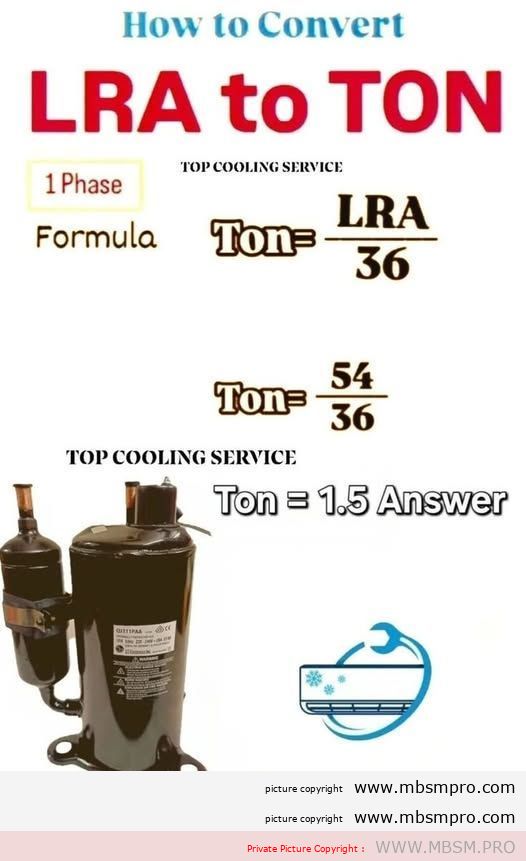
Ton=LRA/36Ton=LRA/36
Example:
If the compressor’s LRA is 54:
Ton = 54 / 36 = 1.5 Ton
Always use the division symbol (/) instead of horizontal lines for cleaner, easier-to-read formulas in technical documentation.
Benefits and Use Cases
Quick Unit Sizing: Helpful when label information is limited or during site evaluations.
Matching Electrical Loads: Ensures new or replacement units are compatible with existing infrastructure.
Field Troubleshooting: Arms technicians with a fast check for expected capacity vs. measured electrical consumption.
Suggested Keywords and Search Terms:
LRA to ton, LRA/ton conversion, LRA calculation formula, convert LRA to ton HVAC, mbsmgroup, mbsmgroup.tn, mbsmpro.com, mbsmpro, mbsm.pro, HVAC compressor sizing, refrigeration tonnage, locked rotor amps, HVAC Tunisia, modern formula HVAC
Combined Keywords Example:
LRA to ton HVAC, convert LRA to ton mbsmgroup, mbsmgroup.tn LRA formula, mbsmpro.com refrigeration capacity, mbsmpro LRA conversion, mbsm.pro ton calculator
Summary:
This guide explains how to convert LRA into cooling tons using a direct and easy-to-use formula (LRA / 36 = Ton). It streamlines sizing, troubleshooting, and matching of commercial HVAC and refrigeration compressors, ensuring professional and efficient results in the field.
Slug:
convert-lra-to-ton-hvac-modern
Quick Reference Table: LRA / 36 = Ton
LRA Value
Tons (Ton = LRA / 36)
36
1.0
45
1.25
54
1.5
72
2.0
90
2.5
108
3.0
By using this updated formula and professional writing style, technicians and engineers benefit from fast and transparent conversions that enhance reliability and accuracy in every HVAC task.
Selecting a compressor for refrigeration and freezing is more than numbers; it’s about trust, energy efficiency, and optimal performance in demanding environments. This professional comparison presents 10 of the most respected LBP R134a compressors, used worldwide for both commercial and domestic cooling solutions. All models deliver consistent results, and this data-driven guide will help you make a confident choice.
Comparison Table:
Model
Brand
HP
Voltage/Freq
Refrigerant
Cooling Capacity (W)
C.O.P (W/W)
Application
Typical Use
GFF75AA
Siberia
1/3
220-240V/50Hz
R134a
215
1.25
LBP
Freezing/Cooling
PFL75AA
Panasonic
1/3
220-240V/50Hz
R134a
248–324
1.41–2.03
LBP
Freezing/Cooling
EGAS100HLR
Embraco
1/3
220-240V/50Hz
R134a
250
~1.20–1.30
LBP
Freezing/Cooling
STT134L
Secop
1/3
220-240V/50Hz
R134a
205
~1.20
LBP
Freezing/Cooling
AEA4440Y
Tecumseh
1/3
220-240V/50Hz
R134a
226
1.10
LBP
Freezing/Cooling
ZR86AA
Zero
1/3
220-240V/50Hz
R134a
250
1.52
LBP
Commercial/Freezing
GPY14NGA
Cubigel
1/3
200-220V/50Hz
R134a
250
~1.30
LBP
Display fridges
LM72CZ
Donper
1/3
220V/50Hz
R134a
~245
~1.25
LBP
Fridge/Freezer
EGM90AZ
ZMC
1/3
220-240V/50Hz
R134a
~235
~1.20
LBP
Domestic, commercial
ML200A
Samsung
1/3
220-240V/50Hz
R134a
~240
~1.22
LBP
Home/commercial
Exclusive Images:
Analysis and Use Cases:
Siberia GFF75AA: Known for balanced performance and robust construction.
Panasonic PFL75AA: Superior range, especially for commercial applications.
Embraco EGAS100HLR: Quiet, efficient—choice for high-demand retail.
Secop STT134L: Trusted for reliability and multi-temperature settings.
Zero ZR86AA: High efficiency, strong for commercial setups.
Cubigel GPY14NGA: Reliable, used in display and retail cooling.
Donper LM72CZ: Versatile and value-focused.
ZMC EGM90AZ: Efficient for domestic and small business.
Samsung ML200A: Modern electronics, energy efficiency.
Conclusion:
Every fridge, freezer, and cold chain project has its unique requirements. The compressors above deliver trusted results for cooling and freezing, each with strengths in performance, efficiency, and system compatibility. For professional guidance and integration help, contact mbsmgroup.tn or mbsmpro.com.
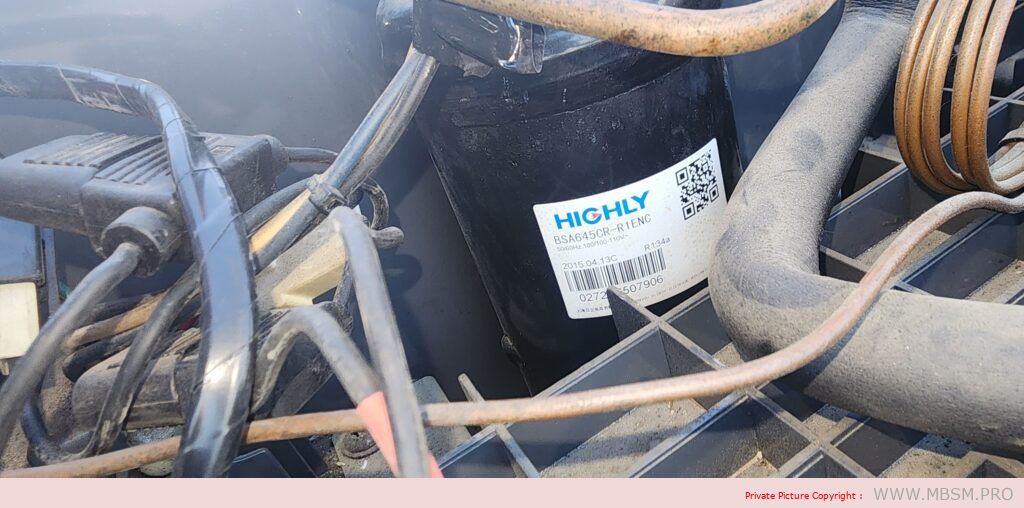
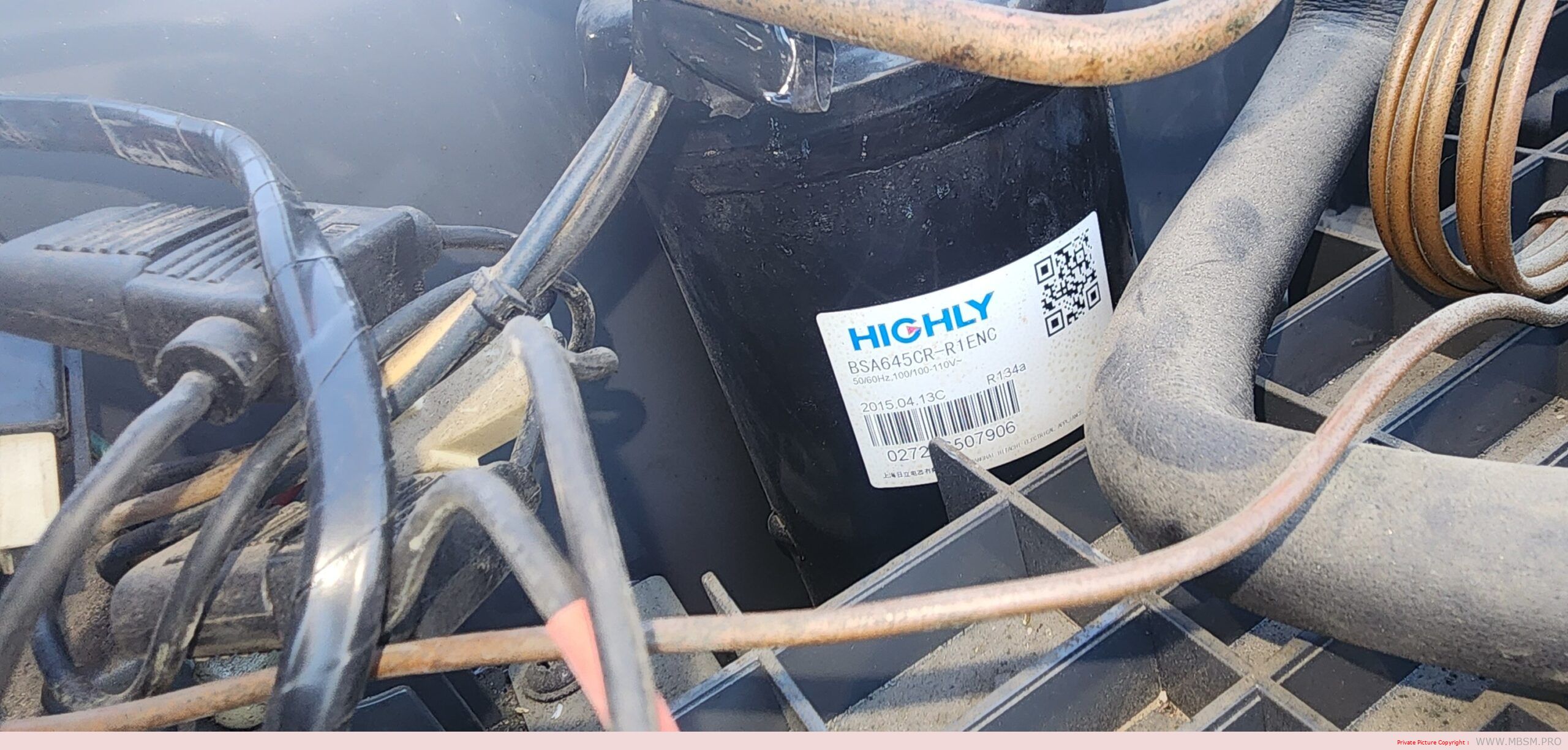
Performance Analysis of the BSA645CR Compressor with Horsepower Calculation
1. Introduction
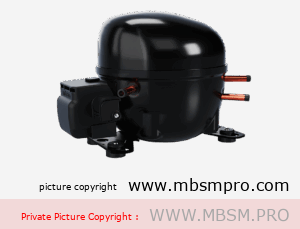
The BSA645CR is a constant-speed reciprocating compressor designed for refrigeration and air conditioning systems using R134a refrigerant. It is commonly used in residential and light commercial applications due to its compact design, efficiency, and compatibility with standard voltage supplies.
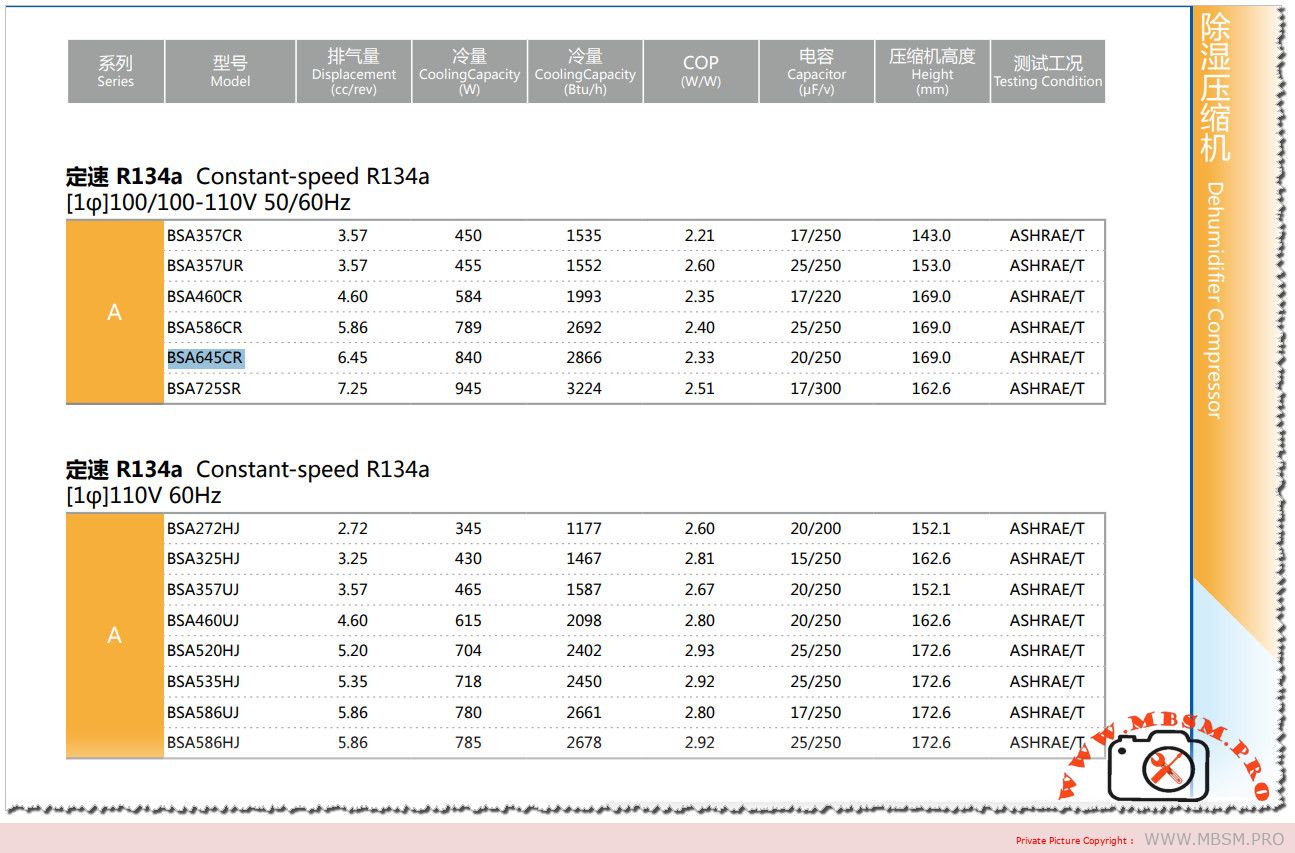
This article provides a detailed overview of the BSA645CR compressor’s technical specifications, explains how to calculate its output horsepower (HP), and discusses its performance characteristics.
2. Technical Specifications of
Parameter
Value
Model
BSA645CR
Refrigerant
R134a
Voltage
100/100–110V, 50/60Hz
Displacement
6.45 cc/rev
Cooling Capacity (W)
840 W
Cooling Capacity (Btu/h)
2866 Btu/h
COP (Coefficient of Performance)
2.33 W/W
Capacitor
20 μF / 250 V
Compressor Height
169.0 mm
Test Condition
ASHRAE/T
Mbsm.pro, TOSHIBA, REFRIGERATOR, FREEZER, GR-RG70UD, compressor, 1/4 hp
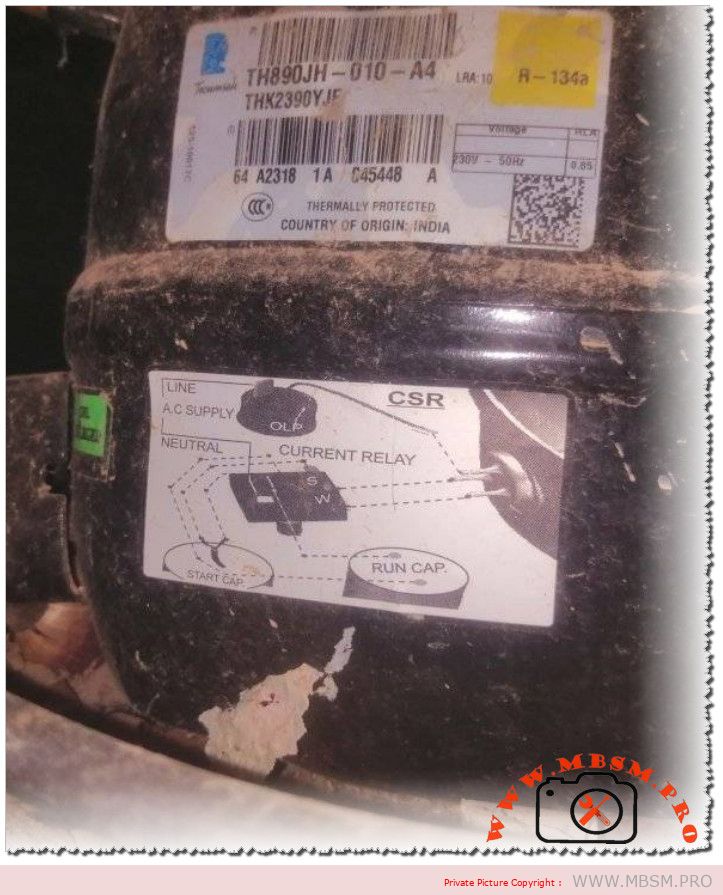
The THK2390Y (often referenced as THK2390YJE) is a hermetic reciprocating compressor manufactured by Tecumseh, commonly used in refrigeration and air conditioning applications. Key specifications and features include:
Motor Type: Capacitor Start Induction Run (C.S.I.R.), 2-pole, 2850 rpm
Voltage: Typically 220-240 V, 50 Hz, single phase
Cooling: Compressor cooling fan included
Performance: Suitable for low back pressure (LBP) evaporating temperature range from about -40°C to -12.2°C (-40°F to 10°F)
Motor Protector: External type, model KME660-21/C
Oil Type: Polyolester oil, oil charge around 300 cc
Weight: Approximately 9 kg with oil and accessories
Application: Designed for refrigeration systems requiring high start torque and reliable operation in low temperature ranges1346.
This compressor is widely used in commercial refrigeration, air conditioning, and heat pump systems due to its robust design and efficiency in low-temperature environments.The THK2390Y (often referenced as THK2390YJE) is a hermetic reciprocating compressor manufactured by Tecumseh, commonly used in refrigeration and air conditioning applications. Key specifications and features include:
Motor Type: Capacitor Start Induction Run (C.S.I.R.), 2-pole, 2850 rpm
Voltage: Typically 220-240 V, 50 Hz, single phase
Cooling: Compressor cooling fan included
Performance: Suitable for low back pressure (LBP) evaporating temperature range from about -40°C to -12.2°C (-40°F to 10°F)
Motor Protector: External type, model KME660-21/C
Oil Type: Polyolester oil, oil charge around 300 cc
Weight: Approximately 9 kg with oil and accessories
Application: Designed for refrigeration systems requiring high start torque and reliable operation in low temperature ranges1346.
This compressor is widely used in commercial refrigeration, air conditioning, and heat pump systems due to its robust design and efficiency in low-temperature environments.