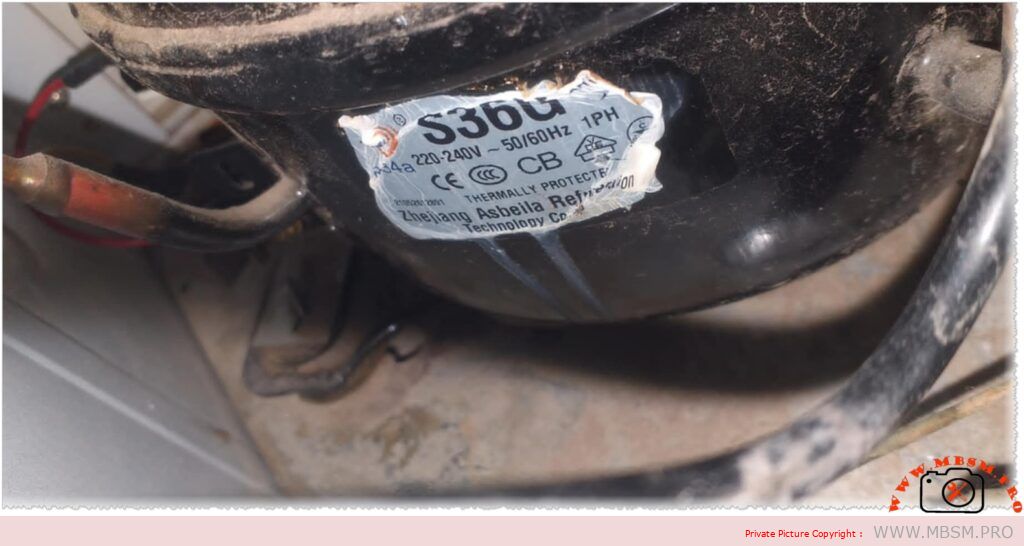
Purpose: The core component for pressurizing refrigerant in a cooling cycle.
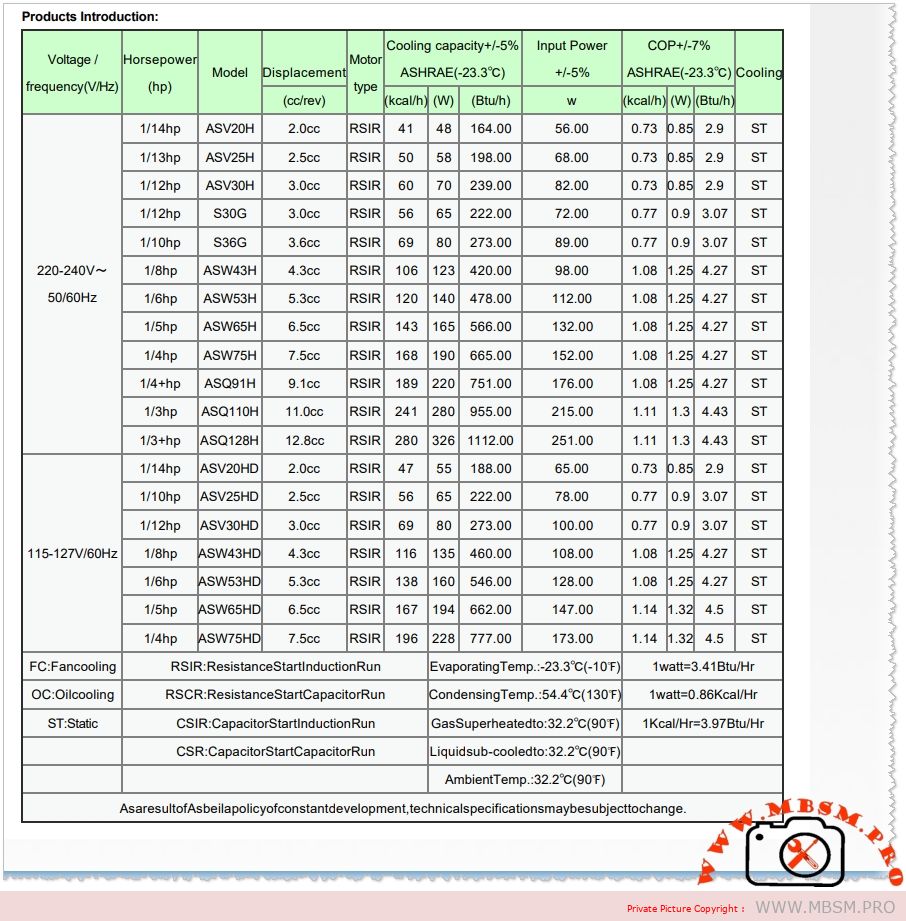
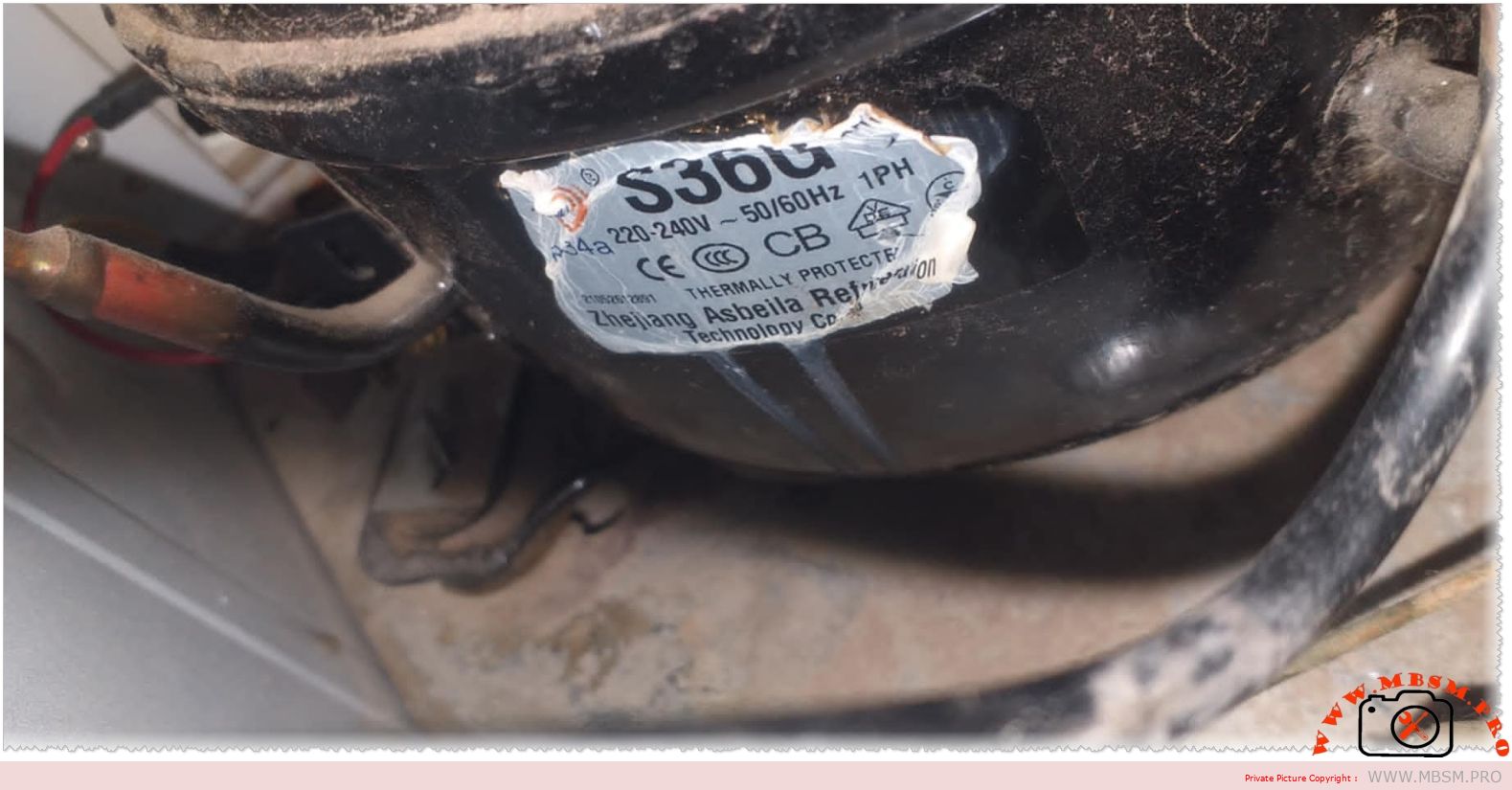
Model S36G: Likely a specific compressor model (possibly from a brand like Secop, Danfoss, or a regional manufacturer). Verify with manufacturer documentation for exact specs.
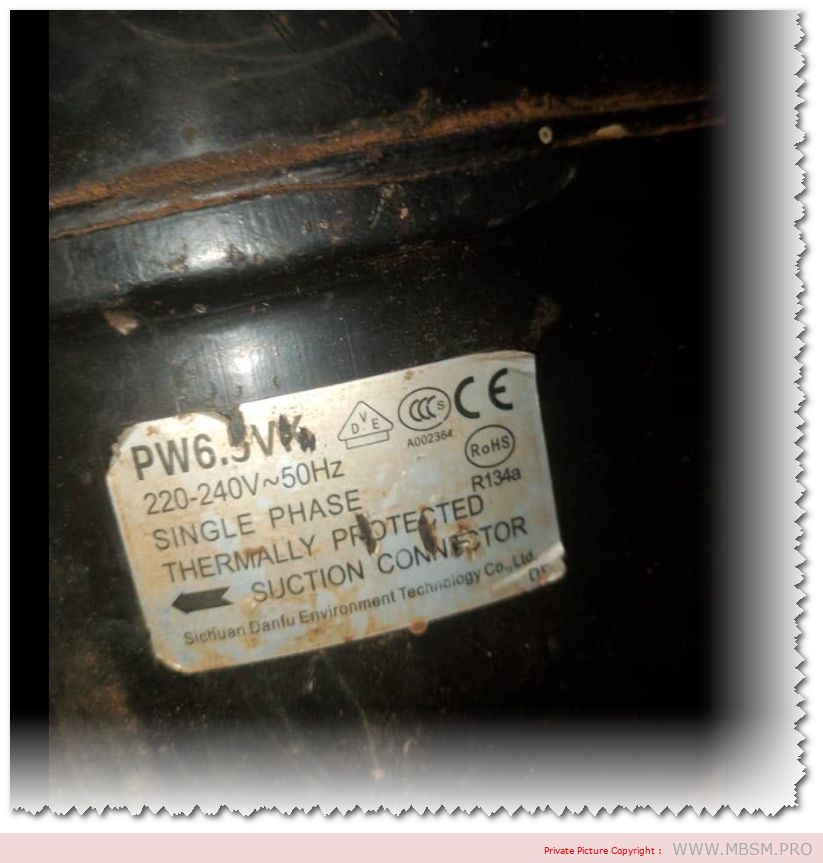
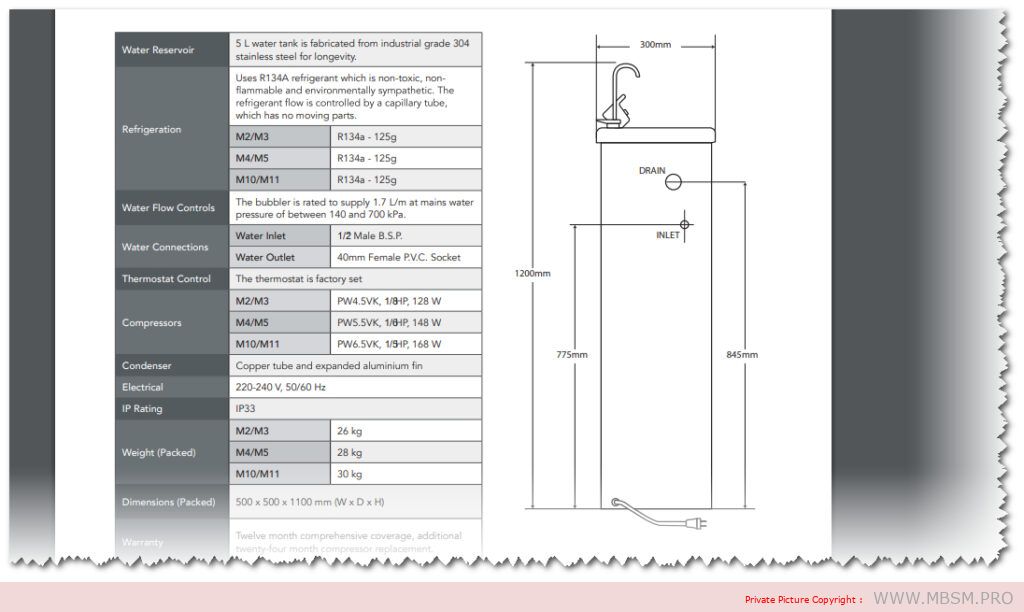
Application: Small-scale systems (e.g., commercial water coolers, medical devices, or compact refrigeration) due to the small refrigerant charge.
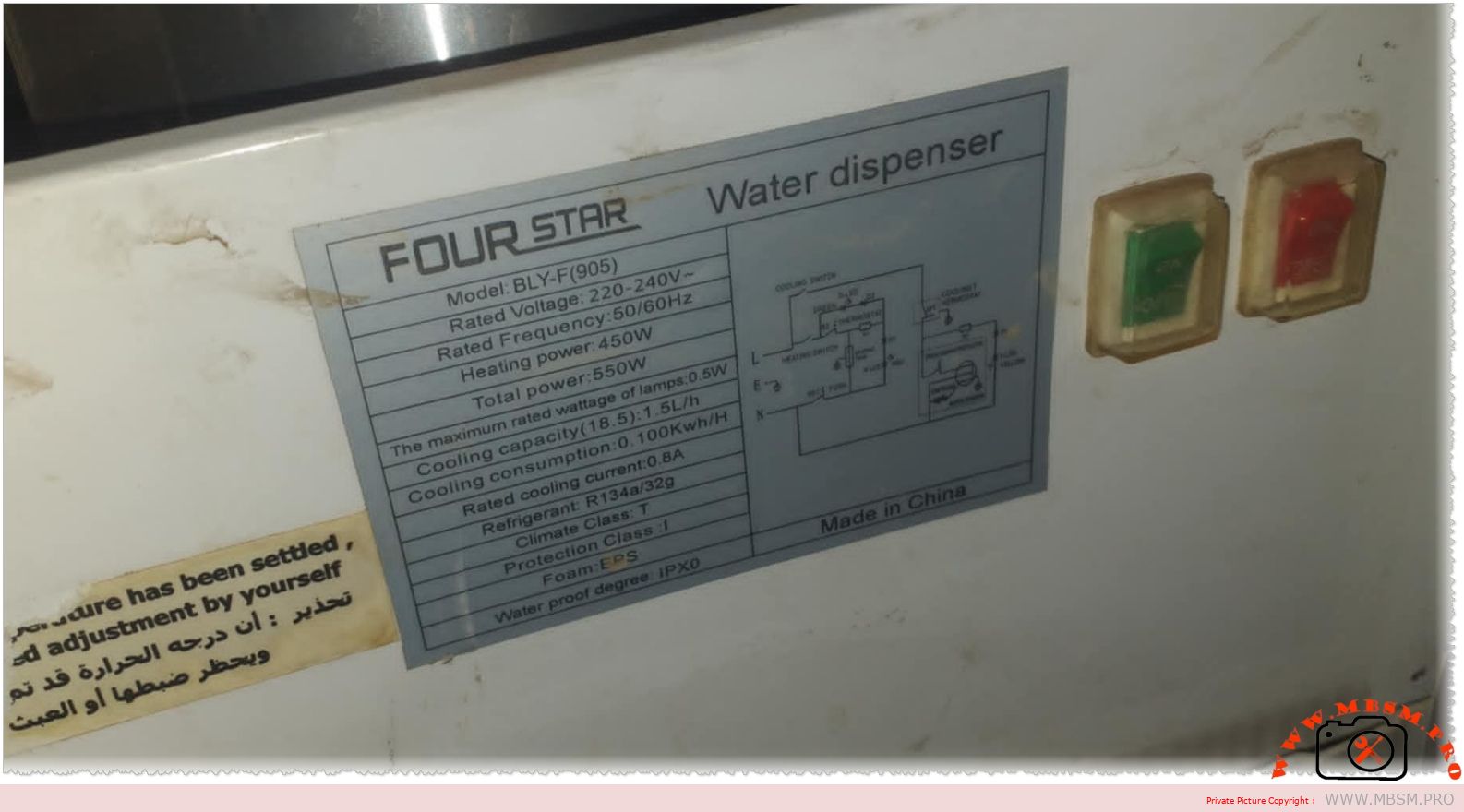
2. Refrigerant (R134a, 32g)
R134a: A common hydrofluorocarbon (HFC) refrigerant used in medium-temperature systems (e.g., refrigerators, AC units, water coolers).
32g Charge: Indicates a small system, typical for portable or compact units. Ensure the charge matches manufacturer specifications to avoid inefficiency or damage.
3. Water-Cooler System
Water-Cooled Condenser: Uses water (instead of air) to dissipate heat, improving efficiency. Requires a water supply, pump, and possibly a cooling tower.
Applications: Often found in commercial settings (e.g., water dispensers, industrial chillers, or high-efficiency HVAC systems).
4. BLY-F/950
Likely a component model, such as:
Filter drier: Removes moisture/contaminants from refrigerant.
Pressure switch: Safety device to control system pressure.
Control board/Valve: Part of the system’s electrical or flow regulation.
Check manufacturer manuals or suppliers for exact function.
Key Considerations
Compatibility: Ensure the compressor (S36G) is designed for R134a and water-cooled operation.
Refrigerant Charge: Confirm 32g is correct (undercharging/overcharging affects performance).
Water Cooling: Check for scale buildup, water flow rate, and pump functionality.
BLY-F/950 Replacement: Cross-reference with OEM parts or contact the system manufacturer.
Troubleshooting Tips
Low Cooling Efficiency: Check refrigerant charge, water flow, or condenser cleanliness.
Component Failure: Test the BLY-F/950 part (e.g., continuity for switches, clogging in filter driers).
Noise/Leaks: Inspect the compressor and refrierant lines.
Mbsm.pro, Understanding, Motor, Starting , Systems, for, Compressor
Category: Chaud&Froid
written by www.mbsm.pro | 2 February 2025
Introduction Motor starting systems are critical in ensuring the efficient and safe operation of electric motors across various industries. Choosing the right starting method can significantly impact performance, energy consumption, and equipment longevity. In this post, we’ll explore the most common motor starting systems, their characteristics, advantages, and disadvantages to help you make informed decisions for your applications.
1. Direct-On-Line (DOL) Starting
Characteristics:
Starting current: 5 to 8 times the rated current.
Starting torque: 0.5 to 1.5 times the rated torque.
Direct connection of the stator to the power supply.
Advantages:
Simple and cost-effective.
No additional devices required.
Disadvantages:
High starting current may cause voltage drops in the network.
Not recommended for high-power motors.
2. Star-Delta Starting
Characteristics:
Starting current: 1.5 to 2.6 times the rated current.
Reduced voltage in star mode (3 times lower).
Requires a motor with compatible windings.
Advantages:
Reduces starting current.
Suitable for machines with low resistive torque or no-load starting.
Disadvantages:
Requires a specific motor type.
Not effective for heavy loads.
3. Part-Winding Starting
Characteristics:
Starting current: Approximately half of DOL starting.
Starting torque: Higher than star-delta.
Uses two parallel windings.
Advantages:
Lower starting current.
Higher starting torque compared to star-delta.
Disadvantages:
Rarely used in Europe.
Requires a motor with specific windings.
4. Stator Resistance Starting
Characteristics:
Starting current: 4.5 times the rated current.
Starting torque: 0.75 times the rated torque.
Resistors in series with the windings.
Advantages:
Reduces starting current.
No winding modification required.
Disadvantages:
Energy losses in resistors.
Requires a timer to remove resistors.
5. Autotransformer Starting
Characteristics:
Reduced voltage during starting.
Three stages: star, partial coupling, and full voltage.
Selectable transformation ratio.
Advantages:
Reduces starting current.
Flexible voltage selection.
Disadvantages:
Expensive and complex.
Requires additional space for the autotransformer.
6. Electronic Soft Starter
Characteristics:
Limits current and adjusts torque.
Smooth start and stop.
Electronic control of applied voltage.
Advantages:
Smooth starting reduces mechanical stress.
Energy savings.
Disadvantages:
Higher initial cost.
Requires maintenance of the electronic system.
7. Variable Frequency Drive (VFD) Starting
Characteristics:
Speed and torque control.
Suitable for high-inertia loads.
Optimizes energy consumption.
Advantages:
Precise speed control.
Ideal for applications requiring variable speed.
Disadvantages:
High initial cost.
Requires technical expertise for setup and maintenance.
Conclusion
Selecting the right motor starting system depends on factors such as motor size, load type, and operational requirements. While DOL starting is simple and cost-effective, more advanced systems like soft starters and VFDs offer greater control and efficiency, albeit at a higher cost. Understanding these systems will help you optimize performance, reduce energy consumption, and extend the lifespan of your equipment.
If you have any questions or need further assistance in choosing the right motor starting system for your application, feel free to leave a comment or contact us!
Tags: Motor Starting Systems, Electric Motors, Soft Starters, VFD, Star-Delta Starting, Industrial Automation Categories: Electrical Engineering, Industrial Automation, Energy Efficiency
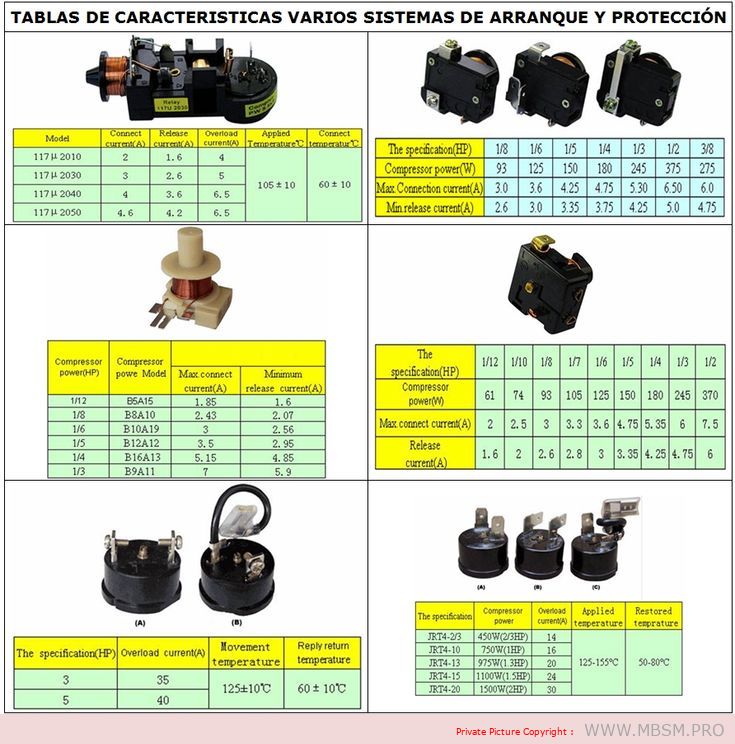
table organizes the information for better readability and understanding:
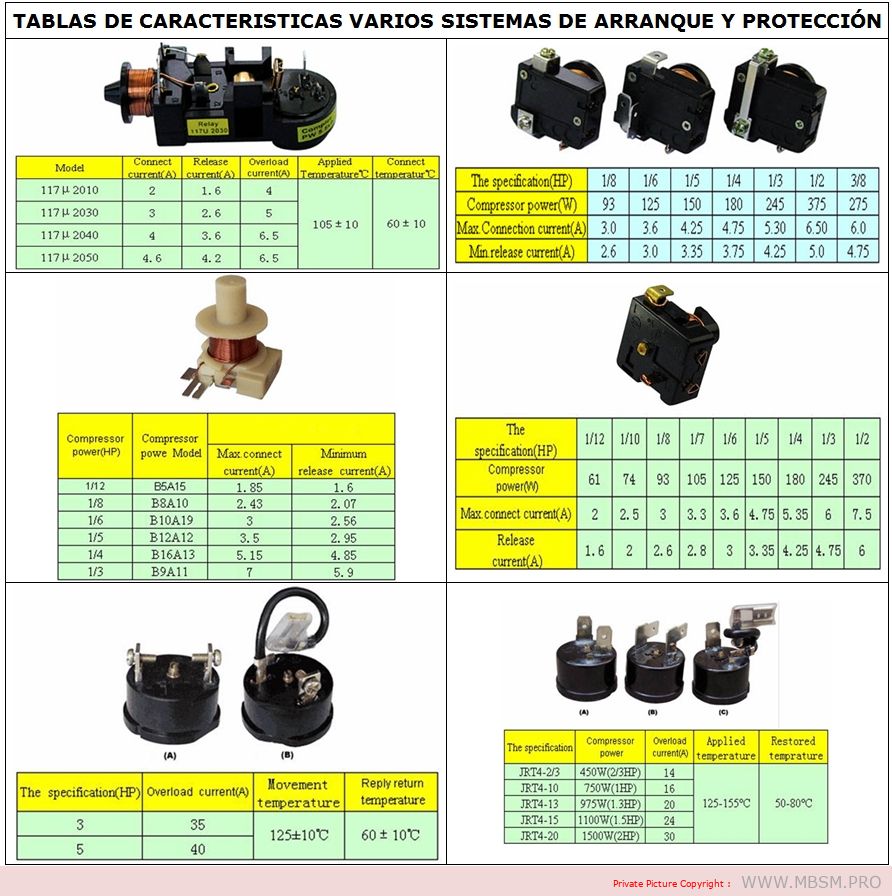
Content Table: Motor Starting Systems and Protection Specifications
1. General Specifications
Model
Concesor Current (A)
Relaxo Current (A)
Overload Current (A)
Applied Temperature (°C)
Concesor Temperature (°C)
1171/2010
2
1.6
4
–
–
1171/2030
3
2.6
5
105 ± 10
60 ± 10
1171/2040
4
3.6
6.5
–
–
1171/2050
4.6
4.2
6.5
–
–
2. Compressor Power Specifications (HF)
Component Power (HF)
Compressor Power Model
Max. Connection Current (A)
Minimum Release Current (A)
1/12
BSA15
1.55
1.6
1/8
BSA10
2.43
2.07
1/6
B10A19
3
2.56
1/5
B12A12
3.5
2.95
1/4
B16A13
5.15
4.85
1/3
B9A11
7
5.9
3. Compressor Power and Current Ratings
Component Power (HF)
Compressor Power (W)
Max. Connection Current (A)
Release Current (A)
1/12
61
2
1.6
1/10
74
2.5
2
1/8
93
3
2.6
1/7
105
3.3
2.8
1/6
125
3.6
3
1/5
150
4.75
3.35
1/4
180
5.35
4.25
1/3
245
6
4.75
1/2
370
7.5
6
4. IRFA Series Specifications
Model
Compressor Power (W)
Max. Connection Current (A)
Release Current (A)
IRFA-20
450W (20HF)
14
–
IRFA-10
750W (1HF)
16
–
IRFA-13
975W (1HF)
20
–
IRFA-15
1100W (2HF)
24
–
IRFA-20
1500W (2HF)
30
–
5. Additional Notes
Concesor Current: The current drawn by the compressor during operation.
Relaxo Current: The current at which the system releases or disconnects.
Overload Current: The maximum current the system can handle before tripping.
Applied Temperature: The operating temperature range for the system.
Concesor Temperature: The temperature range for the compressor during operation.
This table provides a clear and organized overview of the motor starting and protection systems, including their specifications and performance metrics. Let me know if you need further assistance!
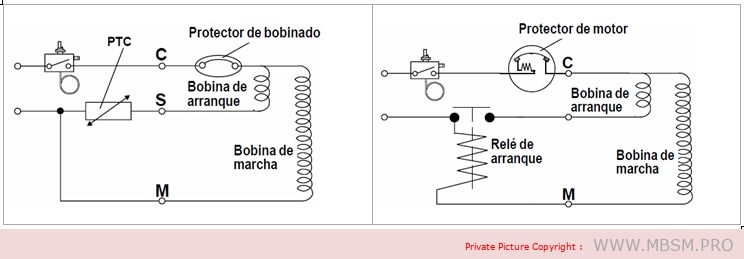
Sistemas de arranque:
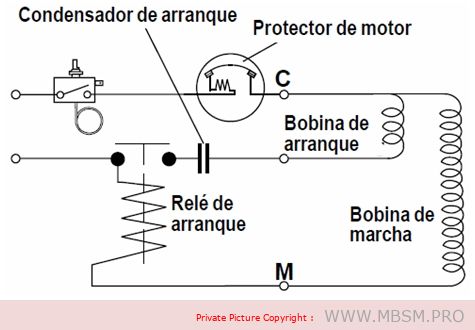
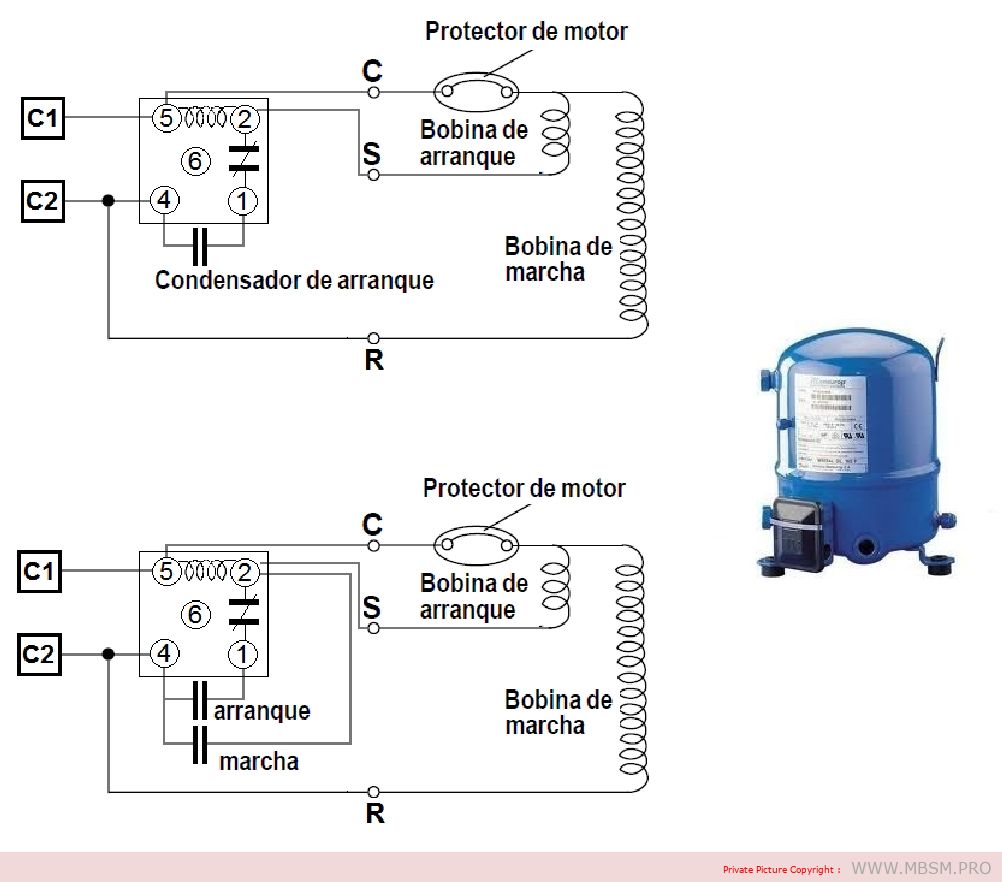
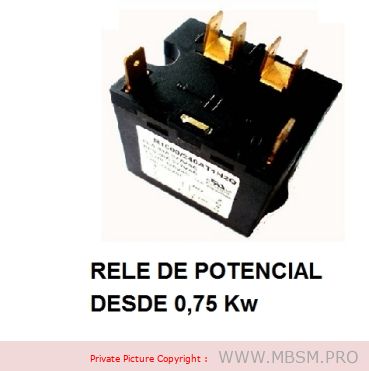
En el caso del relé de arranque, cuando la energía es aplicada al compresor, la bobina solenoide del relé atrae la armadura del mismo para arriba produciendo el cierre de los contactos, energizando la bobina de arranque del motor. Cuando el motor del compresor alcanza la velocidad de funcionamiento, la corriente de la bobina principal del motor será tal que la bobina solenoide del relé desenergiza permitiendo que los contactos del relé se abran, desconectando de esta manera la bobina de arranque del motor.
The PTC is a semiconductor with a positive temperature coefficient, which means that it offers no resistance to the passage of current when the unit is cold. When the unit is turned on, the current passing through the PTC causes it to heat up rapidly, creating such a high resistance in its circuit that the passage of current remains at a very low value but high enough to keep the PTC warm.
Prerequisites for using the PTC system:
– The thermostat must be used to ensure that the stop time allows for pressure equalisation in the system. – Depending on the size of the compressor, the stop period should be at least 3 to 5 minutes (e.g. the minimum times for TL are 3 minutes, and for SC 5 minutes).
The PTC system offers a number of advantages:
– Improved protection of the starter coil – PTC is not affected by voltage increases or decreases – Free from radio and television interference – No wear – Identical PTC starter system for many compressors of different sizes.
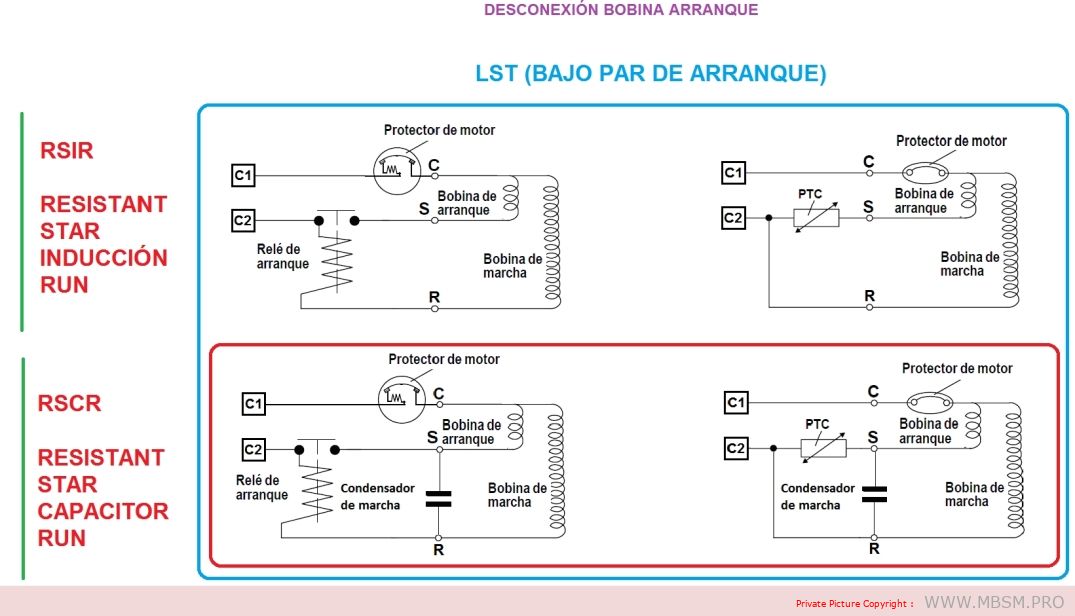
LST (low starting torque) engines
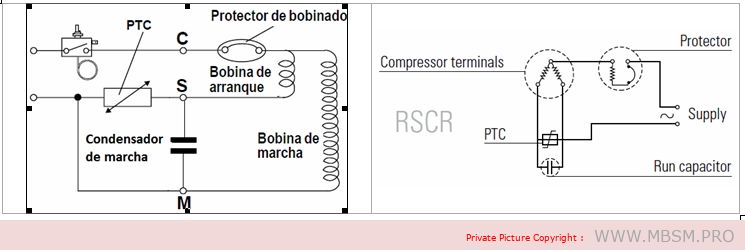
Compressors with RSIR and RSCR system motors have a low starting torque (LST) and are used in refrigeration appliances with capillary tubes, where pressure equalization takes place before each start.
The RSIR system incorporates a PTC thermistor or a relay and a bifilar winding (current relay) as starting equipment. The PTC needs to be kept off for a period of about 5 minutes to allow it to cool down before it can restart.
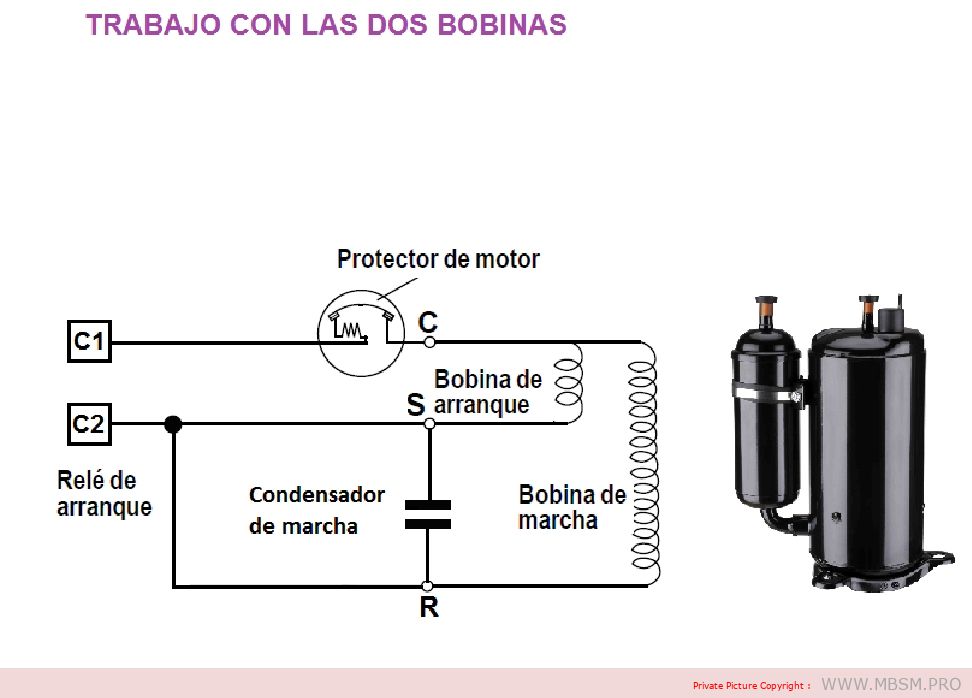
RSCR (Resistant Start Capacitor Run): Induction motor with resistor start and run capacitor.
The RSCR system, consisting of a PTC thermistor and a run capacitor, is mainly used in energy-optimized compressors.
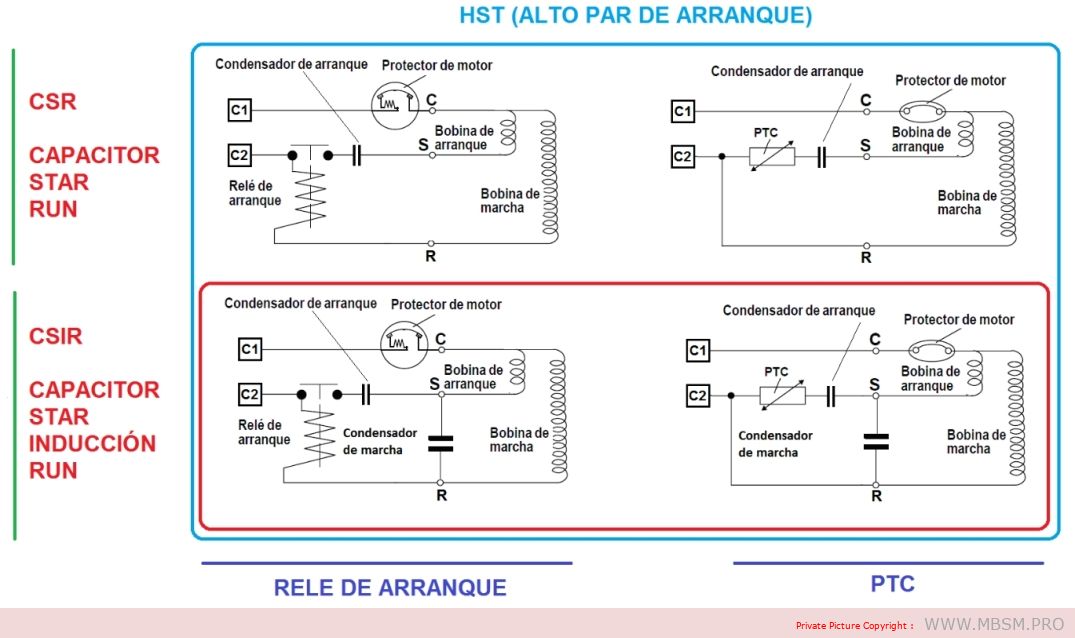
HST (High Starting Torque) Engines
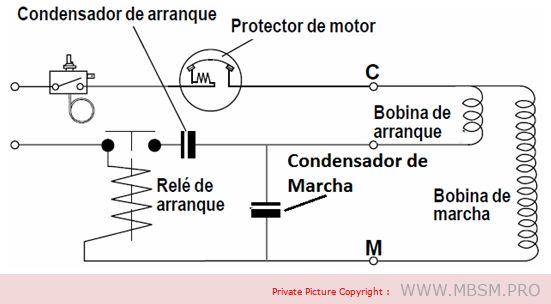
Compressors with CSIR and CSR type motors have a high starting torque (HST) and can be used in refrigeration appliances with capillary tubes as well as in systems with expansion valve operation (without pressure equalization).
– CSR (Capacitor Start Run): Induction motor with start capacitor and run capacitor
CRS systems require a voltage relay, a start capacitor and a run capacitor.
– CSIR (Capacitor Start Induction Run): Induction motor with starting capacitor.
The CSIR system consists of the starting relay and starting capacitor specified for each particular compressor type.
Graphic summary:
Conditions for a long service life
To achieve trouble-free operation and long service life of the hermetic compressor, the following conditions must be met:
1. The starting torque must be sufficient to enable the motor to start under the prevailing pressure conditions in the system. 2. The maximum torque of the motor must be sufficient to enable the motor to withstand the load conditions at start-up and during running. 3. During operation of the refrigeration system, the temperature of the compressor must never rise to levels that could damage its components. Condensation and compression temperatures must therefore be kept as low as possible. 4. Correct sizing of the refrigeration system in question, and a correct assessment of the operating conditions of the compressor under maximum loads. 5. Sufficient cleanliness and minimum residual moisture in the system.
Engine overload
The motor start-up is determined by the starting torque and/or the maximum torque of the motor. If the starting torque or the maximum torque are insufficient, the compressor cannot start or the start-up will be hindered and delayed due to the activation of the internal motor protector.
Repeated starting attempts subject the motor to overload, which will sooner or later result in failure. It is all a matter of selecting the right compressor for extreme working conditions.
Thermal overload
To ensure a long compressor life, operating conditions that lead to thermal decomposition of the materials used in the compressor must be avoided. The materials involved are coolant, oil and materials for motor insulation. Motor insulation consists of enamel for the copper winding, insulation for the stator core slot, insulating tape and power cables.
The R 134a, R 404A or R 507 refrigerants used today require advanced oils. Only special quality POE oils (polyester) are used.
For the application of compressors in domestic and commercial refrigeration devices with the refrigerants that are currently available, it is advisable to comply with the following rules.
Coil temperature
The coil temperature must never exceed 125°C during continuous operation. For limited periods of time, e.g. during compressor start-up or in case of short load peaks, the temperature should not exceed 135°C.
For commercial refrigeration with R 134a, the same values apply as for domestic refrigeration. However, cooling the compressor by means of a fan is recommended.
Condensation temperature
When using R 600a or R 134a refrigerants, the condensation temperature during continuous operation must not exceed 60°C. During short load peaks, the temperature must not exceed 70°C.
In commercial refrigeration where R 404A and R 507 refrigerants are used, the condensation temperature limit is 48°C during continuous operation and 58°C during peak loads.
Checking the compressor coils.
We must take into account that we are going to check an electromechanical part since it has an electrical part that makes another mechanical part work and it is necessary to carry out several types of tests to be able to determine if it is damaged and if it is possible to find out which part of the compressor is damaged. For these tests we will need measuring tools and a little expertise since in some we will use the senses, we will divide the tests into two parts, one when it is installed and the other when the compressor is alone without being installed.
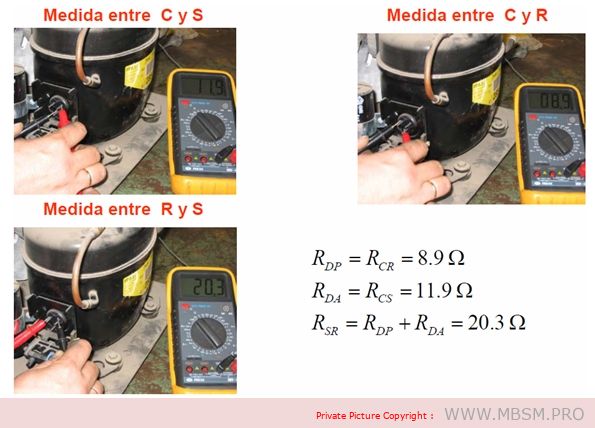
Measure continuity between the compressor coils:
For this test we will need a tester that measures continuity, we will have to disconnect the compressor cables, the test consists of verifying that there is continuity between the compressor terminals and measuring two by two we verify if there is no continuity in these terminals, we must take into account the temperature of the compressor, if it is cold the coil is open (damaged), if the compressor is hot we must wait for it to cool down because it may be that the thermal switch is open due to high temperature and we perform the test again.
If you are disconnected or off the computer, this test is performed in the same way.
Test if the amperage is too high:
For this test we will need a clamp meter and we will place it in one of the compressor lines, either the common one, preferably the start (maintenance) line, it should not be placed on the start-up line because it will not give us the measurement we need to check, we must know the normal working amperage of the compressor, start it, wait for it to stabilize, at start-up it normally consumes 5 times the working amperage, we wait for it to stabilize and if it is above that indicated on the plate it is too high in amperage, in this case we will have to check, capacitor, ventilation, pressures, voltage tension, to determine if it is because of the compressor or an external cause. If the compressor is disconnected from the equipment and the amperage exceeds that indicated it is a sign that it is damaged and we should not install it.
Determine if compressor pumps well:
Pressure test: it is not advisable to measure the output pressure, however there are technicians who when buying a used compressor usually measure the high pressure, if it exceeds 300 psi the compressor is fine and if when turning it off the pressure is maintained without it returning, it is an excellent sign that everything is fine, it is not low on compression since the valves do not return pressure, this test is not performed on rotary compressors because they work with the pressure and temperature of the same compressor to reach the normal working refrigerant gas pressure.
If the compressor is installed when measuring with the pressure gauge and registering that the high pressure does not rise and the low pressure is very high, it is a sign of decompression. If it is a rotary equipment, we look at the suction filter that is located at the compressor inlet to see if it freezes. If it is frozen it is due to obstruction. If, upon observing this, everything is normal, it is most likely that the pressures are destabilized due to low compression. Another sign is that the amperage with the low pressure high and the high pressure low will show a consumption well below normal since it is not exerting force to maintain a high pressure in the condenser.
Determine if the compressor is seized:
For this we need to use the ammeter or clamp meter when trying to start the having a suitable capacitor and in good condition it should not exceed the starting amperage which is 5 times the nominal or working amperage, if it exceeds it is a sign that it is blocked, we can use an additional starting aid to the capacitor and if with this the result is the same (taking into account that the voltage is normal) we will determine that the compressor is seized and it is necessary to replace it.
When I mention at the beginning that we should use our senses, I mean that if we are testing a compressor and we notice a strange noise when starting it, this is not a good sign, and if it is already in full operation and sounds unusual, it is a bad sign, as well as looking at the part where the cables are connected to the compressor, since this is a seal that sometimes gets damaged and allows oil to leak, be attentive and verify that the filter that is fixed by a belt in the case of rotary compressors is not subject to this belt being damaged, since it also produces noise, refrigerant gas leaks and vibrations, these are details that we should be very attentive to.
Note: We should always try to exhaust every last resource to determine if a compressor is damaged, because if we are technicians and they seek a second opinion, and it works in the hands of the second opinion, the client will think the worst of us and our reputation will be in jeopardy, and if the compressor is our property, we should also exhaust all resources, since it is the most expensive part of our air conditioning, both its individual price and the expenses generated in labor and materials for its installation. We must be very clear that it no longer works for ourselves and for others.
Checking the starting capacitor.
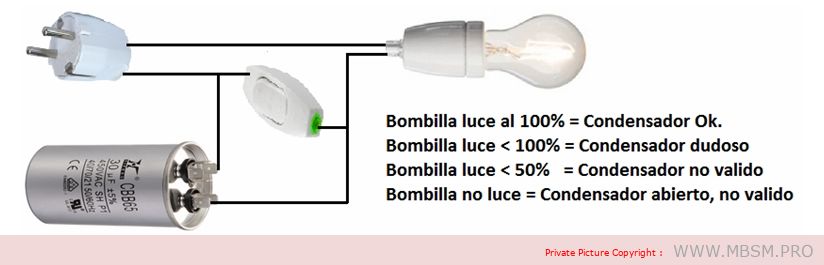
To test a starting capacitor in a simple way, we simply connect it in series with an incandescent light bulb and supply it with AC voltage. We will also complement the assembly with a normally open push button like the one used in doorbells, which we will connect in parallel with the capacitor according to the following diagram.
Calculation of the starting capacitor capacity:
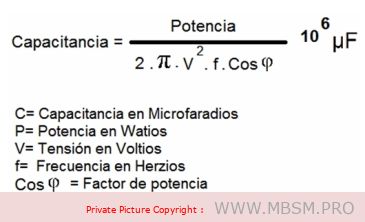
Many refrigeration compressors are single-phase motors. The problem with supplying a motor with 230 V, with a single phase, means that the torque needed for starting is not generated. To “trick” the motor and generate a fictitious phase, a capacitor is used that shifts the supply voltage by 90º. In this way, we will have the necessary starting torque. To obtain the best and most powerful starting torque of the single-phase motor, which will result in the refrigeration compressor working better and with more force and not jamming… the capacity of the capacitor that obtains this 90º phase shift must be calculated.
It is not true that the larger the capacitor, the greater the starting torque of the single-phase motor. The only thing that is obtained is a greater phase shift, which will produce a lower starting torque of the single-phase motor. In fact, if the capacitor is too large, it may happen that the phase shift is 360º, that is, 0º, so that the single-phase motor would have no starting torque. In any case, capacitors with a higher or lower capacity than necessary will generate phase shifts lower or higher than the optimum, which will result in starting torque values lower than the optimum. Starting with starting torque lower than the optimum can result in our single-phase motor burning out; it has to make more effort than necessary to start, the intensity increases and the motor burns out, which would end up being damaged.
The highest starting torque for the single-phase motor is obtained when the phase shift we obtain with our capacitor is 90º. To obtain this phase shift we will proceed to calculate the capacitor of a single-phase motor in the following way.
Suppose we have an engine with the following characteristics
Power 150 W Working voltage 230 V. Frequency 50 Hz. Cosine of phi = 0.85
Applying the formula, the capacitance is 10.61 microfarads.
Therefore, the optimal ideal capacitor for the single-phase motor in the example is 10.61 uF, as 10.61 micro Farads is a capacitor value that we cannot find on the market, we will choose to buy the value that is closest in this case 10 micro Farads.
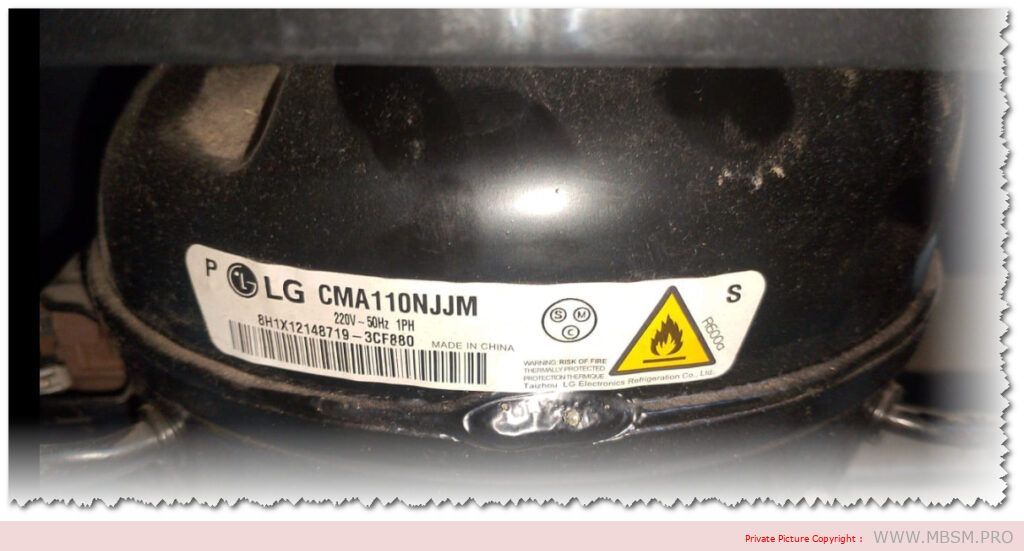
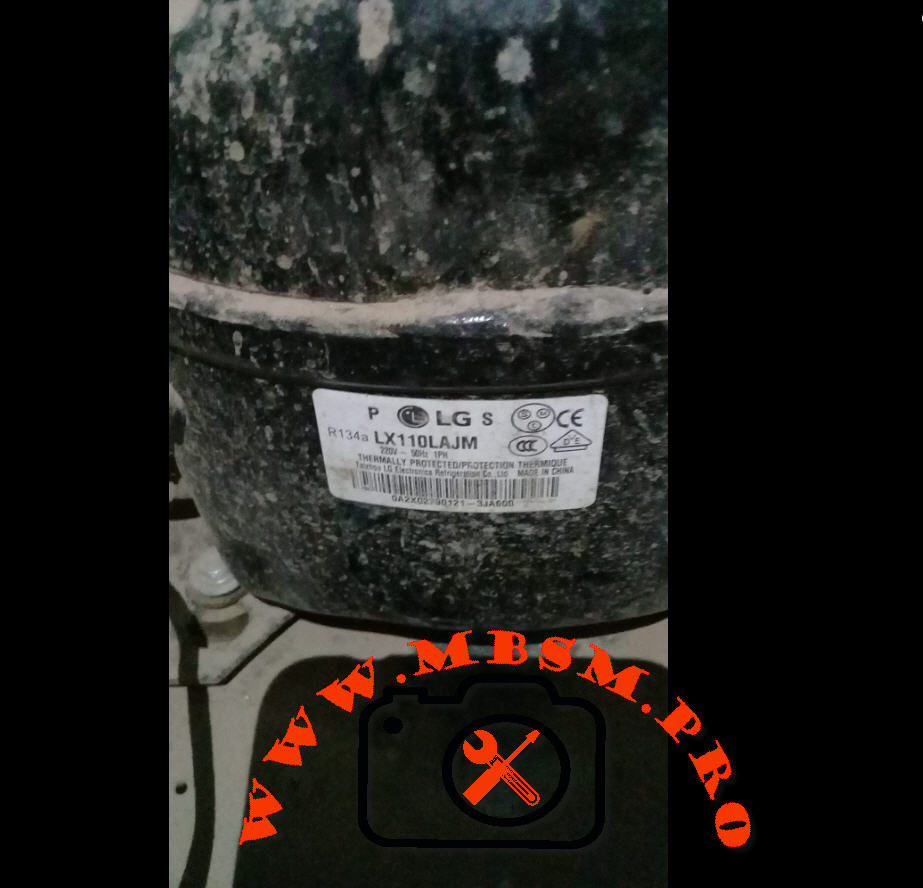
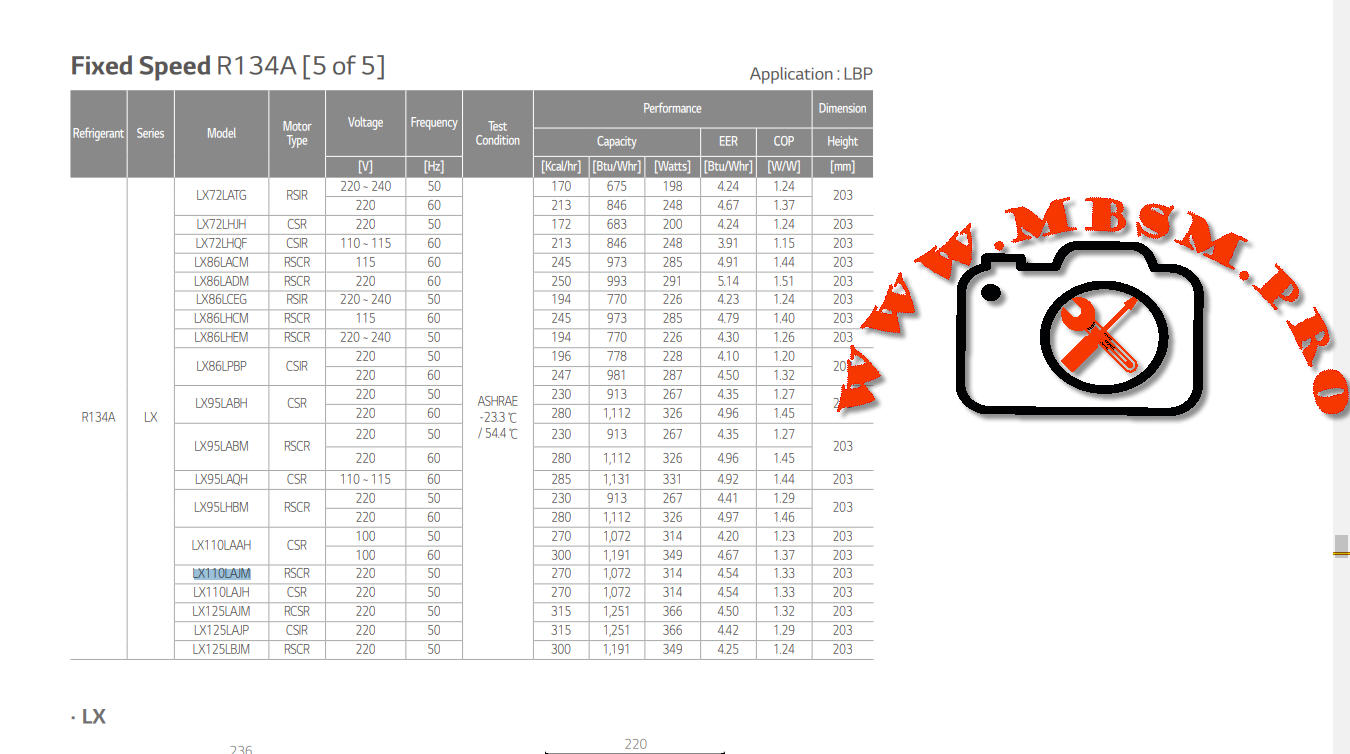
The LG CMA110NJJM compressor is a classic model that operates on a single phase with a voltage of 220V and a frequency of 50Hz. It boasts a fixed speed and is powered by a 1/4 HP motor. This compressor is perfect for applications requiring a steady and reliable performance.
Energy Efficiency
Energy efficiency is a crucial factor when choosing a compressor. The LG CMA110NJJM excels in this area with an impressive energy consumption of 198 watts. It provides 170 kcal of cooling capacity and 676 BTU/h, ensuring optimal performance without excessive energy usage.
Refrigerant Type
The compressor uses R600a refrigerant, which is known for its environmental friendliness and efficiency. R600a is a hydrocarbon refrigerant that has a low global warming potential, making it a sustainable choice for modern applications.
LBP (Low Back Pressure)
One of the standout features of the LG CMA110NJJM is its low back pressure (LBP) design. This feature ensures that the compressor operates smoothly and efficiently, even under demanding conditions. The LBP design helps in maintaining consistent performance and reducing wear and tear.
Applications
The LG CMA110NJJM compressor is versatile and can be used in a variety of applications, including:
Refrigeration Systems: Ideal for domestic and commercial refrigerators and freezers.
Air Conditioning: Suitable for small to medium-sized air conditioning units.
Cooling Solutions: Perfect for cooling solutions in various industrial and commercial settings.
Why Choose LG CMA110NJJM?
Reliability: LG is a trusted brand known for its high-quality products. The CMA110NJJM compressor is no exception, offering reliable performance and durability.
Efficiency: With its energy-efficient design and low back pressure feature, this compressor ensures optimal performance with minimal energy consumption.
Environmental Friendliness: The use of R600a refrigerant makes it an eco-friendly choice, contributing to a greener environment.
Versatility: Suitable for a wide range of applications, making it a versatile addition to your cooling and refrigeration systems.
Conclusion
The LG CMA110NJJM compressor is a top-tier product that combines efficiency, reliability, and environmental friendliness. Whether you need it for refrigeration, air conditioning, or other cooling solutions, this compressor is a smart investment. Upgrade your systems with the LG CMA110NJJM compressor and experience the difference in performance and efficiency.
For more information or to purchase the LG CMA110NJJM compressor, visit Mbsm.pro today!
The 1/5 HP compressor is a common type of refrigeration compressor used in various applications, particularly for domestic refrigerators and commercial refrigeration systems. Here are some key specifications and details based on the search results:
Power Rating: 1/5 HP (approximately 0.15 kW).
Refrigerants: Typically used with R134a or R600a refrigerants.
Cooling Capacity: Varies by model, but often around 120W to 160W depending on the specific design and application.
Applications: Suitable for low back pressure systems, commonly found in beer coolers, dehumidifiers, and domestic refrigerators.
Model:SC21G Refrigerant:R134A Power:220-240V/50/60HZ Back Pressure:Low/High Power Source: AC Power
Description
We take ‘Quality Standards, Innovation, Continuous Improvement, Customer Satisfaction’ as our quality policy, take the recruitment of talents as the foundation of the enterprise, and regard improving product quality as our mission. We provide you with a one-stop service for Tecumseh Piston Compressor For Air Conditioning, 30HP Copeland Semi-hermetic Compressor, DIXELL Controller For Compressor at a reasonable price. Welcome domestic and foreign customers to call and negotiate. We also continuously innovated and improved our enterprise management system to improve efficiency, providing professional, reliable and high-quality products to serve customers around the world. If you pursuit the Hi-quality, Hi-stable, Competitive price parts, company name is your best choice! We are dedicated to the satisfaction of customers and try to meet their different requirements, sample orders are accepted.
Hot sales R134a SECOP Piston Compressors SC21G
Product introduction
SECOP Hermetic Piston Compressors
Model:SC21G
Refrigerant:R134A
Power:220-240V/50/60HZ
Back Pressure:Low/High
Power Source: AC Power
Voltage range[V]:187- 254
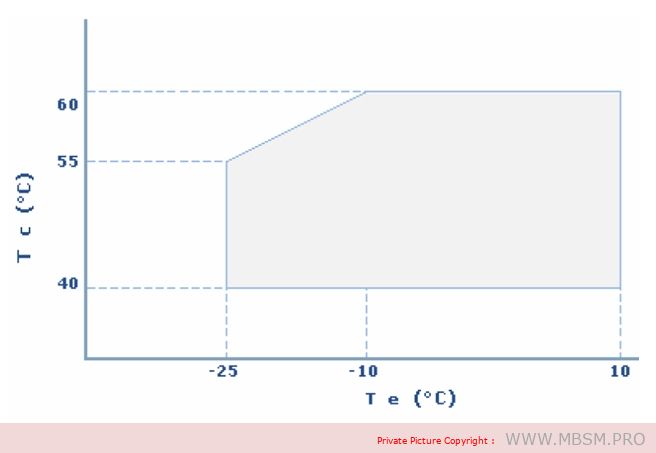
Evaporating temperature [F]:-25 to -5
Transport Package: Wood Package
Product feature
Model
Electric Source
Power(HP)
Capacity(W)
Refrigerant
Back Pressure
SC15CM
220V-240V 50Hz
1/2HP
375
R22
Low
SC18CM
220V-240V 50Hz
5/8HP
469
R22
Low
SC15D
220V-240V 50Hz
5/8HP
469
R22
High
SC15G
220V-240V 50Hz
3/8HP
281
R134a
Low/High
SC18G
220V-240V 50Hz
1/2HP
375
R134a
Low/High
SC21G
220V-240V 50Hz
5/8HP
469
R134a
Low/High
SC10CL
220V-240V 50Hz
1/3HP
250
R404A
Low
SC15CL
220V-240V 50Hz
1/2HP
375
R404A
Low
TL5G
220V-240V 50Hz
R134A
Low/High
Product Application
Cold storage, frozen food processing and storage, quick freezing cold storage, low temperature shelf, ice cream machine, showcase, chiller, large integrated air conditioning, laboratory and medical equipment, cold dryer, glass door commercial freezer, vending machine, Ice machine, beverage cabinet, heat pump, milk cooling tank, etc.
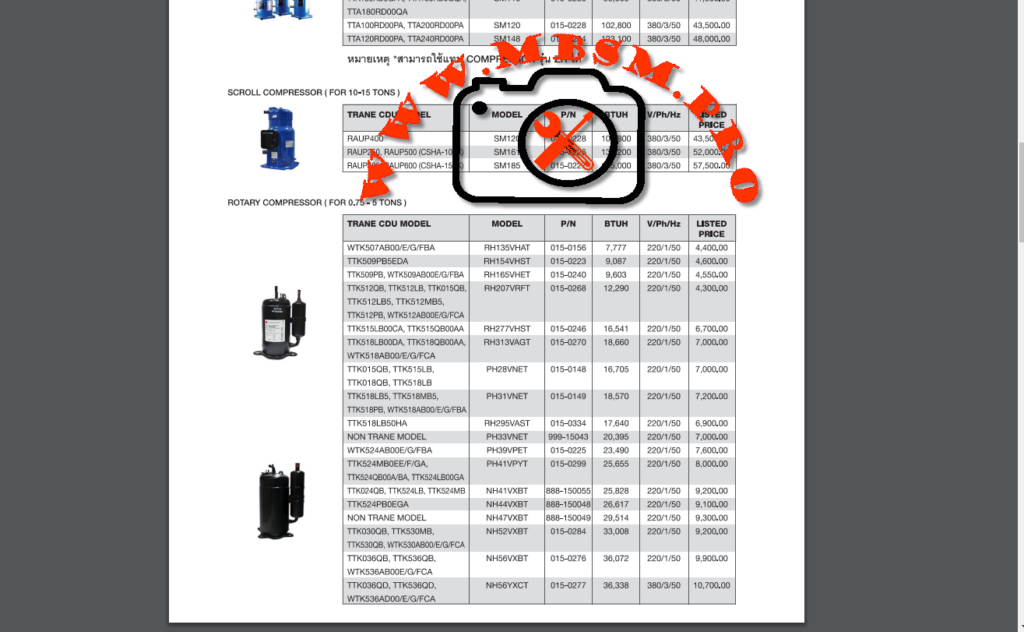
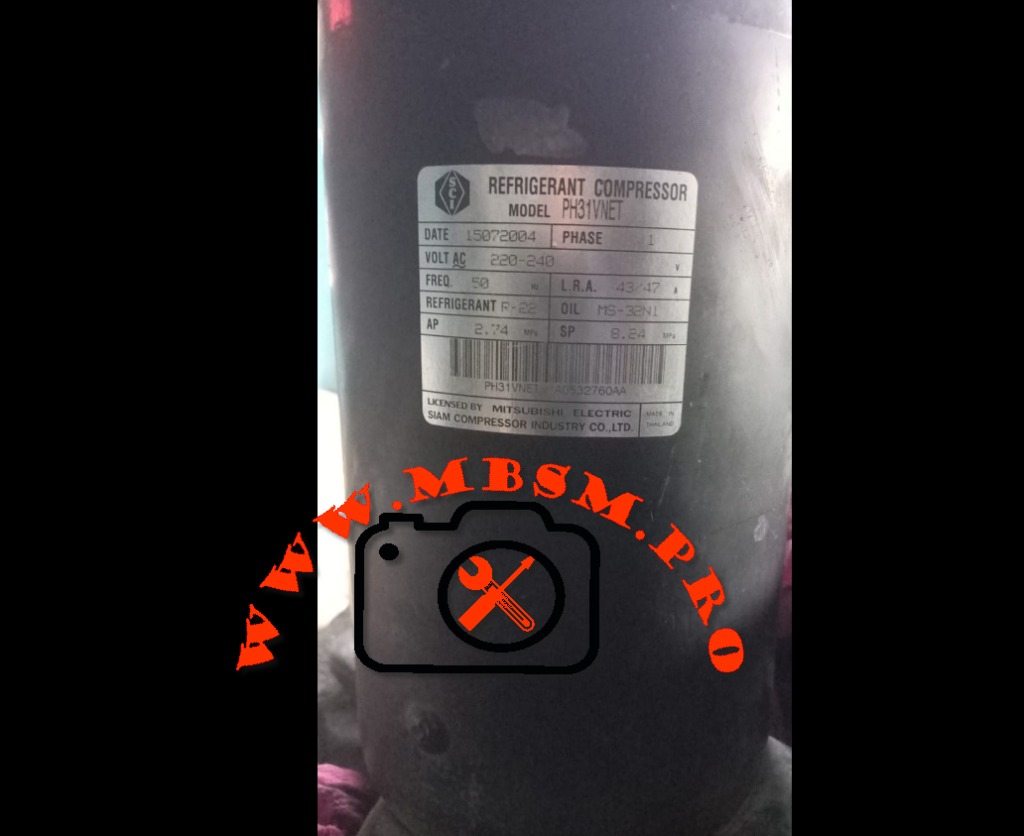
The PH31VNET is a rotary compressor primarily used in refrigeration and air conditioning systems. Here are its key specifications and features:
The PH31VNET rotary compressor has a power rating of approximately 1.5 horsepower (hp). This rating is commonly used to describe the power output of compressors in air conditioning and refrigeration applications, indicating its capability to handle cooling loads effectively
Specifications
Refrigerant Gas: R22
Input Power: 3160W
Cooling Capacity: 18570 BTU
Voltage: 220-240V, 50Hz, Single Phase
Brand: Often associated with Mitsubishi and Siam Compressor Industry Co., Ltd.
Applications
The PH31VNET compressor is suitable for various applications including:
Air conditioning systems
Refrigeration units
Dryers
This model is designed to provide efficient cooling and is typically used in both residential and commercial settings. Its compatibility with R22 refrigerant makes it relevant for systems that utilize this type of gas, although there may be considerations regarding regulatory compliance for refrigerants in certain regions.Overall, the PH31VNET is recognized for its reliability and performance in cooling applications.
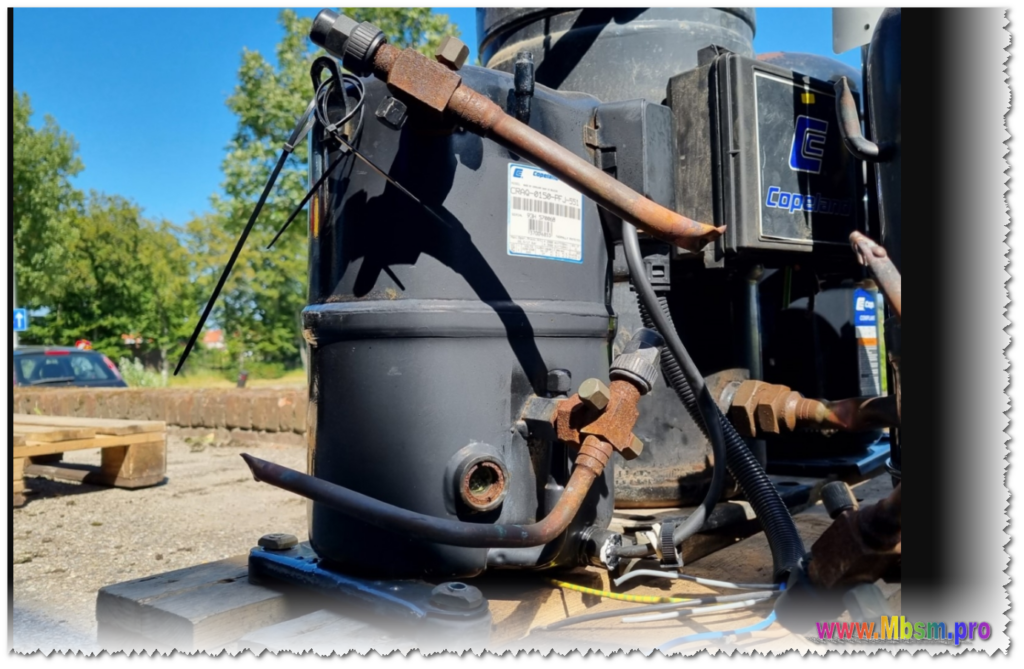
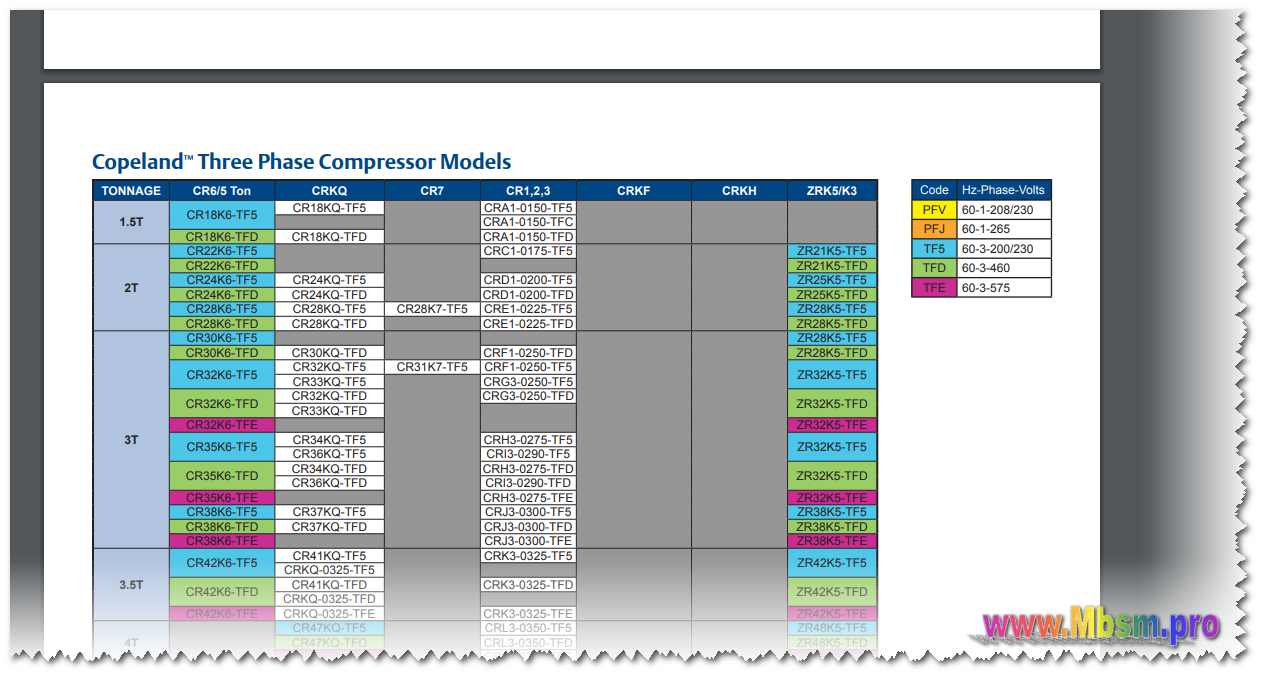
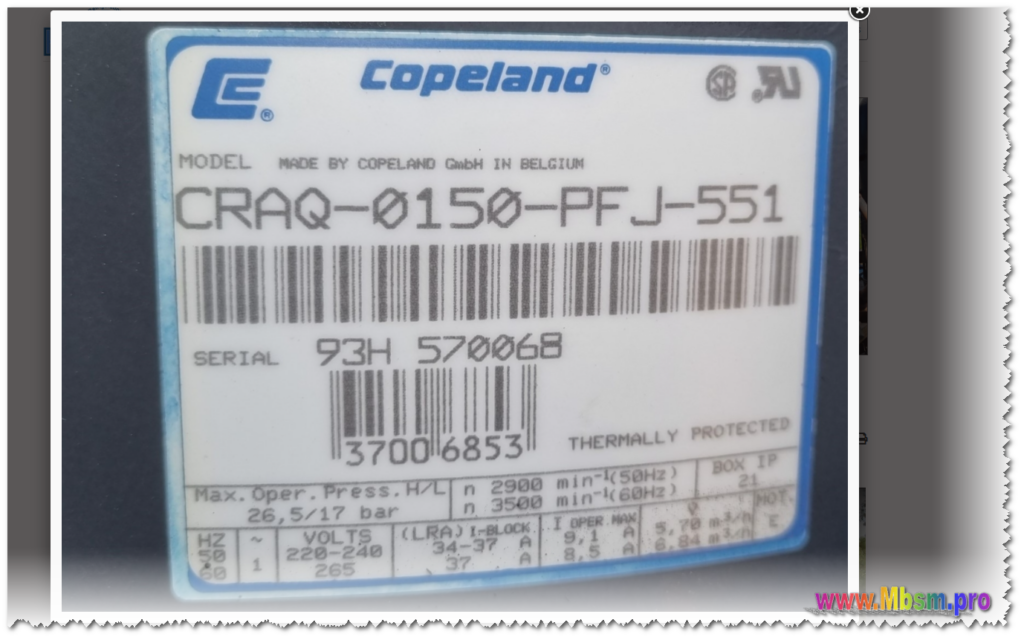
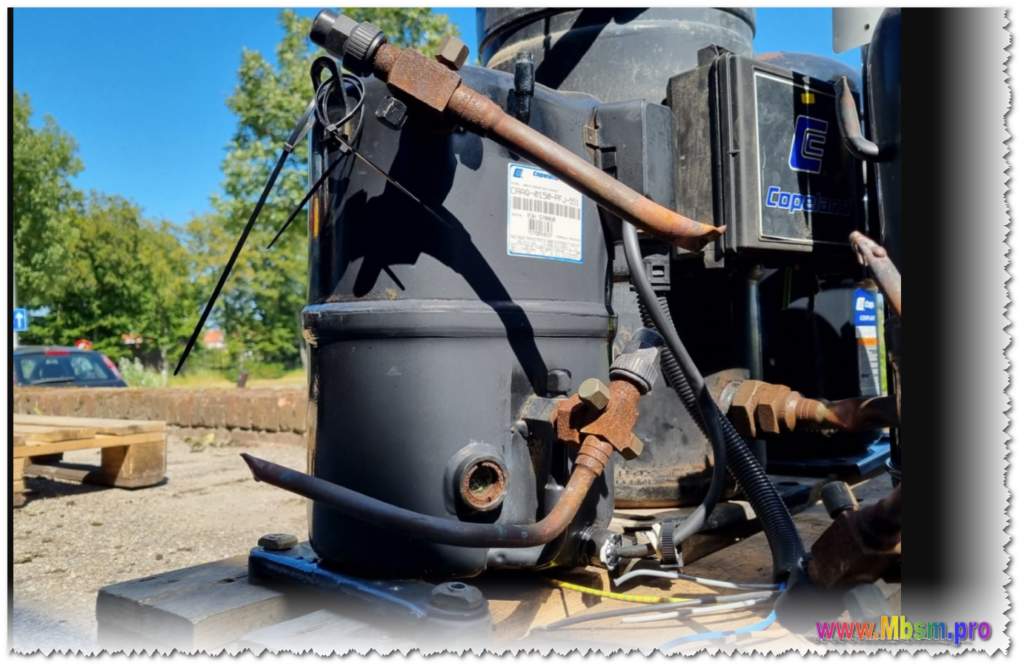
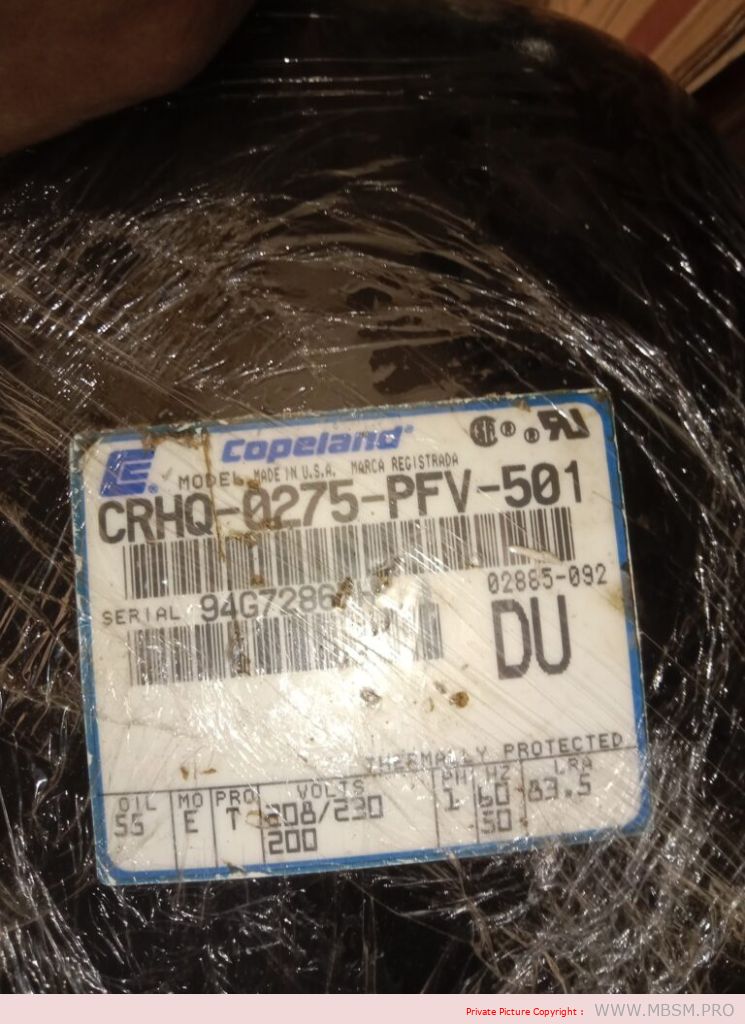
The compressor model CRAQ-0150-PFV-501 is a Hermetic compressor manufactured by Copeland. It is a 1-phase, 208/230V compressor designed for air conditioning applications. The compressor uses HCFC or R-22 refrigerant and operates at 60Hz.
Here are some of the key specifications of the CRAQ-0150-PFV-501 compressor:
Capacity: 18,300 – 23,900 BTU/hr
Power: 1,910 – 1,520 W
Current: 8.8 – 7.0 Amps
EER: 9.6 – 15.7 BTU/Wh
Mass Flow: 268 – 308 lbs/hr
Sound Power: 72 – 77 dBA
Vibration: 1.7 – 2.7 mils (peak-peak)
Displacement: 2.00 in^3/Rev
Overall Length: 9.44 in
Overall Width: 9.13 in
Overall Height: 13.56 in
Mounting Length: 7.50 in
Mounting Width: 7.50 in
Mounting Height: 13.94 in
Suction Size: 5/8 in
Discharge Size: 3/8 in
Initial Oil Charge: 55 oz
Oil Recharge: 51 oz
Net Weight: 61.0 lbs
Internal Free Volume: 345.0 in^3
This compressor is no longer in production and has been replaced by newer, more efficient models. However, it is still a popular choice for replacement applications due to its reliability and performance.
Mbsm.pro, All EMERSON, COPELAND, SCROLL, COMPRESSOR, ZR SERIES, zr34k3e-pfj-522-pfj- 522
1.Brand: 2.Model:ZR/ZB/ZF/ZH/ZSI 3.Refrigerant ForR:ZR22,R407; ZR/ZB compressors For R407C,R134a,R404a,R507 4.Motor voltage:380-460V/3/50-60Hz 5.Net weight:26kg-180kG 6.Country of origin:Earthenware
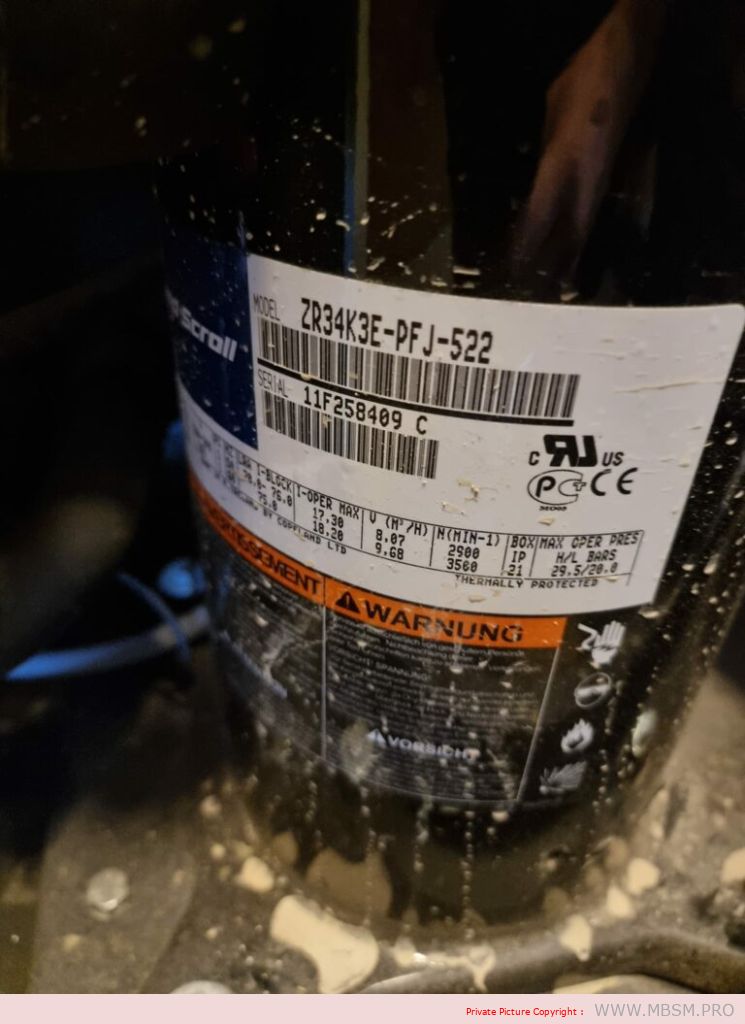
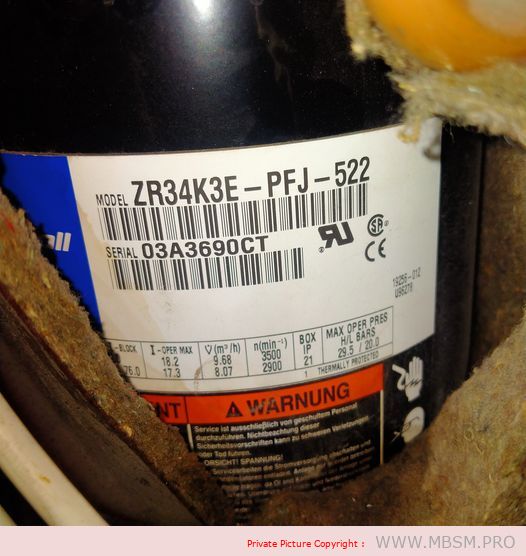
Copeland Scroll ZR34K3E-PFJ-522
ZR Copeland Scroll compressors, for R22, R407C and R134a, for comfort and process/precision cooling applications. Applied in the air conditioning and comfort industry for water chillers, rooftops and close control unit applications. Several, fully Copeland qualified, multiple compressor assemblies (tandem and trio) are available to allow the use of Copeland Scroll compressors into large capacity systems (ex. up to 500kW air cooled chillers) able to deliver optimal comfort, low operating cost with higher seasonal efficiency (ESEER).
Features and Benefits
Copeland Scroll axial and radial compliance for superior reliability and effiiency
Wide scroll line-up for R22, R407C and R134a
Low Total Equivalent Warming Impact
Low sound and vibration level
Copeland qualifid tandem and trio confiurations for superior seasonal effiiency (ESEER)
Maximum Allowable Pressure (PS)
ZR18 to ZR81: Low Side PS 20 bar(g) / High Side PS 29.5 bar(g)
ZR94 to ZR380: Low Side PS 20 bar(g) / High Side PS 32 bar(g)
Note: Product image may vary and is for your reference only.
Get to know our wide range of Copeland Hermetic Compressors, Copeland Semi-Hermetic Compressors, Copeland Discus Compressors, Copeland Scroll Compressors (Tandem and trio), and Copeland Screw Compressors. We have for sale all its components, accessories and parts for their repair and replacement.
We have Repair and Remanufacturing in Semi-hermetic and Screw-type models.
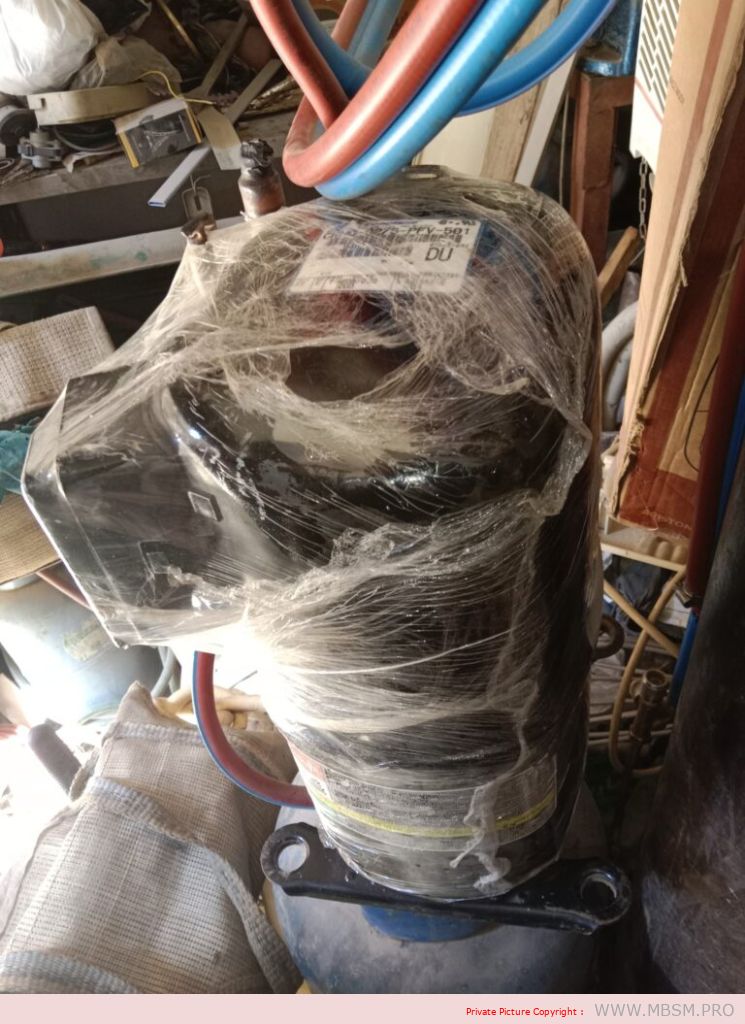
CRHQ-0275-PFV
Technical Data CRHQ-0275-PFV
HCFC, R-22, 60 Hz, 1 -phase, 208/230 V
Air-conditioning
Performance
Evaporator Temp(ºF) 45 45
Condensing Temp(ºF) 130 100
Return Gas (ºF) 65 65
Liquid Temp (ºF) 115 85
Capacity (Btu/hr) 33800 46100
Power (W): 3410 2820
Current (Amps): 15.5 13.0
EER (Btu/Wh): 9.9 16.3
Mass Flow (Ibs/hr): 495 595
Sound Data
Sound Power (dBA): 75 Avg 80 Max
Vibration (mils(peak-peak)): 1.1 Avg 2.1 Max
Record Date: 2004-08-19
Mechanical
Displ(in^3/Rev): 3.89
Displ(ft^3/hr): 472.26
Overall Length (in): 9.44
Overall Width (in): 9.13
Overall Height (in): 14.56
Mounting Length (in): 7.50
Mounting Width (in): 7.50
Mounting Height (in): 14.94*
Suction Size (in): 3/4 trozo
Discharge Size (In): 3/8 trozo
Initial Oil Charge (oz): 55
Oil Recharge (oz): 51
Net Weight (ibs): 68.0
Internal Free Volume (in^3): 385.0
Horse Power: NA
*Overall compressor height on Copeland Brand Product´s specified mounting grommets.
Electrical
LRA-High*: 83.5
LRA Low*: NA
LRA-Half Winding: NA
MCC (Amps): 27.9
Max Operating Current: NA
RLA(=MCC/1.4;use for contactor selection): 19.9
RLA(=MCC/1.56;use for breaker & wire size selection): 17.9
RPM: 3500
UL File No: SA-2337
UL File Date: 1984-12-28
*Low and High refer to the low and high nominal voltage ranges for which the motor is approved.
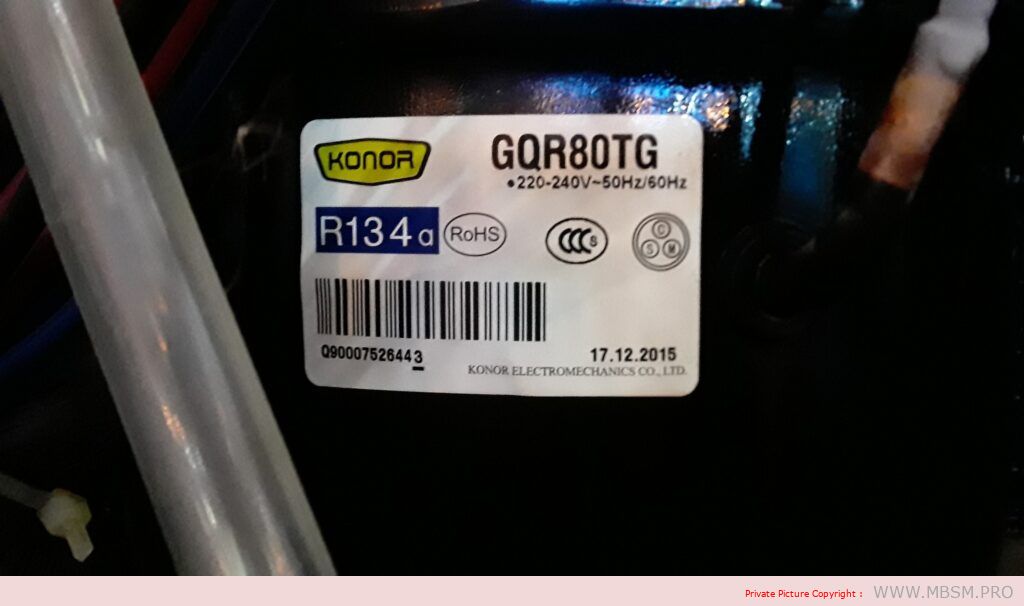
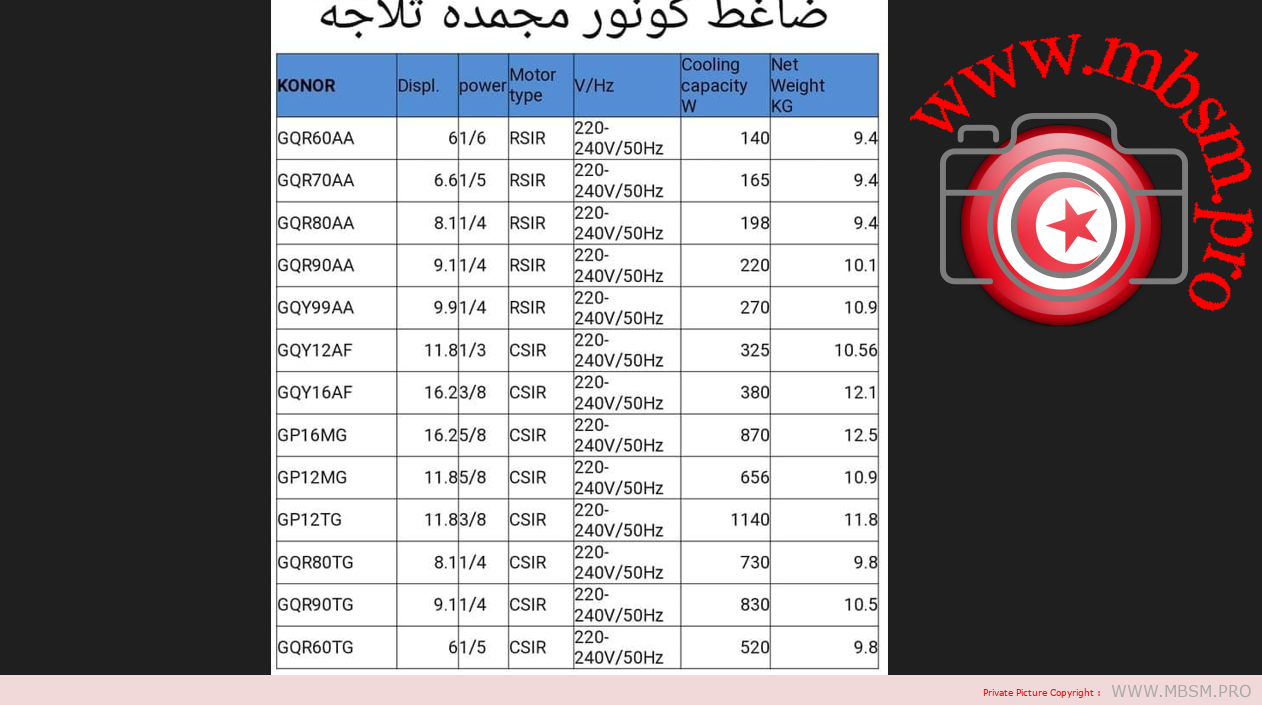
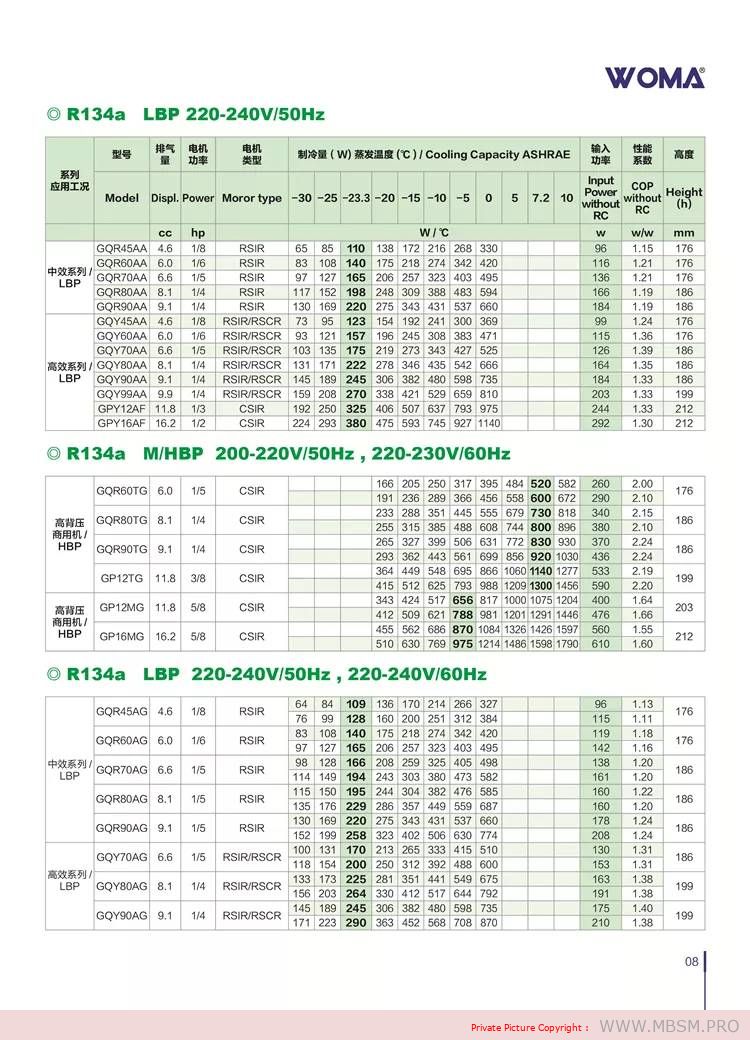
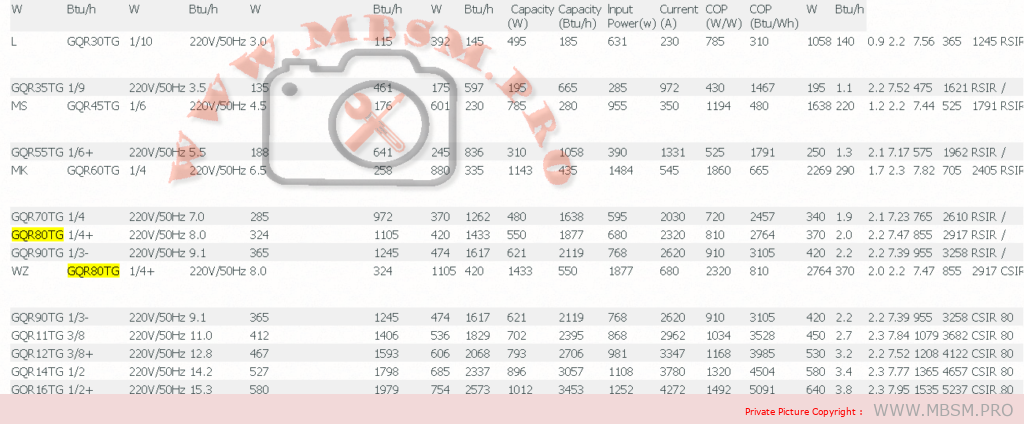
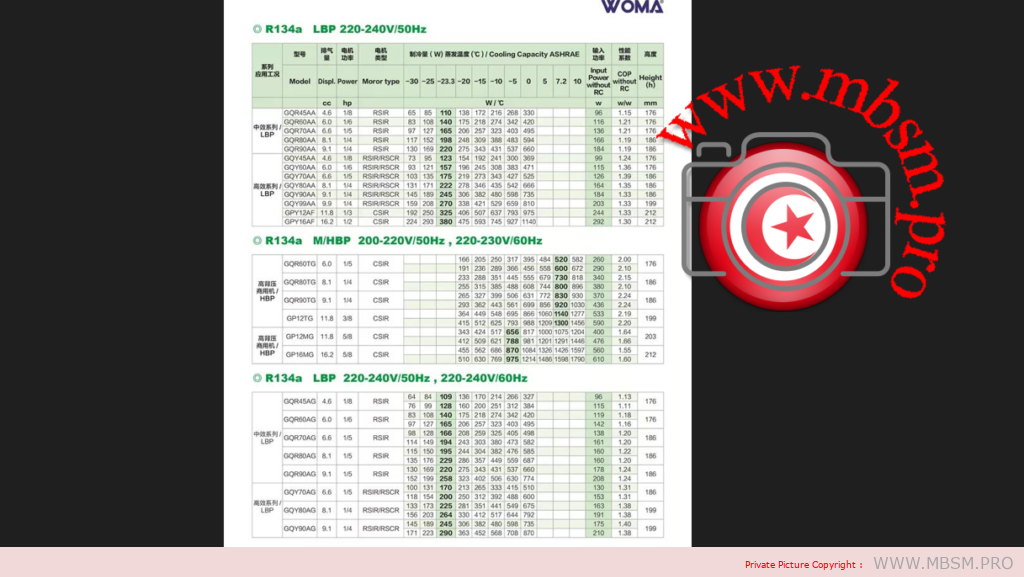
1.Product Performance 1)GQR80TG,MQseries, use R134a refrigerant; 2)Voltage application 220V to 240V; 3)Frequency for 50HZ; 4)Motor type:CSR; 5)Cooling type: F; 6)Starting device is PTC/CURRENT Relay; 7)Application: HBP; 8)Nominal power is 1/4+ HP; 9)COP is 2.25 with the cooling capacity 220W.
Basé sur l’état d’essai (ASHRAE) Température d’évaporation: 7.2 degrés Température ambiante: 35 degrés Température de refroidissement: 46.1 degrés Température de condensation: 54.4 degrés Température d’aspiration: 35 degrés
1. Low levels of noise and vibration. 2. Developed for LBP applications can be adapted for M / HBP applications.
Technical Features
1. Standard, medium, high and very high levels of efficiency 2. Available for R-134A, R-600A and R-290
Household Applications
– Freezers – Refrigerators – Wine Coolers
Commercial Applications
– Horzontal Freezers – Merchandisers – Equipment for professional kitchens – Dispenser – Water Coolers – Wine Coolers – Ice makers – Vending Machines – Minibar
They are the best selling high-tech compressors sold in the world. They are ideal for domestic refrigeration and also for small commercial applications. They are small, have low noise and vibration levels, they achieve the highest levels of efficiency available in the market for this category.
For more details of the refrigeration compressor, please contact us.