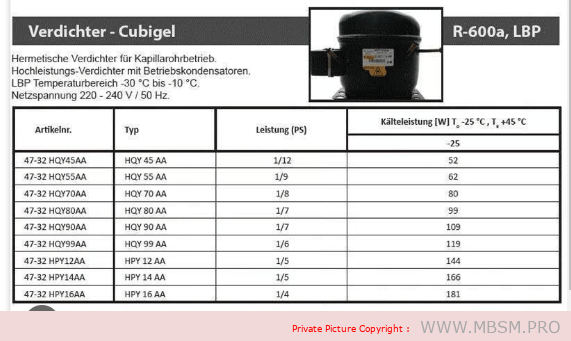
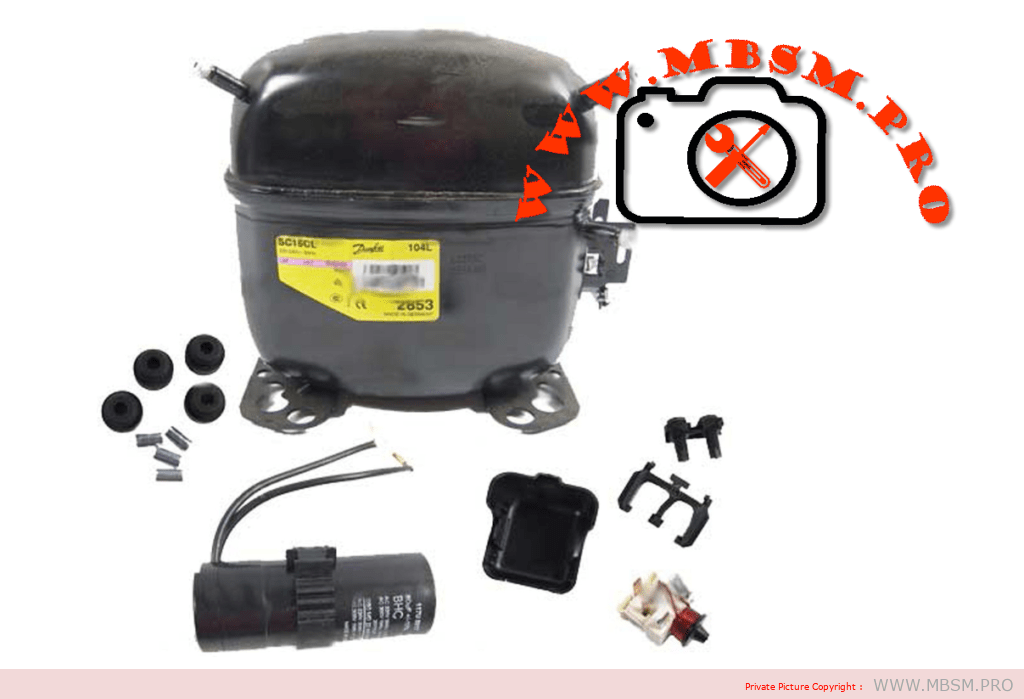
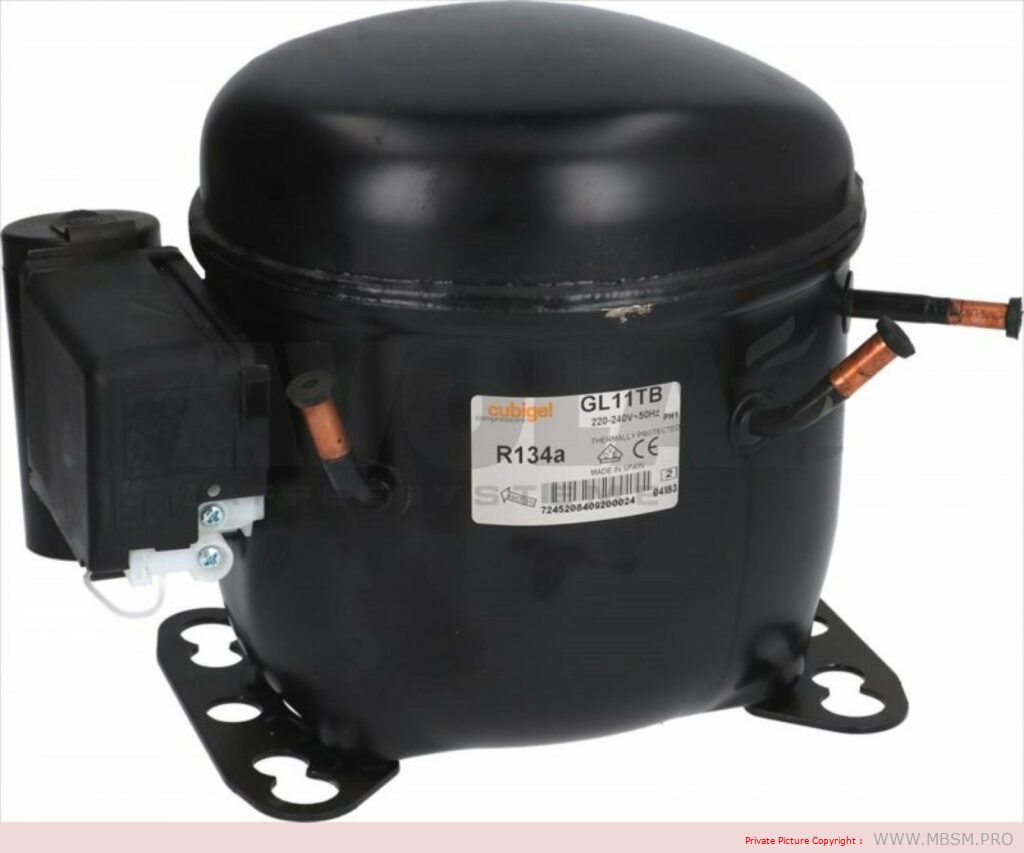
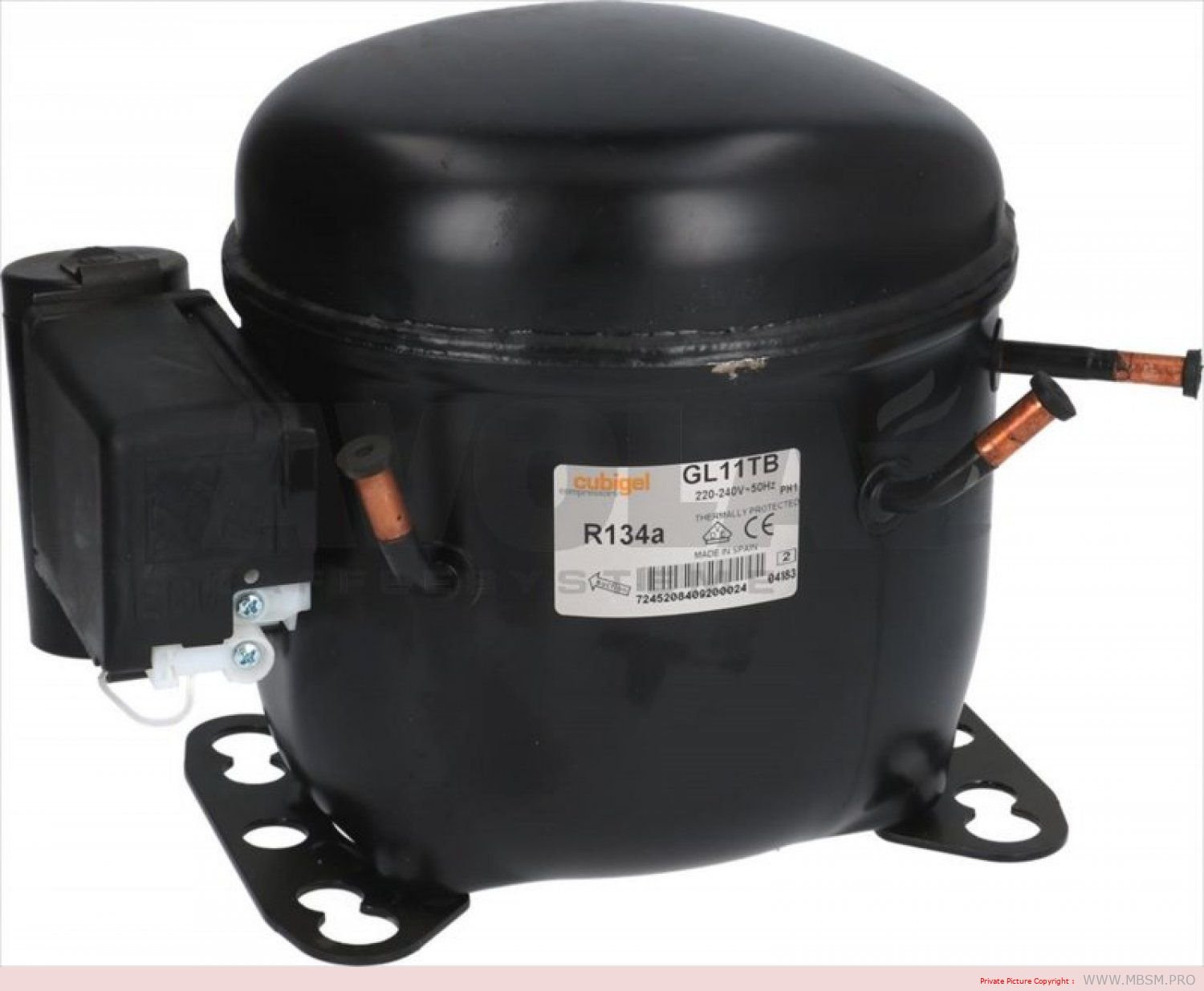
HTK70AA; compressor SECOP HTK70AA, LBP – R600a, 220 – 240V/1/50Hz, displacement 6,64 [cm3], motor type RSCR/RSIR, oil type: mineral, oil charge 165 [cm3], 86,7 [W] at -25 / +55 [°] according EN 12900, power consumption 69,9 [W], current consumtion 0,40 [A], expansion device: capillary, static cooling, weight 7,9 [kg]replacement for: HQY70AA, HQY75AA
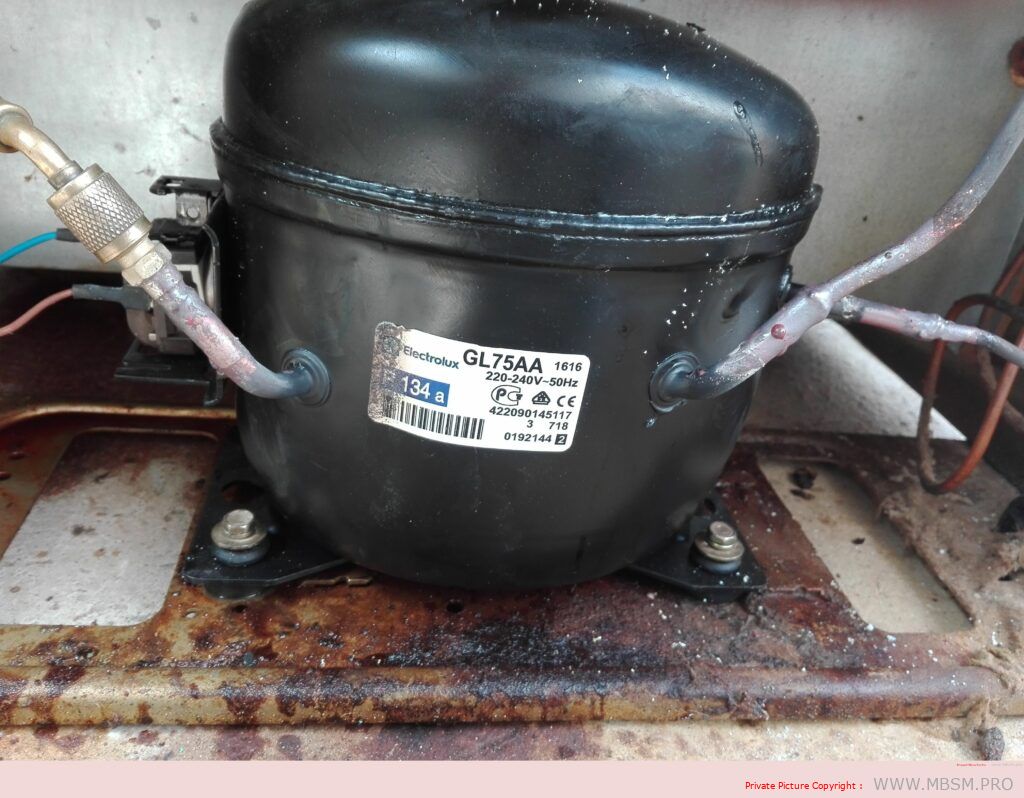
If you need to replace a compressor in a refrigerator, you need to choose the right analogue
Category: Développement,expertise
written by www.mbsm.pro | 11 January 2024
If you need to replace a compressor in a refrigerator, you need to choose the right analogue.
Compressors are designed for different types of applications, namely, they are classified according to their temperature range.
LBP (Low Suction Pressure) indicates a range of low evaporation temperatures, typically -10°C to -35°C or even -45°C, these compressors are designed for use in freezers or refrigerator-freezers.
MBP (mean suction pressure) indicates the range of average evaporation temperatures, typically -20°C to 0°C. Such compressors are used in refrigerators, milk coolers, ice makers and water dispensers.
HBP (high suction pressure) indicates a range of high evaporation temperatures, typically -5°C to +15°C, and is used, for example, in dryers and individual liquid coolers. The additional letter T indicates a “tropical” design of the compressor. This means that the compressor is designed for high ambient temperatures and can operate in unstable power conditions
Also, when repairing refrigerators, it is important to take into account the length and diameter of the capillary tube.
Capillary tubes play an important role. It is always necessary to select the correct diameter and length of the capillary; their values cannot be changed arbitrarily.
About problems with capillary tubes.
One of the most common problems is clogged capillary tubes; they must be replaced with the same length and diameter.
If you install a larger diameter capillary tube than what was originally installed, the system will work, but the cooling efficiency will be lower.
Typically, capillaries are installed in compressors as follows:
73W compressors are equipped with a 0.63 mm (0.025 in) capillary tube.
92W compressors are equipped with a 0.71 mm (0.028 in) capillary tube.
122W compressors are equipped with a 0.71 mm (0.028 in) capillary tube.
184W compressors are equipped with a 0.8 mm (0.031 in) capillary tube.
245W compressors are equipped with a 0.1 mm (0.039 in) capillary tube.
368W compressors are equipped with a 1.4 mm (0.055 in) capillary tube.
Errors in selecting a capillary tube…
The parameters of the capillary tube are the internal diameter and length. In order for the capillary tube to match the power of the refrigeration system and the freon flow rate, which is determined by the volume of the piston, the diameter changes the freon flow rate.
For example, changing the diameter from 0.63 to 0.71 mm means that increasing the diameter by 0.127 mm doubles the freon flow. In addition, the longer the capillary tube, the slower the flow, and vice versa, the shorter the length, the greater the flow.
For example, if you replace a capillary tube without taking into account the old section, what will happen?
The first case: a smaller diameter or a larger length, this means a large resistance to the flow of freon inside the capillary tube, which leads to a lack of freon in the evaporator, so the inlet pressure decreases and the superheat increases. The pressure in the condenser or receiver increases, the efficiency of the compressor decreases, its temperature rises, and overload may occur.
Second case: larger diameter or shorter length, which means little resistance to the flow of freon inside the capillary tube, which increases the flow, and this causes high suction pressure, low superheat and the risk of liquid returning to the compressor inlet. At the same time, the liquid in the condenser easily passes through the capillary tube, causing less discharge pressure. This reduces the compression ratio of the piston, and over time the compressor can be damaged due to the flow (through the discharge valve) of liquid freon from the condenser into the piston area while the compressor is idle.
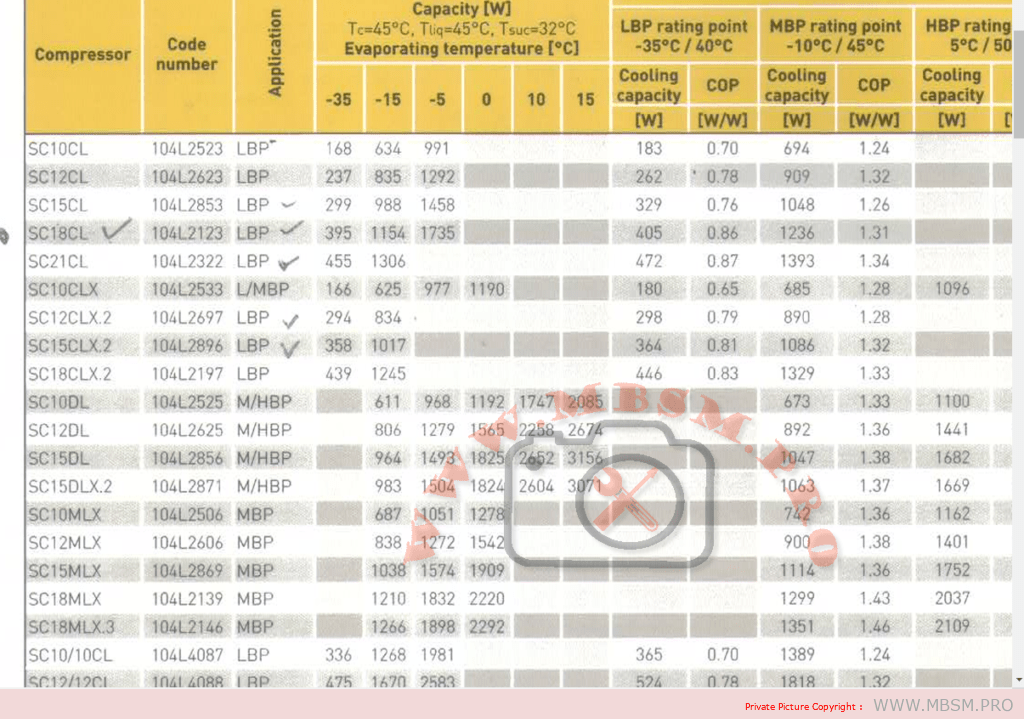
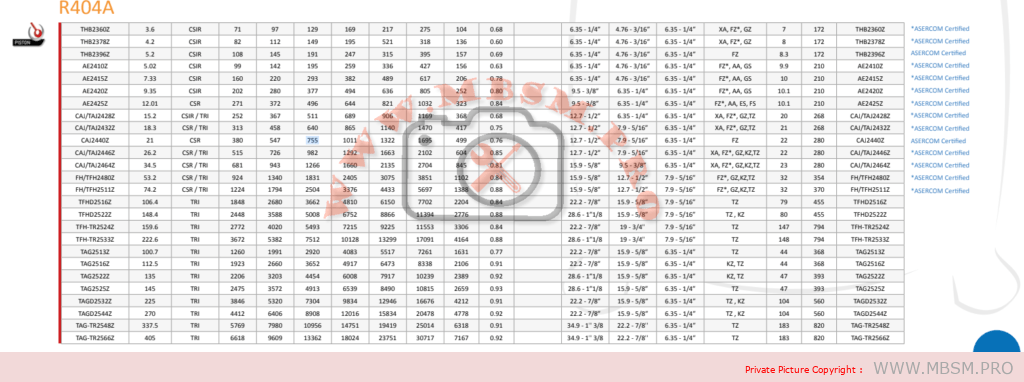
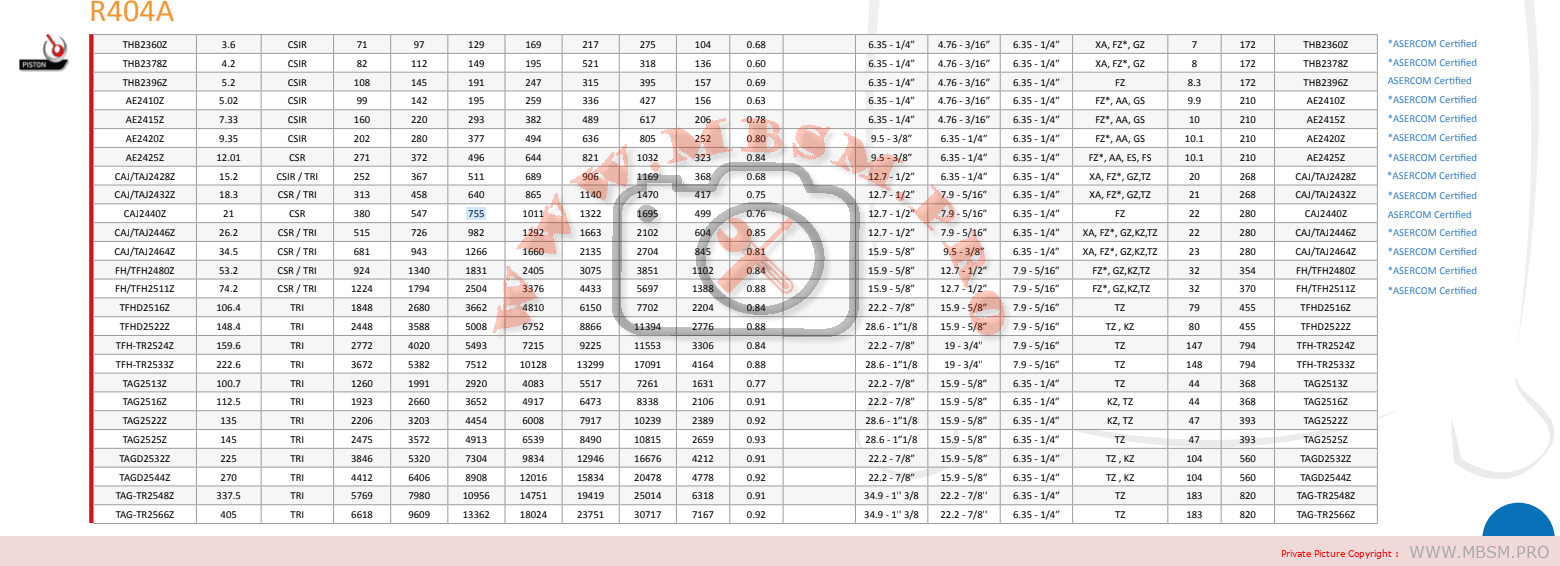
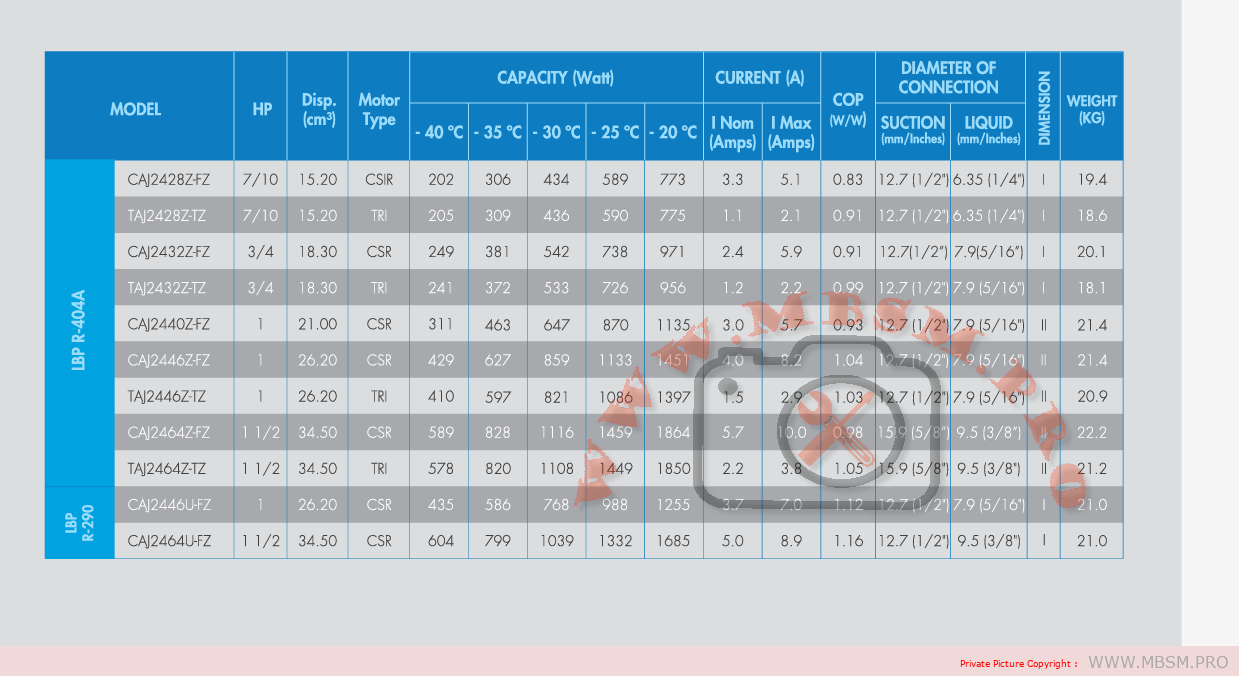
Below is a table of characteristics of compressors for refrigerators:
Typical features of the old Sanaky 4-door 2000 liter refrigerator VH-2209HP
The compressor is used in the Sanaky 4-door 2000 liter refrigerator
Sanaky 4 glass door 2000 liter refrigerator is installed with 2 CUBIGEL compressors with code GP18TG. New generation compressor with modern technology helps save energy. In addition, it does not cause the compressor to heat up, making it safe to operate.
What is the capacity of the old Sanaky 4-door refrigerator VH-2209HP?
Sanaky 4-door refrigerator VH-2209HP has a capacity of 2000 liters and has a large space. The space inside the Sanaky refrigerator is spacious and comfortable to display goods. Height and movement segments thanks to internal cargo racks.
Glass door structure of old Sanaky 4-door refrigerator VH-2209HP
Sanaky 4-door 2000 liter refrigerator VH-2209HP glass door has 3-layer structure. Vacuum glass technology helps prevent heat from being absorbed inside and outside. At the same time, the glass can see through to the inside, making it convenient for merchandising and displaying goods.
The structure of the glass door includes 2 layers of tempered glass and in the middle there is an aluminum bar containing desiccant beads. Desiccant beads will absorb all the air inside, creating a vacuum layer. In addition, the surrounding area is covered with a layer of glue, creating a tightness that prevents moisture from entering the glass, causing it to fog up.
The outside of the glass door is covered with thick and strong aluminum bars. Aluminum bars with embossed ribs create a stronger and more beautiful aesthetic. At the same time, the aluminum bar has the effect of absorbing heat that spreads to the glass surface, heating the glass, which will reduce sweating on the glass surface.
Goods and food racks of Sanaky 4-door 2000 liter refrigerator
Sanaky 4-door 2000 liter refrigerator VH-2209HP arranges the number of shelves up to 16 shelves. Divided into 4 floors, each floor is a row of sturdy shelves. The shelves can be removed and moved freely inside the refrigerator thanks to the support hooks below.
The rack is made of iron, the outside is covered with a layer of ABS plastic. Iron racks are connected together with beautiful, aesthetically pleasing welds. Creates a strong connection that can withstand high gravity. The ABS plastic layer prevents dust and dirt from sticking and is easy to clean.
Structure of the indoor unit of the old 2000 liter 2000 liter Sanaky refrigerator VH-2209HP
Sanaky 4-door 2000 liter refrigerator VH-2209HP indoor unit is divided into 2 independent units. Materials used to make the condenser include copper pipes and aluminum heatsinks. Manufactured in an elongated rectangular box bundle form. The copper tube rolls around in a neat box shape that doesn’t take up space. In addition, the box-shaped indoor unit will be easier to repair than the direct unit mounted inside the cabinet.
Does the old Sanaky 4 glass door 2000 liter VH-2209HP refrigerator cause snow on the cooling system?
Sanaky 2000 liter 4-door refrigerator VH-2209HP when operating will not cause snow on the cooling system. Because it is a fan cabinet line, the cabinet will not have thick snow accumulation on the condenser. The circulating heat island fan will spread cold air to the goods faster.
What material is the outdoor unit of the Sanaky 4-glass door 2000 liter refrigerator VH-2209Hp made of?
Sanaky 4-door 2000 liter refrigerator VH-2209HP outdoor unit uses iron pipe material. Iron gas pipes can withstand high temperatures and are very durable. In addition, the condenser is also installed with a heat exhaust fan to cool down, and at the same time uses the heat from the condenser to dry the glass surface.
Cooling mechanism of Sanaky 4-door glass refrigerator with capacity of 2000 liters
Sanaky 4-door 2000 liter refrigerator VH-2209HP indirect cooling mechanism with fan. Cool quickly to an even temperature over a certain period of time. As one of the large vertical cabinet lines, using a floating cooling system with fan support is inevitable.
Appropriate storage temperature of Sanaky 4-compartment refrigerator with capacity of 2000 liters of glass door
Sanaky 4-door 2000 liter refrigerator VH-2209HP storage temperature ranges from 3 to 10°C. Depending on the temperature level, the buyer needs to install it. The deep cold temperature range allows for the preservation of a variety of items.
Refrigerant gas is used in the Sanaky 4 glass door 2000 liter refrigerator system
Sanaky 4-door 2000 liter refrigerator VH-2209HP uses R134a gas in the entire system. R134a refrigerant gas is commonly used on the market because of its high safety and good cooling performance.
The electronic temperature control system is used in the Sanaky 4-door glass refrigerator with a capacity of 2000 liters
Sanaky 2000 liter 4-door refrigerator VH-2209HP is equipped with a smart electronic temperature control system. Turn off the power to the machine to stop operating when the cabinet reaches a certain low temperature threshold. Automatically reruns when the distance difference is 5 degrees.
Technical specifications of old Sanaky 4-door 2000 liter refrigerator VH-2209HP
Singlepack kits are complete compressor kits with all electrical and mounting accessories required for an installation or replacement. The singlepack lists provide the code numbers that are included in the kits. For comprehensive technical data on these code numbers, please refer to the individual code numbers.
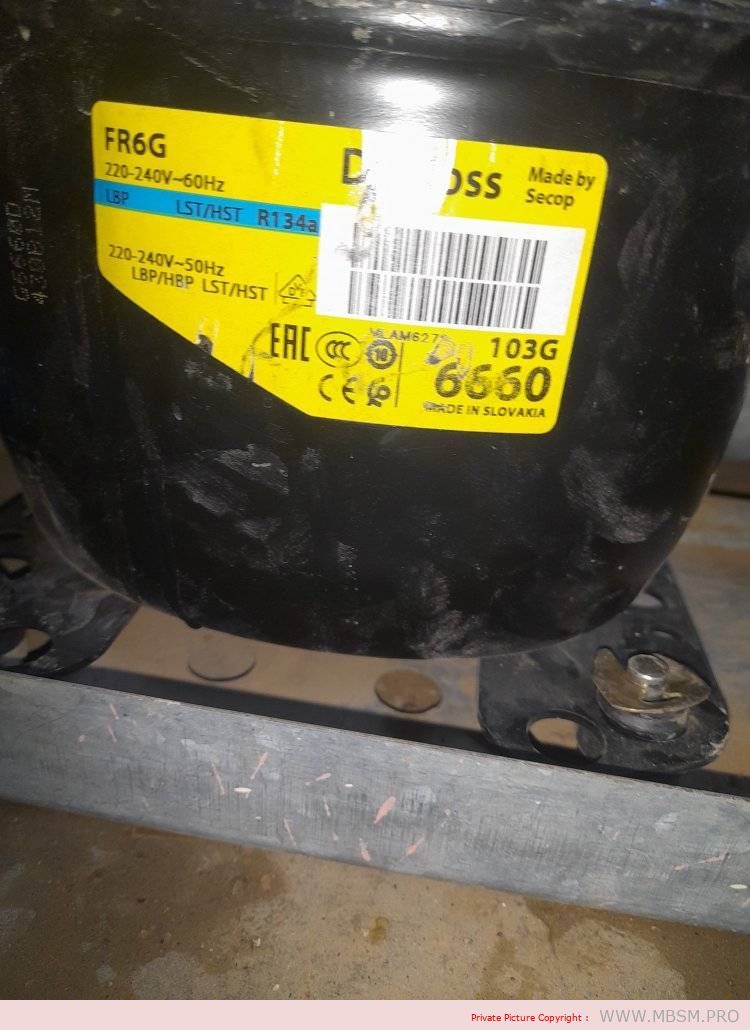
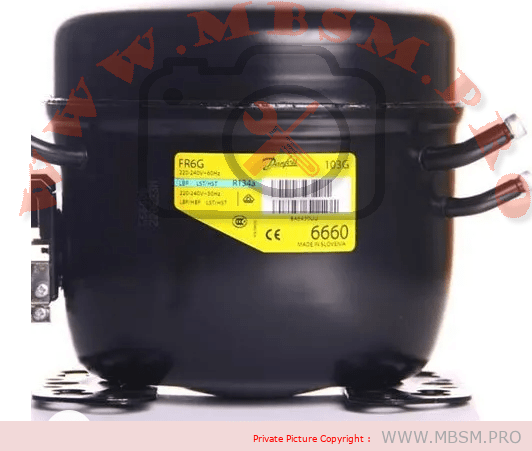
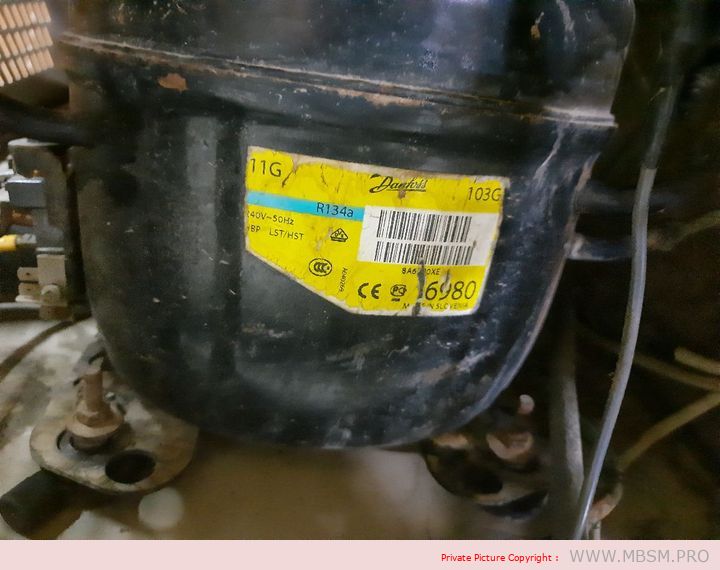
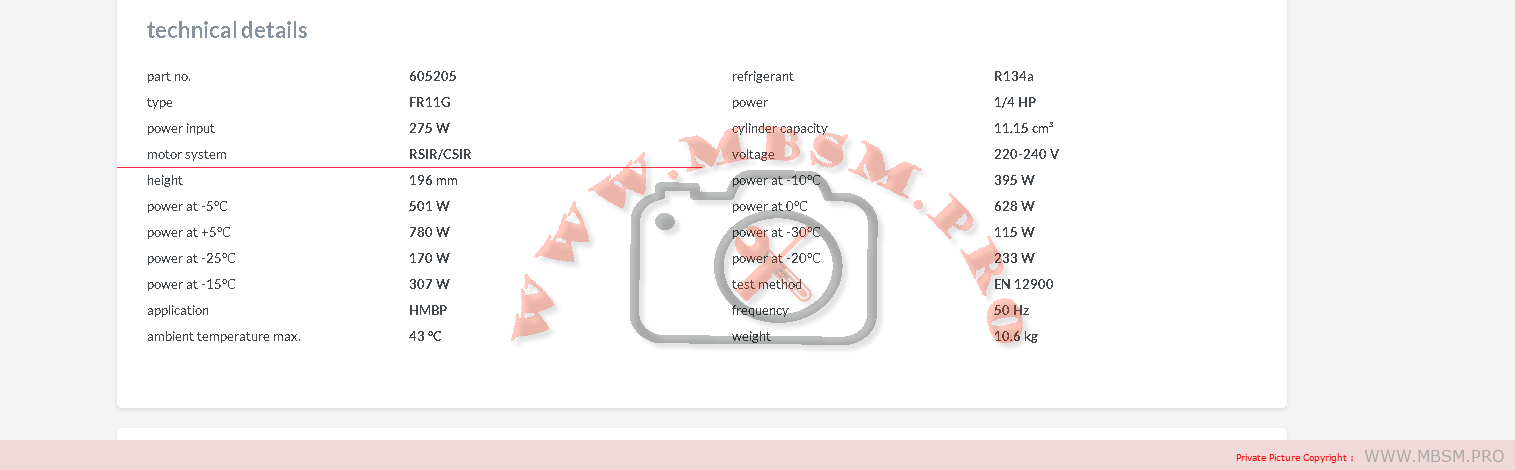
103G6980, compressor Secop / Danfoss FR11G, LBP / HBP- R134, 220
– 240V/1/50 Hz, discharge 11.15 cm3, motor type RSIR/CSIR, oil
type POE, oil charge 450 cm3, 170 W at -25 / 55° C, LRA 10 A,
maximum refrigerant charge 900 g, height: 196 mm, weight 10.6 kg
Refrigerant:
R134a
Power range(W):
101 – 200 W
Working area:
HBP LBP
Design type:
Hermetic
Model series:
Fr
Use with:
Expansion/Capillary
Power supply:
230 V
Oil type:
POE
Engine type:
CSIR RSIR
Article condition:
New
Info:
Oil filled
Shipping weight:
12,60 kg
Content:
1,00 Pieces
Dimensions ( Height ):
19,60 cm
customs tariff number:
84143081
Cooling capacity condition:
-25 / +55 °C
Manufacturer:
Danfoss Secop
Model:
FR11G
Modelname:
103G6980
Modellname 3:
FR11GX
Stroke volume (cm3):
11,15
Cooling capacity (W):
170
Max. Starting current (A):
10
Engine type:
RSIR
Note:
Maximum refrigerant quantity 900 g
Oil quantity (l):
0,45
Compressor type:
Piston
Others also bought:
Mbsm.pro, Flow Control
Category: air conditioner
written by www.mbsm.pro | 11 January 2024
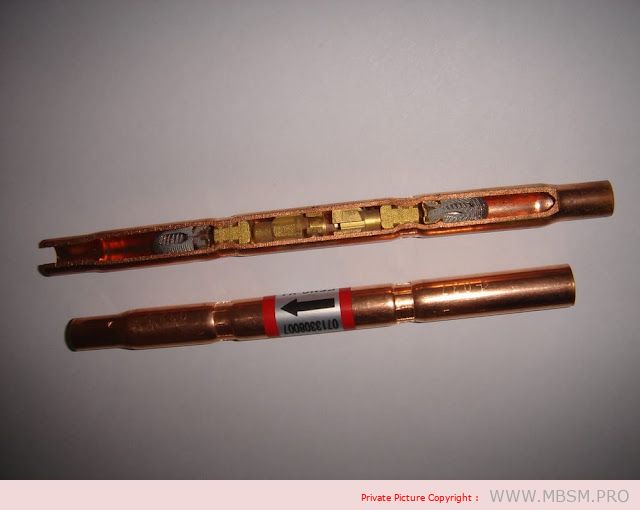
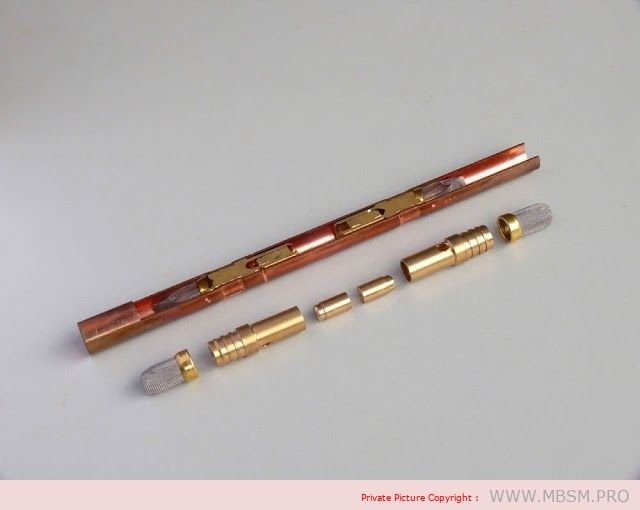
In some air conditioning units, we have started to notice that instead of bringing a capillary tube, they bring this type of flow control valve.
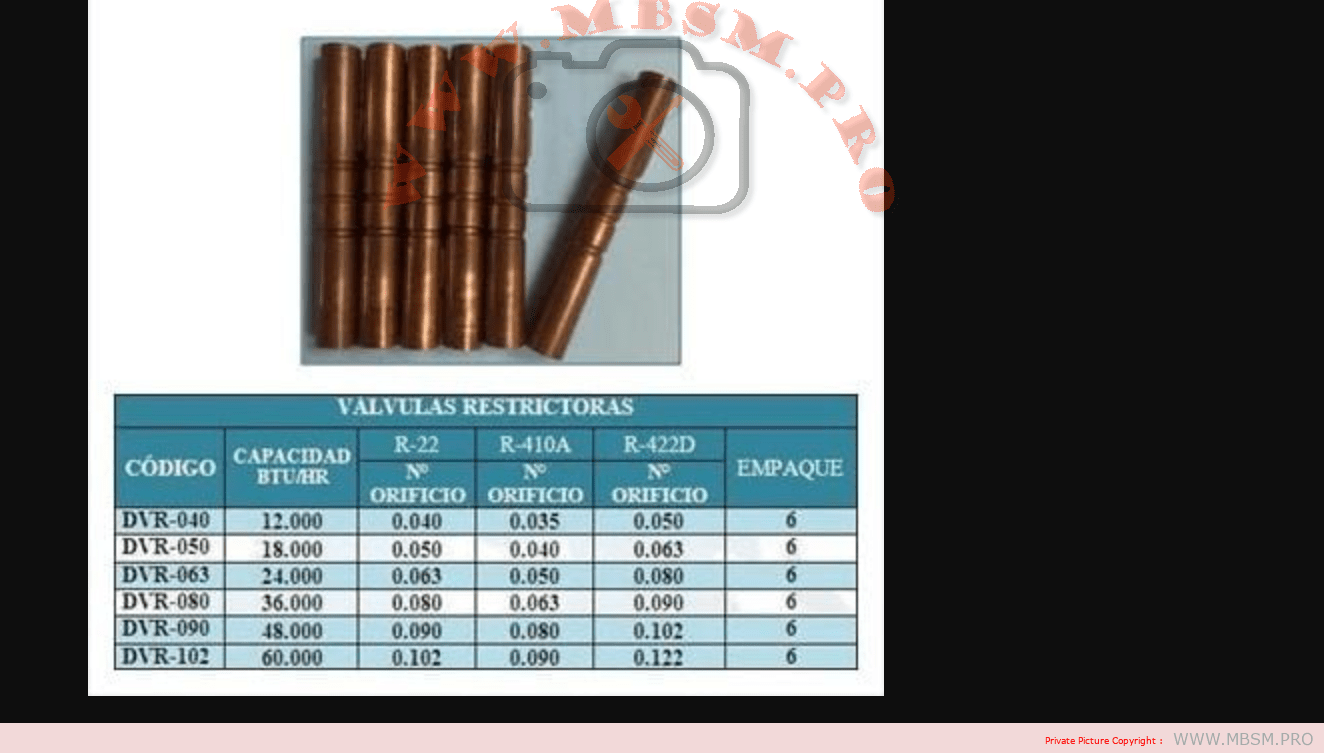
The following table shows which flow control should be used in R-22, R-410A and R-422D air conditioners and which vent on them according to what capacity the air conditioning equipment should be.
This type of valve has become very popular when it comes to replacing capillary tubes . It is used to modify the air conditioning system and replace capillary tubes using the Flow Control expansion system .
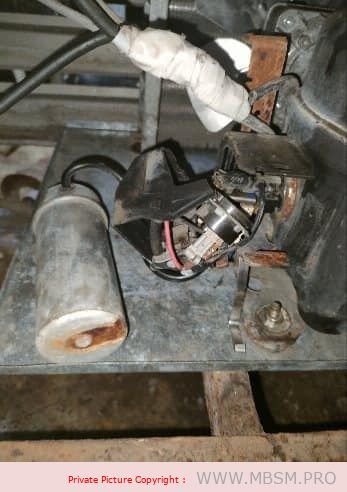
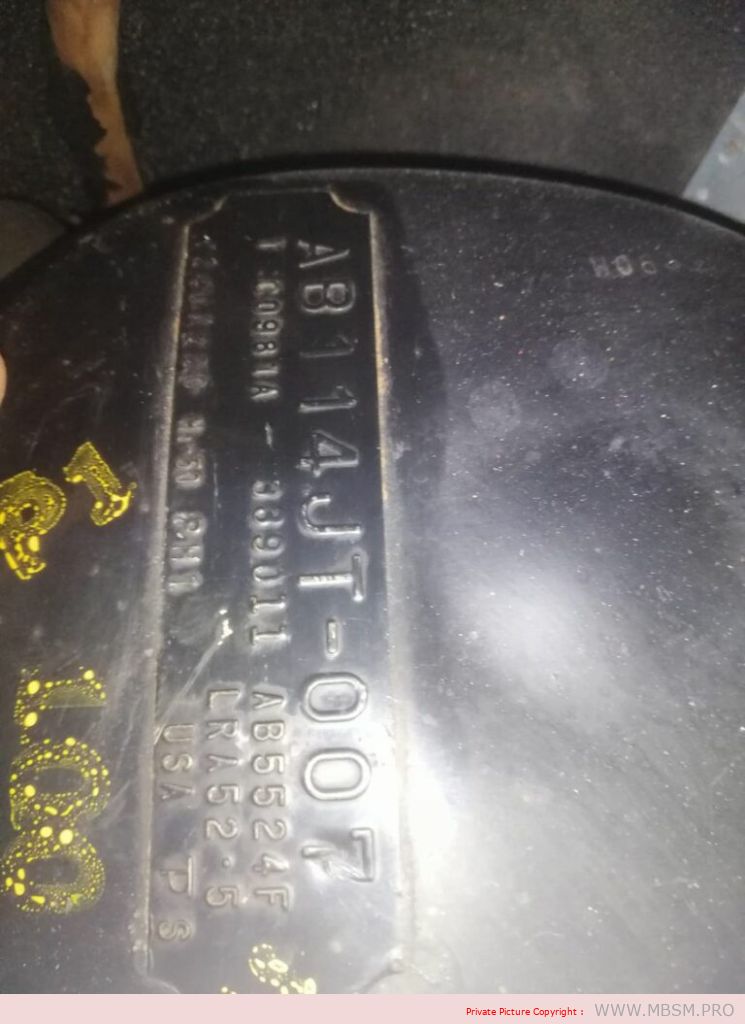
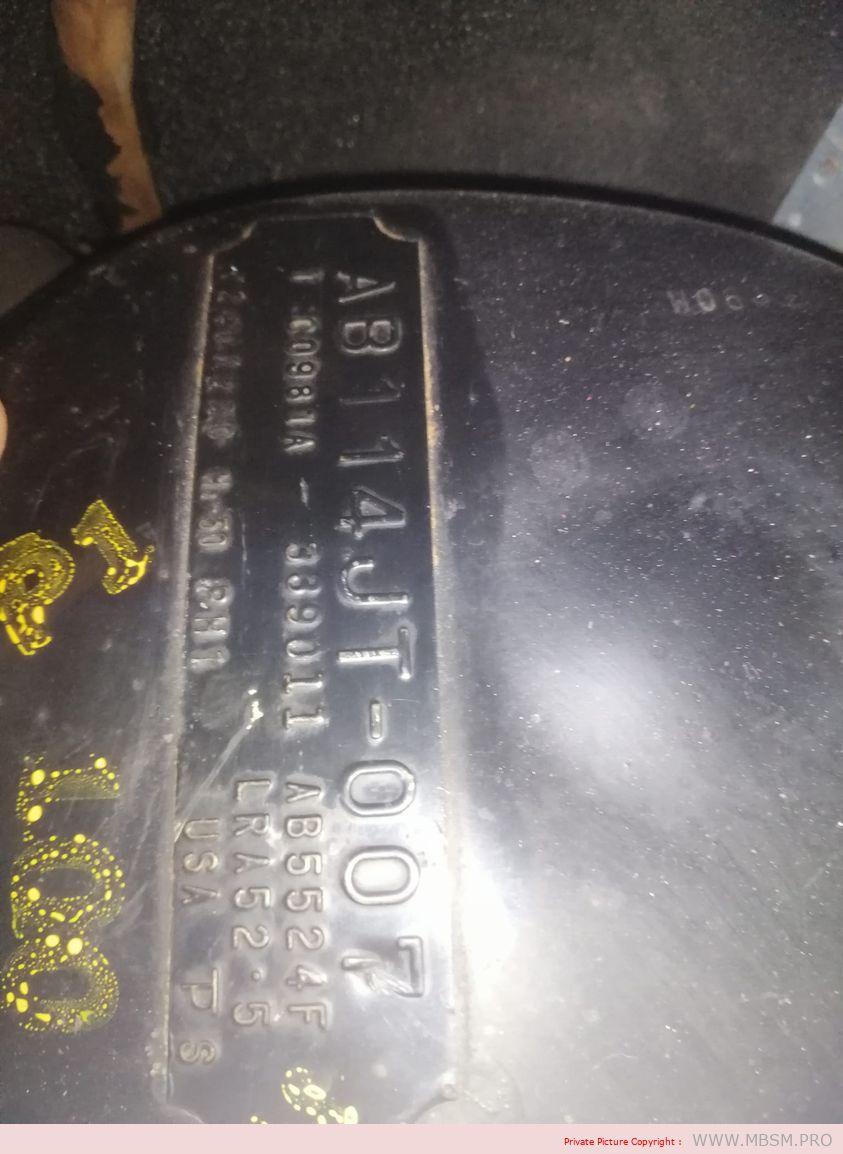
The AB114JT compressor is a Tecumseh 2 HP, 208-230V, 1 PH, 24200 BTU, R22, Hermetic (Reciprocating) Compressor Replacement. It is available for purchase from AC Parts Distributors[1][2]. It is also listed in a compressor substitution guide[5]. However, it is not clear what the specific application of the compressor is or what equipment it is compatible with.
What is the difference between AB114JT and AB114JT-004
According to the search results, both AB114JT and AB114JT-004 are Tecumseh 2 HP, 208-230V, 1 PH, 24200 BTU, R22, Hermetic (Reciprocating) Compressor Replacements. The only difference between the two is the part number. AB114JT-004 is listed as an OEM upgraded Tecumseh compressor on the AC Parts Distributors website[1]. It is possible that the difference in part number is due to a minor revision or update to the compressor model. However, without further information, it is difficult to determine the exact difference between the two part numbers.