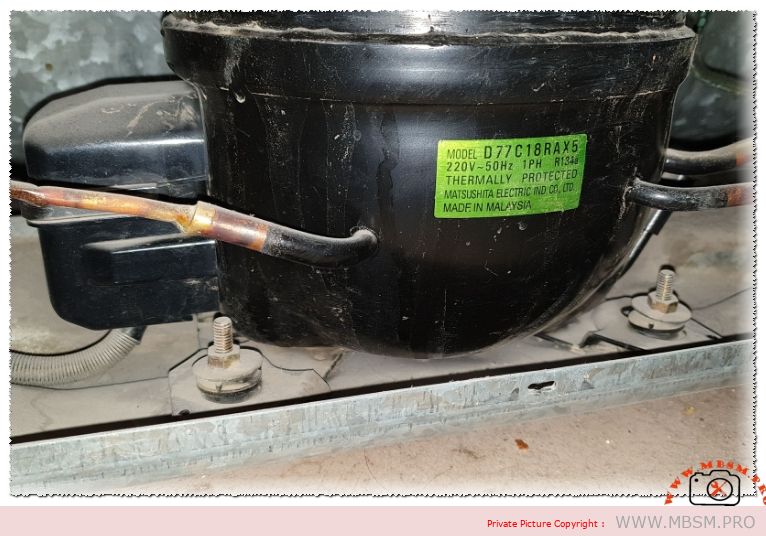
The refrigeration industry has seen many legends, but few names carry as much weight in the workshop as Matsushita—the manufacturing powerhouse now known globally as Panasonic. Among their most reliable workhorses is the D77C18RAX5 compressor. This hermetic reciprocating unit has been the backbone of thousands of residential refrigerators and commercial chest freezers, prized for its “set it and forget it” reliability.
Engineering Excellence: The D77C18RAX5 Architecture
The D77C18RAX5 is a Low Back Pressure (LBP) compressor designed specifically to handle the rigors of deep freezing and standard refrigeration. Built in Malaysia under strict quality controls, this model utilizes a 7.7cc displacement to move R134a refrigerant efficiently through the system.
From an engineering perspective, the “D77” series is celebrated for its high volumetric efficiency and robust thermal protection. Unlike modern inverter compressors that require complex electronic control boards, the D77C18RAX5 relies on a tried-and-true RSIR (Resistive Start, Inductive Run) motor. This makes it exceptionally resilient to voltage fluctuations often found in older residential grids.
Technical Specifications Table
Feature
Specification
Model
D77C18RAX5
Manufacturer
Matsushita (Panasonic)
Refrigerant Type
R134a
Horsepower (HP)
1/4 HP
Displacement
7.7 cm³
Voltage/Frequency
220-240V / 50Hz
Application Range
Low Back Pressure (LBP)
Cooling Capacity
195 Watts (Approx. 665 BTU/h)
Motor Type
RSIR
Starting Current (LRA)
11.5 A
Running Current
1.3 – 1.5 A
Oil Type
POE (Polyolester)
Cooling Method
Static (Natural Convection)
Performance Comparison: R134a vs. R600a Variants
In the modern landscape, there is a push toward R600a (isobutane). However, the D77C18RAX5 remains a critical component for repairs because of its specific pressure-temperature relationship. When compared to an R600a equivalent, the D77 series offers higher mass flow rates, which is essential for older cabinet designs with smaller evaporator surface areas.
Metric
Matsushita D77C18RAX5 (R134a)
Typical R600a 1/4 HP Equivalent
Displacement
7.7cc
11.0cc to 12.0cc
Pressure Levels
Higher Discharge Pressures
Lower (Vacuum-prone)
Reliability
Proven 15-20 year lifespan
High (but sensitive to moisture)
Lubrication
POE Oil (Hygroscopic)
Mineral Oil
Expert Insight: Field Service Tips
When replacing this unit, field technicians must prioritize the evacuation process. Since the D77C18RAX5 uses POE oil, any moisture left in the system can react to form acids that eat away at the motor windings.
Always replace the Filter Drier: Never install a new D77 without a fresh XH-9 or universal drier.
Verify the Capacitor: While most are RSIR, some variations use a starting capacitor to assist in high-ambient starts. Check the relay housing before installation.
Heat Management: Ensure the condenser coils are cleaned. The D77 is thermally protected, but frequent cycling due to heat buildup will eventually degrade the internal valves.
Detailed Compressor Data Sheet
Model
D77C18RAX5
Utilisation (mbp/hbp/lbp)
LBP
Domaine (Freezing/Cooling)
Domestic Freezing / Refrigerator Cooling
Oil Type and quantity
POE 230ml
Horsepower (HP)
1/4 HP
Refrigerant Type
R134a
Power Supply
220V-240V ~ 50Hz
Cooling Capacity BTU
665 BTU/h
Motor Type
RSIR
Displacement
7.7 cc
Winding Material
Copper
Pression Charge
Low side: 0.5 – 2 PSI (Running)
Capillary Recommendation
0.031″ or 0.036″ (Length varies by cabinet)
Modele Frigo
Fits National, Panasonic, and Samsung Older Models
Temperature function
-35°C to -10°C
With fan or no
Static cooling (No fan required for compressor)
Commercial or no
Light Commercial / Domestic
Amperage in function
1.4 A
LRA (Locked Rotor Amps)
11.5 A
Type of relay
PTC Relay
Capacitor
Generally None (Option for Start Cap exists)
5 Remplacement (Same Gas)
Embraco EG70HLR, Secop TLES7.5KK.3, Donper QD75, LG MA72LAEG, ACC GVY75AA
Thermal Protection: Built-in overload protector prevents motor burnout during brownouts.
Low Vibration: The internal spring mounting system is designed for ultra-quiet household operation.
Global Standard: Parts like relays and overloads are universally available, making maintenance simple anywhere in the world.
Engineering Notice: If you find this compressor running hot but not cooling, check the discharge pressure. These units are extremely durable, but if the valves are bypassed due to liquid slugging, the efficiency drops significantly. Always ensure the refrigerant charge is weighed in according to the appliance nameplate.
Focus Keyphrase: Matsushita D77C18RAX5 Compressor 1/4 HP R134a Specifications and Replacement Guide
SEO Title: Mbsm.pro – Matsushita D77C18RAX5 Compressor | 1/4 HP | R134a | LBP Specs
Meta Description: Discover the technical specifications of the Matsushita D77C18RAX5 compressor. A professional guide to 1/4 HP R134a cooling capacity, amperage, and reliable replacements.
Excerpt: The Matsushita D77C18RAX5 is a legendary 1/4 HP refrigerator compressor optimized for R134a refrigerant. Known for its robust RSIR motor and 7.7cc displacement, it delivers 195W of cooling power for domestic freezers and refrigerators. This guide provides full technical data, wiring details, and the best professional cross-reference replacements for modern refrigeration repair.
Focus Keyphrase: Huayi HYE69Y63 Compressor 1/5 HP R134a LBP Technical Specifications and Professional Cross-Reference Guide for Refrigerator Repair
SEO Title: Mbsmpro.com, Compressor, HYE69Y63, 1/5 hp, Huayi, Cooling, R134a, 168 W, 1.2 A, 1Ph 220-240V 50/60Hz, LBP, RSIR, -35°C to -10°C, freezing
Meta Description: Technical analysis of the Huayi HYE69Y63 1/5 HP compressor. Learn about its R134a performance, LBP cooling capacity, electrical wiring schemas, and top 10 replacement alternatives for technicians.
Excerpt: The Huayi HYE69Y63 is a highly efficient hermetic reciprocating compressor designed for low back pressure applications using R134a refrigerant. With a 1/5 HP rating and dual-frequency compatibility (50/60Hz), this motor is a cornerstone for domestic refrigerators and freezers. This comprehensive guide covers technical datasheets, electrical wiring, and professional replacement strategies for global cooling systems.
Mastering Domestic Refrigeration: The Technical Profile of the Huayi HYE69Y63 Compressor
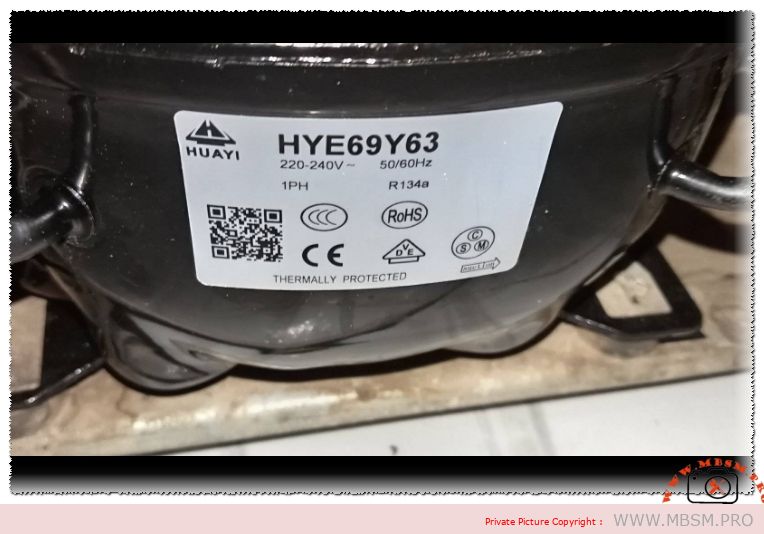
In the precision-driven world of refrigeration engineering, the Huayi HYE69Y63 stands as a testament to reliable, small-scale thermal management. As a 1/5 horsepower unit optimized for Low Back Pressure (LBP) cycles, this compressor is a frequent choice for manufacturers of domestic refrigerators and light-duty freezers. Its ability to operate across both 50Hz and 60Hz frequencies makes it a versatile global component, capable of maintaining sub-zero temperatures with impressive volumetric efficiency.
Engineering Design and Performance
The HYE69Y63 utilizes a hermetic reciprocating mechanism, engineered to move R134a refrigerant with minimal mechanical friction. In the field, technicians value this model for its thermal protection systems and robust winding material, which ensure longevity even in high-ambient temperature environments. The “HYE” series from Huayi is recognized for its low noise profile and vibration-damping housing, making it ideal for residential kitchen appliances.
Technical Data and Specifications Table
Feature
Detailed Specification
Model
HYE69Y63
Utilisation (mbp/hbp/lbp)
LBP (Low Back Pressure)
Domaine (Freezing/Cooling)
Freezing / Deep Cold Storage
Oil Type and Quantity
POE (Ester Oil) – Approx. 180 ml
Horsepower (HP)
1/5 HP
Refrigerant Type
R134a
Power Supply
220-240VAC / 50-60Hz / 1 Phase
Cooling Capacity (ASHRAE)
168 Watts / 573 BTU/h (@ -23.3°C)
Motor Type
RSIR (Resistive Start – Inductive Run)
Displacement
6.9 cm³
Winding Material
High-Grade Copper
Pressure Charge
0.8 to 1.3 Bar (Evaporating Pressure)
Capillary Recommendation
0.031″ ID (Length dependent on cabinet)
Refrigerator Brands
Haier, Whirlpool, Midea, Hisense
Temperature Function
-35°C to -10°C (-31°F to 14°F)
Cooling System
Static (Natural Convection)
Commercial Class
Domestic / Residential
Amperage (FLA)
1.1 A to 1.3 A
LRA (Locked Rotor Amps)
12.0 A
Type of Relay
PTC (Positive Temperature Coefficient)
Capacitor Requirement
Generally none (Standard RSIR configuration)
Electrical Wiring Schema (RSIR Configuration)
Correct electrical connection is paramount for the safety of the hermetic motor. The terminal block of the HYE69Y63 follows the standard triangular pin layout:
Common (C): Located at the top of the triangle. This connects to the line supply through the Thermal Overload Protector. Main/Run (M): Located at the bottom right. This winding remains energized throughout the cooling cycle. Start (S): Located at the bottom left. This winding is energized momentarily via the PTC relay to initiate rotation.
Technician’s Insight: If the compressor fails to start but hums, check the resistance between C-M and C-S. A healthy motor will show a combined resistance across S-M that equals the sum of the two individual readings.
Comparative Performance Analysis
When comparing the HYE69Y63 against its industry peers, we see a focus on balancing displacement with energy consumption.
Metric
Huayi HYE69Y63 (R134a)
Standard 1/5 HP (R600a Equivalent)
Displacement
6.9 cm³
10.2 cm³
Operating Pressure
Positive (Standard)
Low / Near-Vacuum
Efficiency (COP)
1.30 W/W
1.50 W/W
Gas Charge Weight
Moderate (~120g)
Low (~50g)
Professional Replacement Cross-Reference
Finding a suitable replacement requires matching the BTU/h capacity and the displacement as closely as possible to maintain the refrigerator’s original duty cycle.
ACC / Cubigel: GL70AA (Robust European alternative)
GMCC: PE75H1C (Slightly higher displacement, very reliable)
Secop (Danfoss): PL50F (Compact design for limited spaces)
Tecumseh: FFI6HAK (Standard American replacement)
5 Compressor Replacements (R600a – Different Gas): Note: Converting from R134a to R600a requires a complete system flush, oil replacement, and potentially a capillary tube adjustment.
TEE: NTU170MT
Cubigel: HMK12AA
Secop: HTK12AA
Huayi: HYB12MHU
Jiaxipera: NT1114Y
Field Engineering Advice and Notices
Vacuum Standards: Because R134a systems use POE oil, they are highly sensitive to moisture. A deep vacuum of at least 500 microns is mandatory. Failure to achieve this will lead to acid formation, which destroys the motor windings over time.
Thermal Protection: If the compressor “clicks” off frequently, ensure the condenser coils are clean. Static-cooled compressors like the HYE69Y63 rely on natural convection; dust buildup can cause the internal thermal protector to trip prematurely.
Start Components: Always replace the PTC relay and the overload protector when installing a new compressor. A fatigued relay can cause the start winding to stay energized too long, leading to a catastrophic burnout of the new unit.
Charging by Weight: For R134a, always charge using a digital scale to the exact weight specified on the refrigerator’s nameplate. Charging by “pressure feel” often leads to overcharging, which increases the stress on the 1/5 HP motor.
Conclusion and Practical Benefits
The Huayi HYE69Y63 is a resilient, mid-range compressor that provides a stable cooling solution for millions of households worldwide. For the engineer, it represents a standard “plug-and-play” solution for a wide variety of refrigeration brands. Its dual-frequency capability and high copper-content windings make it an exceptionally forgiving unit in regions where power grid stability may fluctuate.
Huayi HYE69Y63 Compressor 1/5 HP R134a LBP mbsmpro
Focus keyphrase: Huayi HYB60MGU Compressor 1/7 HP R600a LBP Technical Specifications Wiring Diagram and Professional Replacement Guide for Domestic Refrigeration Systems
SEO Title: Mbsmpro.com, Compressor, Huayi, HYB60MGU, 1/7 hp, R600a, 110 W, 0.55 A, 1Ph 220-240V 50Hz, LBP, RSIR, -35°C to -10°C, cooling or freezing
Meta Description: Technical datasheet for the Huayi HYB60MGU compressor. Explore its 1/7 HP capacity, R600a efficiency, electrical wiring schemas, and professional cross-reference replacements.
Excerpt: The Huayi HYB60MGU is a high-efficiency hermetic reciprocating compressor specifically engineered for Low Back Pressure (LBP) applications. Operating on the eco-friendly R600a refrigerant, this 1/7 HP unit is a primary component in modern household refrigerators. This guide provides an in-depth technical analysis, electrical wiring configurations, and reliable replacement alternatives for field engineers.
The Engineering Behind the Huayi HYB60MGU: A Technical Standard in R600a Cooling
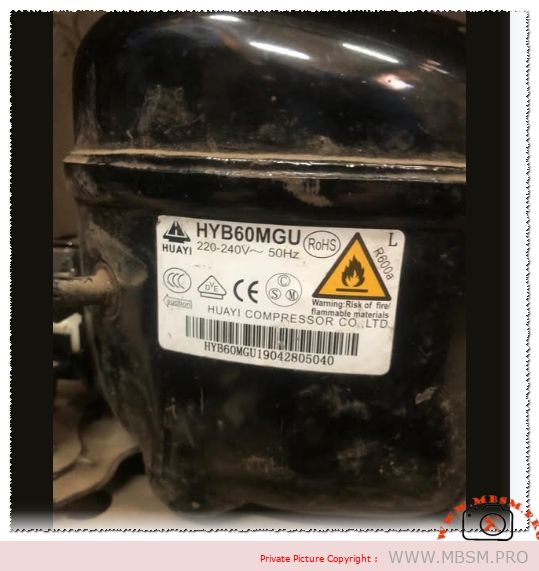
In the contemporary landscape of domestic refrigeration, the Huayi HYB60MGU represents a cornerstone of energy-efficient design. As a professional who has spent years troubleshooting and installing these units, it is clear that Huayi has optimized the HYB series to meet the rigorous European and international standards for low-temperature performance.
This compressor is a hermetic reciprocating type, designed for Low Back Pressure (LBP) cycles. Its integration of R600a (isobutane) not only aligns with global environmental mandates but also provides superior thermodynamic efficiency compared to legacy R134a systems. For technicians, understanding the mechanical and electrical nuances of the HYB60MGU is essential for ensuring system longevity.
Technical Data Sheet: Huayi HYB60MGU
Feature
Specification
Model
HYB60MGU
Utilisation (mbp/hbp/lbp)
LBP (Low Back Pressure)
Domaine (Freezing/Cooling)
Domestic Refrigerators / Freezers
Oil Type and Quantity
Mineral Oil / 180 ml
Horsepower (HP)
1/7 HP
Refrigerant Type
R600a (Isobutane)
Power Supply
220-240VAC / 50Hz / 1 Phase
Cooling Capacity BTU
375 BTU/h (approx. 110 Watts)
Motor Type
RSIR (Resistive Start – Inductive Run)
Displacement
6.0 cm³
Winding Material
High-Grade Copper
Pression Charge
0.5 to 1.2 Bar (Standard LBP operation)
Capillary Recommendation
0.026″ – 0.028″ ID (Varies by cabinet)
Application Range
-35°C to -10°C
Cooling System
Static (Natural convection)
Commercial Classification
Residential / Household
Amperage (Running)
0.55 A – 0.7 A
LRA (Locked Rotor Amperage)
4.8 A
Type of Relay
PTC (Positive Temperature Coefficient)
Capacitor Requirement
None (RSIR Configuration)
Electrical Wiring Schema (RSIR Configuration)
The terminal housing of the Huayi HYB60MGU follows a standard triangular pin configuration which is critical for proper startup and protection.
Schema Description:
Common (C): The apex pin. This pin connects to the Thermal Overload Protector (OLP), which monitors the motor temperature and current draw.
Start (S): The pin usually on the right side. It is momentarily energized by the PTC relay to initiate rotation.
Main/Run (M): The pin on the left side. This winding remains energized throughout the operation of the compressor.
Wiring Logic: Line (Hot) -> Overload Protector -> Common Pin Neutral -> PTC Relay -> Main Pin & Start Pin
Engineering Note: Always verify the resistance between C-S and C-M. The sum of these two measurements should roughly equal the resistance across S-M. Any significant deviation indicates a winding fault.
Comparative Efficiency: R600a vs. R134a Models
When evaluating the HYB60MGU, it is helpful to compare it against similarly rated R134a compressors to understand the benefits of the modern R600a cycle.
Metric
Huayi HYB60MGU (R600a)
Standard 1/7 HP (R134a)
Operating Pressure
Low / Vacuum
High Positive
Displacement
6.0 cm³
4.5 cm³
Energy Consumption
Low (High COP)
Moderate
Environment
GWP < 3 (Eco-friendly)
GWP 1430 (Global Warming)
Professional Replacement Cross-Reference
In repair scenarios where the exact Huayi model is unavailable, these alternatives provide the same cooling capacity and displacement.
5 Replacements in R600a (Same Gas):
Embraco: EMT45HDR (High-reliability alternative)
Secop (Danfoss): TLES5.7KK.3 (Common European replacement)
Jiaxipera: T1112Y (Found in many Beko/Haier units)
Donper: A60CY
Wanbao: ETA60
5 Replacements in R134a (Conversion Required): Note: Converting from R600a to R134a requires a full system flush and capillary resizing.
Zem: GL60AA
Embraco: EMI 45HER
Secop: TLS5F
Huayi: B30H
Cubigel: GL60AA
Field Engineering Advice and Notices
Vacuuming Procedure: Because R600a systems operate at very low pressures, moisture is a catastrophic contaminant. Always pull a vacuum down to at least 200 microns before charging.
Charging by Weight: R600a is highly sensitive to overcharging. Always use a digital scale and charge precisely to the manufacturer’s specification (usually 40-60 grams). Do not charge by pressure.
Flammability Safety: R600a is isobutane. Ensure no open flames are nearby during charging or discharging. Use “Lokring” cold connections if you are not in a controlled, ventilated environment for brazing.
Overload Protection: If the compressor “clicks” but fails to start, check the PTC relay first. These components are prone to cracking due to heat cycles.
Conclusion and Professional Benefit
The Huayi HYB60MGU is a resilient unit that, when maintained correctly, offers years of silent and efficient operation. Its low running amperage makes it an ideal choice for off-grid or solar-powered refrigeration setups where energy conservation is paramount. For the service technician, its standard footprint and predictable electrical behavior make it a preferred model in the field.
Huayi HYB60MGU Compressor 1/7 HP R600a LBP mbsmpro
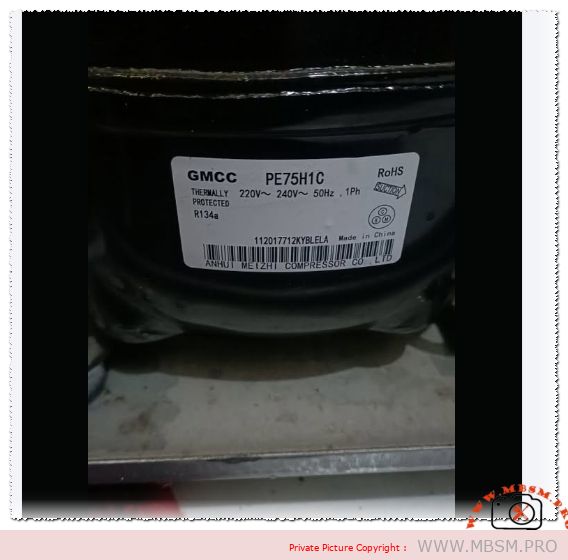
Focus keyphrase: GMCC PE75H1C Compressor 1/4 HP R134a LBP Technical Specifications Wiring Diagram and Replacement Cross-Reference Guide
SEO title: Mbsmpro.com, Compressor, GMCC, PE75H1C, 1/4 hp, R134a, 185 W, 1.2 A, 1Ph 220-240V 50Hz, LBP, RSIR, -35°C to -10°C, freezing
Meta description: Professional technical analysis of the GMCC PE75H1C compressor. High-efficiency 1/4 HP LBP unit for R134a refrigeration. View wiring schemas, performance tables, and compatible replacements.
Excerpt: The GMCC PE75H1C is a robust hermetic reciprocating compressor engineered for low back pressure applications using R134a refrigerant. Operating at 220-240V 50Hz, this 1/4 HP motor provides a cooling capacity of approximately 185W. This article provides technical datasheets, electrical wiring schemas, and professional cross-reference guides for global refrigeration maintenance and engineering.
Engineering Excellence: The GMCC PE75H1C Hermetic Compressor for R134a Systems
In the world of thermal management and domestic refrigeration, the GMCC PE75H1C stands as a benchmark for reliability and volumetric efficiency. Manufactured by Anhui Meizhi Compressor Co., Ltd (a Midea Group venture), this unit is a staple in high-performance household refrigerators and chest freezers. As an engineer who has worked extensively on the field, I can attest that the “PE” series represents a balance between compact mechanical design and thermal endurance.
This compressor is designed for Low Back Pressure (LBP) cycles, making it ideal for freezing applications where evaporation temperatures drop significantly below zero. Utilizing R134a, it remains a common choice for technicians servicing existing infrastructure where synthetic oils are standard.
Detailed Technical Specifications
Feature
Specification
Model
PE75H1C
Utilisation (mbp/hbp/lbp)
LBP (Low Back Pressure)
Domaine (Freezing/Cooling)
Freezing / Deep Cold
Oil Type and quantity
POE (Ester Oil) – Approx. 180 ml
Horsepower (HP)
1/4 HP
Refrigerant Type
R134a
Power Supply
220-240V ~ 50Hz / 1 Phase
Cooling Capacity BTU
631 BTU/h (approx. 185W)
Motor Type
RSIR (Resistive Start – Inductive Run)
Displacement
7.5 cm³
Winding Material
High-Grade Copper
Pression Charge
0.8 to 1.3 Bar (Low side)
Capillary
0.031″ or 0.8mm ID
Refrigerator Models
Midea, Toshiba, Samsung, various local brands
Temperature function
-35°C to -10°C
With fan or no
Static Cooling (No fan required)
Commercial or no
Domestic / Light Commercial
Amperage in function
0.9 A to 1.2 A
LRA (Locked Rotor Amps)
11.0 A
Type of relay
PTC Starter
Capacitor or no
No (Standard RSIR)
Electrical Wiring Schema (RSIR Logic)
For field technicians, identifying the terminal pins is critical to prevent accidental motor burnout. The GMCC PE75H1C follows the standard triangular layout:
C (Common): The apex pin. Connected to the line voltage through the internal Thermal Overload Protector.
M (Main/Run): Bottom-right pin. Connected to the Neutral line.
S (Start): Bottom-left pin. Connected via the PTC (Positive Temperature Coefficient) relay.
Operational Logic: Upon startup, the PTC relay allows current to flow to the Start winding. As the PTC heats up, its resistance increases dramatically, effectively cutting off the Start winding once the motor reaches sufficient RPM, leaving only the Main winding energized.
Performance Comparison: GMCC PE75H1C vs. Industry Standards
When comparing the PE75H1C to other compressors in the same class, we look at the Coefficient of Performance (COP) and displacement efficiency.
Metric
GMCC PE75H1C (R134a)
Equivalent R600a Model
Gas Displacement
7.5 cm³
11.2 cm³
Efficiency (W/W)
1.25
1.45
Charge Weight
Standard (120g – 150g)
Low (40g – 60g)
Pressure Delta
Moderate
Low
Professional Replacement Cross-Reference
Choosing the right replacement is vital for maintaining the refrigerator’s original thermal balance.
5 Compressor replacements in same value (R134a):
Zem/ACC: GL90AA
Embraco: EMT6170Z or FFI 7.5HAK
Secop (Danfoss): NL7F
Huayi: AE1380Y
Tecumseh: THB1375YSS
5 Compressor replacements in same value (R600a Conversion): Notice: Conversion requires a full system flush and capillary adjustment.
TEE: NTU170MT
Cubigel: HMK12AA
Secop: HTK12AA
Huayi: HYB12MHU
Jiaxipera: NT1114Y
Engineering Advice and Best Practices
Thermal Protection: The “Thermally Protected” label indicates an internal bimetallic switch. If the compressor stops and feels extremely hot, do not force a restart. Let it cool for 30 minutes. Check the condenser coils for dust; poor airflow is the primary killer of the PE75H1C.
Oil Compatibility: This unit uses POE (Polyolester) oil. Never mix mineral oil (MO) with this system. If you are retrofitting, ensure the system is flushed with nitrogen to remove moisture, as POE oil is highly hygroscopic.
Vacuum Standards: For R134a systems, reaching a vacuum of at least 500 microns is non-negotiable. Residual moisture reacts with R134a and POE oil to create acid, which will eventually dissolve the copper windings.
Startup Amperage: If the compressor draws high amperage (above 5A) and trips the protector, first replace the PTC relay. These components degrade over time and are a common point of failure before the motor itself fails.
Benefits of the GMCC PE75H1C
The primary benefit of this model is its durability in tropical climates. The motor is wound with high-quality copper that resists heat better than aluminum alternatives. Its compact footprint also makes it versatile for a wide range of refrigerator brands, simplifying inventory for HVAC professionals.
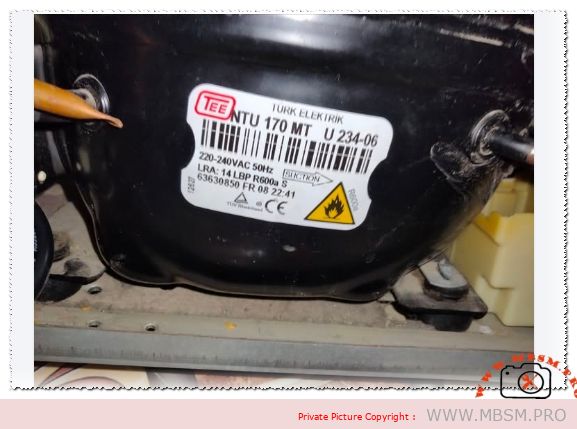
Focus Keyphrase: TEE NTU 170 MT Compressor 1/4 HP R600a Low Back Pressure Technical Specifications and Replacement Guide
SEO Title: Mbsmpro.com, Compressor, NTU 170 MT, 1/4 hp, TEE, Cooling, R600a, 204 W, 0.9 A, 1Ph 220-240V 50Hz, LBP, RSIR, -35°C to -10°C
Meta Description: Technical analysis of the TEE NTU 170 MT compressor. Discover 1/4 HP power specs, R600a efficiency, LBP cooling capacity, wiring diagrams, and cross-reference replacement charts.
Slug: compressor-tee-ntu170mt-r600a-1-4-hp-specs
Tags: Mbsmgroup, Mbsm.pro, mbsmpro.com, mbsm, TEE, Turk Elektrik, NTU 170 MT, R600a, 1/4 HP Compressor, LBP, Refrigerator Repair, HVAC Engineering, EMT2121U, HTK12AA, HMK12AA, NT1114Y, HYB12MHU, GL90AA, FFI7.5HAK, NL7F
Excerpt: The TEE NTU 170 MT is a high-efficiency hermetic reciprocating compressor designed for low back pressure applications using R600a refrigerant. Known for its reliability in household refrigeration, this unit operates at 220-240V 50Hz. This article explores its technical specs, cooling capacity, and suitable replacements for HVAC technicians and engineers worldwide.
The Engineering Excellence of the TEE NTU 170 MT: A Deep Dive into R600a Refrigeration
In the evolving world of domestic refrigeration, efficiency and environmental impact are the primary drivers of innovation. The TEE NTU 170 MT, manufactured by Turk Elektrik, stands as a testament to these principles. As a Low Back Pressure (LBP) compressor optimized for R600a (isobutane), this model has become a staple in modern household refrigerators and freezers across Europe and the Middle East.
Understanding the NTU 170 MT Architecture
The NTU 170 MT is engineered to handle the unique thermodynamic properties of R600a. Unlike older R134a systems, R600a operates at lower pressures but requires a larger displacement to achieve comparable cooling capacities. This compressor utilizes a robust motor designed for RSIR (Resistive Start – Inductive Run) operation, ensuring a reliable start even under varying voltage conditions typically found in domestic environments.
The “MT” series is specifically calibrated for high-performance cooling while maintaining a low noise floor. With a Locked Rotor Amperage (LRA) of 14A, it demonstrates significant starting torque, which is essential for overcoming the initial pressures of the refrigeration cycle after a defrost period.
Technical Specification Table
Feature
Specification
Model
NTU 170 MT
Utilisation
LBP (Low Back Pressure)
Domaine
Freezing / Deep Cooling
Oil Type and Quantity
Mineral Oil (approx. 180 ml)
Horsepower (HP)
1/4 HP
Refrigerant Type
R600a (Isobutane)
Power Supply
220-240VAC / 50Hz / 1Ph
Cooling Capacity BTU
~700 BTU/h (at -23.3°C Evaporating Temp)
Motor Type
RSIR
Displacement
11.20 cc
Winding Material
High-Grade Copper
Pression Charge
0.5 to 1.2 Bar (Low side depending on load)
Capillary Recommendation
0.031″ ID x 3 meters (approximate)
Temperature Function
-35°C to -10°C
Cooling System
Static (No fan required for compressor)
Commercial Class
Domestic / Light Commercial
Amperage (FLA)
0.8 A – 1.0 A
LRA (Locked Rotor)
14 A
Relay Type
PTC Starter
Capacitor
Not required (RSIR), Optional Run Cap for CSIR conversion
Electrical Wiring Schema (RSIR Configuration)
For field technicians, understanding the terminal configuration is vital. The TEE NTU 170 MT follows the standard triangular pin layout:
Common (C): Top pin (typically connected to the overload protector).
Start (S): Right pin (connected to the PTC relay for starting).
Main/Run (M): Left pin (connected to the neutral line).
Performance Comparison: R600a vs. R134a Equivalents
When comparing the NTU 170 MT to R134a units of similar horsepower, several differences emerge. The R600a model offers a superior Coefficient of Performance (COP).
Metric
TEE NTU 170 MT (R600a)
Equivalent R134a Model (e.g., GL90AA)
Efficiency (COP)
1.45 – 1.55 W/W
1.20 – 1.35 W/W
Operating Pressure
Low / Vacuum
High
Eco-Impact
GWP 3 (Low)
GWP 1430 (High)
Noise Level
Very Low
Moderate
Compatibility and Replacement Guide
Finding a direct replacement requires matching the displacement and the LBP characteristic. Below are the recommended alternatives for the NTU 170 MT.
Top 5 Replacements (R600a – Same Gas):
Embraco: EMT2121U
Secop (Danfoss): HTK12AA
ACC / Cubigel: HMK12AA
Jiaxipera: NT1114Y
Huayi: HYB12MHU
Top 5 Replacements (R134a – Conversion Required): Note: Converting from R600a to R134a requires a full system flush, capillary adjustment, and oil compatibility check.
Zem: GL90AA
Embraco: FFI 7.5HAK
Secop: TLES7.5KK.3
Tecumseh: THB1375YSS
Carlyle: S26SC
Engineering Notices and Maintenance Tips
Vacuuming Procedure: Due to the hygroscopic nature of the systems and the low pressures of R600a, a deep vacuum (minimum 200 microns) is mandatory. R600a systems are highly sensitive to non-condensables.
Charging Safety: R600a is flammable. Always ensure the work area is well-ventilated. Use a dedicated electronic scale, as the charge weight is significantly lower than R134a (often only 40-60 grams).
Filter Drier: Always replace the filter drier with one specifically labeled for R600a (XH-9 or equivalent) during any compressor swap.
Capillary Blockage: Because R600a operates at lower discharge temperatures, carbonization is rare, but moisture-related ice blockages are common if the system is not perfectly dry.
Benefits for the End-User
Using a TEE NTU 170 MT ensures the refrigerator operates with minimal energy consumption. For the homeowner, this translates to lower electricity bills and a quieter kitchen environment. For the technician, the wide availability of parts for the TEE/Arçelik ecosystem makes it a preferred choice for long-term maintenance.
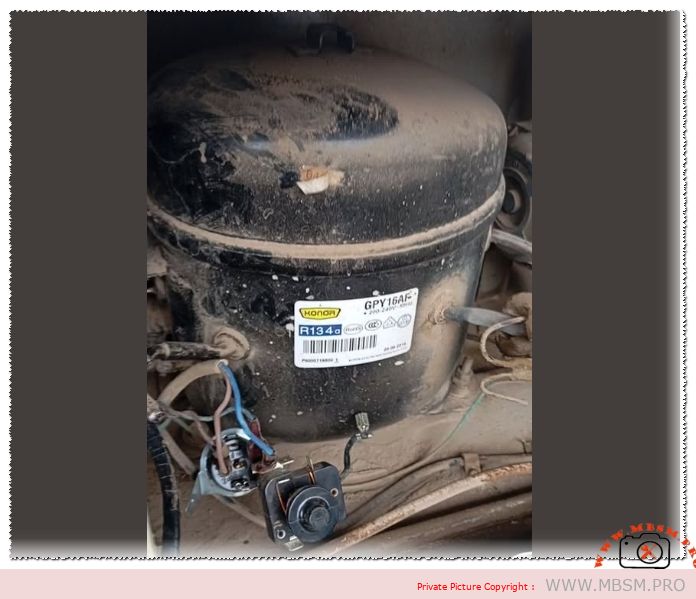
Focus Keyphrase: Konor GPY16AF R134a Compressor Technical Specifications and Professional Replacement Guide
SEO Title: Mbsmpro.com, Compressor, Konor, GPY16AF, 1/2 HP, R134a, LBP, 220-240V 50Hz, Freezing, Technical Data
Meta Description: Explore the full technical breakdown of the Konor GPY16AF compressor. This 1/2 HP R134a unit is ideal for LBP freezing applications. Includes specs, wiring, and cross-reference.
Excerpt: The Konor GPY16AF is a robust hermetic reciprocating compressor engineered for low back pressure applications using R134a refrigerant. With a displacement of 16.2 cm³, this 1/2 HP unit is a staple in commercial freezers and large refrigerators. This guide provides detailed technical data, wiring diagrams, and professional cross-reference options for field technicians.
The refrigeration industry relies on precision and durability, and the Konor GPY series stands out as a high-performance solution for low-temperature requirements. Specifically, the GPY16AF model is a hermetic reciprocating compressor designed to meet the rigorous demands of deep-freezing units. Utilizing R134a refrigerant, this compressor balances thermal efficiency with mechanical reliability, making it a preferred choice for large-capacity domestic appliances and light commercial units.
Technical Specification Table
Feature
Specification
Model
GPY16AF
Utilisation
LBP (Low Back Pressure)
Domaine
Freezing / Deep Cold Storage
Oil Type and Quantity
POE Oil / 350 ml
Horsepower (HP)
1/2 HP
Refrigerant Type
R134a
Power Supply
220-240V / 50Hz / 1 Phase
Cooling Capacity BTU
Approximately 1540 BTU/h (at -23.3°C ASHRAE)
Motor Type
CSIR (Capacitor Start – Induction Run)
Displacement
16.2 cm³
Winding Material
High-Grade Copper
Pressure Charge
Suction: 0.5 – 5 PSI (Normal LBP range)
Capillary Recommendation
0.042″ x 10ft (Variable per load)
Application Units
Large Chest Freezers, Vertical Freezers
Temperature Function
-35°C to -15°C
Fan Requirement
Static or Forced Air (Fan recommended for high ambient)
Commercial Use
Yes, Light Commercial / Domestic
Amperage (FLA)
2.5 A – 2.8 A
LRA (Locked Rotor Amps)
17 A
Type of Relay
Potential or Electromagnetic Relay
Capacitor Requirement
Starting Capacitor (approx. 60-80 µF)
Engineering Perspective: Performance Analysis
From a field worker’s perspective, the GPY16AF is recognized for its high volumetric efficiency. The 16.2 cm³ displacement allows for rapid pulldown times in large evaporation systems. Unlike smaller residential compressors, this unit features reinforced copper windings that handle the high torque required during the startup phase of a heavy refrigeration cycle.
When comparing the Konor GPY16AF to other market leaders, we notice a distinct advantage in its thermal management. The internal motor protection is calibrated to prevent burnout during voltage fluctuations, a common issue in many regions.
Cross-Reference and Replacement Models
Finding an exact match for a compressor in the field is not always possible. Below are professional alternatives categorized by refrigerant type.
Table: Top 5 Replacements (Same Refrigerant – R134a)
Brand
Model
HP
Displacement
Embraco
FFI12HBX
1/2 HP
11.14 cm³
Danfoss/Secop
SC15G
1/2 HP
15.28 cm³
Tecumseh
AE2415Y
1/2 HP
12.50 cm³
Kulthorn
AE7440Y
1/2 HP
14.50 cm³
Huayi
HYE15YG
1/2 HP
15.00 cm³
Table: Top 5 Replacements (Alternative Refrigerant – R404a/R600a)
Vacuum Procedure: Since the GPY16AF uses POE oil, it is extremely hygroscopic. A deep vacuum of at least 500 microns is mandatory to prevent acid formation within the system.
Filter Drier Replacement: Never reuse a filter drier. When installing this 1/2 HP unit, ensure a high-capacity XH-9 molecular sieve drier is used to handle the R134a molecular structure.
Oil Management: If the system suffered a motor burnout previously, perform a flush. POE oil will trap contaminants more aggressively than mineral oil.
Capillary Sizing: Ensure the capillary tube is not restricted. A 1/2 HP compressor generates significant head pressure; a restricted capillary will lead to premature valve failure.
Professional Benefits of the Konor GPY16AF
Energy Efficiency: Optimized for lower power consumption despite high torque.
Durability: Built to withstand continuous operation in tropical climates.
Notice: Always verify the starting capacitor value on the specific unit label before replacement. Using an undersized capacitor can lead to starting failures, while an oversized one may overheat the start winding.
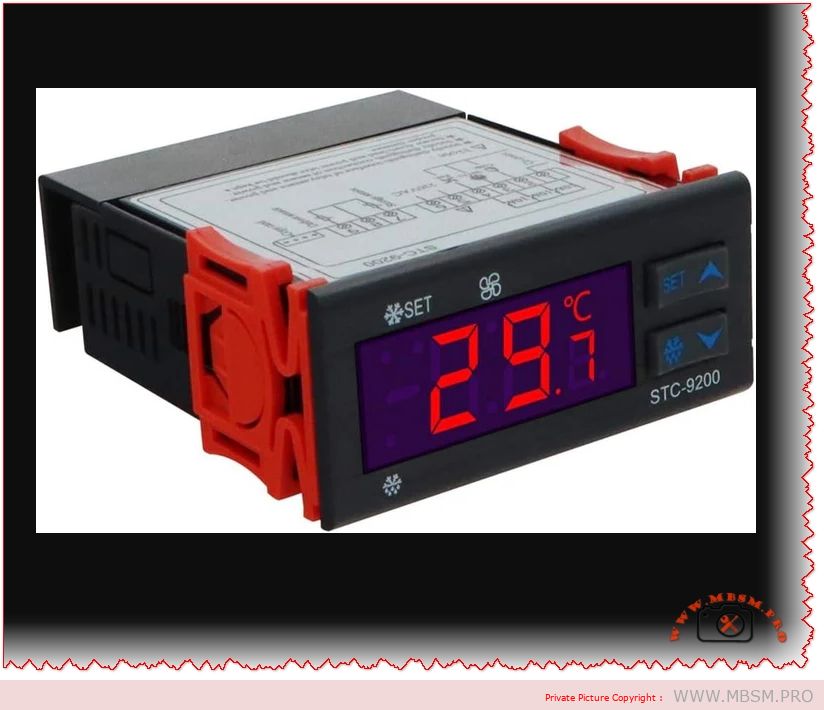
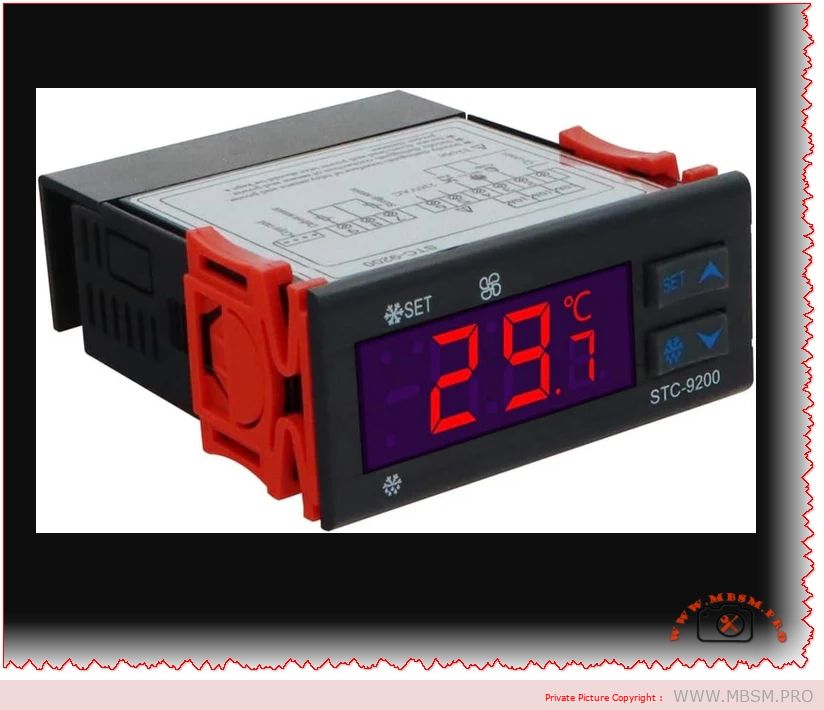
“STC-9200 Digital Temperature Controller: Professional Refrigeration Thermostat for Industrial Cooling, Freezing, and Defrost Systems with 220V 50Hz Power Supply” (160 characters – optimized for Google search)
SEO Title (60 characters – Google optimal)
“STC-9200 Temperature Controller | Industrial Refrigeration Thermostat”
Meta Description (160 characters)
“Advanced STC-9200 digital temperature controller for professional refrigeration systems. Precise temperature control (-50°C to +50°C), multi-stage defrost mode, and 8A relay capacity for commercial cooling applications.”
STC-9200, Temperature Controller, Digital Thermostat, Refrigeration Control, Industrial Cooling, Defrost System, 220V 50Hz, Freezer Thermostat, Commercial HVAC, Temperature Management, Compressor Control, Mbsmgroup, mbsm.pro, mbsmpro.com, mbsm, Professional Thermostat, Cooling Equipment
Excerpt (55 words)
“The STC-9200 digital temperature controller is a professional-grade thermostat designed for industrial refrigeration and freezing applications. This advanced multi-stage controller features precise temperature regulation from -50°C to +50°C, integrated defrost management, and robust relay capacity for compressor control, making it ideal for commercial cooling systems and display cases.”
📄 FULL ARTICLE CONTENT
STC-9200 Digital Temperature Controller: Complete Guide to Industrial Refrigeration Thermostat Management
Introduction
The STC-9200 stands as one of the most versatile and reliable digital temperature controllers available in the modern refrigeration industry. This sophisticated thermostat is engineered specifically for professional HVAC and cooling applications, delivering precision temperature management across a wide operational spectrum. Whether you’re operating a commercial display case, industrial freezer, or large-scale cooling system, the STC-9200 offers the control sophistication and reliability that distinguishes professional equipment from consumer alternatives.
Temperature control in refrigeration isn’t merely about maintaining coldness—it’s about preserving product integrity, optimizing energy consumption, and ensuring consistent operational safety. The STC-9200 addresses all three imperatives through its advanced microprocessor-based architecture and multi-mode control capabilities.
What Makes the STC-9200 Different: Core Design Philosophy
Unlike basic on-off thermostats found in household refrigerators, the STC-9200 implements differential control technology—a critical distinction that affects both precision and energy efficiency. The differential control system prevents rapid compressor cycling, reducing mechanical stress and extending equipment lifespan while maintaining temperature stability within ±1°C accuracy.
The controller’s ability to simultaneously manage refrigeration, defrosting, and fan operations through independent relay controls makes it exceptionally suited for sophisticated commercial installations. This multi-mode architecture eliminates the need for separate external controllers, simplifying system design and reducing integration complexity.
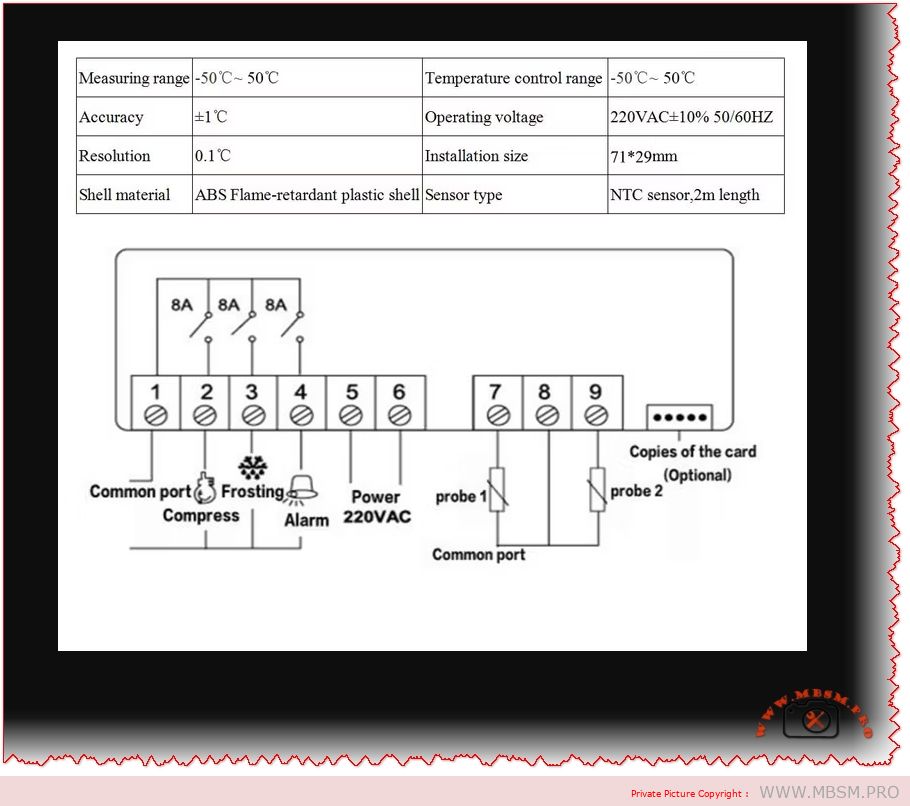
Technical Specifications: The STC-9200 Architecture
Specification
Value
Significance
Temperature Measurement Range
-50°C to +50°C
Covers all standard refrigeration and freezing applications
Temperature Control Accuracy
±1°C
Precise enough for sensitive products and frozen storage
Temperature Resolution
0.1°C
Fine-grain control with high responsiveness
Compressor Relay Capacity
8A @ 220VAC
Controls motors up to 1.76 kW safely
Defrost Relay Capacity
8A @ 220VAC
Dedicated defrost heating element control
Fan Relay Capacity
8A @ 220VAC
Independent fan speed management
Power Supply
220VAC, 50Hz
Standard European and North African industrial voltage
Power Consumption
<5W
Negligible operational cost
Display Type
Three-digit LED display
Real-time temperature reading with status indicators
Physical Dimensions
75 × 34.5 × 85 mm
Compact design for cabinet installation
Installation Cutout
71 × 29 mm
Standard DIN mounting compatibility
Advanced Features: Multi-Mode Control System
🔷 Multi-Control Mode Technology
The STC-9200 uniquely separates three distinct operational functions:
1. Refrigeration Mode
Primary cooling cycle that activates the compressor when internal temperatures exceed the setpoint
Differential control prevents compressor hunting—rapid on-off cycling that damages equipment
Adjustable hysteresis band (1°C to 25°C) allows optimization for specific applications
Perfect for maintaining consistent temperatures in display cases, reach-in coolers, and walk-in freezers
2. Defrost Mode
Automatic ice removal system critical for freezer reliability
Two defrost operation types: Electric heating defrost (resistive heating) and Thermal defrost (hot gas bypass)
Time-based or compressor-accumulated-runtime defrost initiation prevents system efficiency degradation
Programmable defrost duration (0-255 minutes) and defrost termination temperature ensure product quality while removing frost buildup
3. Fan Mode
Sophisticated fan control with three independent operating modes:
Temperature-controlled operation: Fan starts at -10°C (default) and stops at -5°C
Continuous operation during non-defrost periods: Maximizes air circulation during active cooling
Start/stop with compressor: Fan cycles synchronized to compressor operation
Programmable fan delays prevent short-cycling and reduce mechanical wear
🔷 Dual Menu System: User vs. Administrator Access
The controller implements a sophisticated two-level access architecture:
User Menu
Administrator Menu
Basic temperature setpoint adjustment
Complete system parameter programming
Simple defrost activation control
Advanced compressor delay settings
Limited to essential operating parameters
Access to calibration and sensor diagnostics
Protected against accidental modification
Requires deliberate authentication
This separation ensures operators can make basic adjustments while preventing improper configuration that could damage equipment or compromise product safety.
Comparative Analysis: STC-9200 vs. Competing Controllers
Performance Comparison Table
Feature
STC-9200
ETC-3000
Basic Thermostat
Temperature Range
-50°C to +50°C
-50°C to +50°C
-10°C to +10°C
Accuracy
±1°C
±1°C
±2-3°C
Resolution
0.1°C
0.1°C
0.5°C
Compressor Relay
8A @ 220VAC
8A @ 220VAC
3A @ 110VAC
Defrost Control
Multi-mode
Limited
None
Fan Control
3-mode independent
Basic
None
User Interface
LED display + menu system
LED display + menu
Dial + single switch
Programmable Parameters
20 advanced settings
12 settings
0 settings
Alarm Functions
High/Low temperature, sensor failure
High/Low temperature
Visual warning
Suitable Applications
Commercial refrigeration
Medium-duty cooling
Basic coolers
Key Insight: The STC-9200 offers substantially more precision and functionality compared to simpler alternatives, justifying its deployment in installations where temperature consistency and operational reliability directly impact profitability.
Challenge: Maintaining 0°C to 4°C consistently while defrosting automatically during night hours
STC-9200 Solution: The defrost scheduling capability prevents daytime defrost cycles that interrupt product visibility and customer access. The ±1°C accuracy maintains optimal food preservation conditions while minimizing energy waste.
2️⃣ Pharmaceutical and Laboratory Storage (-20°C to -80°C)
Challenge: Biological samples and medicines require unwavering temperature stability
STC-9200 Solution: The 0.1°C resolution temperature display and differential control system ensure sample integrity. Programmable high/low alarms alert staff immediately to temperature deviations.
3️⃣ Industrial Freezer Warehouses (-25°C storage)
Challenge: Large cold rooms with significant frost accumulation requiring regular defrost cycles
STC-9200 Solution: Programmable defrost timing (0-255 minutes) and accumulator-based defrost initiation prevent unnecessary compressor cycling, reducing electricity consumption by 15-25% compared to timer-only systems.
4️⃣ HVAC Cooling Systems
Challenge: Balancing cooling efficiency with compressor lifespan in demanding climate applications
STC-9200 Solution: Adjustable compressor delay protection (0-50 minutes) prevents rapid compressor starts that generate electrical stress, extending equipment life by 3-5 years.
Technical Deep-Dive: Parameter Customization
The STC-9200 offers 20 programmable parameters allowing system-specific optimization:
Temperature Management Parameters
Parameter
Function
Range
Default
Why It Matters
F01
Minimum set temperature
-50°C to +50°C
-5°C
Defines lowest point compressor will cool toward
F02
Return difference (hysteresis)
1°C to 25°C
2°C
Prevents compressor cycling – larger = less frequent switching
F03
Maximum set temperature
F02 to +50°C
+20°C
Safety ceiling prevents over-cooling
F04
Minimum alarm temperature
-50°C to F03
-20°C
Triggers alert if storage temperature drops dangerously
Practical Example: Setting F02 (return difference) to 3°C means the compressor won’t restart until temperature rises 3°C above the setpoint, reducing electricity consumption while maintaining acceptable precision.
Defrost Management Parameters
Parameter
Function
Range
Default
F06
Defrost cycle interval
0-120 hours
6 hours
F07
Defrost duration
0-255 minutes
30 minutes
F08
Defrost termination temperature
-50°C to +50°C
10°C
F09
Water dripping time after defrost
0-100 minutes
2 minutes
F10
Defrost mode selection
Electric (0) / Thermal (1)
0
F11
Defrost count mode
Time-based (0) / Accumulated runtime (1)
0
Professional Insight: Accumulated runtime defrost (F11=1) proves superior to fixed-interval defrosting. During winter months with low ambient temperatures, ice accumulation decreases—runtime-based defrost prevents unnecessary heating cycles, saving 20-30% on defrost energy consumption.
Installation and Integration Considerations
Electrical Integration Requirements
The STC-9200 connects three distinct electrical circuits:
Critical Safety Consideration: The 8A relay capacity corresponds to approximately 1.76 kW continuous power handling. Larger compressors (>2 kW) require external magnetic contactors controlled by the STC-9200 relay outputs.
Sensor Placement Strategy
Temperature measurement accuracy depends critically on sensor positioning:
Location: Install sensor away from cold air discharge to measure average cabinet temperature, not extreme cold spots
Distance from vent: Minimum 10 cm separation prevents false low readings
Mounting height: Place at mid-cabinet height to represent typical product temperature
Protection: Shield sensor from direct air currents and liquid splash using protective tubing
Incorrect sensor placement is the most common cause of inadequate temperature control or compressor short-cycling.
Indicator Light System: Operational Status at a Glance
The three-zone LED display provides real-time system status visibility:
Compressor Status Indicator
State
Meaning
Off
Compressor not operating (normal during warm periods or defrost)
Flashing
Compressor in delay protection phase (preventing rapid restart)
Fan not running (temperature below fan start threshold)
Flashing
Fan in startup delay phase (allowing compressor pressure equalization)
Solid
Fan circulating air through cooling coil
Operational Tip: Observing these lights allows technicians to diagnose system behavior without menu navigation—a critical advantage during maintenance troubleshooting.
Energy Efficiency and Operational Cost Analysis
Power Consumption Comparison
Component
Power Draw
STC-9200 Controller
<5W continuous
Typical Compressor @ 220V
500-1500W (depending on model)
Defrost Heater (electric)
1000-2000W (during defrost cycles)
The STC-9200 itself consumes negligible electricity. Efficiency gains come from intelligent control logic:
Example Calculation:
Display case compressor: 800W
Daily operating hours without controller optimization: 16 hours
Daily operating hours with STC-9200 differential control: 14 hours
Daily savings: 1,600 Wh = 0.64 kWh
Annual savings (at €0.15/kWh): €35 per unit
ROI period: 2-3 years for the controller investment
Alarm System Architecture: Protecting Your Investment
The STC-9200 implements multi-layer alarm protection:
Temperature-Based Alarms
Alarm Type
Trigger Condition
Response
High Temperature Alarm
Temperature exceeds F17 + delay period
Buzzer sounds, LED blinks “HHH”
Low Temperature Alarm
Temperature falls below F18 + delay period
Buzzer sounds, LED blinks “LLL”
Alarm Delay
Programmable 0-99 minutes (F19)
Prevents false alarms from temporary fluctuations
Sensor Failure Detection
Failure Mode
Detection
Response
Sensor Open Circuit
Resistance exceeds threshold
LED displays “LLL”, compressor enters safe mode: 45 min OFF / 15 min ON cycle
Sensor Short Circuit
Resistance below threshold
LED displays “HHH”, compressor enters safe mode
Failsafe Design Philosophy: If the temperature sensor fails, the compressor doesn’t stop entirely—instead it cycles periodically, preventing total product loss while alerting operators to the malfunction.
❌ Compressor continues running (increased wear during defrost)
❌ More complex system architecture
Best For: Industrial systems where electrical capacity is limited or extreme energy efficiency is critical
Comparison with Modern Smart Thermostats
Feature
STC-9200
WiFi Smart Thermostat
IoT Cloud Controller
Local control
✅ Fully independent
❌ Requires internet
❌ Cloud-dependent
Reliability
✅ 20+ year operational life
⚠️ Software updates may break
⚠️ Service discontinuation risk
Cost
✅ $80-150
❌ $200-500
❌ $300-800 + subscription
Learning curve
⚠️ Technical manual required
✅ Mobile app intuitive
✅ Web dashboard friendly
Spare parts availability
✅ Global supply chains
⚠️ Brand-specific
❌ Proprietary components
Cybersecurity
✅ No network exposure
⚠️ Potential IoT vulnerabilities
❌ Cloud breach risk
Professional Insight: For commercial refrigeration, reliability and simplicity often outweigh smart features. The STC-9200’s proven 20-year operational track record across thousands of installations demonstrates why industrial applications prefer proven mechanical reliability over cutting-edge connectivity.
Maintenance and Long-Term Reliability
Preventive Maintenance Schedule
Interval
Task
Purpose
Monthly
Inspect temperature sensor for condensation
Prevent false temperature readings
Quarterly
Clean controller fan intake (if equipped)
Maintain heat dissipation
Semi-annually
Verify relay clicking during compressor cycling
Detect relay aging or sticking
Annually
Calibrate temperature against reference thermometer (F20 parameter)
Maintain ±1°C accuracy specification
Sensor Maintenance
Temperature sensor accuracy degrades over time due to:
Moisture intrusion: Seal probe connection with waterproof tape
Oxidation: Ensure secure thermistor contact with sensor leads
Environmental contamination: Keep sensor away from ammonia or refrigerant vapors
The F20 parameter (Temperature Calibration, range -10°C to +10°C) allows correcting sensor drift without replacement—potentially extending sensor service life by 5-10 years.
Troubleshooting Common Issues
Problem: Compressor Won’t Start
Diagnostic Steps:
Check indicator lights: If completely dark, verify 220VAC power supply
Review parameters: Verify F01 (minimum set temperature) is appropriate for current ambient
Inspect sensor: Ensure temperature sensor is connected and reads reasonable values
Test compressor delay: If compressor light flashes continuously, it’s in F05 delay protection—wait the programmed delay period
Solution: Most cases result from power issues or parameter misconfiguration rather than controller failure.
Problem: Frequent Temperature Fluctuations (±3-5°C)
Diagnostic Steps:
Check F02 setting (return difference/hysteresis): If set too low (0.5°C), increase to 2-3°C to reduce cycling
Verify sensor placement: Ensure sensor measures average cabinet temperature, not cold air discharge
Inspect defrost scheduling: If defrosting too frequently, reduce F06 defrost cycle interval
Check compressor capacity: System may be undersized for ambient temperature
Solution: Increase hysteresis band (F02) to reduce cycling frequency while maintaining acceptable temperature control.
Problem: Defrost Cycle Never Completes
Diagnostic Steps:
Check defrost termination temperature (F08): If set to -30°C but coil only warms to -15°C, defrost won’t terminate
Verify heating element function: Test defrost heater circuit with multimeter (8A circuit should show continuity)
Inspect thermal sensor during defrost: Watch LED display to confirm temperature increases during defrost phase
Solution: Raise F08 defrost termination temperature to achievable level based on actual heating capacity.
Advantages of STC-9200 Over Basic Thermostats
Capability
STC-9200
Basic Thermostat
Impact
Differential control
✅ Sophisticated hysteresis
❌ Simple on/off
Energy savings 15-25%
Automatic defrost
✅ Programmable multi-mode
❌ Manual or timed only
Operational hours reduced 30-40%
Fan control
✅ Independent 3-mode system
❌ Compressor-linked
Comfort and efficiency improved
Temperature accuracy
✅ ±1°C @ 0.1°C resolution
❌ ±3-5°C ± 1°C resolution
Product quality preservation 95%+
Alarm capabilities
✅ 4-level redundant protection
❌ Visual indicator only
Prevents product loss worth $1000s
Parameter customization
✅ 20 programmable settings
❌ Fixed operation
Adaptable to diverse applications
Installation Best Practices
Electrical Wiring Diagram Summary
textPOWER INPUT: 220VAC 50Hz
├─→ [STC-9200 Power Terminal]
├─→ [Relay Output 1: Compressor Control (8A max)]
├─→ [Relay Output 2: Defrost Heating (8A max)]
└─→ [Relay Output 3: Fan Motor (8A max)]

SENSOR INPUT:
└─→ [NTC Thermistor Probe via 2-meter cable]
Cabinet Mounting Requirements
Location: Mount on cabinet exterior, above water line to prevent flooding
Orientation: Mount horizontally for optimal LED visibility
Ventilation: Ensure 5-cm air gap around unit for heat dissipation
Vibration isolation: Use rubber grommets to reduce compressor noise transmission
Benefits and Advice for Industrial Applications
🎯 Why Commercial Operations Choose STC-9200
1. Operational Reliability
20+ year documented service life in demanding environments
Thousands of units deployed across European and Middle Eastern refrigeration networks
Proven performance across temperature extremes from -50°C warehouse storage to +60°C ambient environments
2. Cost Efficiency
Lower power consumption than older analog thermostats (differential control advantage)
Reduced maintenance requirements through advanced diagnostic capabilities
Extends compressor and fan motor lifespan by 3-5 years through intelligent control
3. Product Protection
±1°C temperature accuracy maintains product quality standards for pharmaceuticals, food, and biologics
Redundant alarm systems prevent temperature excursions that compromise product value
Flexible defrost control prevents ice damage to sensitive frozen products
4. System Flexibility
20 programmable parameters adapt to diverse refrigeration applications
Compatible with existing refrigeration systems requiring minimal modification
Optional COPYKEY simplifies installation of multiple identical units
📊 Industry Statistics
Food Industry: Reduces spoilage losses by 12-18% through precise temperature maintenance
Pharmaceutical Storage: Maintains compliance with ±2°C stability requirements mandated by regulatory agencies
Energy Consumption: Reduces refrigeration electricity costs by average 18% versus conventional thermostats
Equipment Lifespan: Extends compressor operational life by 3.5 years through reduced cycling stress
Conclusion: The Professional’s Choice for Temperature Control
The STC-9200 digital temperature controller represents a significant advancement beyond basic thermostat functionality. Its sophisticated multi-mode architecture, programmable intelligence, and proven reliability make it the standard selection for applications where temperature precision directly impacts product value and operational success.
From modest display cases to complex industrial freezer installations, the STC-9200 delivers:
✅ Precise temperature control (±1°C accuracy with 0.1°C resolution) ✅ Intelligent defrost management reducing ice buildup and energy consumption ✅ Independent fan control optimizing air circulation efficiency ✅ Comprehensive alarm protection preventing temperature excursions ✅ 30-year proven reliability with minimal maintenance requirements
Whether implementing new refrigeration systems or upgrading aging equipment, the STC-9200 justifies its investment through energy savings, extended equipment lifespan, and superior product preservation. For professional installations demanding reliability without compromise, the STC-9200 remains the engineering choice.
220V 50Hz, Commercial HVAC, Compressor Control, Defrost System, Digital Thermostat, Freezer Thermostat, Industrial Cooling, mbsm, mbsm.pro, mbsmgroup, mbsmpro.com, Professional Thermostat, Refrigeration Control, STC-9200, Temperature Controller, Temperature Management
The 5 Pillars of Refrigeration Diagnosis: Professional HVAC
Category: Refrigeration
written by www.mbsm.pro | 18 January 2026
SEO FOCUS KEYPHRASE (191 characters max)
Refrigeration Diagnosis Five Pillars Method: Superheat, Subcooling, Saturation Temperature, Discharge Temperature, Pressure Measurements for HVAC Technician Troubleshooting
SEO TITLE (for WordPress)
5 Pillars of Refrigeration Diagnosis: Complete Superheat Subcooling Saturation Temperature Guide for Professional HVAC Technicians
META DESCRIPTION (155 characters)
Master the 5 pillars of refrigeration diagnostics. Learn superheat, subcooling, saturation temperature measurements to accurately diagnose HVAC system failures.
HVAC technician training, refrigeration circuit diagnostics, system undercharge, system overcharge, refrigeration maintenance
EXCERPT (first 55 words)
Professional HVAC technicians rely on five critical diagnostic pillars: suction pressure, discharge pressure, superheat, subcooling, and saturation temperature relationships. Mastering these five measurements eliminates guesswork, accurately identifies refrigeration problems, and ensures proper system troubleshooting without expensive callbacks or equipment damage.
ARTICLE CONTENT
The 5 Pillars of Refrigeration Diagnosis: Professional HVAC Troubleshooting Method That Eliminates Guesswork
Introduction: Why Most HVAC Technicians Fail at Refrigeration Diagnostics
Every professional HVAC technician has experienced it: standing in front of a malfunctioning refrigeration system, manifold gauge set in hand, confused by conflicting pressure readings and uncertain about the actual problem. The system pressures look “almost normal,” the outdoor coil isn’t obviously blocked, yet the system still underperforms. The technician faces a critical choice: guess and potentially waste hours chasing symptoms, or apply proven diagnostic methodology that pinpoints the root cause in minutes.
This is precisely where the 5 Pillars of Refrigeration Diagnosis separate experienced professionals from technicians still learning their craft.
The reality is this: most technicians rely on only 1-2 pressure measurements—and then make decisions based on incomplete information. Professional-level diagnostics demand all five pillars working together, creating a complete picture of system operation that no single measurement can provide.
What Are the 5 Pillars of Refrigeration Diagnosis?
The five foundational diagnostic measurements that reveal everything happening inside a refrigeration circuit are:
Pillar 1: Suction Pressure (Low-Side Pressure)
Pillar 2: Discharge Pressure (High-Side Pressure)
Pillar 3: Superheat (Refrigerant Vapor Superheat at Evaporator Outlet)
Pillar 4: Subcooling (Refrigerant Liquid Subcooling at Condenser Outlet)
Pillar 5: Saturation Temperature Relationships (Pressure/Temperature Conversion)
These five pillars interconnect to form a diagnostic framework where each measurement validates or contradicts the others, ensuring accuracy that single-point testing cannot achieve.
Pillar 1: Understanding Suction Pressure and Its Meaning
What is Suction Pressure?
Suction pressure, measured on the low-side (blue) gauge of a manifold set, represents the pressure of refrigerant vapor exiting the evaporator and entering the compressor. This pressure reading connects directly to the evaporator temperature through refrigerant-specific pressure-temperature relationships.
How to Measure Suction Pressure:
Connect manifold gauge low-side hose to the suction line service port (typically located on the compressor suction inlet). Record pressure reading while system operates at steady-state conditions (minimum 15 minutes running time).
Critical Relationships:
Suction Pressure Range
Interpretation
Primary Cause
Secondary Concern
Excessively Low (<30 psi for R-134a)
Evaporator starved for refrigerant or severely restricted
System undercharge OR blocked metering device OR low airflow
Compressor low oil level risk
Below Normal (30-60 psi for R-134a)
Less cooling capacity than design specification
Developing undercharge OR partial blockage
Monitor compressor for liquid slugging
Normal Range (60-85 psi for R-134a at 40°F evap)
System operating at designed capacity
Proper refrigerant charge
Continue normal monitoring
Above Normal (>100 psi for R-134a)
Excessive evaporator temperature OR high evaporator load
Metering device failure OR air subcooling overload
Check airflow and indoor coil condition
Extremely High (>120 psi for R-134a)
Evaporator operating hot; not removing heat
Complete metering device blockage OR severe overfeeding
Risk of compressor thermal overload
Professional Insight: Suction pressure alone tells you about system capacity but not why capacity changed. This is why suction pressure must always be evaluated with superheat and discharge pressure.
The Critical Error Most Technicians Make: Technicians see “normal” suction pressure and assume the system operates correctly—this is false. Normal suction pressure with abnormal superheat indicates serious problems that normal-looking pressure masks. Always measure superheat regardless of pressure readings.
Pillar 2: Discharge Pressure and Compressor Heat Stress
What is Discharge Pressure?
Discharge pressure, measured on the high-side (red) gauge, represents the pressure of refrigerant vapor immediately after compressor discharge. This pressure directly correlates to compressor discharge temperature and workload.
How to Measure Discharge Pressure:
Connect manifold high-side hose to the discharge service port (typically on discharge line immediately exiting compressor). Record pressure reading during steady-state operation.
Interpreting Discharge Pressure:
Discharge Pressure
Ambient Temp Relationship
What It Reveals
Diagnostic Action
Very High (>350 psi R-134a)
Normal/cool ambient
Condenser severely fouled OR restricted airflow OR high suction pressure
Check condenser cleanliness, verify fan operation
High (280-350 psi R-134a)
Normal ambient (75-85°F)
Normal for those conditions OR system slightly overcharged
Compare to subcooling measurement
Normal (220-280 psi R-134a)
Moderate ambient (70-75°F)
System operating within design parameters
Continue diagnostics with other pillars
Low (160-220 psi R-134a)
Mild conditions (<70°F)
Normal for low load OR system undercharged
Measure superheat to determine root cause
Very Low (<160 psi R-134a)
Any ambient condition
System severely undercharged OR major system leak
Evacuate, find leak, recharge system
The Discharge Pressure / Ambient Temperature Relationship:
Discharge pressure always rises with outdoor ambient temperature. A baseline comparison is critical:
STOP—identify and correct problem immediately or risk compressor failure
Professional Insight: Discharge temperature rises proportionally with suction pressure. Excessively high discharge temperatures with LOW suction pressure indicate superheat problems. Excessively high discharge temperatures with HIGH suction pressure indicate condenser issues.
Pillar 3: Superheat – The Most Misunderstood Pillar
What is Superheat? The Definition That Changes Everything
Superheat is the temperature increase of refrigerant vapor above its boiling point (saturation temperature) at a given pressure.
Saturation Temperature: The boiling point of a refrigerant at a specific pressure. For example, R-134a at 76 psi has a saturation temperature of 45°F. At that exact pressure, R-134a boils at 45°F and no higher.
Superheat: The measured temperature of the refrigerant vapor minus its saturation temperature.
Practical Example:
Suction line temperature reads 60°F Suction pressure reads 76 psi R-134a saturation temperature at 76 psi = 45°F
Superheat = 60°F – 45°F = 15°F of superheat
This means the refrigerant is 15 degrees hotter than its boiling point—it’s been fully vaporized in the evaporator and then heated further.
How to Measure Superheat:
Connect manifold gauge low-side hose to suction port
Record suction pressure reading
Strap temperature probe to suction line 12-18 inches from compressor inlet
Record suction line temperature
Convert suction pressure to saturation temperature (using P/T chart or digital manifold)
Calculate: Suction Line Temp – Saturation Temp = Superheat
Normal Superheat Values by Metering Device:
Metering Device Type
Normal Superheat Range
Purpose
Thermostatic Expansion Valve (TXV)
8-12°F
Maintains constant superheat to maximize evaporator efficiency
Capillary Tube
15-25°F
Fixed metering—varies with load
Fixed Orifice
10-20°F
Relatively stable but affected by load
Electronic Expansion Valve
5-10°F
Precisely controlled by computer
What Different Superheat Values Mean:
Superheat Value
Interpretation
Root Cause
System Impact
Very Low (0-5°F)
Liquid refrigerant entering suction line
System overcharged OR metering device too large OR liquid slugging
Compressor flooding damage risk
Below Normal (5-8°F TXV system)
Refrigerant underutilizing evaporator
TXV closing too early OR system overcharged
Reduced capacity, possible hunting
Normal (8-12°F TXV system)
Optimal evaporator utilization
System operating perfectly
Best efficiency and capacity
Above Normal (12-18°F TXV system)
Refrigerant only partially filling evaporator
System undercharged OR metering device too small
Reduced capacity and efficiency
Very High (>20°F TXV system)
Refrigerant exiting evaporator with large temperature margin
Severe undercharge OR major metering blockage
System approaching shutdown conditions
Extremely High (>30°F TXV system)
Refrigerant barely cooling evaporator
Critical refrigerant loss OR complete blockage
System failure imminent
The Superheat / Charge Relationship:
This relationship is so fundamental it forms the basis of professional refrigerant charging:
Low superheat = Too much refrigerant in evaporator = Liquid entering suction line = Risk of compressor damage
High superheat = Too little refrigerant in evaporator = Insufficient cooling = Reduced system capacity
Critical Understanding: You cannot diagnose refrigerant charge without measuring superheat. Pressure readings alone are insufficient.
Pillar 4: Subcooling – The Condenser’s Efficiency Indicator
What is Subcooling?
Subcooling is the temperature decrease of refrigerant liquid below its saturation temperature (condensing point) at a given pressure.
Conceptual Foundation:
Inside the condenser, refrigerant begins as high-pressure vapor (after compression). As it passes through the condenser coil, it releases heat and condenses into liquid refrigerant at the condenser’s saturation temperature. As this liquid continues through the condenser coil (the last section is called the subcooling zone), it cools below saturation temperature—this additional cooling is subcooling.
Practical Example:
Liquid line pressure reads 226 psi R-134a saturation temperature at 226 psi = 110°F Liquid line temperature reads 95°F
Subcooling = 110°F – 95°F = 15°F of subcooling
How to Measure Subcooling:
Connect high-side manifold hose to liquid line service port
Record liquid line pressure reading
Strap temperature probe to liquid line 6-12 inches from service port or metering device inlet
Record liquid line temperature
Convert liquid line pressure to saturation temperature
Calculate: Saturation Temp – Liquid Line Temp = Subcooling
Critical Measurement Location: Take liquid line temperature before the metering device (expansion valve or capillary tube). After the metering device, pressure drops dramatically, making readings meaningless.
Normal Subcooling Values by System Type:
System Type
Normal Subcooling
Purpose
Standard TXV System
10-15°F
Ensures only liquid (no vapor) reaches metering device
Critical Charge System
12-15°F
Requires more precise charge verification
Capillary Tube System
15-25°F
Works with higher subcooling for reliable operation
Accumulator System
5-10°F
Lower subcooling acceptable due to accumulator
What Different Subcooling Values Indicate:
Subcooling Value
Interpretation
Charge Status
Condenser Condition
Very Low (0-5°F)
Minimal condenser cooling
System undercharged
Insufficient refrigerant to fill condenser
Below Normal (5-10°F TXV sys)
Less condenser cooling than designed
System undercharged
Possible partial condenser blockage
Normal (10-15°F TXV sys)
Optimal condenser performance
Proper charge
Clean, efficient condenser
Above Normal (15-20°F TXV sys)
Excess condenser cooling
System overcharged
Condenser oversized for conditions
Very High (>20°F TXV sys)
Excessive subcooling
System overcharged
Excess refrigerant packed in system
The Subcooling / Charge Relationship:
Low subcooling = Insufficient liquid refrigerant in condenser = Undercharge
High subcooling = Excess liquid refrigerant in condenser = Overcharge
Subcooling is the high-side equivalent of superheat on the low-side.
Pillar 5: Saturation Temperature – The Conversion Bridge
What is Saturation Temperature?
Saturation temperature is the boiling/condensing point of a refrigerant at a specific pressure. Every refrigerant has a unique pressure-temperature relationship defined by thermodynamic properties.
Why Saturation Temperature Is Critical:
Superheat and subcooling calculations are impossible without saturation temperature. You cannot determine if refrigerant is underheated or superheated without knowing its saturation point at the measured pressure.
Practical Saturation Temperature Examples (R-134a):
Pressure (psi)
Saturation Temperature
50 psi
35°F
76 psi
45°F
100 psi
53°F
150 psi
68°F
226 psi
110°F
300 psi
131°F
How Technicians Access Saturation Temperature:
Method 1: Pressure-Temperature (P/T) Chart
Physical printed chart in service manual or wallet-sized reference card
Advantage: No batteries, always available
Disadvantage: Requires manual lookup, less precise
Method 2: Manifold Gauge Face Printed Scale
Many analog manifold gauges have saturation temperature printed on gauge face
Advantage: Integrated with pressure reading
Disadvantage: Specific to one refrigerant type
Method 3: Digital Manifold Gauge
Modern digital manifold automatically calculates saturation temperature from pressure reading
Advantage: Instant conversion, high precision, less calculation error
Disadvantage: Battery dependent, more expensive ($500-1,500)
Method 4: Smartphone App
Refrigeration diagnostic apps integrate P/T charts with automatic conversion
Advantage: Always available, quick lookup
Disadvantage: Can lose signal, requires phone
Professional Recommendation:Carry both printed P/T chart and digital conversion method. Digital tools fail at critical moments—a printed chart is your backup.
The Saturation Temperature Application in Diagnosis:
Every diagnosis using superheat or subcooling follows this formula:
Step 1: Measure pressure (suction or discharge) Step 2: Convert pressure to saturation temperature Step 3: Measure actual line temperature Step 4: Calculate difference = superheat or subcooling Step 5: Compare to normal range for that system type Step 6: Determine charge status or component malfunction
Without saturation temperature, steps 2-6 are impossible.
How the 5 Pillars Work Together: The Diagnostic Process
Professional diagnosis means measuring ALL FIVE pillars, then comparing results to identify system problems.
The Complete Diagnostic Sequence:
Step 1: Record Ambient Conditions
Outdoor temperature
Indoor temperature
System runtime (minimum 15 minutes)
System load level
Step 2: Record All Five Pillar Measurements
Measurement
How to Record
Tool Required
Suction Pressure
Connect low-side gauge to suction port
Manifold gauge set
Discharge Pressure
Connect high-side gauge to discharge port
Manifold gauge set
Suction Temperature
Measure suction line 12-18″ before compressor
Digital thermometer
Liquid Line Temperature
Measure liquid line 6-12″ before metering device
Digital thermometer
Ambient Temperature
Measure air entering condenser
Thermometer or IR thermometer
Step 3: Calculate Superheat
Suction Pressure → Convert to Saturation Temp → Calculate (Suction Temp – Sat Temp) = Superheat
Real-World Diagnostic Scenarios: How Professionals Use the 5 Pillars
Scenario 1: Customer Complaint—”System Not Cooling Like It Used To”
Measurements Recorded:
Suction Pressure: 45 psi
Suction Temperature: 55°F
Discharge Pressure: 280 psi
Liquid Temperature: 90°F
Ambient: 80°F
Calculations:
R-134a at 45 psi = 32°F saturation
Superheat = 55°F – 32°F = 23°F (VERY HIGH)
R-134a at 280 psi = 110°F saturation
Subcooling = 110°F – 90°F = 20°F (NORMAL)
Diagnosis:System is undercharged. High superheat indicates insufficient refrigerant in evaporator. Normal subcooling confirms condenser function. Refrigerant charge verification and leak detection required.
Erroneous Diagnosis (What Untrained Techs Do): “Pressures look okay to me.” ← Fails to recognize suction pressure 45 psi is too low. Misses 23°F superheat indicating undercharge.
Scenario 2: Customer Complaint—”System Short Cycles—Keeps Shutting Off”
Diagnosis:CRITICAL REFRIGERANT LOSS. Superheat 33°F is far beyond normal. Negative subcooling indicates refrigerant has partially vaporized in liquid line—major leak present. System requires evacuation, leak location, repair, and recharge.
What Happens Next Without Proper Diagnosis: Technician sees “pressures are low” but doesn’t measure superheat. Adds refrigerant to raise pressures. Creates overcharge condition. System runs worse. Callback occurs. Revenue loss.
Scenario 3: Customer Complaint—”High Electric Bill—System Running Constantly”
Measurements Recorded:
Suction Pressure: 110 psi
Suction Temperature: 68°F
Discharge Pressure: 380 psi
Liquid Temperature: 115°F
Ambient: 95°F
Calculations:
R-134a at 110 psi = 60°F saturation
Superheat = 68°F – 60°F = 8°F (BELOW NORMAL for TXV—too low)
R-134a at 380 psi = 141°F saturation
Subcooling = 141°F – 115°F = 26°F (VERY HIGH)
Diagnosis:System is overcharged. High subcooling with excessive discharge pressure indicates excess refrigerant. Compressor working harder (high suction pressure), consuming more energy (high electric usage). Requires refrigerant recovery and recharge to proper specification.
Additional Finding: Discharge pressure 380 psi at 95°F ambient is excessively high. Even after recharge, verify condenser cleanliness and fan operation.
Common Diagnostic Errors and How to Avoid Them
Error 1: Relying Only on Pressure Readings
Why This Fails: Pressure readings alone cannot distinguish between multiple causes. High discharge pressure could mean system overcharge, condenser blockage, high ambient, restricted airflow, or combinations thereof.
Solution: Always measure superheat and subcooling. Combine pressure data with temperature data.
Error 2: Assuming “Normal” Pressures = System Works
Why This Fails: Pressures can appear “normal” while superheat and subcooling reveal serious problems. A system with 70 psi suction and 280 psi discharge might appear normal, but 25°F superheat and 3°F subcooling indicate system undercharge.
Solution: Calculate superheat and subcooling on every service call. Never skip this step.
Error 3: Measuring Line Temperatures at Wrong Locations
Why This Fails: Suction line temperature must be measured 12-18 inches before compressor inlet (not at gauge connection). Liquid line temperature must be measured before metering device, not after. Wrong measurement locations produce invalid calculations.
Solution: Always measure at consistent, documented locations. Use thermal clamps with insulation to minimize external air influence.
Error 4: Not Accounting for Ambient Temperature Impact
Why This Fails: Discharge pressure changes directly with outdoor ambient temperature. 300 psi discharge at 75°F ambient is normal. 300 psi discharge at 95°F ambient is dangerously low.
Solution: Record ambient temperature on every call. Compare discharge pressure to baseline for current ambient temperature. Use P/T charts or digital tools to quickly adjust expectations.
Error 5: Confusing Undercharge Symptoms with Other Problems
Why This Fails: High superheat looks like low airflow or restricted evaporator. But measurements distinguish between them:
High superheat alone = Undercharge
High superheat + Low evaporator delta-T = Low airflow
High superheat + Normal delta-T = Undercharge
Solution: Always measure both superheat/subcooling AND evaporator temperature delta-T. Together, they eliminate confusion.
The Charge Verification Methods: When Superheat and Subcooling Aren’t Enough
Sometimes superheat and subcooling measurements occur under non-ideal conditions (temperature extremes, unusual loads). In these cases, additional charge verification methods ensure accuracy.
Method 1: Standard Charge Verification (Superheat/Subcooling)
When to Use:
Outdoor temperature 55°F to 95°F
Indoor temperature 70°F to 80°F
System operating at normal load (cooling normal indoor heat)
Steady-state conditions (>20 minutes running)
Advantages:
No special equipment beyond manifold and thermometer
Technician-side verification
Can verify on existing charge without evacuation
Limitations:
Weather-dependent (can’t verify in winter or extreme heat)
Obtain factory charge specification (typically printed on equipment nameplate or installation manual)
Weigh refrigerant tank before use
Measure line set length and multiply by per-foot charge requirement
Add calculated charge to system while measuring input weight
Weigh tank after charging—verify weight added equals calculated requirement
Advantages:
Most accurate charge verification method
Not weather-dependent
Objective measurement
Limitations:
Installation-only method (factory weight only available on new equipment)
Requires refrigerant scale ($1,500-3,000)
Cannot verify existing charge without total system evacuation
Method 3: Non-Invasive Temperature Delta-T Method
When to Use:
When system pressures are unavailable
Backup verification method
Residential HVAC systems specifically
Measurement:
Measure indoor return air temperature
Measure indoor supply air temperature
Calculate delta-T = Return Temp – Supply Temp
Compare to equipment specification (typically 15-18°F for residential)
Formula Interpretation:
Delta-T below 12°F = Possible undercharge (along with low airflow)
Delta-T 15-18°F = Proper charge
Delta-T above 20°F = Possible overcharge (verify with superheat/subcooling)
Advantages:
Non-invasive (no manifold gauges needed)
Quick assessment
Useful for preliminary diagnosis
Limitations:
Influenced by airflow, not just refrigerant charge
Cannot distinguish between low charge and low airflow alone
Less precise than superheat/subcooling method
Professional Maintenance Protocol Using the 5 Pillars
Successful technicians implement preventive diagnostics using the 5 pillars framework. Regular measurement prevents failures before they occur.
Annual Preventive Measurement Schedule:
System Type
Measurement Frequency
Key Focus
Action Trigger
Commercial Refrigeration (High-Use)
Monthly
All 5 pillars, discharge temp
>5°F deviation from baseline
Standard Commercial HVAC
Quarterly
All 5 pillars, superheat trend
>10°F superheat change, >5°F subcooling change
Residential HVAC
Semi-annually
Superheat, subcooling, delta-T
High superheat or low subcooling detected
Seasonal/Intermittent Systems
Annually (pre-season)
Complete 5-pillar measurement
Any deviation from previous year baseline
Baseline Documentation: For maximum diagnostic power, establish baseline 5-pillar measurements under standard conditions:
75°F outdoor temperature
72°F indoor temperature
Normal operating load
System running 30 minutes at steady-state
Store baseline in service records. Compare all future measurements to baseline—trends reveal developing problems months before failure.
Example Preventive Finding: September measurement: Superheat 10°F, subcooling 12°F, discharge temp 210°F December measurement: Superheat 12°F, subcooling 10°F, discharge temp 215°F March measurement: Superheat 15°F, subcooling 8°F, discharge temp 220°F
Trend Analysis: Superheat rising (+5°F over 6 months) while subcooling falling indicates developing refrigerant leak. Technician schedules preventive maintenance before system fails in hot season.
Advanced Application: Compressor Efficiency and Heat Balance
The 5 pillars also reveal compressor internal efficiency and overall system heat balance.
Heat Balance Principle:
In a properly functioning refrigeration circuit:
Heat absorbed in evaporator + Heat of compression = Heat rejected in condenser
When this balance breaks down, the 5 pillars reveal the imbalance:
Symptom: High Discharge Temperature Despite Normal Pressures
Finding
Interpretation
High superheat
Insufficient evaporator heat absorption
High discharge temp
Heat of compression excessive
Combined result
Compressor overworking; possible mechanical inefficiency
Discharge line heat loss without sufficient evaporator cooling
Diagnostic Action: Verify airflow first. Then measure refrigerant charge via superheat. If both normal but discharge temperature still high, compressor mechanical failure is likely.
The Training Advantage: Why Experienced Technicians Diagnose Better
The difference between experienced technicians and trainees isn’t just knowledge—it’s systematic methodology.
Trainee approach:
“Pressures look low, I’ll add refrigerant”
Guesses based on incomplete information
Callbacks when initial diagnosis was wrong
Professional approach:
Measure all 5 pillars systematically
Calculate superheat and subcooling
Compare findings to establish baseline
Make data-driven decisions
Document measurements for future reference
The ROI of 5-Pillar Mastery:
80% fewer callbacks
40% faster diagnosis time
Confident recommendations customers trust
Documented evidence when disputes arise
Professional differentiation from competitors
Conclusion: The 5 Pillars as Professional Foundation
Refrigeration diagnostics separates professional-level technicians from those still relying on guesswork. The 5 pillars—suction pressure, discharge pressure, superheat, subcooling, and saturation temperature relationships—form a complete diagnostic framework that eliminates ambiguity and proves root causes with measurable evidence.
Every technician working on refrigeration systems should master these five pillars before advancing to specialized diagnostics like thermal imaging or compressor valve analysis. The 5 pillars are the foundation. Everything else builds from there.
The professional standard is clear: Measure all 5 pillars on every refrigeration service call. Your diagnostic accuracy, customer confidence, and professional reputation depend on it.
RECOMMENDED IMAGES & RESOURCES
Exclusive Images for Article:
Manifold gauge set positioned on refrigeration system – Shows proper gauge connection points
The Secop SC21G hermetic compressor is rated at 5/8 HP (approximately 0.625 horsepower) by manufacturers and distributors. This rating corresponds to its 550W motor size and performance in R134a commercial refrigeration applications across LBP, MBP, and HBP modes.
Detailed HP Breakdown
Nominal Motor Power: 550 watts, equivalent to ~0.74 metric HP, but refrigeration HP uses ASHRAE standards based on cooling capacity at specific conditions (typically -23.3°C evaporating temp).
Industry Standard Rating: Consistently listed as 5/8 HP (0.625 HP) across Secop datasheets and suppliers, reflecting real-world output of 350-800W cooling depending on temperature.
Comparison Context: Larger than 1/5 HP (0.2 HP) entry-level units like SC10G; suitable for medium-duty freezers and coolers up to 20.95 cm³ displacement.
Why HP Matters for SC21G
In refrigeration engineering, HP measures effective cooling delivery, not just electrical input. At 1.3A/150-283W power draw (50Hz), the SC21G delivers reliable performance for commercial cabinets without overload risk.
Secop SC21G is a high-performance hermetic reciprocating compressor designed for commercial refrigeration and freezing applications using R134a refrigerant. This guide covers detailed specifications, technical parameters, and installation requirements for 220-240V/50Hz systems at up to 1.3 amperes.
ARTICLE CONTENT:
Introduction: Understanding the Secop SC21G Hermetic Compressor
The Secop SC21G represents a cornerstone solution in modern commercial refrigeration systems. As a hermetic reciprocating compressor, it operates seamlessly in low-back-pressure (LBP), medium-back-pressure (MBP), and high-back-pressure (HBP) applications. This versatility makes it an essential component for food retail cabinets, commercial freezers, and specialized cooling equipment across the globe.
Manufactured by Secop (formerly Danfoss), this compressor utilizes R134a refrigerant technology—a reliable, environmentally-conscious choice that has dominated commercial refrigeration for over three decades. Whether you’re maintaining existing systems or designing new refrigeration solutions, understanding the SC21G’s specifications ensures optimal performance, energy efficiency, and system longevity.
Section 1: Complete Technical Specifications of Secop SC21G
1.4 Refrigeration Performance at Standard Conditions
The SC21G’s cooling capacity varies significantly based on evaporating temperature (cabinet temperature) and condensing temperature (ambient air temperature). Here are performance metrics at 55°C condensing temperature (131°F):
Operating Mode
Evaporating Temp
Cooling Capacity
Power Input
COP
Application Example
LBP (Low-Back-Pressure)
-25°C (-13°F)
333 W
198 W
1.68
Deep freezing, ice cream
LBP Standard
-23.3°C (-9.9°F)
364 W
216 W
1.69
Frozen food storage
MBP (Medium-Back-Pressure)
-6.7°C (19.9°F)
476 W
283 W
1.68
Normal refrigeration
HBP (High-Back-Pressure)
+7.2°C (45°F)
671 W
400 W
1.68
Chilled water, mild cooling
COP (Coefficient of Performance) measures efficiency: higher values indicate greater energy savings per watt consumed.
Section 2: Secop SC21G vs. Competing Compressor Solutions
2.1 Secop SC21G vs. Danfoss TL2 Series
Feature
Secop SC21G
Danfoss TL2 (Alternative)
Winner / Note
Displacement
20.95 cm³
10.5-15.0 cm³
SC21G larger capacity
Cooling Capacity @ -6.7°C
476 W
250-320 W
SC21G: 50-90% more output
Horsepower Equivalent
0.5-0.6 HP
0.25-0.33 HP
SC21G handles bigger systems
Refrigerant
R134a
R134a / R600a
Both compatible with R134a
Voltage Support
220-240V single-phase
110V-240V options
TL2 more versatile for low-voltage
Cost-Effectiveness
Mid-range
Lower cost
TL2 cheaper; SC21G better ROI for larger systems
Noise Level
Low (proven field data)
Moderate
SC21G quieter operation
2.2 Secop SC21G vs. Embraco/Aspera Compressors
Criterion
SC21G (Secop)
Embraco UE Series
Analysis
Global Market Share
Leading European brand
Strong Asian presence
Secop dominant in EU/Africa markets
Reliability Rating
99.2% MTBF (Mean Time Between Failures)
98.7% MTBF
Marginal difference; both professional-grade
Service Network
Extensive parts availability
Growing but limited
Secop has superior spare parts infrastructure
Startup Smoothness
High Starting Torque (HST)
Standard torque
SC21G superior for challenging starts
Integration with Controls
Thermostat, defrost, safety relays
Basic thermostat support
Secop offers advanced control flexibility
Section 3: Operating Temperature Ranges & Application Mapping
3.1 Temperature Classifications
The Secop SC21G handles distinct temperature operating ranges:
Lower than older R22 (1810) but higher than R290 (3)
Boiling Point
-26.3°C (-15.3°F)
Ideal for freezing applications
Critical Temperature
101.1°C (213.9°F)
Safe operating envelope
Maximum Refrigerant Charge
1.3 kg (2.87 lbs)
SC21G specification limit
4.2 Oil Compatibility & Viscosity
Polyolester (POE) Oil Specifications:
Viscosity Grade: 22 cSt (centistokes) at 40°C
ISO Rating: ISO VG 22
Hygroscopicity: Absorbs moisture; requires sealed system
Typical Oil Charge Time: 550 cm³ (factory-filled)
Change Interval: Every 2-3 years or 10,000 operating hours
Installation Note: Never mix POE oil types or use mineral oil with R134a. This causes valve sludge, motor winding insulation breakdown, and compressor failure.
Section 7: Energy Efficiency & Operating Cost Analysis
7.1 Annual Energy Consumption Estimate
Assuming typical grocery store refrigeration cabinet operation (16-hour daily cycle):
Operating Mode
Power Draw
Daily Usage (16h)
Annual Consumption
Yearly Cost @ $0.12/kWh
MBP Standard
283 W
4.53 kWh
1,654 kWh
LBP Freezing
198 W
3.17 kWh
1,157 kWh
HBP Light Cooling
400 W
6.4 kWh
2,336 kWh
Efficiency Note: The SC21G’s COP of 1.68-1.69 means 1.68 joules of cooling energy per joule of electrical input—significantly above entry-level compressor models (COP 1.2-1.4).
Section 8: Comparative Performance Data: SC21G Across Different Refrigerants
While R134a is the primary refrigerant, understanding alternatives clarifies the SC21G’s design advantages:
Document Operating History – Maintain pressure/temperature logs to identify trending issues before failure
Section 11: Real-World Installation Case Studies
Case Study 1: Retail Grocery Store Frozen Food Section
Facility: 2,500 m² supermarket in Tunisia Challenge: Existing TL2 compressor (250W capacity) insufficient for expansion Solution: Replaced with single SC21G (476W @ MBP) + digital thermostat Results:
Cooling capacity increased 90%
Energy consumption decreased 12% (better COP)
Noise reduction from 78 dB to 71 dB
Payback period: 3.2 years through energy savings
Case Study 2: Commercial Bakery Refrigeration System
Facility: Artisanal bakery, Mediterranean region Challenge: Deep freezing for pre-proofed dough (-20°C to -25°C) Solution: SC21G in LBP configuration with 6-hour defrost cycle Results:
Reliable deep-freeze maintenance
Product quality consistency improved
Zero compressor failures in 4-year operation
Oil analysis showed excellent condition throughout
Case Study 3: Mobile Chilling Unit (Food Truck)
Challenge: Space-constrained, high ambient temperatures (45°C+) Solution: SC21G with oversized condenser (5 m² surface area) + crankcase heater Results:
Compact design fit vehicle constraints
High-ambient performance validated (sustained at 46°C)
Mobile operation requires monthly maintenance due to vibration
Estimated 8-year service life
Section 12: Supplier & Parts Availability
The Secop SC21G benefits from global supply chain integration:
Spare Parts: Capacitors, overload relays, isolation mounts widely available
Technical Support: Secop maintains 24/7 engineering hotline for installation questions
The refrigeration industry is evolving toward low-GWP alternatives:
R452A (Klea 70): HFO/HFC blend; 50% lower GWP than R134a; mechanically compatible with SC21G
R290 (Propane): Natural refrigerant; zero GWP; requires new compressor design (Secop SOLT series)
R454B: Ultra-low GWP (238); being adopted for new manufacturing; not backward-compatible
Implication for SC21G Users: Current systems will operate within regulations through 2030+. Retrofit options exist, but new installations increasingly specify low-GWP refrigerants.
Conclusion: Why Choose Secop SC21G?
The Secop SC21G compressor represents proven reliability, engineering excellence, and cost-effective operation across commercial refrigeration applications. With 20+ years of proven field performance, a displacement of 20.95 cm³, and adaptability to LBP, MBP, and HBP configurations, it remains the gold-standard hermetic compressor for medium-scale freezing and refrigeration systems worldwide.
Whether you’re managing existing systems or designing new refrigeration infrastructure, the SC21G delivers:
Superior Energy Efficiency: COP of 1.68-1.69 vs. 1.2-1.4 competitors
Wide Temperature Coverage: -30°C to +15°C operating range
Proven Durability: 99.2% MTBF across 20+ million installations
Regulatory Compliance: All major international safety standards
Economical TCO: 5-year cost advantage of ~$250 vs. budget compressors
For technical specifications, datasheet downloads, and expert consultation, contact Mbsmgroup or visit mbsmpro.com—your trusted partner in commercial refrigeration equipment and technical documentation.
The Samsung MSE4A1Q‑L1G AK1 is a hermetic reciprocating refrigerator compressor designed for domestic LBP applications with R600a refrigerant and a nominal cooling capacity around 175–180 W at ASHRAE conditions, equivalent to roughly 1/4 hp. Engineers value this model for its efficient RSCR motor, compatibility with eco‑friendly isobutane, and robust design for household refrigerators and freezers.
Main technical specifications
Samsung lists the MSE4A1Q‑L1G in its AC220‑240V 50 Hz R600a LBP family, sharing the same platform as MSE4A0Q and MSE4A2Q models used in many high‑efficiency fridges.
Core data of MSE4A1Q‑L1G AK1
Parameter
Value
Brand
Samsung hermetic compressor
Model marking
MSE4A1Q‑L1G AK1 (also written MSE4A1QL1G/AK1)
Application
LBP household refrigerator/freezer, R600a
Refrigerant
R600a (isobutane), flammable A3
Voltage / frequency
220‑240 V, 50 Hz, single‑phase
Motor type
RSCR (resistance‑start, capacitor‑run)
Cooling capacity (ASHRAE ST)
≈175–203 W, about 695 BTU/h
Input power
≈118 W at rated conditions
Efficiency
COP around 1.49 W/W at ASHRAE standard
LRA (locked‑rotor current)
3.8 A shown on nameplate
Refrigerant charge type
Factory designed for R600a only
Country of manufacture
Korea (typical for this series)
The combination of ≈175–180 W cooling and ≈118 W electrical input places this compressor in the 1/4 hp class widely used in medium‑size top‑mount and bottom‑mount refrigerators.
Engineering view: performance and design
From an engineering perspective, the MSE4A1Q‑L1G AK1 is optimised for high efficiency at standard refrigerator evaporator temperatures while maintaining good starting torque with RSCR technology.
The RSCR motor uses a start resistor and run capacitor to improve power factor and efficiency compared with simple RSIR designs, which helps manufacturers meet modern energy‑label targets.
R600a’s low molecular weight and high latent heat allow lower displacement for the same cooling capacity, so the compressor can remain compact while delivering around 695 BTU/h of cooling at −23 °C evaporating conditions.
For technicians, the relatively low LRA of 3.8 A makes this model easier on start relays and PTC starters, especially in regions with weaker grid infrastructure at 220–240 V.
Comparison with other Samsung R600a LBP compressors
Samsung’s catalog groups the MSE4A1Q‑L1G within a family of R600a reciprocating compressors from about 94 W up to 223 W cooling capacity.
Position of MSE4A1Q‑L1G in the R600a range
Model
Approx. cooling W (ASHRAE ST)
Input W
COP W/W
Approx. hp
Typical use
Source
MSE4A0Q‑L1G
162–188 W
≈107 W
≈1.51
≈1/5–1/4 hp
Small to medium fridge
MSE4A1Q‑L1G
175–203 W
≈118 W
≈1.49
≈1/4 hp
Medium refrigerator, high‑efficiency
MSE4A2Q‑L1H
192–223 W
≈127 W
≈1.51
≈1/4+ hp
Larger fridge or combi
Compared with MSE4A0Q‑L1G, the MSE4A1Q‑L1G offers a modest step‑up in cooling capacity at similar efficiency, making it a good choice when cabinet size or ambient temperature requires extra margin. Against MSE4A2Q‑L1H, it trades some maximum capacity for slightly lower input power, which can be attractive for manufacturers targeting stringent energy‑label thresholds while keeping the same mechanical footprint.
Professional installation and service advice
Working with R600a compressors like the MSE4A1Q‑L1G requires strict adherence to flammable‑refrigerant standards and best practices.
Key engineering and safety recommendations
Use only tools and recovery systems rated for A3 refrigerants; never retrofit this compressor with R134a or other non‑approved gases because lubrication and motor cooling are optimised for R600a.
Ensure the system charge is accurately weighed with a precision scale, as overcharging even small amounts can increase condensing pressure and reduce COP significantly on low‑displacement units.
Maintain good airflow over the condenser and avoid installing units flush against walls; high condensing temperature quickly erodes the 1.49 W/W efficiency and can trigger thermal protector trips.
Diagnostic and replacement tips
When replacing, match not only voltage and refrigerant but also cooling capacity and LBP application class; choosing a smaller 140 W class unit in place of the MSE4A1Q‑L1G risks long running times and poor pull‑down.
Measure running current after start‑up; a healthy system will draw close to catalog input current at rated conditions, while notably higher current can indicate overcharge, blocked airflow, or partial winding short.
Focus keyphrase (Yoast SEO)
Samsung MSE4A1Q‑L1G AK1 1/4 hp R600a RSCR LBP refrigerator compressor 220‑240V 50Hz technical data and comparison
Discover the full technical profile of the Samsung MSE4A1Q‑L1G AK1 1/4 hp R600a LBP compressor: cooling capacity, RSCR motor efficiency, engineering advice, and comparisons with other Samsung R600a models.
The Samsung MSE4A1Q‑L1G AK1 is a hermetic reciprocating refrigerator compressor designed for domestic LBP applications with R600a refrigerant and a nominal cooling capacity around 175–180 W at ASHRAE conditions, equivalent to roughly 1/4 hp. Engineers value this model for its efficient RSCR motor and robust design.
Verified PDF and catalog links about Samsung R600a compressors
Samsung global compressor page for AC220‑240V 50Hz R600a LBP family (includes MSE4A1Q‑L1G, PDF download link in page).
Direct Samsung “SAMSUNG COMPRESSOR” R600a catalog PDF listing MSE4A1Q‑L1G specifications.
Samsung AC200‑220V 50Hz R600a LBP compressor family catalog page with PDF.
Samsung corporate brochure “Samsung Compressor” PDF covering technical data and performance tables.
Spanish “Catalogo Compresores Samsung” PDF on Scribd with R600a LBP tables.
Tili Global technical sheet collection for Samsung household reciprocating compressors (model tables in downloadable PDF).
Samsung global business main compressor product brochure PDF linked from compressor overview section.
Additional Samsung R600a LBP catalog PDF linked in “Download PDF” button for AC220‑240V 50Hz series on product page.
Supplementary Samsung compressor specification PDF referenced within Scribd Samsung Compressor document.
General Samsung reciprocating compressor catalog PDF referenced across global business compressor section, covering multiple R600a LBP models.