HVAC Basics: Compressors, Ducts, Filters, and Real‑World Applications
mbsmgroup2026-01-10_214148-mbsmpro-1

HVAC Basics: Compressors, Ducts, Filters, and Real‑World Applications

Understanding HVAC basics is essential for technicians, engineers, and facility managers who want reliable comfort, healthy indoor air, and efficient energy use in every type of building. This guide goes deeper than standard introductions and connects each basic element—compressors, ducts, filters, and applications—to practical field experience and engineering concepts.​


Main Types of HVAC Compressors

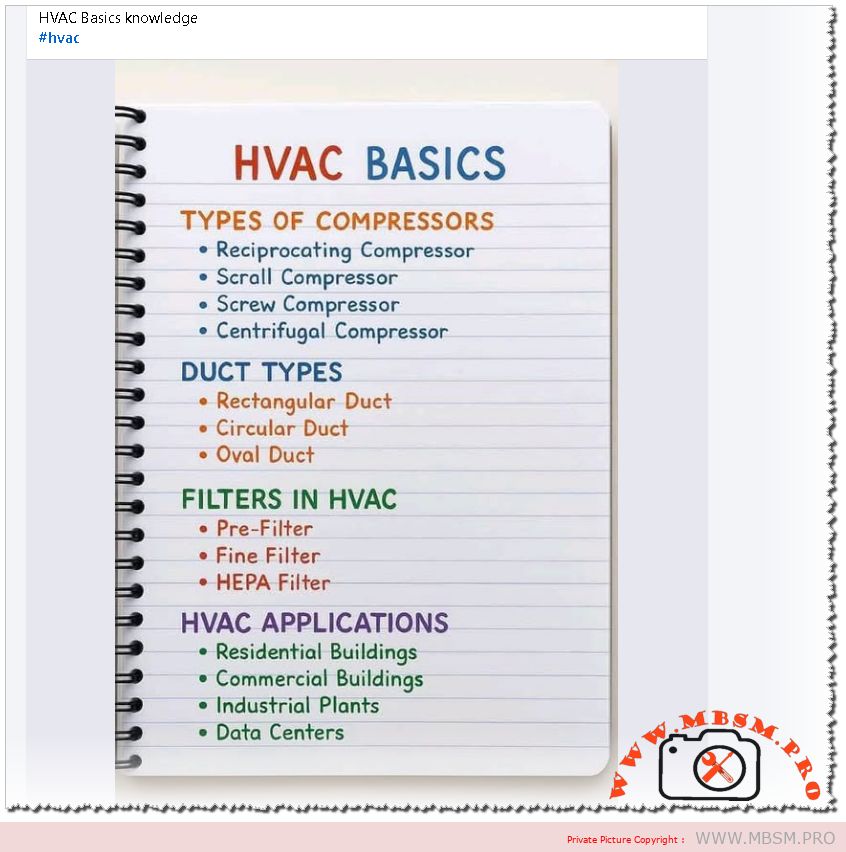
Compressors are the heart of any refrigeration or air‑conditioning system, raising refrigerant pressure so heat can be rejected outdoors and absorbed indoors. Four main compressor families dominate HVAC and refrigeration:​

Compressor type Working principle Typical applications Key advantages
Reciprocating compressor Piston moves back and forth in a cylinder, compressing refrigerant in stages.​ Small cold rooms, domestic refrigeration, light commercial AC Simple design, good for high pressure ratios
Scroll compressor Two spiral scrolls; one fixed, one orbiting, progressively traps and compresses gas.​ Residential and light commercial split AC, heat pumps Quiet, high efficiency, fewer moving parts
Screw compressor Two interlocking helical rotors rotate in opposite directions, trapping and compressing gas.​ Large chillers, industrial refrigeration, process cooling Continuous operation, stable capacity control
Centrifugal compressor High‑speed impeller accelerates refrigerant, then diffuser converts velocity to pressure.​ Large district cooling plants, high‑rise buildings, industrial HVAC Very high flow, good efficiency at large capacities

Engineering insight: choosing a compressor

  • Reciprocating vs scroll: Reciprocating units tolerate higher compression ratios and are robust for low‑temperature refrigeration, while scroll compressors deliver smoother, quieter operation for comfort cooling.​
  • Screw vs centrifugal: Screw compressors are ideal for variable industrial loads and tough conditions, whereas centrifugal units excel when a plant needs very large, steady cooling capacity with clean refrigerant and good water treatment.​

For design engineers, selecting a compressor is a trade‑off between capacity range, part‑load efficiency, noise, maintenance strategy, and refrigerant choice.​


HVAC Duct Types and Air Distribution

Ductwork acts like the circulatory system of an HVAC installation, moving conditioned air from central equipment to occupied spaces and back again. The main duct geometries are:​

Duct type Shape Typical use Performance notes
Rectangular duct Flat, four‑sided Commercial buildings, retrofits with space constraints Easy to install above ceilings; needs good sealing to reduce leakage
Circular duct Round cross‑section Industrial plants, high‑velocity systems, long runs Lower friction losses and leakage for the same air volume vs rectangular.
Oval duct Flattened circle Modern offices, tight ceiling spaces Compromise between rectangular space efficiency and circular aerodynamics

Comparison with ductless systems

  • Ducted systems distribute air through a network of ducts and are ideal when many zones share common air handling units.
  • Ductless systems (like VRF cassettes or mini‑splits) avoid duct losses but put more equipment in occupied spaces; they suit renovations where duct installation is difficult.​

Correct sizing, smooth layouts, and sealed joints are crucial engineering tasks; poorly designed ducts can waste 20–30% of fan energy and create comfort complaints.​


Filters in HVAC: From Pre‑Filter to HEPA

Air filters protect occupants and equipment by capturing dust, pollen, and fine particulates, and by keeping coils and fans clean. In a typical system, several filter stages can be combined:​

Filter type Function Typical efficiency & classification Main applications
Pre‑filter Captures coarse dust and fibers, acts as first protection.​ G2–G4 or M5 range in EN/ISO standards Central AC units, fan‑coil units, rooftop units
Fine filter Removes smaller particles, improves indoor air quality.​ F7–F9 or ePM1/ePM2.5 classes Offices, malls, schools, clean industrial spaces
HEPA filter High‑efficiency particle air filtration down to 0.3 µm.​ H10–H14, up to >99.995% efficiency Cleanrooms, hospitals, pharma, high‑tech manufacturing

Engineering view: value comparison

  • Pre‑filters extend the life of fine and HEPA filters by capturing large loads of dust, which reduces lifecycle cost and maintenance frequency.​
  • Fine filters strike a balance between air quality and pressure drop, suitable where regulations or comfort demand cleaner air but full HEPA is not required.​
  • HEPA filters are reserved for critical environments; they carry higher pressure drop and require careful design of fans, seals, and housings to avoid bypass leaks.​

Engineers should coordinate filter strategy with building use (for example, residential vs hospital), outdoor pollution levels, and standards such as EN ISO 16890 or ASHRAE 52.2.​


HVAC Applications Across Building Types

HVAC basics appear in very different configurations depending on the building category and load profile.​

Application type Typical system configuration Special design focus
Residential buildings Split AC or heat pumps, ducted or ductless; small boilers or furnaces. Comfort, low noise, simple controls, easy maintenance
Commercial buildings Central AHUs with duct networks, rooftop units, chillers with air or water‑cooled condensers.​ Energy efficiency, zoning, demand‑controlled ventilation
Industrial plants Process chillers, large air handlers, dedicated exhaust and makeup air systems. Process reliability, temperature/humidity control, safety
Data centers Precision cooling, CRAH/CRAC units, containment and raised floors. Continuous operation, redundancy, exact thermal management

Compared with process refrigeration

While comfort HVAC focuses on occupant well‑being and general air quality, industrial process refrigeration may prioritize precise temperature at equipment, sub‑zero conditions, or specific humidity requirements for production lines. In many factories, comfort HVAC and process cooling share chillers or cooling towers but operate under different control strategies and redundancy levels.​


Professional Tips and Practical Consel for Technicians

To move from theory to daily field performance, technicians and engineers can follow a few key habits:

  • Always look at the system as a chain: compressor, condenser, expansion device, evaporator, ductwork, and controls; diagnosing only one part often hides the real cause.​
  • When commissioning, verify airflow (CFM or m³/h) as carefully as refrigerant charge; incorrect duct balance can make a perfectly charged system look weak.​
  • For filters, log pressure drop across each stage and plan replacement based on performance, not just fixed dates; this protects both air quality and fan energy.​
  • In data centers and sensitive industrial zones, coordinate with IT and production teams to understand critical loads before choosing compressor type, redundancy level, and filtration strategy.​

These practices transform simple HVAC “basics” into a robust, engineered system that delivers stable comfort, safety, and reliability throughout the life of the installation.​

Focus keyphrase (Yoast SEO)
HVAC basics compressors duct types filters HEPA and HVAC applications in residential commercial industrial buildings and data centers explained for technicians and engineers

SEO title
HVAC Basics, Compressors, Duct Types, Filters, Residential and Industrial Applications | Mbsm.pro Technical Guide

Meta description
Learn HVAC basics with a technical yet practical guide to compressor types, duct systems, air filters from pre‑filter to HEPA, and key HVAC applications in homes, commercial buildings, industry, and data centers.

Slug
hvac-basics-compressors-ducts-filters-applications

Tags
HVAC basics, HVAC compressors, duct types, HVAC filters, HEPA filter, residential HVAC, industrial HVAC, data center cooling, Mbsmgroup, Mbsm.pro, mbsmpro.com, mbsm

Excerpt (first 55 words)
HVAC basics start with understanding how compressors, ducts, and filters work together to move heat and clean air in any building. From reciprocating and scroll compressors to rectangular and circular ducts, each choice affects comfort, energy efficiency, and reliability in residential, commercial, industrial, and data center applications.

10 PDF or catalog links about HVAC basics, compressors, ducts, and filters

  1. General HVAC BASICS methodology guidebook – RIT (cooling mode, components, airflow).
  2. TMS Group industrial HVAC systems guide, including ducts, filters, and components (often provided with downloadable technical PDFs).
  3. AireServ beginner’s guide to HVAC systems, with linked resources covering core components and operation.
  4. Fieldproxy “Basics of HVAC” resource, describing system elements and maintenance, with references to detailed documents.
  5. Heavy Equipment College “HVAC Parts and Their Functions” technical overview, listing all major components and roles.
  6. Gardner Denver knowledge hub on types of air compressors, including reciprocating, scroll, and screw, often linked as downloadable brochures.
  7. Sullair “Types of Compressors” knowledge document explaining rotary screw, scroll, and centrifugal compressor technology.
  8. ALP HVAC Filter Systems catalog, covering pre‑filters, fine filters, and HEPA filters with efficiency classes and applications.
  9. Camfil general ventilation filters catalog, showing bag filters, fine filters, and HEPA‑level products for HVAC applications.
  10. EU vs ASHRAE filter standards comparison for high‑efficiency and HEPA filtration, explaining classes H10–H14 and mechanisms.
Mbsmgroup2026-01-10_214148 mbsmpro


Copper Pipe Flaring: Common Mistakes and How to Avoid Them in HVAC and Plumbing Installations

Copper Pipe Flaring: Common Mistakes and How to Avoid Them in HVAC and Plumbing Installations

Improper flaring can lead to refrigerant leaks, system inefficiency, and costly repairs. This guide outlines the most frequent errors and how to engineer flawless connections.

Mbsmpro.com, Copper Pipe, Flaring, HVAC, Plumbing, R600a, Mini-Split, Leak Prevention, Soft Copper, Flaring Block, 1/4″, 3/8″, 1/2″, 5/8″, Refrigerant Line

Understanding Copper Pipe Flaring

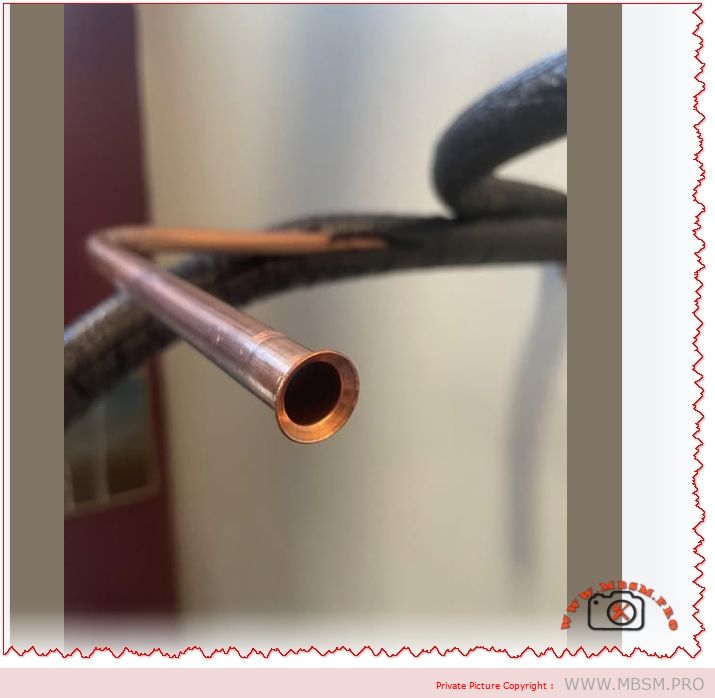
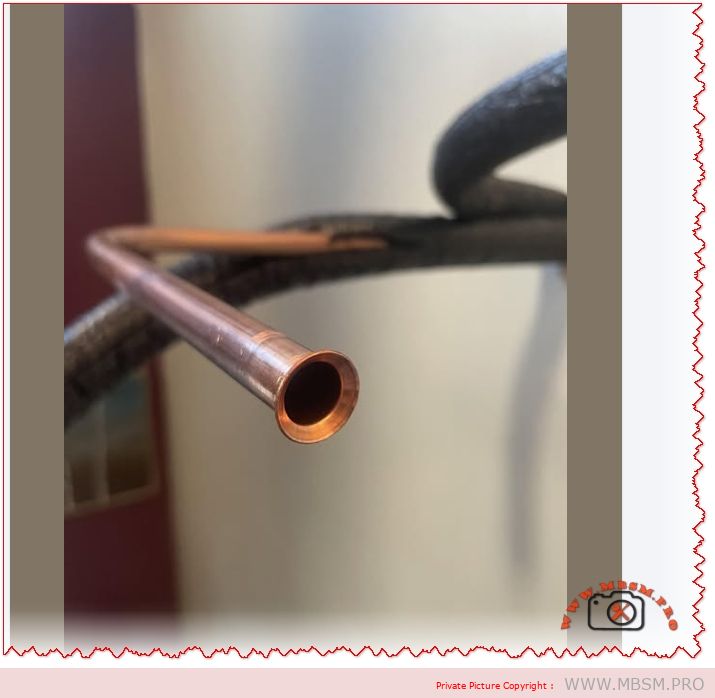
Flaring is the process of shaping the end of a copper pipe into a conical form to create a tight seal with flare fittings. It’s widely used in HVAC systems, refrigeration lines, and plumbing to ensure leak-proof connections—especially when working with R600a, R134a, or R410A refrigerants.

Common Mistakes in Copper Pipe Flaring

Mistake Impact Correction
Uneven flare Causes leaks Use calibrated flaring tools
Over-tightening Damages flare face Torque to spec using flare nut wrench
Under-tightening Loose connection Confirm seal with leak detector
Dirty pipe ends Poor seal Clean and deburr before flaring
Wrong pipe size Misfit with flare nut Match pipe with fitting size (e.g., 1/4″, 3/8″)
No lubrication Cracked flare Use flare oil or refrigerant-safe lubricant
Using hard copper Cracks during flaring Use soft copper tubing only

Comparison: Flaring vs. Brazing

Method Seal Quality Ease of Repair Tool Cost Leak Risk
Flaring High (if done right) Easy Low Medium
Brazing Very High Difficult High Low

Flaring is preferred for mini-split systems and field repairs, while brazing is ideal for permanent joints.

Engineering Tips for Perfect Flares

  • Use a flaring block or hydraulic flaring tool for consistent results.
  • Heat the pipe slightly if working in cold environments to prevent cracking.
  • Inspect flare face for concentric rings and smooth finish.
  • Always pressure test after installation to verify seal integrity.

Benefits of Proper Flaring

  • Leak-free connections reduce refrigerant loss and environmental impact.
  • Improved system efficiency due to stable pressure.
  • Longer equipment life with reduced wear on compressors and valves.

Focus Keyphrase

Copper Pipe Flaring Common Mistakes HVAC Plumbing Leak Prevention Soft Copper Mini-Split Refrigerant Line Installation Guide

SEO Title

Mbsmpro.com, Copper Pipe, Flaring, HVAC, Plumbing, R600a, Mini-Split, Leak Prevention, Soft Copper, Flaring Block

Meta Description

Avoid costly leaks and system failures by mastering copper pipe flaring. Learn the most common mistakes in HVAC and plumbing, plus engineering tips for perfect flare connections.

Slug

copper-pipe-flaring-mistakes-hvac-plumbing-guide

Tags

Copper Pipe, Flaring, HVAC, Plumbing, R600a, Mini-Split, Leak Prevention, Soft Copper, Mbsmgroup, Mbsm.pro, mbsmpro.com, mbsm, Refrigerant Line, Flaring Block

Excerpt

Copper pipe flaring is essential for leak-free HVAC and plumbing systems. This guide covers common mistakes, engineering tips, and comparisons with brazing to help technicians achieve perfect connections.

Mbmpro-2026-01-08_235817 mbsmpro


Embraco FMXY9C Compressor: R600a, 1/6 HP

Embraco FMXY9C Compressor: R600a, 1/6 HP, Fullmotion Inverter, 220-240V, LBP Cooling – Technical Review and Comparison

This article provides a full technical breakdown of the Embraco FMXY9C compressor, including specs, performance, comparisons, and engineering advice for refrigeration systems.

Mbsmpro.com, Compressor, FMXY9C, Embraco, R600a, 1/6 hp, Cooling, 220-240V, 1Ph 50Hz, LBP, Fullmotion, Inverter, −35°C to −10°C, CE UL, Austria

Overview of Embraco FMXY9C Compressor

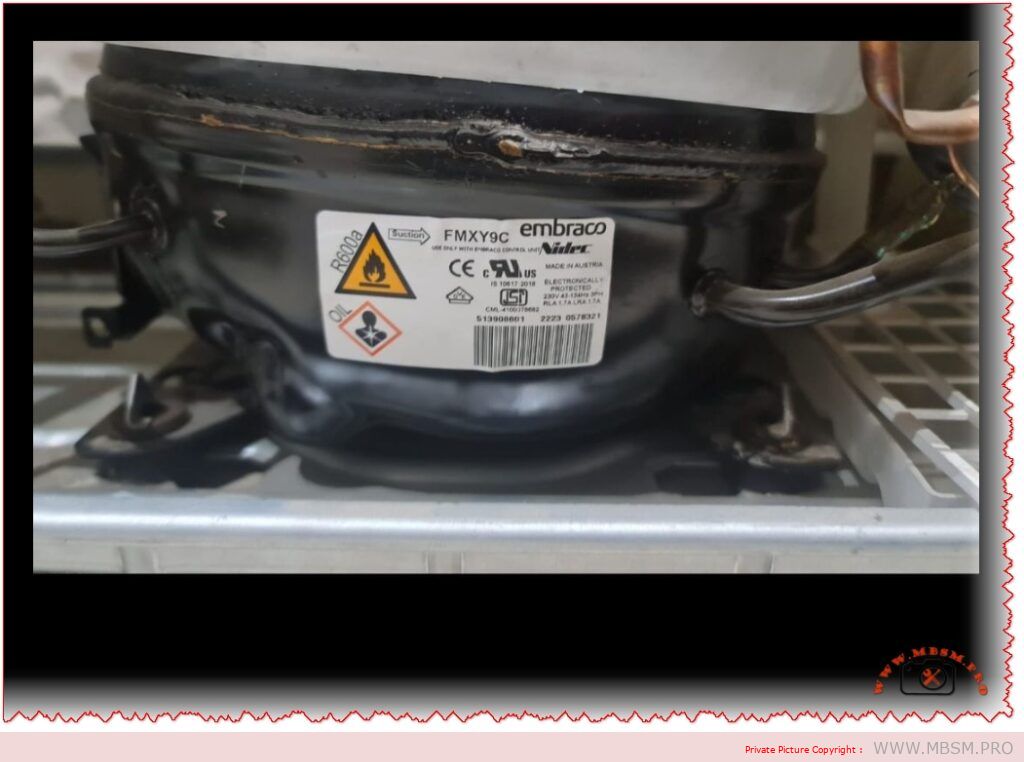
The Embraco FMXY9C is a hermetic reciprocating compressor designed for low back pressure (LBP) refrigeration systems. It uses R600a (isobutane) refrigerant, offering high efficiency and low environmental impact. Built in Austria, this model features Fullmotion inverter technology, allowing variable speed operation for optimized cooling and energy savings.

Technical Specifications Table

Parameter Value
Model FMXY9C
Brand Embraco
Refrigerant R600a
Voltage/Frequency 220-240V / 50Hz
Phase Single (1Ph)
Rated Load Amps (RLA) 1.1 A
Locked Rotor Amps (LRA) 1.7 A
HP Rating ~1/6 HP
Cooling Type LBP
Compressor Type Fullmotion (Inverter)
Displacement 8.74 cm³
Max Winding Temp 130°C
Certifications CE, UL
Origin Austria
Oil Type Alkyl Benzene
Application Range −35°C to −10°C

Comparison with Similar Compressors

Model Refrigerant HP Rating Application Voltage Technology
FMXY9C R600a ~1/6 HP LBP 220-240V Fullmotion Inverter
VTH1113Y R600a ~1/6 HP LBP 220-240V Inverter
NEK6210U R290 ~1/5 HP MBP 115V RSIR

FMXY9C offers superior energy control and quieter operation compared to fixed-speed models like NEK6210U.

Engineering Insights & Usage Tips

  • Fullmotion Technology: Adjusts compressor speed based on cooling demand, reducing energy consumption.
  • R600a Refrigerant: Eco-friendly with zero ozone depletion, but flammable—requires sealed systems and proper ventilation.
  • Electronic Protection: Prevents overload and ensures safe operation under voltage fluctuations.
  • Maintenance Advice: Use only Embraco-approved components and compatible oil to maintain performance and warranty.

Benefits of FMXY9C Compressor

  • Energy Efficiency: Variable speed operation reduces power draw.
  • Quiet Performance: Ideal for residential and commercial refrigeration.
  • Durability: Designed for high ambient temperatures and long duty cycles.

Focus Keyphrase

Embraco FMXY9C Compressor R600a 1/6 HP Fullmotion Inverter 220-240V 50Hz LBP Cooling Austria CE UL Specs Comparison

SEO Title

Mbsmpro.com, Compressor, FMXY9C, Embraco, R600a, 1/6 hp, Cooling, 220-240V, 1Ph 50Hz, LBP, Fullmotion

Meta Description

Explore the full specifications of Embraco FMXY9C compressor for refrigeration systems using R600a. Includes technical tables, performance comparisons, and engineering advice for LBP cooling applications.

Slug

embraco-fmxy9c-compressor-r600a-220v-lbp-fullmotion-specs

Tags

Embraco, FMXY9C, R600a, Compressor, Inverter, Fullmotion, LBP, Cooling, 220-240V, Mbsmgroup, Mbsm.pro, mbsmpro.com, mbsm, Austria, CE, UL

Excerpt

The Embraco FMXY9C compressor is a high-efficiency inverter model using R600a refrigerant. Designed for LBP applications, it operates on 220-240V and offers quiet, reliable cooling with electronic protection.

Embraco FMXY9C Compressor: R600a, 1/6 HP mbsmpro


Mechanical Defrost Timer LUFO HPT-02: Wiring

Mechanical Defrost Timer LUFO HPT-02: Wiring, Function, and Engineering Comparison for Refrigeration Systems

Explore how the LUFO HPT-02 mechanical timer manages defrost and cooling cycles in refrigeration systems, with wiring insights and performance comparisons.

Mbsmpro.com, Timer, LUFO HPT-02, 30 Minute, 120 VAC, 60 Hz, 15A, 3/4 HP, Defrost Cycle, Cooling Cycle, Mechanical Control, Heavy Duty, Wiring Diagram

What Is a Mechanical Defrost Timer?

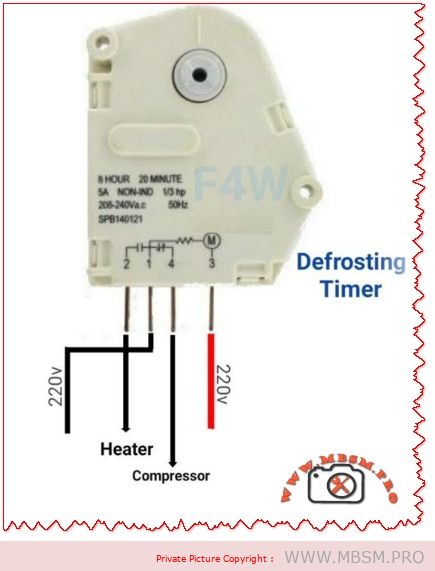
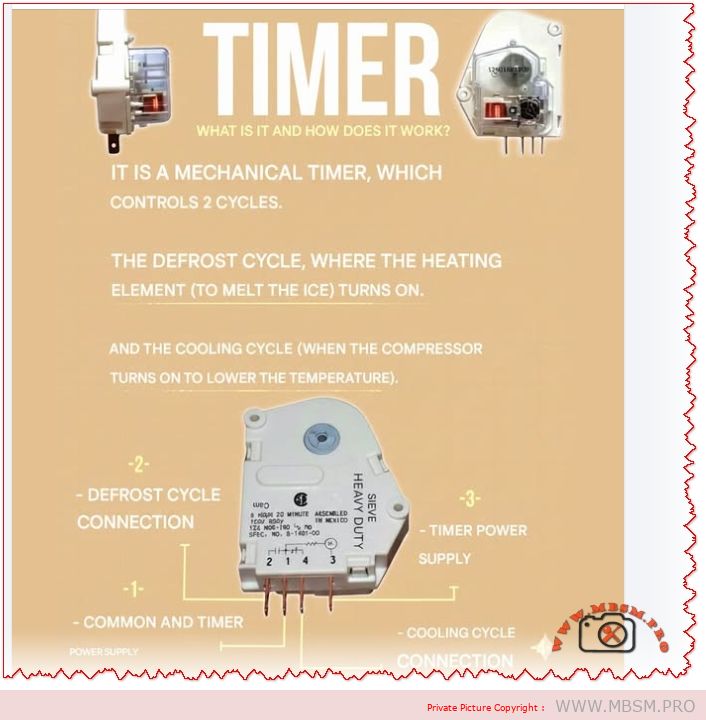
A mechanical defrost timer is a critical component in refrigeration systems, especially in freezers and commercial coolers. It alternates between two cycles:

  • Defrost Cycle: Activates a heating element to melt accumulated ice.
  • Cooling Cycle: Powers the compressor to maintain low temperatures.

The LUFO HPT-02 is a 30-minute timer rated for 120 VAC at 60 Hz, handling up to 15A resistive load and 3/4 HP motor load. It’s built for heavy-duty applications and uses a 4-terminal wiring configuration.

Wiring Table for LUFO HPT-02 Timer

Terminal Function
1 Common and Timer Power Supply
2 Defrost Cycle Connection
3 Timer Power Supply
4 Cooling Cycle Connection

Comparison: LUFO HPT-02 vs. Digital Defrost Timers

Feature LUFO HPT-02 Digital Timer
Type Mechanical Electronic
Voltage 120 VAC 120–240 VAC
Cycle Control Fixed (30 min) Programmable
Reliability High Moderate
Cost Lower Higher
Maintenance Minimal Requires updates

Mechanical timers like LUFO HPT-02 are preferred in rugged environments due to their simplicity and durability.

Engineering Insights & Installation Tips

  • Ensure correct terminal wiring to avoid short circuits or cycle misfires.
  • Use surge protection to extend timer lifespan.
  • Verify compatibility with compressor and heater ratings before installation.
  • Test cycle intervals after setup to confirm proper switching.

Benefits of Mechanical Timers in Refrigeration

  • No software failures or digital glitches.
  • Easy replacement and low maintenance.
  • Reliable cycle control for consistent defrosting and cooling.

Focus Keyphrase

LUFO HPT-02 Mechanical Defrost Timer Wiring Diagram 120VAC 60Hz 30 Minute Cycle for Refrigeration Systems Heavy Duty Cooling Defrost Control

SEO Title

Mbsmpro.com, Timer, LUFO HPT-02, 30 Minute, 120 VAC, 60 Hz, 15A, 3/4 HP, Defrost and Cooling Cycle Wiring

Meta Description

Discover how the LUFO HPT-02 mechanical timer controls defrost and cooling cycles in refrigeration systems. Includes wiring table, engineering advice, and comparisons with digital timers.

Slug

lufo-hpt-02-mechanical-defrost-timer-wiring-120vac-30min

Tags

LUFO, HPT-02, Timer, Defrost, Cooling, Mechanical, Wiring, 120VAC, 60Hz, Mbsmgroup, Mbsm.pro, mbsmpro.com, mbsm, Refrigeration, Heavy Duty

Excerpt

The LUFO HPT-02 mechanical timer alternates between defrost and cooling cycles in refrigeration systems. Rated at 120 VAC and 15A, it offers reliable control with a simple 4-terminal wiring setup.

Mechanical Defrost Timer LUFO HPT-02: Wiring mbsmpro


Jiaxipera VTH1113Y Compressor: R600a

Jiaxipera VTH1113Y Compressor: R600a, 220-240V, LBP Cooling, Technical Breakdown and Engineering Insights

Jiaxipera VTH1113Y Compressor Horsepower Rating

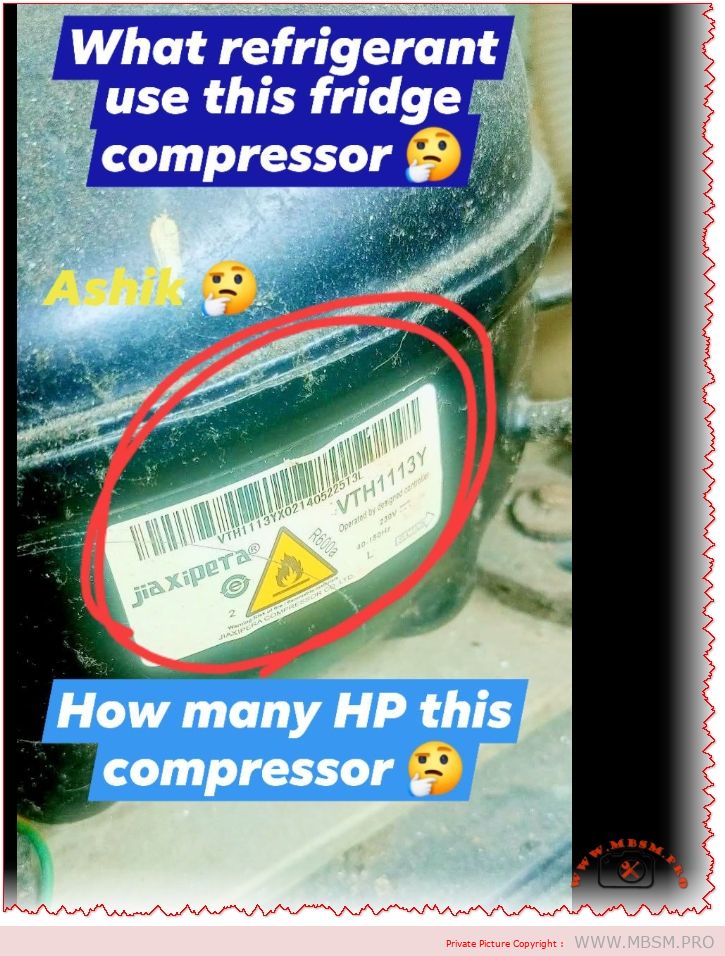
The Jiaxipera VTH1113Y compressor is typically rated at approximately 1/6 HP (Horsepower). This rating aligns with its application in low back pressure (LBP) systems, such as household refrigerators using R600a refrigerant. The compressor is designed for efficient cooling in temperature ranges from −35°C to −10°C, making it suitable for static cooling environments.

Comparison Table: HP Ratings of Similar Compressors

Model Refrigerant HP Rating Application
VTH1113Y R600a ~1/6 HP LBP
VTX1116Y R600a ~1/5 HP MHBP
VNC1118Z R134a ~1/5 HP HBP

Engineering Insight

  • 1/6 HP compressors are ideal for compact refrigerators and deep freezers.
  • They offer low energy consumption and quiet operation, especially when paired with inverter technology.
  • R600a refrigerant enhances efficiency but requires careful handling due to its flammability.

Copy All for WordPress:

Jiaxipera VTH1113Y Compressor Horsepower Rating

The Jiaxipera VTH1113Y compressor is typically rated at approximately 1/6 HP (Horsepower). This rating aligns with its application in low back pressure (LBP) systems, such as household refrigerators using R600a refrigerant. The compressor is designed for efficient cooling in temperature ranges from −35°C to −10°C, making it suitable for static cooling environments.

Model Refrigerant HP Rating Application
VTH1113Y R600a ~1/6 HP LBP
VTX1116Y R600a ~1/5 HP MHBP
VNC1118Z R134a ~1/5 HP HBP

1/6 HP compressors are ideal for compact refrigerators and deep freezers. They offer low energy consumption and quiet operation, especially when paired with inverter technology. R600a refrigerant enhances efficiency but requires careful handling due to its flammability.

This article explores the Jiaxipera VTH1113Y compressor used in inverter refrigerators, highlighting its specifications, performance, and comparisons with similar models.

Mbsmpro.com, Compressor, VTH1113Y, Jiaxipera, R600a, 220-240V, 1PH, 50Hz, LBP, Static Cooling, −35°C to −10°C, Alkyl Benzene Oil, ASHRAE Standard

Technical Overview of Jiaxipera VTH1113Y Compressor

The Jiaxipera VTH1113Y is a hermetic inverter compressor designed for household refrigerators using R600a (isobutane) refrigerant. It operates on 220-240V at 50Hz, with a single-phase configuration. This model is optimized for Low Back Pressure (LBP) applications, making it ideal for cooling environments ranging from −35°C to −10°C.

Performance Specifications Table

Parameter Value
Refrigerant R600a
Voltage/Frequency 220-240V / 50Hz
Cooling Type Static
Application LBP
Evaporating Temp Range −35°C to −10°C
Displacement 8.9 cm³
Max Winding Temp 130°C
Max Discharge Pressure 0.98 MPa
COP Range 1.60 – 1.72
Power Consumption 40.7W – 131.3W
Current Range 0.44A – 1.25A
Speed Range 1320 – 4500 RPM
Oil Type Alkyl Benzene

Comparison with Similar Compressors

Model Refrigerant HP Rating Application COP Voltage
VTH1113Y R600a ~1/6 HP LBP 1.60–1.72 220-240V
VTX1116Y R600a ~1/5 HP MHBP 1.65–1.75 220-240V
VNC1118Z R134a ~1/5 HP HBP 1.55–1.70 220-240V

VTH1113Y is best suited for low-temperature applications, while VTX1116Y and VNC1118Z serve medium and high pressure systems respectively.

Engineering Insights & Usage Recommendations

  • Use in LBP Systems: Ideal for deep-freezing and low-temperature refrigeration.
  • R600a Compatibility: Environmentally friendly with low GWP, but requires leak-proof systems due to flammability.
  • Voltage Stability: Ensure consistent 220-240V supply to avoid overload protection triggers.
  • Oil Maintenance: Use only Alkyl Benzene oil for optimal lubrication and longevity.

Benefits of VTH1113Y Compressor

  • Energy Efficient: High COP values reduce electricity consumption.
  • Quiet Operation: Inverter technology minimizes noise.
  • Durable Design: Withstands high discharge pressure and ambient temperatures up to 43°C.

Focus Keyphrase

Jiaxipera VTH1113Y Compressor R600a 220-240V 50Hz LBP Cooling Static Inverter Refrigerator Technical Specifications Comparison

SEO Title

Mbsmpro.com, Compressor, VTH1113Y, Jiaxipera, R600a, 220-240V, LBP, Static Cooling, −35°C to −10°C

Meta Description

Explore the full specifications of Jiaxipera VTH1113Y compressor for inverter refrigerators using R600a. Includes technical tables, performance comparisons, and engineering advice for LBP cooling systems.

Slug

jiaxipera-vth1113y-compressor-r600a-220v-lbp-specs

Tags

Jiaxipera, VTH1113Y, R600a, Compressor, Inverter, Refrigerator, LBP, Mbsmgroup, Mbsm.pro, mbsmpro.com, mbsm, Cooling, Static, 220-240V

Excerpt

Jiaxipera VTH1113Y is a high-efficiency inverter compressor using R600a refrigerant. Designed for LBP applications, it operates on 220-240V and offers quiet, reliable cooling for household refrigerators.

Jiaxipera VTH1113Y Compressor: R600a mbsmpro


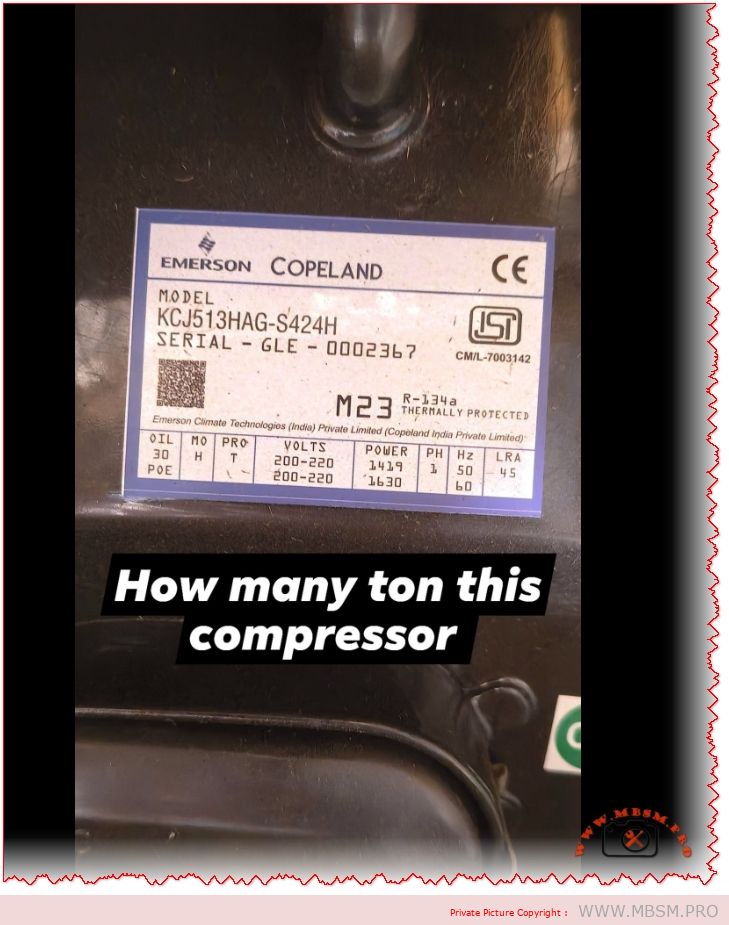
Champion of HBP: Copeland KCJ513HAG-S424H

Mbsmpro.com, Compressor, KCJ513HAG-S424H, 1.2 HP, Copeland, R134a, HBP, 12300 Btu/h, 230V, CSCR, Water Cooler, Air Conditioning


The Heavyweight Champion of HBP: Copeland KCJ513HAG-S424H

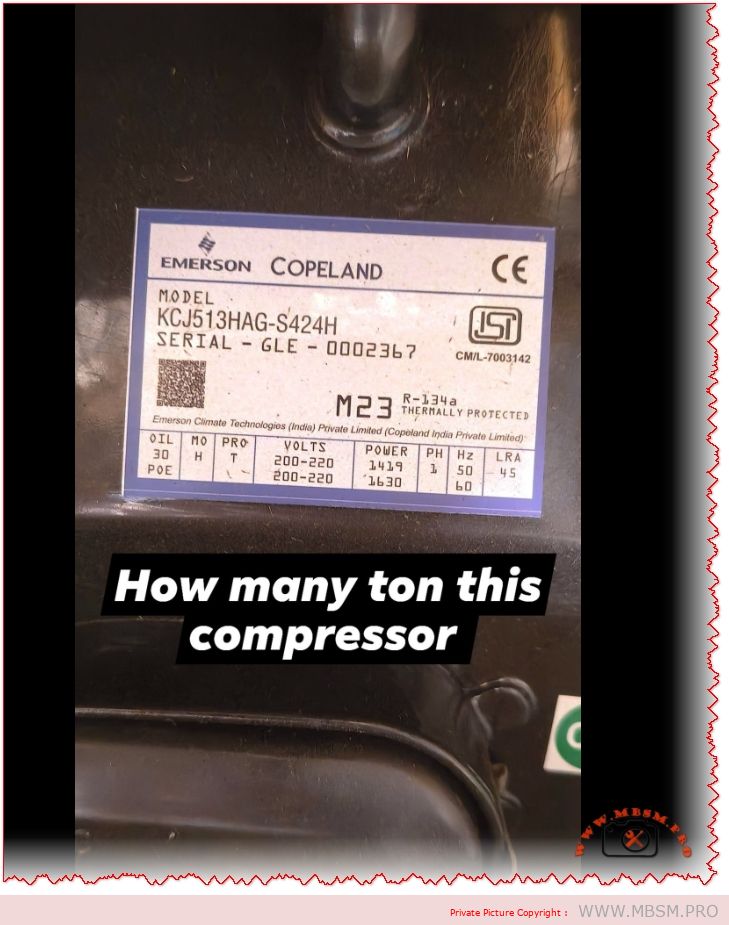
In the realm of commercial refrigeration, few names carry as much weight as Copeland. If you are an artisan bricoleur repairing a large water cooler, a bottle chiller, or a specialized air conditioning unit, encountering the KCJ513HAG-S424H means you are dealing with a robust, high-torque machine. This isn’t a small domestic compressor; it is a 1.2 HP beast designed to move heat fast.

The KCJ series (Reciprocating) is legendary for its durability in high-ambient temperatures (common in Tunisia and the Middle East). Unlike rotary compressors that might struggle when the condenser gets clogged with dust, this reciprocating connecting rod design keeps pumping. The “HAG” suffix is your key identifier: ‘H’ stands for High Temperature (HBP), and ‘G’ confirms it is built for R134a gas.

Why 1.2 HP Matters for High Back Pressure (HBP)

This compressor is a “High Back Pressure” specialist. It is designed to operate where the evaporator temperature is relatively high (like +7.2°C for AC or water cooling).

  • Cooling Capacity: At standard ASHRAE conditions, it delivers a massive 12,300 Btu/h (approx 3,604 Watts).
  • Efficiency: It uses a CSCR (Capacitor Start Capacitor Run) motor configuration. This means it has a start capacitor to get the heavy piston moving and a run capacitor to keep the amperage low (approx 6.5 Amps) while running.

Technical Specifications: The Data Sheet

Below is the precise data for the KCJ513HAG-S424H.

Feature Specification
Model KCJ513HAG-S424H
Brand Copeland (Emerson)
Nominal HP 1.20 HP (approx. 1 Ton)
Displacement 38.04 cc/rev
Refrigerant R134a (Tetrafluoroethane)
Application HBP (High Back Pressure) / AC / Heat Pump
Voltage 220-230V ~ 50Hz
Cooling Capacity 12,300 Btu/h (@ +7.2°C Evap)
Input Power 1374 Watts
Input Current 6.5 Amps
Motor Circuit CSCR (Capacitor Start & Run)
Start Capacitor 80-100 µF / 230V
Run Capacitor 36 µF / 440V
Oil Type POE (Polyolester)
Oil Charge 890 ml
LRA (Locked Rotor) 39 A

Comparison: Copeland KCJ513HAG vs. Tecumseh & Danfoss

When this specific Copeland is unavailable, you need a backup plan. Here is how it compares to other market leaders in the 1 HP+ R134a category.

Compressor Brand Nominal HP Displacement Cooling (HBP) Verdict
KCJ513HAG Copeland 1.2 HP 38.0 cc 12,300 Btu Best for rugged, high-vibration environments.
TAG4518Y Tecumseh 1.5 HP 53.2 cc 15,000 Btu Slightly larger; good upgrade if space permits.
CAJ4511Y Tecumseh 1 HP 32.7 cc 10,500 Btu A bit weaker; only use for smaller loads.
MT18 Maneurop 1.5 HP 30.2 cc 13,000 Btu Excellent alternative, but physically larger/heavier.

Exploitation Note: If you replace a rotary compressor with this reciprocating model, ensure you add a liquid receiver. Reciprocating pumps are less tolerant of liquid slugging than rotaries!


Exploitation: Installation & Troubleshooting

For the technician, installing the KCJ513HAG requires attention to detail:

  1. Capacitor Logic: This unit requires the start capacitor to fire. If you hear a “hum” but no start, check the potential relay (AC85001) and the 80-100µF start capacitor. They are the most common failure points, not the compressor itself.
  2. Oil Management: It comes charged with POE oil. If you are retrofitting an old R12 system (rare these days, but possible), you must flush the lines completely. R134a + Mineral Oil = Sludge.
  3. Vibration: This is a heavy piston compressor (~22.5 kg). Ensure the rubber grommets are fresh. If you bolt it down too tight without the rubber play, the vibration will crack the copper discharge line within weeks.
  4. Heat Management: At 54.4°C condensing temp, this unit works hard. Ensure the condenser fan is clean and spinning at full RPM (usually 1300 RPM for these units).

Champion of HBP: Copeland KCJ513HAG-S424H mbsmpro

Focus Keyphrase:

Copeland KCJ513HAG-S424H Compressor Specs R134a

SEO Title:

Mbsmpro.com, Compressor, KCJ513HAG-S424H, 1.2 HP, Copeland, R134a, HBP, 12300 Btu, 230V

Meta Description:

Detailed specs for Copeland KCJ513HAG-S424H (1.2 HP, R134a). Discover cooling capacity, capacitor values (CSCR), and Tecumseh comparisons for water coolers and AC repair.

Slug:

copeland-kcj513hag-s424h-compressor-1-2hp-r134a-specs

Tags:

Mbsmgroup, Mbsm.pro, mbsmpro.com, mbsm, Copeland Compressor, KCJ513HAG, 1.2 HP Compressor, R134a HBP, Commercial Refrigeration, Water Cooler Repair, KCJ513HAG-S424H, Emerson Climate

Excerpt:

The Copeland KCJ513HAG-S424H is a powerhouse 1.2 HP compressor designed for high-demand cooling. Built for R134a applications like large water coolers and AC units, it delivers 12,300 Btu/h reliability. This guide covers its CSCR electrical setup, 38cc displacement, and how it compares to Tecumseh alternatives.


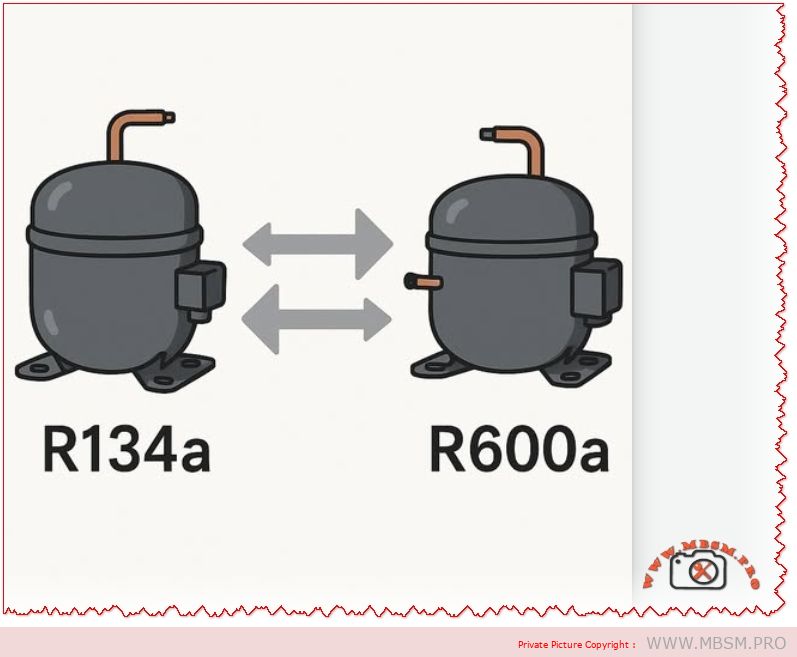
R134a vs. R600a Compressor Conversion

Mbsmpro.com, Comparison, R134a vs R600a, Compressor Retrofit, Displacement Calculation, Capillary Sizing, Refrigeration Repair


The Technician’s Guide: R134a vs. R600a Compressor Conversion

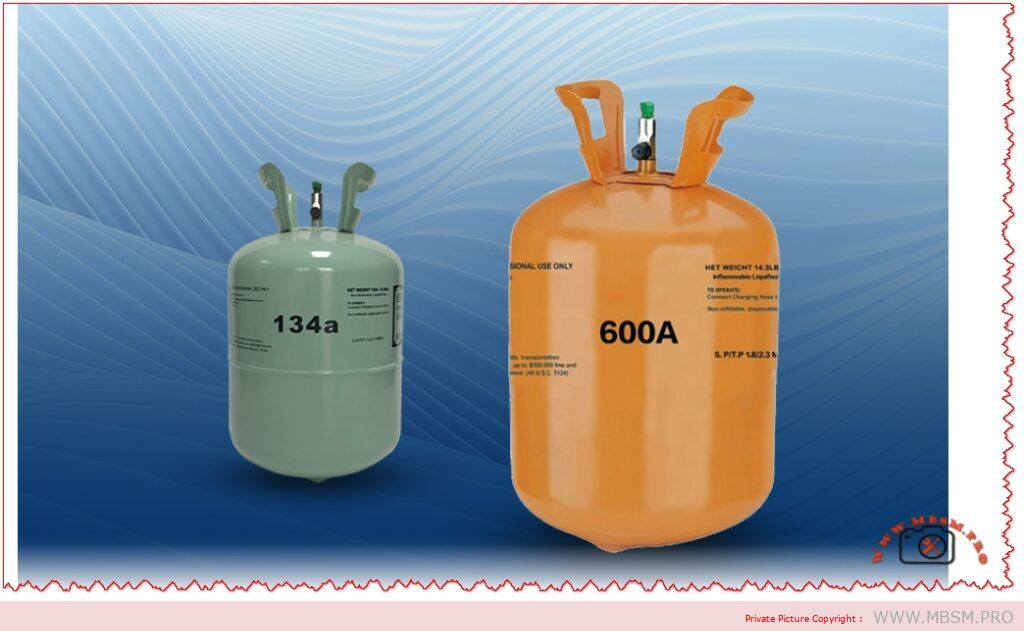
In the evolving world of refrigeration repair, the transition from HFCs (R134a) to Hydrocarbons (R600a) is no longer a choice—it is the standard. For the artisan bricoleur, understanding the relationship between these two refrigerants is critical. You cannot simply swap one for the other without understanding the physics of displacement and pressure.

This guide breaks down exactly what happens when you compare an R134a system to an R600a system, and how to correctly calculate the replacement if you are retrofitting a cabinet (changing the compressor and gas).

The Golden Rule: Displacement is King

The biggest mistake technicians make is matching “Horsepower to Horsepower” (e.g., swapping a 1/5 HP R134a with a 1/5 HP R600a). Do not do this.

R600a gas is much less dense than R134a. To pump the same amount of heat, the R600a compressor must have a larger cylinder volume (displacement).

  • R134a Displacement Factor: 1.0
  • R600a Displacement Factor: ~1.7 to 2.0

If you remove an R134a compressor with a 5.0 cc displacement and replace it with a 5.0 cc R600a compressor, the fridge will never get cold. You need an R600a compressor with approximately 8.5 cc to 10 cc to do the same work.


Technical Comparison: R134a vs R600a

Here is the data you need to understand the behavior of these gases inside your pipes.

Feature R134a (Tetrafluoroethane) R600a (Isobutane) The Difference
Operating Pressure (Low Side) 0 to 2 PSI (Positive pressure) -5 to -10 inHg (Vacuum) R600a often runs in a vacuum. Leaks suck air in.
Displacement Required Low (Dense gas) High (Light gas) R600a compressor needs ~70-80% bigger cylinder.
Charge Amount 100% (Baseline) ~45% of R134a mass If R134a took 100g, R600a takes only ~45g.
Oil Compatibility POE (Polyolester) Mineral or Alkylbenzene R600a is compatible with mineral oil (cheaper/less hydroscopic).
GWP (Global Warming Potential) 1430 (High) 3 (Very Low) R600a is eco-friendly.
Flammability A1 (Non-Flammable) A3 (Highly Flammable) Requires spark-proof tools and care.

Retrofit Table: Equivalent Displacement (Estimated)

Use this table when you are forced to replace a dead R134a compressor with a new R600a model on an existing fridge.

Original R134a Compressor Approx. Displacement Target R600a Compressor Approx. Displacement
1/6 HP 4.0 cc 1/5 HP ~7.0 – 8.0 cc
1/5 HP 5.5 cc 1/4 HP ~9.0 – 10.5 cc
1/4 HP 7.5 cc 1/3 HP ~13.0 – 14.0 cc
1/3 HP 9.0 cc 3/8 HP ~16.0 cc

Note: These are estimations. Always check the Cooling Capacity (Watts) at -23.3°C (LBP) in the datasheet. The Watts must match!


Exploitation: The Capillary Tube & Oil Dilemma

When converting a system designed for R134a to use an R600a compressor, you face two hurdles:

  1. Capillary Tube: R600a has a higher latent heat of vaporization. Ideally, it requires a slightly different restriction than R134a. However, in practice (for repair jobs), the original R134a capillary tube often works “acceptably” because the lower mass flow of R600a balances out with its higher specific volume. Do not shorten the capillary unless you have high superheat issues.
  2. Oil Mixing: R134a systems contain POE oil stuck in the evaporator. R600a compressors come with Mineral oil. While R600a can tolerate some POE, it is best to flush the system with nitrogen and a flushing agent to remove as much old POE oil as possible before brazing the new compressor.

Safety First: Working with Isobutane

  • No Brazing on Charged Systems: Never use a torch if there is any chance of gas in the system. Use tube cutters.
  • Ventilation: R600a is heavier than air. It settles in low spots (floors, inspection pits). Ensure good airflow.
  • Spark-Free: When vacuuming, ensure your pump switch and relay are not sparking sources near the vents.

R134a vs. R600a Compressor Conversion mbsmpro

Focus Keyphrase:

R134a vs R600a Compressor Conversion Comparison

SEO Title:

Mbsmpro.com, Comparison, R134a vs R600a, Compressor Retrofit, Displacement Calculation, Capillary Sizing, 1/5 HP

Meta Description:

Master the R134a to R600a conversion. Learn why displacement ratios matter (1.7x rule), how to calculate charge weight (45%), and essential safety tips for retrofitting fridge compressors.

Slug:

r134a-vs-r600a-compressor-conversion-displacement-guide

Tags:

Mbsmgroup, Mbsm.pro, mbsmpro.com, mbsm, R600a Conversion, R134a Replacement, Compressor Displacement, Fridge Repair, HVAC Retrofit, Isobutane Safety, Capillary Sizing, 1/5 HP Compressor

Excerpt:

Switching from R134a to R600a requires more than just changing the gas. This guide explains the critical “Displacement Rule”—why R600a compressors need nearly double the cylinder volume of R134a units to produce the same cooling. We cover charge calculation (45% rule), oil compatibility, and safety protocols for the modern artisan.


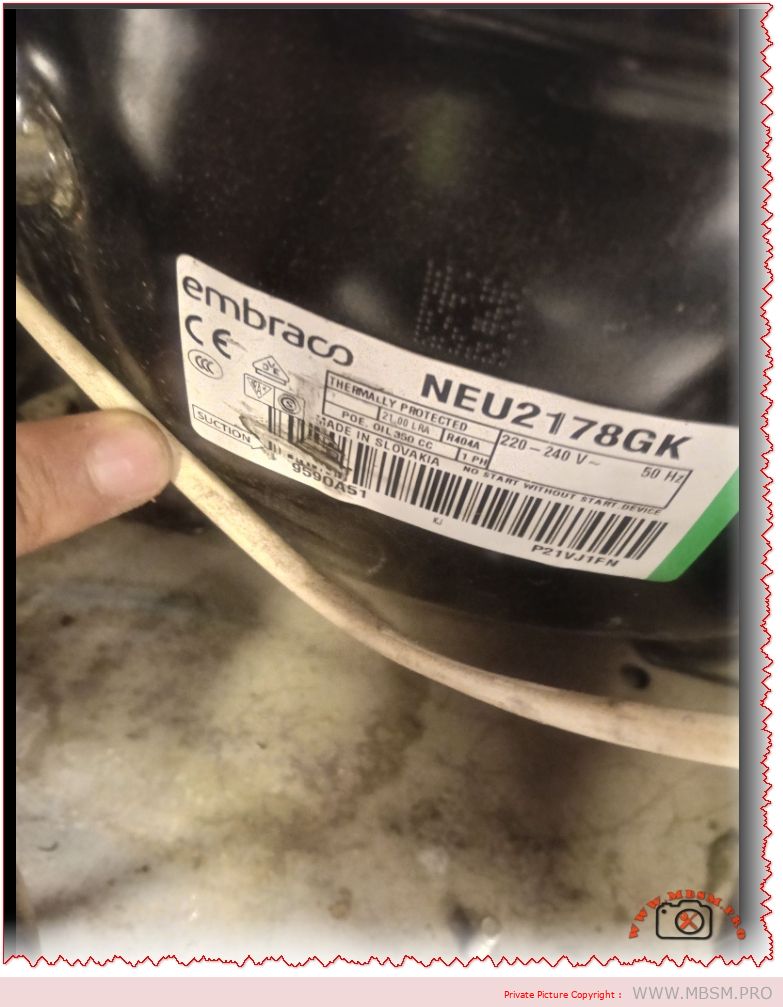
Embraco NEU2178GK, compressor

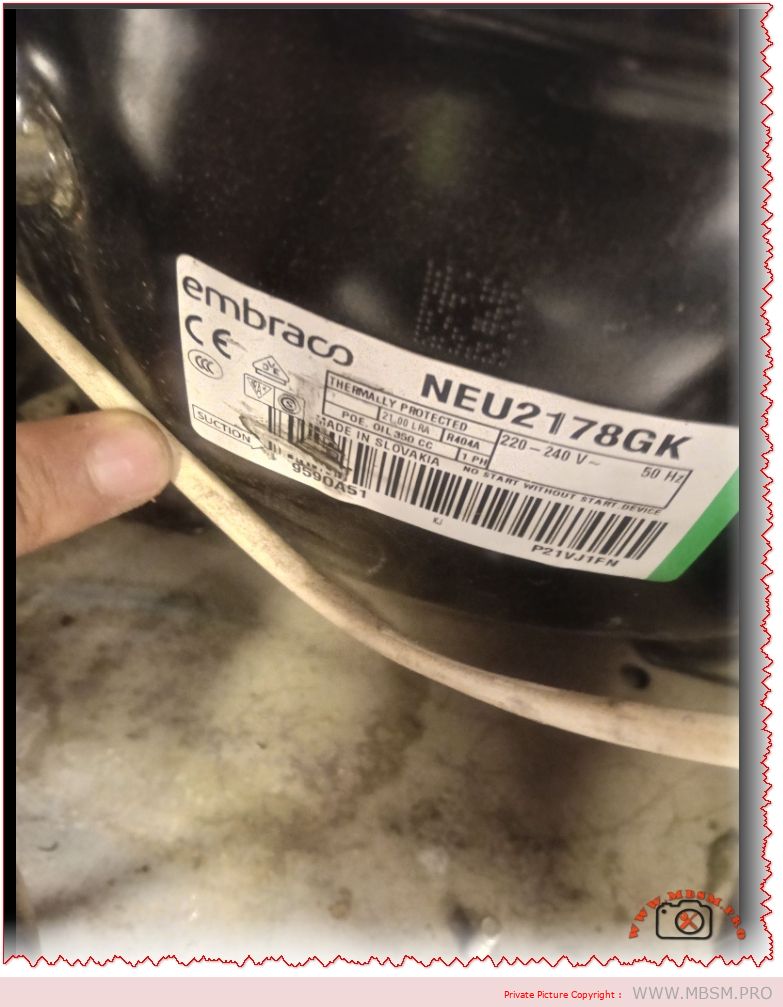
Mbsmpro.com, Embraco, NEU2178GK, 1 HP, LBP, R404A, 220-240V, 50Hz, 16.8 cc, CSR, Commercial Freezer Compressor


The Cold Heart of Commercial Freezing: Embraco NEU2178GK

If you are an artisan bricoleur or a refrigeration technician working on commercial island freezers or restaurant reach-ins, you have likely encountered the Embraco NEU2178GK. This isn’t your standard domestic fridge compressor; this is a 1 HP powerhouse designed for the heavy lifting required by Low Back Pressure (LBP) applications using R404A or R507 refrigerant.

Known for its robust “Made in Slovakia” build, the NEU2178GK is a CSR (Capacitor Start, Capacitor Run) motor. This is a critical detail for technicians: unlike simpler PTCSCR compressors, this unit relies on a precise electrical box containing both a start capacitor and a run capacitor to manage its high starting torque (HST). It is the engine you choose when you need reliability in a -30°C environment.

Why the “GK” Matters

In Embraco’s nomenclature, the “K” at the end (as in NEU2178GK) often signifies a specific motor type—in this case, one designed for High Starting Torque. This means it can restart even if pressures haven’t fully equalized, a common scenario in busy commercial kitchens where doors are opened frequently.


Technical Specifications: The Data You Need

Here is the breakdown of the technical capabilities of this compressor.

Feature Specification
Model NEU2178GK
Brand Embraco (Nidec)
Horsepower (HP) 1 HP
Displacement 16.80 cm³ (cc)
Refrigerant R404A / R507 / R452A
Application LBP (Low Back Pressure)
Voltage 220-240V ~ 50Hz
Cooling Capacity ~900 W (at -23.3°C ASHRAE)
Motor Type CSR (Capacitor Start & Run)
Start Capacitor 88 – 108 µF / 330V
Run Capacitor 15 µF / 400V
Oil Type POE 22 (Polyolester)
Oil Charge 350 ml
Expansion Device Capillary or TXV (Expansion Valve)

Exploitation: Installation Tips for the Artisan

Installing a 1 HP commercial compressor is different from swapping a domestic one. Here are the “golden rules” for the NEU2178GK:

  1. The Electric Box is Mandatory: You cannot bypass the capacitor box. This motor needs the 15µF run capacitor to maintain efficiency and keep the windings cool, and the start capacitor to kick the rotor into motion against high head pressure.
  2. Moisture is the Enemy: This compressor comes filled with POE oil. POE is like a sponge for humidity. If you leave the plugs open for more than 15 minutes, the oil absorbs moisture that vacuum pumps cannot remove. Keep it sealed until the last second.
  3. Nitrogen Sweep: Because R404A systems use POE oil, any carbon from brazing will turn into sludge and block the capillary tube immediately. Always braze with a trickle of nitrogen flowing through the pipes.
  4. R452A Compatibility: If R404A is expensive or restricted in your area, this compressor is often compatible with R452A, a drop-in replacement with a lower GWP (Global Warming Potential), but always check the discharge temperature.

Comparison: Embraco NEU2178GK vs. The Competition

When you can’t find the exact Embraco model, you need a replacement. Here is how it stacks up against the heavyweights from Secop and Tecumseh.

Compressor Brand Approx. HP Displacement Verdict
NEU2178GK Embraco 1 HP 16.8 cc Best for high-torque commercial freezers.
SC21CL Secop (Danfoss) ~7/8 – 1 HP 20.95 cc Older design, physically larger, very reliable.
CAJ2464Z Tecumseh 1.5 HP 34.4 cc Much more powerful; usually overkill for this slot.
NT2180GK Embraco 1 HP 20.4 cc The “big brother” of the NEU series; fits if you have space.

Pro Tip: If replacing a Secop SC21CL with this Embraco NEU2178GK, you may need to adjust the pipework as the Embraco is slightly more compact (lower height: ~206mm vs Secop ~219mm).


Performance Analysis: Power Consumption

One reason technicians love the NEU series is efficiency.

  • Current (Amps): At typical freezer conditions (-25°C), it draws about 4.3 Amps.
  • LRA (Locked Rotor Amps): 21.0 A. If your clamp meter reads 21A instantly and stays there, your compressor is mechanically seized or the start capacitor is dead.

Performance Analysis: Power Consumption

One reason technicians love the NEU series is efficiency.

  • Current (Amps): At typical freezer conditions (-25°C), it draws about 4.3 Amps.
  • LRA (Locked Rotor Amps): 21.0 A. If your clamp meter reads 21A instantly and stays there, your compressor is mechanically seized or the start capacitor is dead.

Embraco NEU2178GK, compressor mbsmpro

Focus Keyphrase: Embraco NEU2178GK 1 HP Compressor R404A

SEO Title: Mbsmpro.com, Embraco, NEU2178GK, 1 HP, LBP, R404A, 220-240V, 50Hz, 16.8 cc, CSR, Commercial Freezer

Meta Description: Discover the Embraco NEU2178GK 1 HP Compressor (R404A/LBP). Full technical specs, CSR wiring guide, and comparisons with Secop and Tecumseh for commercial refrigeration repairs.

Slug: embraco-neu2178gk-1-hp-compressor-r404a-lbp-specs

Tags: Mbsmgroup, Mbsm.pro, mbsmpro.com, mbsm, Embraco NEU2178GK, 1 HP Compressor, R404A, Commercial Freezer, CSR Motor, NEU2178GK Specs, Refrigeration Repair, 16.8cc Compressor

Excerpt: The Embraco NEU2178GK is the definitive choice for 1 HP commercial freezing applications. Featuring a robust CSR motor and 16.8cc displacement, this R404A compressor delivers high starting torque for demanding environments. This guide details the electrical requirements, installation tips, and how it compares to Secop and Tecumseh alternatives.


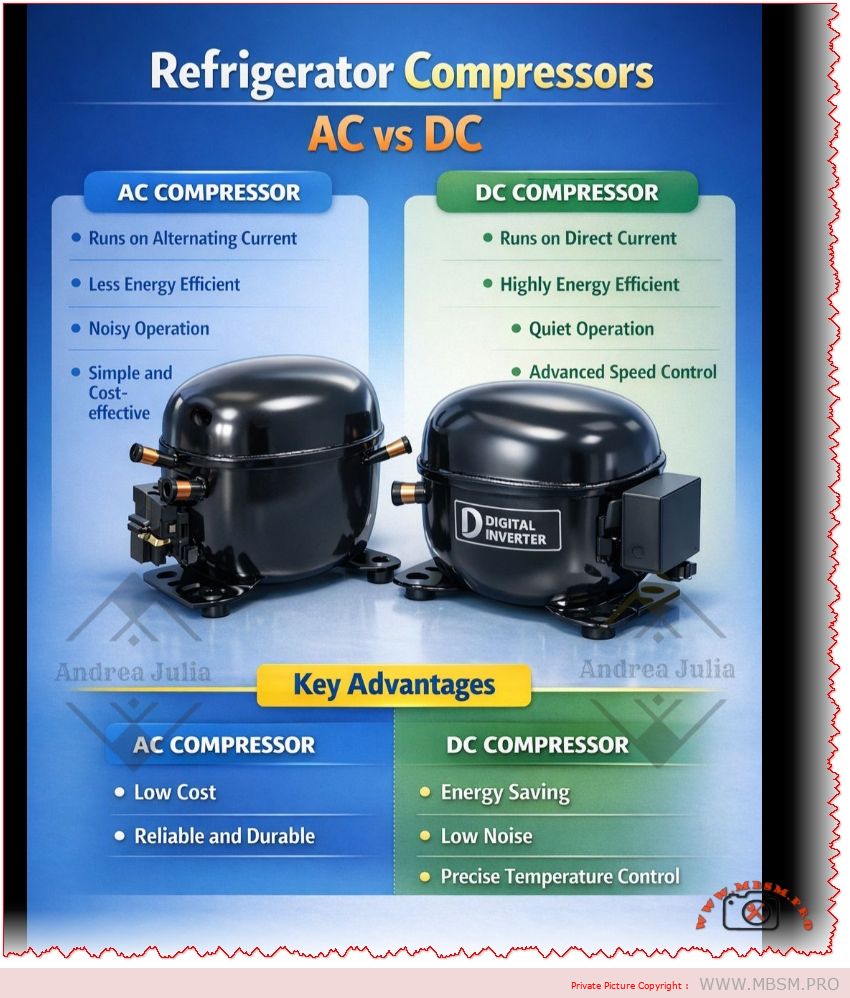
AC vs DC Refrigerator Compressors

Mbsmpro.com, Refrigerator Compressors, AC vs DC, Digital Inverter, Energy Saving, Low Noise, Precise Temperature Control, Home and Commercial Cooling

AC vs DC Refrigerator Compressors: The New Battle Inside Your Fridge

Refrigerator compressors are moving from simple AC motors to sophisticated DC inverter technology that promises lower bills, less noise, and tighter temperature control. DC inverter compressors now dominate premium refrigerators, while classic AC units remain attractive where upfront cost is critical.​

Core Principles of AC and DC Compressors

  • AC refrigerator compressors use alternating current and usually work ON/OFF at fixed speed; the thermostat starts and stops the motor when cabinet temperature crosses the set point, which wastes energy in frequent restarts.​
  • DC inverter compressors run on direct current and adjust speed continuously by changing voltage and frequency, matching cooling capacity to real load instead of cycling at full power.​​
  • This variable‑speed strategy cuts start‑up current peaks, improves part‑load efficiency, and keeps evaporator temperature more stable than fixed‑speed AC designs.​​

Technical Comparison: AC vs DC Compressors

Operating characteristics

  • AC compressors behave like a binary switch: either maximum capacity or stopped, which increases mechanical stress and temperature swings inside the refrigerator compartment.​
  • DC compressors modulate rotation speed; at light load they run slowly, reducing compression ratio and internal losses while still maintaining required suction pressure.​​
  • Inverter control electronics rectify the AC mains, then generate controlled DC power for the brushless motor so the system can follow fine temperature commands from the controller.

Energy and performance

  • Tests on household units show DC inverter refrigerator compressors can cut electricity use by around 20–30 % compared with equivalent fixed‑speed AC models, especially in part‑load operation.​​
  • More precise temperature control improves food quality and reduces frost build‑up, which further improves long‑term efficiency by keeping heat‑exchange surfaces cleaner.​​

Performance Table: AC vs DC Refrigerator Compressors

Criterion AC Compressor (Fixed‑Speed) DC Inverter Compressor
Power supply 1‑phase AC mains, typically 220–240 V 50 Hz in domestic fridges Rectified to DC, controlled by inverter electronics ​
Control mode ON/OFF cycling at single speed Variable‑speed, continuous modulation ​
Typical energy use Baseline; higher at part‑load due to frequent starts About 20–30 % lower consumption in comparable fridges ​
Noise level Noticeable start/stop clicks and vibration Significantly quieter; soft start and smoother rotation ​
Temperature stability Wider swings around set point Tight, stable cabinet temperature, better food preservation ​
Purchase cost Lower compressor and control cost Higher due to inverter electronics and BLDC motor ​
Best use cases Budget fridges, simple commercial units, robust environments Premium domestic fridges, solar/off‑grid systems, medical and high‑value storage ​

Economic and Practical Trade‑Offs

  • In many markets, the added cost of a DC inverter refrigerator can be recovered in a few years purely through lower electricity bills, especially where tariffs are high or usage is continuous.​​
  • AC compressors remain competitive in low‑cost appliances and in regions with unstable power quality, because they use simpler starting gear and cheaper spare parts.​
  • For OEMs, copper windings, precision machining, and control electronics are key cost drivers; optimizing these elements can cut compressor manufacturing cost by about 10 % without sacrificing performance.

Application Comparisons Beyond Domestic Refrigeration

1. Solar and mobile refrigeration

  • DC compressors powered directly from 12 V or 24 V battery systems avoid inverter losses and are now common in RVs, boats, telecom shelters, and off‑grid vaccine coolers.
  • Their compact form factor and high part‑load efficiency make them ideal for portable coolers and mini freezers where every amp‑hour matters.

2. Air conditioning and heat pumps

  • In AC and heat‑pump systems, inverter compressors use the same DC modulation principle to deliver faster pull‑down and quieter operation while reducing energy use and vibration.
  • Variable‑speed technology combined with economizer or vapor‑injection circuits further boosts heating capacity at low ambient temperature, as seen in modern R410A DC EVI compressors.​

3. Commercial refrigeration

  • Conventional fixed‑speed hermetic AC compressors still dominate walk‑in coolers and supermarket cases because of their low cost and well‑known service procedures.​
  • However, new digital inverter and scroll solutions can provide up to 40 % better energy efficiency and noticeably lower greenhouse‑gas emissions compared with legacy constant‑speed compressors.

Extended Specification Table: AC, DC Inverter, and Inverter Scroll

Feature Classic AC Hermetic DC Inverter Hermetic Digital/Inverter Scroll
Motor type Induction, fixed‑speed Brushless DC with inverter AC or BLDC with digital/inverter control ​
Typical capacity control 0 or 100 % 20–120 % continuous modulation 10–100 % through digital or speed modulation ​
Start current 4–8× running current (needs PTC or relay) Soft‑start; close to running current Soft‑start via inverter; reduced grid impact ​
COP at part‑load Drops sharply High COP due to optimized speed High, especially in comfort AC 
Maintenance Simple, widely available spares Electronics sensitive to surge and moisture Requires trained technicians and diagnostics ​
Typical noise Higher cycling noise Very low continuous hum Low; suited for residential AC 

Choosing Between AC and DC Compressors

  • For home refrigerators, DC inverter models are now the best choice when long‑term energy savings, low noise, and food quality are priorities, even if initial price is higher.​​
  • For entry‑level appliances or harsh workshop environments, robust AC compressors remain relevant thanks to their simplicity and lower replacement cost.​​
  • In specialized segments such as medical cold chains, telecom shelters, and high‑end commercial cabinets, DC and inverter compressors offer clear advantages in reliability, temperature accuracy, and total cost of ownership.​​
AC vs DC Refrigerator Compressors mbsmpro


GR‑EFV45,El Araby Toshiba

gr-efv45el-araby-toshiba-mbsmpro

Toshiba 3-Door 16 cu.ft No‑Frost Silver Refrigerator: A Practical Workhorse for Modern Homes

The Toshiba 3‑door 16 cu.ft no‑frost silver refrigerator from El Araby is designed for families who want generous storage, stable cooling, and low maintenance in a compact footprint. It combines vapor no‑frost cooling, a dedicated middle fresh zone, and silver finish that matches most contemporary kitchens.

Key specifications and capacity

  • Net capacity about 351 liters (≈16 cu.ft), enough for a medium to large household.
  • Three-door layout: top freezer, central fresh/vegetable compartment, and main fridge section below for everyday items.
  • Approximate dimensions: width 66.5 cm, depth 68.4 cm, height 175.3 cm, giving a tall but relatively slim cabinet that fits standard kitchen niches.
  • Color: silver with hardened glass shelves for better load resistance and easier cleaning.

Toshiba 3‑door 16 cu.ft no‑frost – main data

Feature Detail
Model family GR‑EFV45 series (El Araby Toshiba) 
Cooling type No‑Frost with vapor air circulation 
Doors 3 doors: freezer / fresh zone / fridge 
Net capacity ≈351 L (around 16 cu.ft) 
Color Silver exterior 
Shelves Tempered glass, adjustable 
Energy class Class A, optimized for reasonable power use 
Refrigerant Non‑CFC, eco‑friendly design 
Extra features Plasma deodorizer (on many variants), low‑noise design 

Cooling technology and food preservation

The refrigerator uses a no‑frost vapor cooling system that circulates cold air around the compartments, preventing ice build‑up on the walls and evaporator. This means no manual defrosting and more stable temperatures for long‑term storage.

  • Multi‑air flow channels distribute air in several layers, reducing temperature differences between shelves and helping vegetables and dairy stay fresh longer.
  • Many GR‑EFV45‑series units include a plasma or bio‑deodorizer module that absorbs odors and reduces bacteria, which is particularly valuable in the middle fresh zone for fruits and vegetables.

Design, usability, and everyday practicality

The three‑door configuration is one of the strong points of this Toshiba line. It offers a separate middle drawer or compartment for fruits and vegetables, isolating humidity and smells from the main fridge area.

  • Adjustable glass shelves and door balconies allow flexible loading, from tall bottles to large pans or cake boxes.
  • Silver exterior and integrated handles give a neutral, modern appearance that blends with stainless or grey appliances, which is often requested in open kitchens.
  • Noise‑reduced compressor design and non‑CFC refrigerant make it a relatively quiet and environmentally conscious appliance for daily home use.

Reliability, market positioning, and who it suits

El Araby distributes this Toshiba 16‑foot, 3‑door refrigerator widely in North Africa and the Middle East, targeting families that need a durable mid‑range no‑frost unit rather than a premium smart fridge.

  • Ten‑year compressor warranty is common on this series, underlining its positioning as a long‑term investment for domestic kitchens.
  • The size and three‑door design make it especially suitable for households that shop weekly, cook frequently, and want one dedicated vegetable/fresh zone without moving to a bulky side‑by‑side model.